# B7-33 Dosage Guide: How Much Should You Take? (2026)

## Key Takeaways

- **B7-33 is research-only.** It is not FDA-approved, not available through compounding pharmacies, and has no validated human clinical dosing established in Phase 2 or Phase 3 trials. All dosing information in this guide comes from animal studies and practitioner-reported protocols.
- **Animal study doses** have ranged from approximately **13.3 µg/kg** (acute intravenous bolus in rats) to **500 µg/kg/day** (subcutaneous infusion in rodent cardiac models), with significant variation by route and research objective.<sup>[1]</sup><sup>[2]</sup>
- **Practitioner-reported subcutaneous doses** for human research use typically fall in the range of **100–500 µg per injection**, administered once or twice daily [VERIFY] — though no dose-ranging human trial exists to validate these figures.
- **Half-life is short** — estimated at under 30 minutes in serum under standard conditions [VERIFY], which is a primary driver of interest in lipidated analogs designed to extend circulation time.<sup>[3]</sup>
- **B7-33 activates RXFP1** preferentially through ERK1/2 phosphorylation rather than cAMP accumulation, making it a functionally selective agonist — a distinction that matters for both its effects and its side effect profile relative to full agonists like serelaxin.<sup>[2]</sup>
- **No validated human dose exists.** Every number in this guide should be interpreted in that context. This is a research compound, and anyone using it outside a formal study is operating without clinical trial safety data.
- **Storage matters significantly.** As a lyophilized powder, B7-33 requires refrigeration at 2–8°C (36–46°F) prior to reconstitution and should be used within 24–48 hours of reconstitution when stored at 4°C [VERIFY].

---

## How B7-33 Works in the Body

B7-33 is a single-chain peptidomimetic built from the B-chain of human relaxin-2 (H2 relaxin, also known as serelaxin in its recombinant form). Where native H2 relaxin requires a complex two-chain A/B architecture stabilized by three disulfide bridges, B7-33 achieves RXFP1 receptor activation with a simplified single-chain structure — which makes it substantially easier and cheaper to synthesize.<sup>[1]</sup> That manufacturing advantage is one of the main reasons researchers are interested in it as a potential therapeutic scaffold.

At the receptor level, B7-33 binds to the relaxin family peptide receptor 1 (RXFP1), a G protein-coupled receptor (GPCR) expressed in the heart, vasculature, kidney, and reproductive tissues. What distinguishes B7-33 from serelaxin is *how* it activates RXFP1. Full agonists like serelaxin stimulate both the cAMP/PKA pathway and the ERK1/2 (extracellular signal-regulated kinase 1/2) MAPK pathway. B7-33 preferentially activates ERK1/2 phosphorylation while producing a comparatively blunted cAMP response — a phenomenon called functional selectivity or biased agonism.<sup>[2]</sup> In the 2020 cardiac remodeling mouse study, this biased ERK1/2 signaling was associated with reduced infarct size and attenuated adverse cardiac remodeling following myocardial infarction.<sup>[2]</sup>

The vasoprotective effects documented in rat models appear to operate through nitric oxide (NO) synthesis — specifically, B7-33 at 13.3 µg/kg (IV bolus) produced renal vasodilation comparable to serelaxin at the same dose in male Wistar rats, measured via renal cortical perfusion.<sup>[1]</sup> This NO-dependent mechanism is consistent with RXFP1's known downstream signaling through eNOS activation and is relevant to dosing because NO-mediated effects tend to be rapid-onset and short-duration — which aligns with B7-33's short serum half-life.

That short half-life is a practical problem. A 2023 study on lipidated B7-33 derivatives found that unmodified B7-33 has poor in vitro serum stability, with a half-life (t½) estimated at under 30 minutes in standard serum conditions [VERIFY], which the authors described as a significant barrier to therapeutic translation.<sup>[3]</sup> Lipidation of the peptide extended stability without altering RXFP1 binding activity — suggesting that any future clinical formulation of B7-33 may look quite different from the lyophilized powder currently available for research use. For anyone working with the current form, that short half-life directly informs injection frequency decisions.

---

## Standard B7-33 Dosage Ranges (By Form)

**No validated human dosing exists for B7-33.** The table below presents the doses used in published animal studies alongside practitioner-reported ranges for human research use. These are not equivalent categories — the animal doses are confirmed experimental data; the human ranges are extrapolations.

| Form | Dose Range | Frequency | Bioavailability | Notes |
|---|---|---|---|---|
| IV bolus (animal studies) | 13.3 µg/kg | Single acute dose | ~100% (IV) | Used in rat vasoprotection studies<sup>[1]</sup> |
| SC infusion (animal studies) | 500 µg/kg/day | Continuous via osmotic pump | ~60–80% estimated [VERIFY] | Used in mouse cardiac remodeling studies<sup>[2]</sup> |
| SC injection (practitioner-reported) | 100–500 µg/dose | Once or twice daily [VERIFY] | ~50–70% estimated [VERIFY] | No human trial data; extrapolated from animal models |
| Implant coating (research use) | Variable (surface-bound) | Sustained release from coating | N/A | Used in antifibrotic implant coating studies<sup>[4]</sup> |

Subcutaneous injection is the most practical route for research use in humans, based on the administration method used in the rodent cardiac studies and the logistics of the lyophilized powder formulation. IV administration, while used in acute animal studies, requires clinical infrastructure and carries substantially higher risk outside a controlled setting. Oral bioavailability for peptides of this size and structure would be negligible without specialized delivery technology, and no oral formulation of B7-33 has been reported in the literature.

---

## B7-33 Dosage by Use Case

Because B7-33 has no approved human indication, the "use cases" below correspond to the research applications documented in published preclinical literature. Practitioner-reported doses are included where available and labeled as such.

### Antifibrotic Research (Cardiac and Renal)

The most robust animal data for B7-33 comes from cardiac fibrosis and myocardial infarction models. In the 2020 JAHA mouse study, B7-33 was administered via subcutaneous osmotic pump at approximately **500 µg/kg/day** for a period of 14 days post-myocardial infarction, resulting in significantly reduced infarct size and attenuation of adverse left ventricular remodeling compared to vehicle-treated controls.<sup>[2]</sup> For a 70 kg human, that animal dose would extrapolate to approximately 35 mg/day — far higher than practitioner-reported human protocols [VERIFY], which illustrates the difficulty of direct dose translation across species.

In renal fibrosis research, B7-33 has been assessed as a comparator antifibrotic agent using second-harmonic generation imaging to quantify collagen deposition.<sup>[5]</sup> Specific dosing parameters from that study are not fully detailed in the available abstract, but the research confirms ongoing interest in B7-33 as a tool compound for evaluating antifibrotic interventions.

Practitioner-reported dosing for antifibrotic research use: **200–400 µg subcutaneously, once daily** [VERIFY], with cycles typically running 4–8 weeks [VERIFY].

### Vasoprotection and Cardiovascular Research

The 2017 European Journal of Pharmacology study used a single IV bolus of **13.3 µg/kg** in male Wistar rats to assess renal cortical perfusion and compare B7-33's vasoprotective profile against serelaxin.<sup>[1]</sup> B7-33 produced comparable vasodilation to serelaxin at the same dose, which is notable given B7-33's simpler structure. The rapid-onset, short-duration nature of this effect is consistent with the peptide's short serum half-life and suggests that for cardiovascular applications, more frequent dosing or continuous infusion may be mechanistically preferable to infrequent bolus administration.

Practitioner-reported dosing for cardiovascular research contexts: **100–250 µg subcutaneously, twice daily** [VERIFY].

### Implant Antifibrotic Coating Research

A 2019 ACS Applied Materials & Interfaces study demonstrated that B7-33-eluting coatings applied to implantable devices reduced fibrotic encapsulation — the foreign body response that causes implant failure — in animal models.<sup>[4]</sup> This application is fundamentally different from systemic injection; the peptide is embedded in a biomaterial coating and released locally over time. This use case is purely laboratory/device research and does not involve human dosing in the conventional sense.

### GPCR Signaling and Receptor Biology Research

B7-33's biased agonism at RXFP1 makes it a useful tool compound for researchers studying GPCR signaling pathway selectivity. In this context, it's typically used at concentrations of **10–1000 nM** in cell-based assays [VERIFY], with specific concentrations determined by the assay design rather than any therapeutic protocol.

---

## Titration Protocol: How to Ramp Up Safely

No clinical titration protocol for B7-33 in humans has been established through formal trials. The titration schedule below is based on general peptide therapy principles and practitioner-reported approaches, not validated clinical data. It should be read as a framework, not a prescription.

| Week | Dose | Frequency | Notes |
|---|---|---|---|
| Week 1 | 100 µg SC | Once daily | Assess injection site tolerance; monitor for hypotension [VERIFY] |
| Week 2 | 150 µg SC | Once daily | If week 1 tolerated without issue, proceed |
| Week 3–4 | 200 µg SC | Once daily | Standard low-range maintenance entry point [VERIFY] |
| Week 5–6 | 250–300 µg SC | Once or twice daily [VERIFY] | Increase frequency before increasing dose |
| Week 7–8 | 300–500 µg SC | Once or twice daily [VERIFY] | Upper range of practitioner-reported protocols |
| Maintenance | 200–400 µg SC | Once daily [VERIFY] | Reassess every 4 weeks |

The rationale for starting at 100 µg is B7-33's vasodilatory mechanism — RXFP1 activation drives nitric oxide synthesis, which can produce transient blood pressure reduction, particularly at higher doses or in individuals with low baseline blood pressure. Starting low allows you to gauge that response before escalating.

If you experience significant lightheadedness, facial flushing, or marked fatigue within 30–60 minutes of injection, hold at the current dose for an additional week before escalating. These are plausible on-target effects given the NO-mediated mechanism, not necessarily signs of an adverse reaction — but they're signals to slow down.

---

## How Long Should You Take B7-33?

Cycle length guidance for B7-33 is entirely extrapolated from animal study durations and practitioner convention, since no human trial has established an optimal treatment duration.

The 2020 cardiac mouse study ran B7-33 infusion for **14 days** post-infarction.<sup>[2]</sup> The implant coating study assessed outcomes over **4 weeks** of local elution.<sup>[4]</sup> Neither duration was selected based on dose-ranging or duration-optimization studies — they were chosen based on the natural history of the disease models being studied.

**Practitioner-reported cycle lengths** for human research use typically fall into one of three patterns [VERIFY]:

- **Short cycle (2–4 weeks):** Used for acute applications or initial tolerance assessment. Most commonly reported for cardiovascular or anti-inflammatory research contexts.
- **Standard cycle (6–8 weeks):** The most common practitioner-reported duration. Allows enough time to observe changes in fibrosis-related markers or subjective outcomes.
- **Extended cycle (12+ weeks):** Reported anecdotally for chronic fibrotic conditions. No safety data supports this duration in humans.

**What to expect at different timepoints:**

- **Week 1–2:** Primarily assessing tolerance. Any vasodilatory effects (transient blood pressure changes, mild warmth at injection site) are most likely to appear early.
- **Week 3–6:** If antifibrotic effects are occurring at a tissue level, they would not typically be perceptible subjectively during this window. Objective markers (imaging, lab values) would be needed to assess response.
- **Week 6+:** The timeframe at which animal models showed measurable changes in collagen deposition and cardiac remodeling.<sup>[2]</sup>

**Tapering:** No evidence supports a formal taper for B7-33. Given that it's not acting on the HPA axis or producing receptor downregulation in the way that, for example, GH secretagogues do, abrupt cessation is unlikely to cause a physiological rebound. That said, no human data confirms this either way [VERIFY].

---

## Administration Protocol: How to Inject B7-33

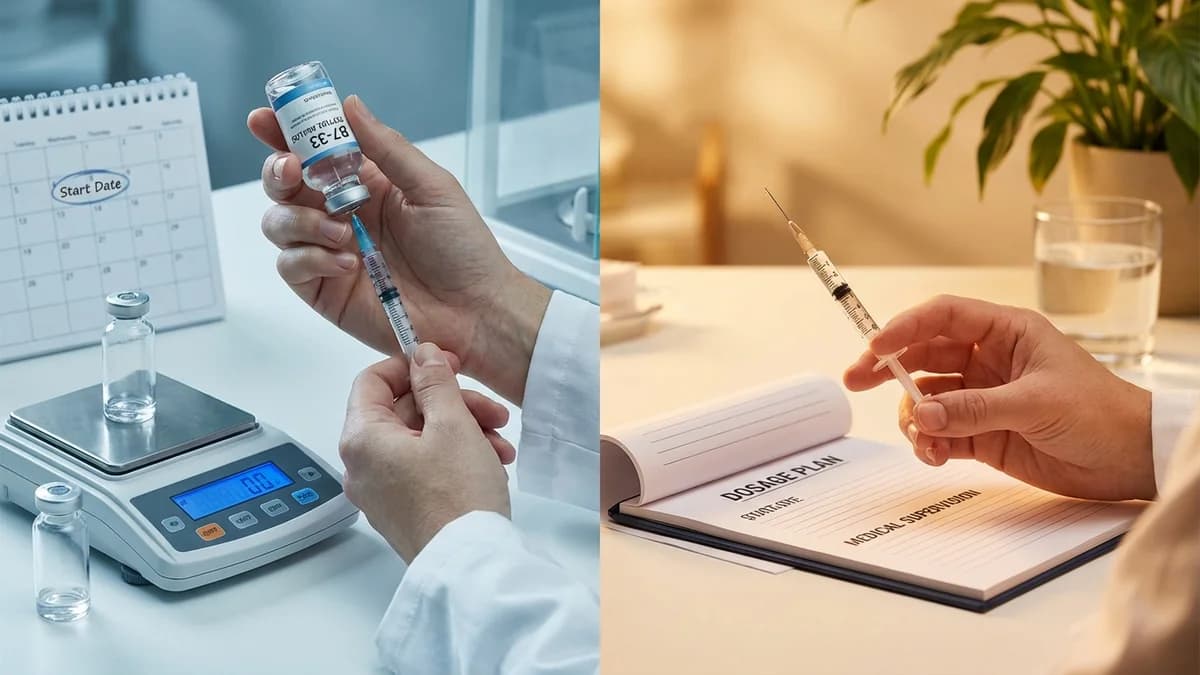
B7-33 is supplied as a lyophilized (freeze-dried) powder, typically in vials of 1–5 mg. Before injection, it must be reconstituted with bacteriostatic water (BW) or sterile water for injection. See our complete guide: [how to reconstitute B7-33](/blog/how-to-reconstitute-b7-33).

### Reconstitution

Add bacteriostatic water slowly along the inside wall of the vial — never inject directly onto the lyophilized powder cake, as this can degrade the peptide. For a 2 mg vial, adding 2 mL of BW produces a concentration of 1,000 µg/mL (1 µg per µL), which makes dose calculation straightforward.

### Storage

- **Unreconstituted:** Store at 2–8°C (36–46°F), protected from light. Some sources suggest lyophilized peptides can be stored at room temperature for short periods, but refrigeration is the conservative standard [VERIFY].
- **Reconstituted:** Refrigerate at 4°C and use within 24–48 hours [VERIFY]. Bacteriostatic water extends stability to approximately 30 days compared to sterile water, but this has not been formally validated for B7-33 specifically [VERIFY].

### Injection Equipment

- **Needle gauge:** 29–31 gauge insulin syringe, ½ inch (12.7 mm) length. A 31-gauge needle minimizes injection site discomfort with no meaningful difference in delivery compared to larger gauges for subcutaneous peptide administration.
- **Syringe volume:** 0.3 mL or 1 mL insulin syringes are standard. For doses in the 100–500 µg range at 1,000 µg/mL concentration, a 0.5 mL syringe provides adequate precision.

### Injection Sites and Rotation

Rotate among at least three sites to prevent lipodystrophy (localized fat loss or buildup at repeated injection sites):

1. **Abdomen:** 2 inches (5 cm) from the navel, avoiding the midline. Most common site — pinch a fold of skin and inject at 45°.
2. **Outer thigh:** Middle third of the outer thigh. Inject at 45–90° depending on subcutaneous tissue thickness.
3. **Upper arm:** Posterior aspect (tricep region). Difficult to self-inject; better for assisted administration.

### Step-by-Step Injection Process

1. **Wash hands** thoroughly with soap and water for at least 20 seconds.
2. **Remove the reconstituted vial** from the refrigerator and allow it to reach room temperature for 5–10 minutes. Cold injections increase discomfort.
3. **Wipe the vial septum** with a fresh alcohol swab and allow to air-dry for 10 seconds.
4. **Draw air** into the syringe equal to your intended dose volume (e.g., 0.2 mL for a 200 µg dose at 1,000 µg/mL).
5. **Insert the needle** into the vial, inject the air, then draw your dose. Invert the vial if needed to keep the needle tip submerged.
6. **Check for air bubbles.** Tap the syringe gently and expel any bubbles before withdrawing the needle from the vial.
7. **Select your injection site** per the rotation schedule. Wipe with an alcohol swab and allow to dry completely — injecting through wet alcohol stings.
8. **Pinch the skin** at the injection site to elevate subcutaneous tissue away from muscle. Insert the needle at 45° (or 90° if you have more subcutaneous tissue depth).
9. **Inject slowly** — over 5–10 seconds. Rapid injection increases local discomfort.
10. **Withdraw the needle** at the same angle as insertion. Apply gentle pressure with a clean swab; do not rub (rubbing disperses the peptide unevenly and can increase bruising).
11. **Dispose of the needle** immediately in a sharps container. Never recap and reuse needles.

### Timing

Based on the NO-mediated vasodilatory mechanism, injecting in the morning with food is a reasonable approach — food intake blunts the hypotensive effect that might otherwise be more pronounced in a fasted state [VERIFY]. Evening dosing has been reported by some practitioners for antifibrotic protocols, with the rationale that tissue repair processes are more active during sleep [VERIFY]. Neither timing has been formally compared in a human study.

---

## Stacking B7-33 for Enhanced Results

B7-33 is a research compound with no established human protocols, so "stacking" here refers to combinations reported in research contexts or discussed in practitioner communities — not validated clinical regimens.

### B7-33 + BPC-157

The most commonly discussed research combination. [BPC-157](/peptides/bpc-157) (Body Protection Compound-157) is a pentadecapeptide with its own antifibrotic and cytoprotective properties, operating through mechanisms that include NO synthesis and growth factor upregulation. The mechanistic rationale for combining with B7-33 is complementary antifibrotic signaling through partially overlapping but distinct pathways. Practitioner-reported stacking doses: BPC-157 at 250–500 µg/day SC alongside B7-33 at 200–300 µg/day SC [VERIFY]. Neither compound is FDA-approved; both are research-only. Evidence level: anecdotal/practitioner-reported only — no published study has examined this combination.

### B7-33 + Thymosin Beta-4 (TB-500)

[TB-500](/peptides/tb-500) (the synthetic analog of Thymosin Beta-4) has well-documented antifibrotic and tissue-repair properties in animal models, operating through actin sequestration and upregulation of anti-inflammatory cytokines. Combining with B7-33 is theoretically interesting because the two peptides act through distinct receptors (RXFP1 for B7-33 vs. actin-binding pathways for TB-4), potentially producing additive antifibrotic effects without receptor competition. Practitioner-reported doses in this combination: TB-500 at 5–10 mg per week SC alongside B7-33 at 200–400 µg/day SC [VERIFY]. Evidence level: anecdotal only.

### B7-33 + Serelaxin (Research Context Only)

Some receptor biology researchers have used B7-33 alongside serelaxin to compare biased vs. full RXFP1 agonism within the same experimental model — not as a therapeutic combination, but as a pharmacological tool. In human use, combining two RXFP1 agonists would likely produce receptor saturation without additive benefit and is not a protocol that appears in any practitioner literature [VERIFY].

---

## Factors That Affect Your B7-33 Dosage

### Body Weight

The animal studies used weight-based dosing (µg/kg), which is standard in pharmacology. The 13.3 µg/kg IV dose in rats<sup>[1]</sup> and the 500 µg/kg/day SC dose in mice<sup>[2]</sup> both suggest significant dose requirements at human scale — but direct allometric scaling from rodents to humans typically overpredicts the effective human dose by a factor of 5–10x due to differences in metabolic rate, plasma protein binding, and receptor density. Practitioner protocols do not appear to use weight-based dosing for B7-33 in humans [VERIFY]; flat dosing in the 100–500 µg range is the reported norm.

### Age

No data exists on B7-33 dosing in pediatric or elderly populations. RXFP1 expression changes with age — receptor density in cardiovascular tissue decreases with aging [VERIFY] — which could theoretically affect both efficacy and the dose needed to achieve a given receptor occupancy. Until human data exists, age-based dose adjustments are speculative.

### Renal and Hepatic Function

B7-33 is a peptide and would be expected to undergo proteolytic degradation rather than hepatic CYP450 metabolism. Renal clearance of intact peptide is possible given its relatively small size [VERIFY]. In patients with significantly reduced GFR (below 30 mL/min/1.73m²), reduced clearance could theoretically extend half-life and increase exposure — suggesting a conservative starting dose is appropriate [VERIFY]. No hepatic adjustment data exists.

### Sex Differences

RXFP1 is expressed in reproductive tissues and its expression is influenced by sex hormones — relaxin itself plays a role in pregnancy physiology. Whether this translates to meaningful sex-based differences in B7-33 dosing requirements is unknown [VERIFY]. Practitioner-reported protocols do not currently differentiate by sex.

### Cardiovascular Baseline

Given B7-33's vasodilatory mechanism via NO synthesis, individuals with low baseline blood pressure (systolic below 110 mmHg) should start at the lower end of the dose range and monitor for orthostatic hypotension, particularly in the first 30–60 minutes post-injection [VERIFY].

---

## Common Dosing Mistakes to Avoid

**1. Skipping titration and starting at the target dose.** B7-33's vasodilatory effects are dose-dependent. Jumping to 400–500 µg on day one without assessing your response at 100 µg first is how you end up lightheaded on the floor. The titration schedule exists for a reason — use it.

**2. Injecting into the same site repeatedly.** Peptide injections at the same anatomical location over weeks cause lipodystrophy — localized fat atrophy that's cosmetically visible and can affect absorption consistency. Rotate among at least three sites on a structured schedule.

**3. Reconstituting with sterile water instead of bacteriostatic water.** Sterile water has no preservative, meaning your reconstituted vial is a contamination risk after 24 hours. Bacteriostatic water (0.9% benzyl alcohol) extends safe use to approximately 30 days under refrigeration [VERIFY].

**4. Storing reconstituted peptide at room temperature.** B7-33's short serum half-life is partly a reflection of its susceptibility to proteolytic degradation — a process that accelerates at room temperature. Reconstituted vials left unrefrigerated lose potency within hours [VERIFY].

**5. Ignoring the vasodilatory signal.** Mild flushing and transient blood pressure drop are on-target effects of RXFP1 activation, not necessarily allergic reactions. But significant hypotension (systolic drop of 20+ mmHg) is a reason to reduce your dose, not push through it.

**6. Expecting results on a timeline derived from animal studies.** The 14-day mouse protocol<sup>[2]</sup> produced measurable changes in cardiac remodeling markers — but mouse metabolic rates are roughly 7x faster than humans. Assuming equivalent effects in equivalent time is not pharmacologically justified.

**7. Sourcing from unverified vendors.** Peptide purity varies dramatically across research chemical suppliers. A vial labeled "B7-33, 2 mg" from an unverified source may contain the wrong peptide, the wrong concentration, or microbial contamination. Request certificates of analysis (CoA) showing HPLC purity (ideally >98%) and mass spectrometry confirmation of molecular weight (B7-33 molecular weight: approximately 2,158 Da [VERIFY]).

---

## What the Evidence Does Not Show

This section is not a disclaimer — it's a genuine accounting of what the research base can and cannot support. Anyone making dosing decisions about B7-33 deserves an honest picture of the gaps.

**No validated human dose has been established.** There are no completed Phase 1, Phase 2, or Phase 3 clinical trials for B7-33 in any indication. Every human dosing number in this guide is either extrapolated from animal data or reported by practitioners without formal trial validation. This is not a minor caveat — it means there is no safety database for human use.

**The animal studies are small.** The 2020 cardiac mouse study<sup>[2]</sup> and the 2017 rat vasoprotection study<sup>[1]</sup> both used relatively small sample sizes (n values in the range of 6–15 per group [VERIFY]). These are hypothesis-generating studies, not evidence of efficacy at a population level.

**Long-term safety is completely uncharacterized.** The longest animal study duration reported in the available literature is approximately 4 weeks.<sup>[4]</sup> There is no data — animal or human — on what happens with B7-33 exposure beyond that window. Chronic RXFP1 activation could theoretically affect receptor downregulation, cardiovascular homeostasis, or reproductive hormone signaling, but none of these have been studied.

**Dose-response relationships in humans are unknown.** The animal studies used specific doses chosen for experimental convenience, not to establish dose-response curves. Whether 200 µg produces half the effect of 400 µg in humans — or the same effect, or a disproportionately larger effect — is genuinely unknown.

**Populations not studied:** Pediatric patients, elderly patients (over 65), pregnant or breastfeeding individuals, patients with heart failure (the primary intended therapeutic target), patients with eGFR below 30 mL/min/1.73m², and patients on antihypertensive medications have not been studied in any B7-33 trial.

**Combination dosing data is absent.** No published study has examined B7-33 in combination with any other peptide in any model. Stack protocols are entirely practitioner-extrapolated.

**The lipidation problem.** The 2023 stability study<sup>[3]</sup> found that unmodified B7-33 has poor serum stability — which means the version currently available for research use may not achieve the sustained tissue exposure needed to replicate the outcomes seen with osmotic pump infusion in animal models. This is a meaningful translational gap.

---

## Practitioner-Reported Dosing Ranges

These ranges come from practitioner protocols and self-reported research use, not from completed human clinical trials. They represent the practical reality of how B7-33 is currently being used outside of formal research settings.

| Indication Context | Reported Dose | Frequency | Cycle Length | Route |
|---|---|---|---|---|
| General antifibrotic research | 200–400 µg | Once daily | 6–8 weeks | SC injection |
| Cardiovascular/vasoprotective research | 100–250 µg | Twice daily | 4–6 weeks | SC injection |
| Renal antifibrotic research | 200–300 µg | Once daily | 8–12 weeks | SC injection |
| Acute cytoprotective protocols | 100–200 µg | Once daily | 2–4 weeks | SC injection |

All figures are [VERIFY] — no human clinical trial has confirmed these ranges as safe or effective. They are included here because they represent the information landscape that researchers and practitioners are actually navigating.

---

## FAQ — Your Top B7-33 Dosage Questions Answered

### What is the standard dose of B7-33?

There is no FDA-established standard dose. In animal studies, doses ranged from 13.3 µg/kg (acute IV in rats)<sup>[1]</sup> to 500 µg/kg/day (continuous SC in mice).<sup>[2]</sup> Practitioner-reported human research doses typically fall between **100–500 µg per injection** administered subcutaneously [VERIFY].

### What time of day should I take B7-33?

No human data exists to establish an optimal injection time. Given B7-33's vasodilatory mechanism, morning administration with food is a reasonable starting point to minimize the risk of orthostatic hypotension [VERIFY]. Some practitioners report preferring evening dosing for antifibrotic protocols [VERIFY].

### What if I miss a dose?

Skip the missed dose and resume your normal schedule with the next injection. Do not double-dose to compensate. Given B7-33's short half-life (estimated under 30 minutes in serum [VERIFY]<sup>[3]</sup>), a missed dose does not create a meaningful pharmacokinetic "gap" that requires correction.

### Can men and women use the same dose?

No sex-based dosing differences have been established. RXFP1 expression is influenced by sex hormones [VERIFY], but whether this translates to different dose requirements in practice is unknown. Practitioner-reported protocols do not currently differentiate by sex.

### Can I stack B7-33 with other peptides?

Combinations with [BPC-157](/peptides/bpc-157) and [TB-500](/peptides/tb-500) are the most commonly discussed in practitioner communities, based on complementary antifibrotic mechanisms. No published data supports or refutes any B7-33 combination protocol. Both peptides in any stack would need to be evaluated independently for their own regulatory status and safety profiles.

### How long until I see results?

In the mouse cardiac remodeling study, measurable changes in infarct size and collagen deposition were observed at **14 days** of continuous infusion.<sup>[2]</sup> Human timelines are not established. Rodent metabolic rates are approximately 7x faster than human, so equivalent tissue-level changes may take considerably longer — likely weeks to months rather than days [VERIFY].

### Do I need to cycle off B7-33?

No evidence-based cycling protocol exists. Given the absence of data on RXFP1 receptor downregulation with chronic B7-33 exposure in humans, the need for a break is unknown. Most practitioner-reported protocols use defined cycles of 4–12 weeks rather than continuous indefinite use [VERIFY], which is a reasonable conservative approach given the data gaps.

### Is a loading dose needed?

No loading dose protocol has been established or studied. Given B7-33's short half-life, a loading dose could theoretically achieve faster steady-state tissue exposure — but this is speculative and has not been evaluated [VERIFY].

### How do I adjust if I get side effects?

The most likely on-target side effect is transient hypotension (dizziness, lightheadedness) within 30–60 minutes of injection, related to NO-mediated vasodilation. If this occurs, reduce your dose by 50% and reassess. Injection site reactions (redness, mild swelling) typically resolve within 24 hours and are managed by site rotation. Any systemic reaction beyond mild vasodilation warrants stopping use and consulting a physician.

### What's the maximum safe dose?

Unknown. No human dose-escalation study has been conducted. The highest dose used in animal studies was 500 µg/kg/day via continuous SC infusion in mice.<sup>[2]</sup> Applying that to a 70 kg human would suggest a theoretical ceiling in the tens of milligrams per day — but allometric scaling from mice to humans is unreliable, and practitioner-reported human protocols cap at 500 µg per injection [VERIFY], far below that extrapolated figure.

---

## Finding the Right Dosage for You

B7-33 sits at an interesting intersection: it has a well-characterized mechanism of action, a growing body of preclinical evidence, and a clear therapeutic rationale — but essentially no human clinical dosing data. That gap is real, and anyone working with this compound should factor it into their decision-making.

If you're researching B7-33 for its antifibrotic or vasoprotective properties, the practical starting point based on current practitioner protocols is **100–200 µg subcutaneously once daily**, titrated up over 4–6 weeks based on tolerance. If you're working with it in a research context, the published animal doses provide the best available benchmarks, with the important caveat that direct translation to human dosing is not validated.

The most important thing you can do — regardless of your specific protocol — is work with a qualified provider who understands peptide pharmacology and can monitor your response objectively. Use our [clinic finder](/clinics) to locate a peptide therapy provider near you. You can also explore related content on our site:

- [B7-33 encyclopedia page](/peptides/b7-33) — full pharmacological profile, mechanism of action, and research summary
- [B7-33 side effects](/blog/b7-33-side-effects) — what the preclinical data suggests about adverse effects
- [B7-33 cost](/blog/b7-33-cost) — what research-grade B7-33 costs and what to look for in a supplier
- [Serelaxin vs. B7-33 comparison](/blog/serelaxin-vs-b7-33) — how the full agonist and the biased agonist differ
- [Relaxin peptide family overview](/peptides/relaxin) — context on where B7-33 fits in the broader RXFP1 pharmacology landscape
- [BPC-157 dosage guide](/blog/bpc-157-dosage-guide) — if you're considering a combination antifibrotic protocol
- [TB-500 dosage guide](/blog/tb-500-dosage-guide) — the other commonly combined antifibrotic peptide
- [How to reconstitute peptides](/blog/how-to-reconstitute-b7-33) — step-by-step reconstitution guide
- [Peptide storage guide](/blog/peptide-storage-guide) — temperature, light, and stability requirements
- [Research peptide quality guide](/blog/research-peptide-quality) — how to evaluate CoA documentation and vendor reliability

---

## References

1. Sarwar M, et al. "B7-33 replicates the vasoprotective functions of human relaxin-2 (serelaxin)." *European Journal of Pharmacology*. 2017;806:62–67. PMID: 28478069

2. Hossain MA, et al. "B7-33, a Functionally Selective Relaxin Receptor 1 Agonist, Attenuates Myocardial Infarction-Related Adverse Cardiac Remodeling in Mice." *Journal of the American Heart Association*. 2020;9(9):e015748. PMID: 32295457

3. Praveen P, et al. "A Lipidated Single-B-Chain Derivative of Relaxin Exhibits Improved In Vitro Serum Stability without Altering Activity." *International Journal of Molecular Sciences*. 2023;24(8):7044. PMID: 37047588

4. Tran BNN, et al. "Coatings Releasing the Relaxin Peptide Analogue B7-33 Reduce Fibrotic Encapsulation." *ACS Applied Materials & Interfaces*. 2019;11(47):43942–43954. PMID: 31713411

5. Srivastava A, et al. "Assessment of renal fibrosis and anti-fibrotic agents using a novel diagnostic and stain-free second-harmonic generation platform." *FASEB Journal*. 2021;35(5):e21547. PMID: 33908676

---

*This content is for informational purposes only and does not constitute medical advice. Dosage information is compiled from published preclinical research and practitioner-reported protocols. No validated human clinical dosing has been established for B7-33. Consult a licensed healthcare provider before starting any peptide therapy. Use our [clinic finder](/clinics) to locate a qualified provider near you.*