
Key Takeaways
- GHRH is not FDA-approved and is available only for research purposes.
- Typical research dosing ranges from 1-2 µg/kg body weight.
- Titration is essential for optimizing tolerability and effectiveness.
- GHRH is administered via subcutaneous injection, requiring specific site rotation.
- Medical supervision is crucial due to the peptide's research-only status.
What Is GHRH?
Growth Hormone-Releasing Hormone (GHRH) is a 44-amino acid peptide that stimulates the release of growth hormone (GH) from the anterior pituitary. It operates by binding to the GHRH receptor, activating adenylate cyclase and cAMP signaling pathways. For more detailed information, visit the GHRH full profile.
Standard Dosing Protocols
GHRH is not FDA-approved and is available solely for research purposes. Therefore, no official dosing guidelines exist. However, research protocols often use doses ranging from 1-2 µg/kg of body weight (PMID 2107038). These protocols are typically based on preclinical studies and should be used under strict research settings.
Titration Schedules
Titration of GHRH dosing is critical to achieving optimal effects while minimizing side effects. Researchers often start with a lower dose and gradually increase it over several weeks. This approach helps in assessing individual tolerance and response, which can vary significantly among subjects. Titration schedules might involve weekly dose increments until the desired effect is observed or until tolerability limits are reached (PMID 39913072).
Administration Method
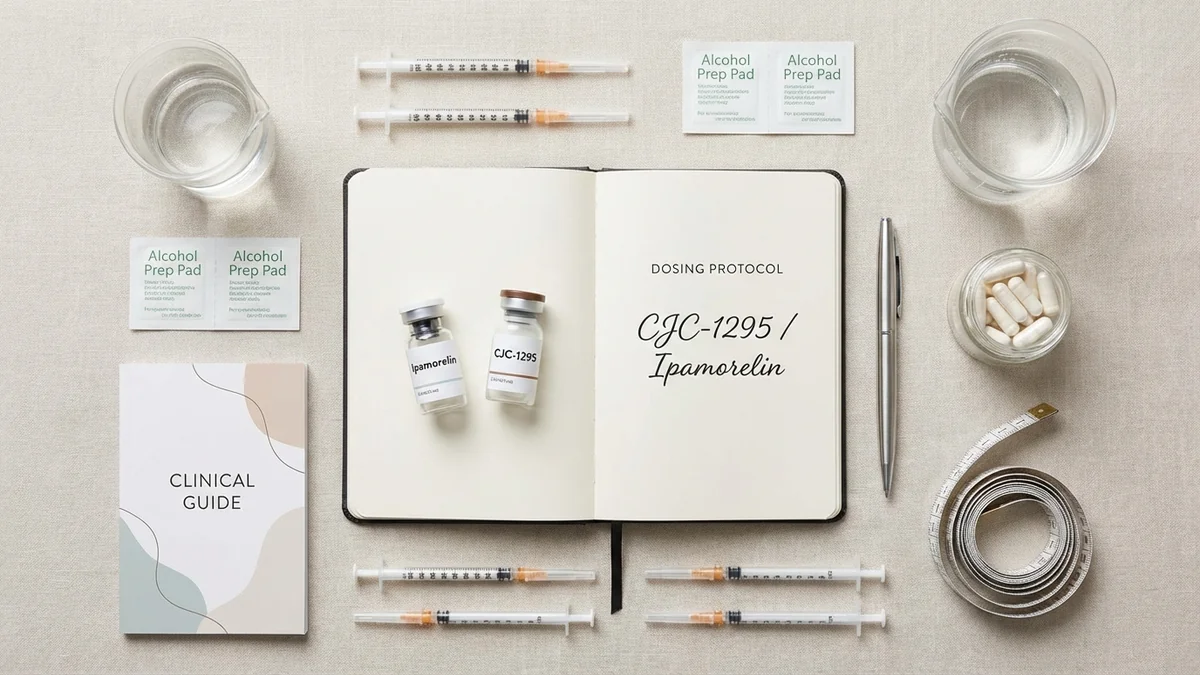
GHRH is administered through subcutaneous injections. Practitioners typically advise rotating injection sites to prevent tissue irritation. Common sites include the abdomen, thigh, and upper arm. A fine needle, often 29-31 gauge, is recommended for the injections. The peptide should be stored in a refrigerator and reconstituted with bacteriostatic water before use. Detailed instructions on preparation and administration are crucial for maintaining peptide stability and efficacy.
Factors That Affect Dosing
Several factors can influence GHRH dosing, including:
- Body Weight: Dosage is often calculated per kilogram of body weight.
- Treatment Goals: Research objectives may dictate specific dosing regimens.
- Concurrent Medications: Other drugs can interact with GHRH, affecting its efficacy or safety.
- Organ Function: Impaired kidney or liver function may necessitate dose adjustments.
Clinicians must evaluate these factors to tailor dosing appropriately for research subjects.
What Happens If You Miss a Dose
In a research setting, missing a dose of GHRH should be addressed by consulting the study protocol or principal investigator. Typically, the missed dose should not be doubled. Instead, resume the regular dosing schedule at the next planned administration.
Dosing Compared to Similar Peptides
GHRH is often compared with other growth hormone secretagogues like ghrelin. While both stimulate GH release, they act on different receptors and pathways (PMID 10604470). Ghrelin, for example, binds to the GHS-R receptor, whereas GHRH binds to the GHRH receptor.
What the Evidence Does Not Show
Current research on GHRH is limited to preclinical studies, and long-term safety data is lacking. The peptide's effects, particularly in humans, require further investigation. There is no evidence supporting its use outside of controlled research environments (PMID 38540684).
FAQ
What is the typical dosing range for GHRH in research?
The typical range is 1-2 µg/kg of body weight, depending on the research protocol.
How is GHRH administered?
GHRH is administered via subcutaneous injection, often requiring site rotation and specific storage conditions.
Can GHRH be used for clinical purposes?
No, GHRH is not FDA-approved for clinical use and is available only for research purposes.
What should I do if I miss a GHRH dose in a research setting?
Refer to the study protocol or consult the principal investigator for guidance. Do not double the dose.
How does GHRH compare to other peptides like ghrelin?
GHRH and ghrelin both stimulate GH release but act on different receptors and pathways.
Medical Disclaimer: This content is for informational purposes only and does not constitute medical advice. Consult a licensed healthcare provider before starting any treatment.