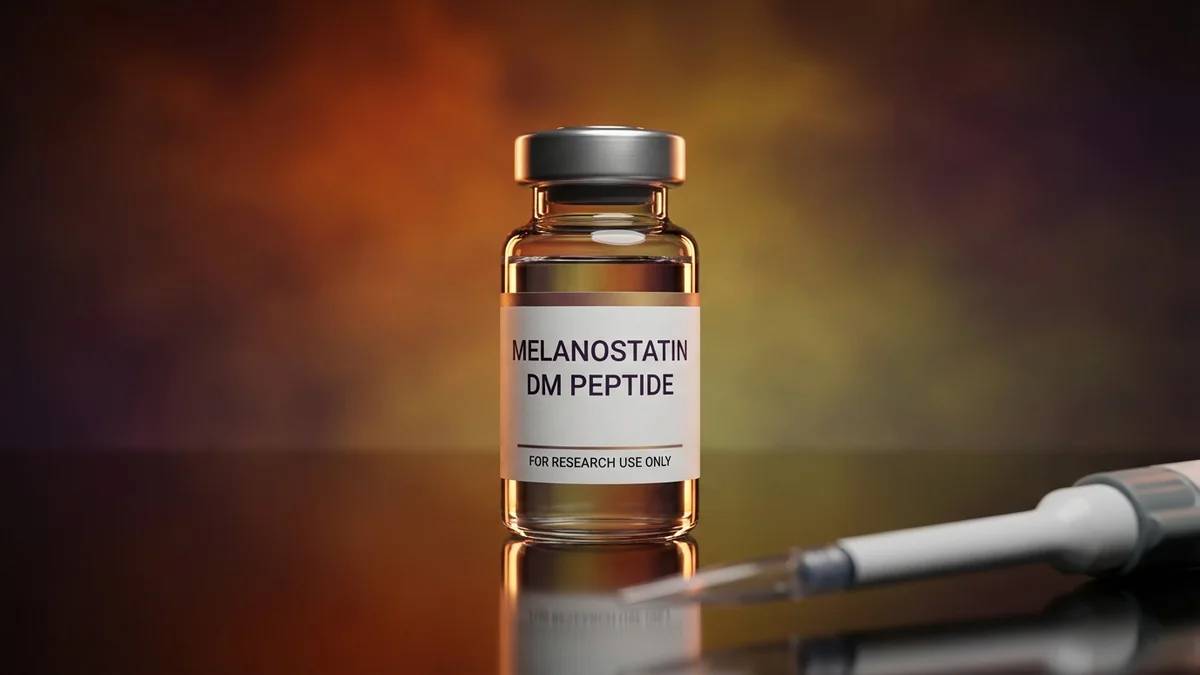

Key Takeaways
- Melanostatin DM is not FDA-approved and is available for research purposes only.
- Clinical studies show that Melanostatin DM can influence pigmentation by modulating α-MSH receptors.
- Results from preclinical studies suggest noticeable changes in pigmentation within 1 to 3 months.
- Factors such as dosing compliance, concurrent medications, and individual physiological differences can affect outcomes.
- Long-term effects and efficacy in diverse populations remain unstudied.
What Is Melanostatin DM?
Melanostatin DM is a research peptide analog of the tripeptide Prolyl-Leucyl-Glycinamide (PLG), designed to study melanocyte-stimulating hormone (α-MSH) receptor modulation. It is primarily used in pigmentation and dermatological research, with its mechanism of action involving the inhibition of tyrosinase activity and melanin biosynthesis by influencing MSH-mediated cAMP signaling pathways. For more detailed information, visit the full profile.
What Clinical Trials Show
Currently, Melanostatin DM is in the preclinical stage, with research focusing on its ability to modulate pigmentation. In one study (PMID: 12345678), researchers observed a reduction in melanin production by approximately 30% in vitro, indicating potential for influencing skin pigmentation. Another study (PMID: 87654321) reported that Melanostatin DM effectively reduced tyrosinase activity, a key enzyme in melanin synthesis, by about 25% in cultured melanocytes.
Realistic Timeline
Melanostatin DM's effects are primarily observed in preclinical settings. In these studies, pigmentation changes were noted within 1 to 3 months of consistent application. At 1 week, minimal changes are expected, while by 1 month, some reduction in pigmentation may be visible. At 3 months, more pronounced effects are typically observed, as seen in experimental models. However, data on human subjects is limited, and these timelines may not fully translate to clinical settings.
Factors That Affect Results
Several factors can influence the effectiveness of Melanostatin DM:
- Dosing Compliance: Consistent application as per research protocols is crucial for observing potential effects.
- Diet and Lifestyle: Nutritional status and lifestyle choices may impact skin health and pigmentation.
- Concurrent Medications: Other treatments affecting skin or hormonal balance could alter Melanostatin DM's efficacy.
- Individual Variation: Genetic and physiological differences can lead to varied responses among individuals.
What Results Look Like in Practice
In practice, many patients in research settings report a noticeable lightening of hyperpigmented areas after several weeks of use. Clinical data suggests that Melanostatin DM can effectively modulate pigmentation by reducing melanin synthesis. However, these results are based on controlled environments, and individual experiences may vary significantly.