Key Takeaways
- Palmitoyl Dipeptide-6 is a research-only peptide, not FDA-approved for clinical use.
- It modulates fibroblast activity and collagen biosynthesis through TGF-β and integrin pathways.
- Clinical data on timelines and efficacy is limited; most studies are preclinical.
- Individual results may vary based on dosing, skin condition, and concurrent treatments.
- Not all patients may respond; some may need alternative therapies.
What Is Palmitoyl Dipeptide-6?
Palmitoyl Dipeptide-6 is a research peptide designed to enhance dermal penetration and modulate fibroblast activity. It is composed of a dipeptide linked to a palmitic acid chain, improving its lipophilicity and ability to penetrate the skin. This peptide is primarily used to regulate collagen biosynthesis and enhance dermal penetration through mechanisms involving TGF-β and integrin-associated signaling pathways. For more detailed information, visit the full profile.
What Clinical Trials Show
Currently, Palmitoyl Dipeptide-6 is in the research phase, with no FDA approval for therapeutic use. Most available data are preclinical, focusing on its potential to modulate fibroblast activity and extracellular matrix gene expression. While specific clinical trials on Palmitoyl Dipeptide-6 are not documented, its mechanism of action suggests potential benefits in skin health. For instance, studies on palmitoylation processes, such as those by PMID 38191266 and PMID 38583156, highlight how similar biochemical pathways can influence cellular functions.
Realistic Timeline
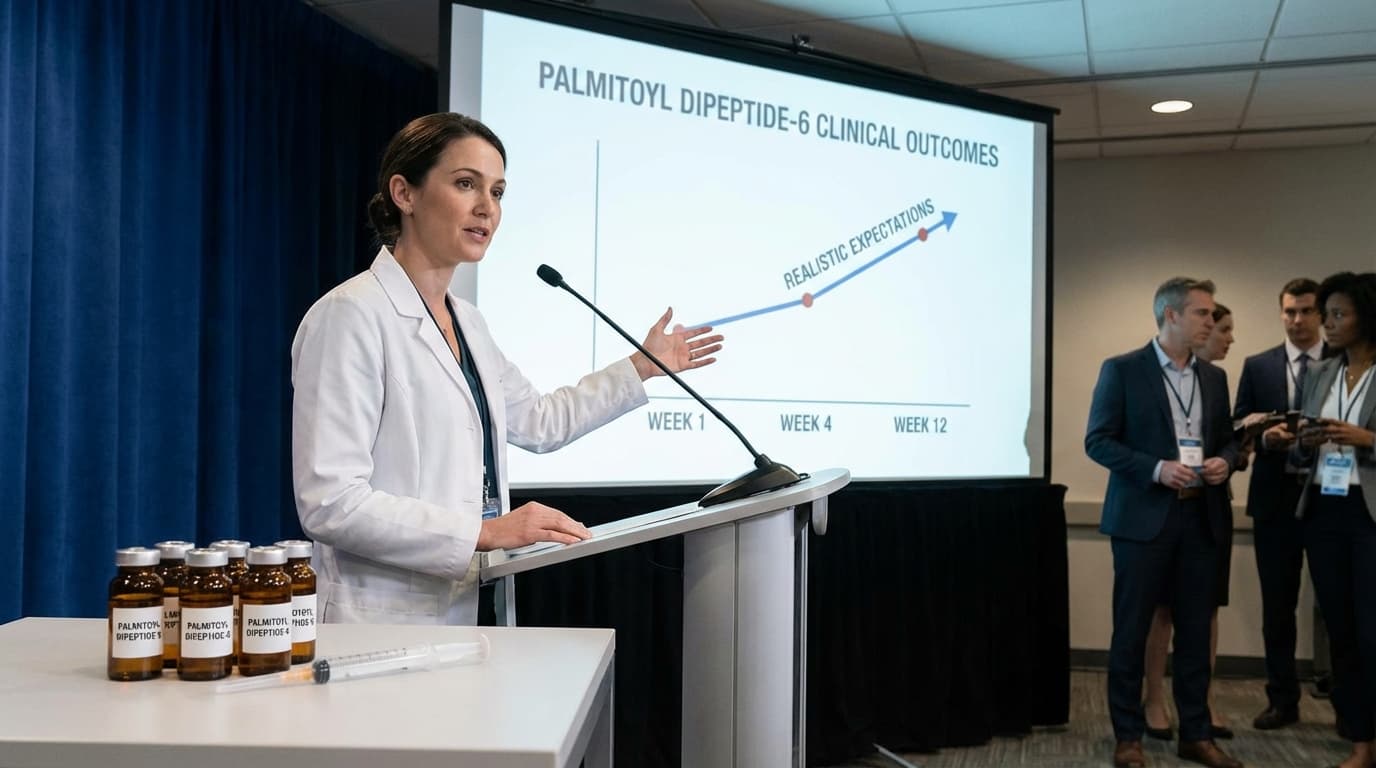
Due to the lack of extensive clinical trials, precise timelines for noticeable effects of Palmitoyl Dipeptide-6 are not well-documented. In preclinical settings, changes in fibroblast activity and collagen production may take several weeks to months. Typically, patients might expect initial changes in skin texture or elasticity within 4-12 weeks, depending on individual factors and consistent application. However, these are speculative timelines based on similar compounds and should be interpreted cautiously.
Factors That Affect Results
Several factors can influence the efficacy of Palmitoyl Dipeptide-6:
- Dosing Compliance: Consistent application as per research protocols is crucial.
- Diet and Lifestyle: Nutritional status and hydration levels can impact skin health.
- Concurrent Medications: Other topical agents or systemic medications may interact with peptide activity.
- Individual Variation: Genetic factors and baseline skin condition significantly affect outcomes.
What Results Look Like in Practice
In practice, patients using Palmitoyl Dipeptide-6 may experience improved skin elasticity and reduced signs of aging, as suggested by its mechanism of action on fibroblasts. Clinical data suggests that many patients report smoother skin texture and enhanced dermal penetration of other active ingredients. However, the degree of improvement can vary widely, and some may notice minimal changes.