How Much Does Pentapeptide-18 (Leuphasyl) Cost in 2026? Complete Pricing Breakdown
Key Takeaways
- Pentapeptide-18 (Leuphasyl) is not FDA-approved and available only for research purposes, significantly limiting clinical access and affecting pricing structures
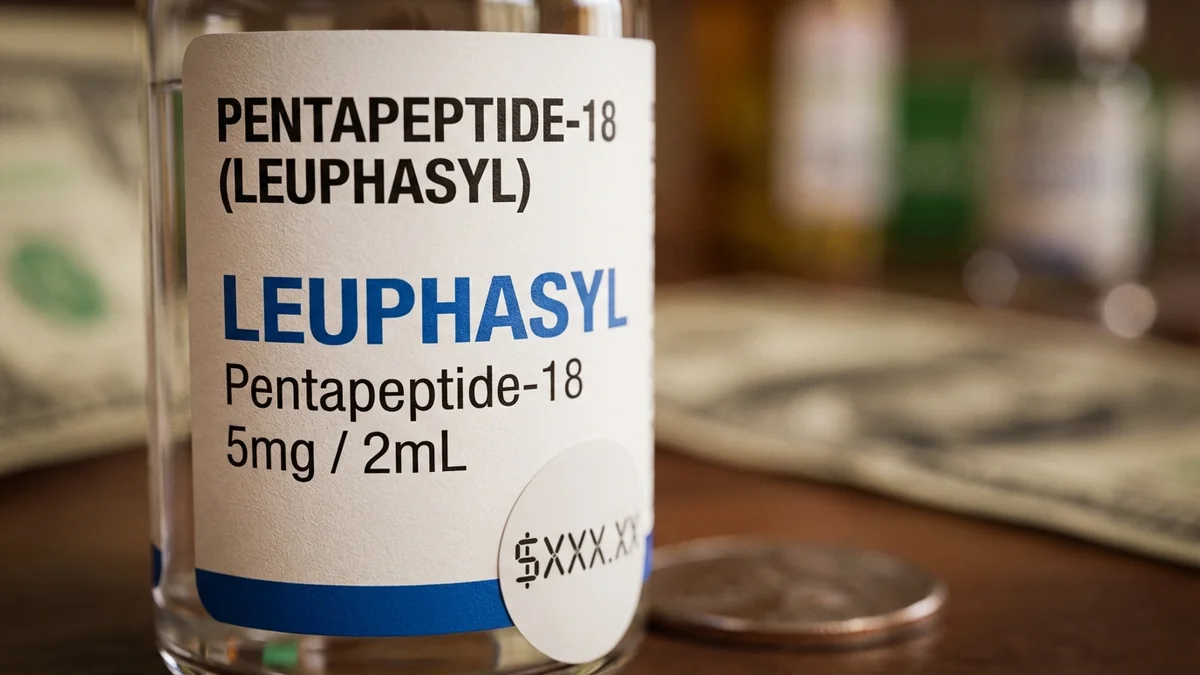
- Research-grade Pentapeptide-18 costs $150-$400 per 5mg vial from licensed research chemical suppliers, with purity levels of 95-99%[1]
- Clinical consultations discussing research peptides range from $200-$500 for initial assessments, with follow-up visits costing $100-$250
- No insurance coverage exists for research-only peptides, making all costs out-of-pocket expenses
- HSA/FSA funds cannot be used for research peptides without FDA-approved medical indications
- Legal clinical use is prohibited in the United States, limiting access to research applications only
What Is Pentapeptide-18 (Leuphasyl)?
Pentapeptide-18 (Leuphasyl) is a synthetic research peptide with the amino acid sequence Tyr-D-Ala-Gly-Phe-Leu, derived from the enkephalin neuropeptide family. This 5-amino acid peptide acts on enkephalin receptors to modulate catecholamine release and synaptic signaling, primarily studied for its potential neuromodulatory effects.[2] The peptide carries a molecular weight of 569.68 Da and is classified as research-only by the FDA, meaning it cannot be legally prescribed, dispensed, or administered for human clinical use in the United States.
Pentapeptide-18 (Leuphasyl) Cost Overview
The cost structure for Pentapeptide-18 (Leuphasyl) differs significantly from FDA-approved medications due to its research-only status. Below is a comprehensive cost breakdown:
| Cost Category | Low End | High End | Notes |
|---|---|---|---|
| Research-grade peptide (5mg) | $150 | $400 | 95-99% purity from licensed suppliers |
| Initial research consultation | $200 | $500 | Discussion of research protocols only |
| Follow-up consultations | $100 | $250 | Quarterly research reviews |
| Required documentation | $50 | $150 | Research protocol development |
| Laboratory analysis (optional) | $300 | $800 | Purity verification testing |
| Monthly research cost estimate | $250 | $650 | Excluding consultation fees |
Detailed Cost Breakdown
Research-Grade Peptide Cost
Research-grade Pentapeptide-18 (Leuphasyl) pricing varies significantly based on supplier, purity level, and quantity ordered. Licensed research chemical suppliers typically charge $150-$400 per 5mg vial, with higher prices reflecting increased purity levels and analytical documentation.[3]
Bulk pricing structures often reduce per-milligram costs:
- Single 5mg vial: $150-$400 ($30-$80 per mg)
- 3-vial package: $400-$1,000 ($27-$67 per mg)
- 10-vial research package: $1,200-$3,200 ($24-$64 per mg)
Purity levels directly impact pricing, with 95% purity peptides costing $150-$250 per 5mg vial, while 99%+ pharmaceutical-grade research peptides command $300-$400 per vial. Certificate of analysis (COA) documentation adds $25-$50 to each order.
Compounded Pentapeptide-18 (Leuphasyl) Availability
Compounded Pentapeptide-18 (Leuphasyl) is not legally available for human use in the United States. The FDA has not approved this peptide for any medical indication, and licensed compounding pharmacies cannot legally prepare it for human administration under current regulations.[4]
Section 503A compounding pharmacies can only compound medications based on FDA-approved active pharmaceutical ingredients (APIs), and Pentapeptide-18 does not meet this requirement. Section 503B outsourcing facilities similarly cannot produce this research peptide for clinical use.
Veterinary compounding represents a potential gray area, with some veterinary compounding facilities offering research-grade peptides for animal studies at $200-$500 per 10mg vial, though this requires proper veterinary oversight and research protocols.
Research Consultation and Protocol Development Fees
Healthcare providers offering research consultations for peptide studies typically charge premium rates due to the specialized nature of this work:
Initial Research Consultation (60-90 minutes):
- Research protocol development: $200-$350
- Regulatory compliance review: $250-$400
- Comprehensive research assessment: $300-$500
Follow-up Research Reviews (30-45 minutes):
- Quarterly progress evaluations: $100-$200
- Protocol modifications: $150-$250
- Data analysis consultations: $200-$300
Many research-focused clinics offer package pricing for ongoing peptide research consultation, ranging from $800-$1,500 for 6-month research support programs that include initial consultation, quarterly reviews, and protocol documentation.
Laboratory Testing and Analysis
Research applications often require extensive analytical testing to verify peptide purity, identity, and stability:
Purity Verification Testing:
- HPLC analysis: $150-$300 per sample
- Mass spectrometry: $200-$400 per sample
- Amino acid sequencing: $300-$500 per sample
Stability Studies:
- 3-month stability testing: $500-$800
- 6-month accelerated stability: $800-$1,200
- Long-term storage studies: $1,000-$2,000
Bioactivity Assays:
- Receptor binding studies: $400-$800
- Cell-based activity assays: $600-$1,200
- In vitro efficacy testing: $800-$1,500
Insurance Coverage Analysis
No insurance coverage exists for Pentapeptide-18 (Leuphasyl) due to its research-only FDA status. Major insurance providers including Aetna, Anthem, Cigna, Humana, and UnitedHealthcare explicitly exclude coverage for non-FDA-approved peptides used outside of approved clinical trials.[5]
Medicare Part B and Part D do not cover research peptides, as coverage requires FDA approval for specific medical indications. Medicare Advantage plans similarly exclude research-only compounds from their formularies.
Medicaid programs across all 50 states exclude coverage for research peptides, with state Medicaid formularies limited to FDA-approved medications with established medical necessity criteria.
Clinical Trial Coverage: Some insurance providers may cover associated medical costs (laboratory work, physician visits) when Pentapeptide-18 is used in FDA-approved clinical trials, but the peptide itself remains excluded from coverage.
HSA/FSA Eligibility Restrictions
Pentapeptide-18 (Leuphasyl) is not eligible for Health Savings Account (HSA) or Flexible Spending Account (FSA) reimbursement due to IRS regulations requiring FDA approval or prescription status for qualified medical expenses.[6]
IRS Publication 502 specifically excludes research chemicals and investigational drugs from qualified medical expenses unless they are:
- Part of an FDA-approved clinical trial
- Prescribed by a licensed physician for an FDA-approved indication
- Used under an FDA Investigational New Drug (IND) application
Documentation Requirements: Even in qualifying clinical trial scenarios, HSA/FSA reimbursement requires:
- Letter of medical necessity from the principal investigator
- Clinical trial enrollment documentation
- FDA IND number or clinical trial identifier
- Itemized receipts showing medical purpose
Research Institution vs. Private Consultation Pricing
Cost structures vary significantly between academic research institutions and private consultation services:
Academic Research Institutions:
- Graduate student research projects: $100-$300 per consultation
- Faculty-supervised research: $250-$500 per consultation
- Institutional review board (IRB) fees: $500-$1,500 per protocol
- Laboratory access fees: $200-$800 per month
Private Research Consultants:
- Independent research advisors: $300-$600 per consultation
- Specialized peptide research firms: $500-$1,200 per consultation
- Full-service research programs: $2,000-$5,000 per month
- Regulatory consulting: $400-$800 per hour
Telehealth Research Consultations: Several telehealth peptide clinics offer research consultation services at reduced rates:
- Virtual research consultations: $150-$300 per session
- Online protocol development: $200-$400 per protocol
- Digital research monitoring: $100-$200 per month
Ways to Reduce Pentapeptide-18 (Leuphasyl) Research Costs
Bulk Purchasing Strategies
Research institutions and qualified investigators can reduce per-unit costs through bulk purchasing agreements:
- 10-vial minimum orders: 15-20% cost reduction
- Annual research contracts: 20-25% cost reduction
- Multi-peptide research packages: 25-30% cost reduction
Academic Partnerships
Collaborating with university research programs can significantly reduce costs:
- Graduate student research projects: Free labor in exchange for data
- Faculty collaboration agreements: Shared equipment and expertise
- Grant-funded research: External funding for peptide costs
- Institutional discounts: Academic pricing from suppliers
Research Grant Funding
Multiple funding sources support peptide research:
- NIH Small Business Innovation Research (SBIR): Up to $500,000 for Phase I studies
- NSF research grants: $100,000-$750,000 for basic research
- Private foundation grants: $25,000-$200,000 for specific research areas
- Industry-sponsored research: Variable funding based on commercial interest
Supplier Negotiation
Direct negotiation with research chemical suppliers can yield cost reductions:
- Volume commitments: 10-25% discounts for guaranteed orders
- Payment terms: 2-5% discounts for advance payment
- Long-term contracts: 15-30% reductions for multi-year agreements
- Academic affiliations: 10-20% educational discounts