# Is Tesofensine Legal? FDA Status and Regulations Explained (2026)

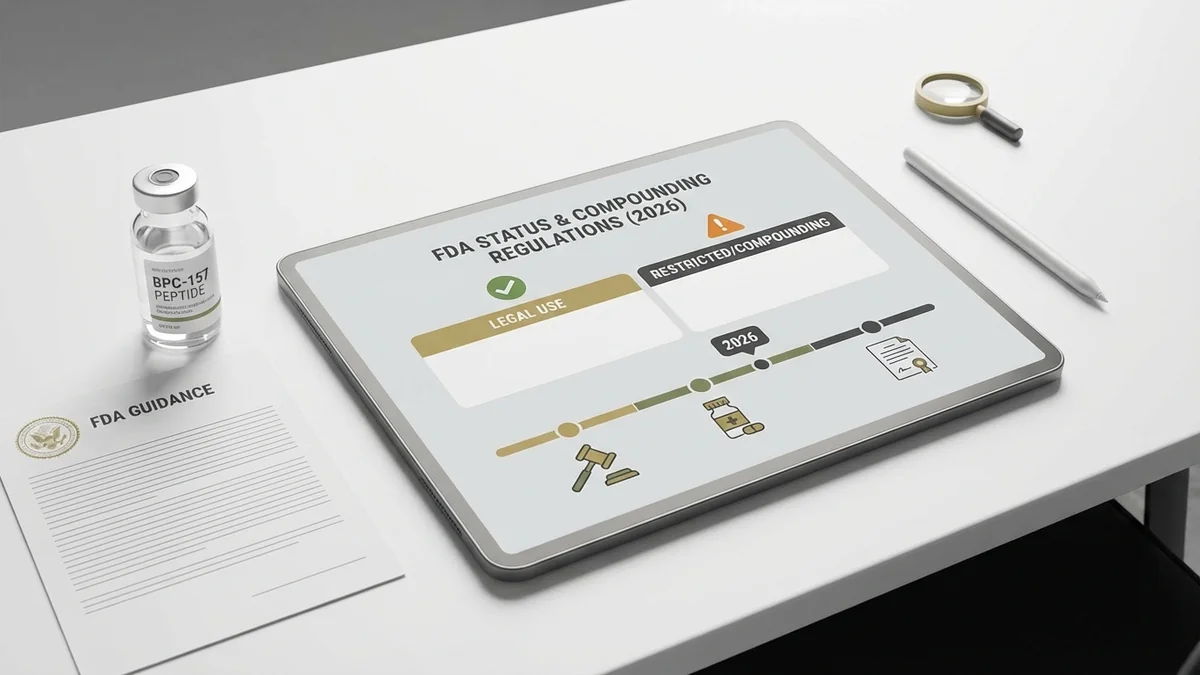
If you've been reading about Tesofensine legality in weight loss forums or heard about it from someone at a clinic, you're probably trying to answer one very specific question: can you actually get this compound legally, and what happens if you do? The short answer is that Tesofensine is not FDA-approved for any indication and carries a research-only classification in the United States as of March 2026. That's not a technicality — it has real consequences for patients, prescribers, and pharmacies.

This article breaks down exactly where Tesofensine stands under US and international law, what the compounding rules say, and what your practical options are if you're interested in metabolic support through legal channels.

---

## Key Takeaways

- **Tesofensine is not FDA-approved** for any indication in the United States. It is classified as a research-only compound.
- Because it has never received FDA approval, prescribing Tesofensine to a patient is not "off-label prescribing" — it's prescribing an unapproved drug, which is a legally distinct and more serious category.
- Tesofensine is **not listed on the FDA's 503A bulk drug substance list**, meaning licensed compounding pharmacies cannot legally compound it for patient use.
- It is **not a DEA-scheduled controlled substance**, but that doesn't make it legal to sell or distribute for human use — it simply means the DEA isn't the primary enforcement agency.
- Products sold online as "research use only" Tesofensine exist in a legal gray zone that carries real risk for buyers, and significant legal exposure for sellers.
- Several FDA-approved and legally compoundable alternatives exist for metabolic and weight management goals — your provider can help identify the right fit.

---

## Regulatory Status at a Glance

| Category | Status | Detail |
|---|---|---|
| **FDA Approval** | Not Approved | No approved NDA, BLA, or indication for any use in humans |
| **Compounding (503A/503B)** | Not Permitted | Not listed on the FDA bulk drug substance (BDS) list for compounding |
| **DEA Scheduling** | Not Scheduled | Not a federally controlled substance under the CSA |
| **Prescription Availability** | Not Legally Prescribable | Cannot be prescribed as an unapproved drug outside of a clinical trial |
| **Research Use** | Permitted (Institutional)** | Available to licensed research institutions under appropriate regulatory oversight |
| **OTC/Online Sales** | Illegal for Human Use | Selling for human consumption without FDA approval violates the FDCA |
| **International Status** | Not Approved (EU, UK, AU, CA) | No major regulatory body has granted marketing authorization |

---

## Current FDA Status

Tesofensine has **no FDA approval for any indication**. There is no New Drug Application (NDA) or Biologics License Application (BLA) on record granting it marketing authorization in the United States.<sup>[1]</sup>

To understand why that matters, you need to know what FDA approval actually gates. Under the Federal Food, Drug, and Cosmetic Act (FDCA), a drug cannot be legally marketed or sold for human use in the US without either FDA approval or an applicable exemption — such as an Investigational New Drug (IND) application for clinical trial use.<sup>[2]</sup> Tesofensine doesn't meet either condition in a consumer context.

Tesofensine is a synthetic small-molecule compound classified pharmacologically as a triple monoamine reuptake inhibitor (TMRI). It inhibits the presynaptic reuptake transporters for dopamine, norepinephrine, and serotonin — the same three monoamines targeted, to varying degrees, by drugs like sibutramine (now withdrawn from the US market) and bupropion.<sup>[3]</sup> Its mechanism involves both direct appetite suppression through central monoaminergic signaling and downstream effects on hypothalamic metabolic regulation.

Tesofensine did advance through early-phase clinical trials, including a Phase II trial (NeuroSearch A/S, Denmark) that examined its effects on body weight in obese adults over 24 weeks.<sup>[4]</sup> That trial showed statistically significant weight reduction, but Phase II data is not approval data. The compound never completed the Phase III trials required for an NDA submission, and no sponsor has received FDA approval to market it. It remains at a **preclinical/research evidence level** for US regulatory purposes.

What this means practically: any product labeled as Tesofensine being sold or administered for human use in the US — outside of a properly registered clinical trial under an active IND — is operating outside FDA authorization.

---

## Compounding Status

This is where a lot of confusion enters the conversation, because compounding pharmacies have become a significant access point for peptides and research compounds in recent years. So can a 503A or 503B pharmacy compound Tesofensine for a patient? **No.**

Here's why. Under Section 503A of the FDCA, licensed compounding pharmacies can prepare individualized prescriptions using bulk drug substances — but only if those substances appear on the FDA's approved bulk drug substance (BDS) list, or if the substance is a component of an FDA-approved drug.<sup>[2]</sup> Tesofensine is on neither list. The FDA has not nominated it, evaluated it, or placed it in any compounding category (Category 1, 2, or 3) through the formal nomination process.

The same restriction applies to 503B outsourcing facilities, which operate under a slightly different regulatory framework designed for larger-scale, non-patient-specific compounding. Without BDS list inclusion, 503B facilities also cannot legally compound Tesofensine.<sup>[2]</sup>

Some compounding pharmacies have operated in gray areas with unapproved compounds — and some have received FDA warning letters as a result. If a pharmacy is offering you compounded Tesofensine, that's a significant red flag. Ask them specifically which FDA-authorized list the compound appears on. If they can't answer that question clearly, walk away.

The FDA's approach to peptide compounding has tightened considerably since 2023, with increased scrutiny of bulk drug substances not on the approved list. Tesofensine has not been part of any formal FDA rulemaking or proposed rule that would change its compounding eligibility.

For legal compoundable options in the weight management and metabolic space, see our profiles on [semaglutide](/peptides/semaglutide), [tirzepatide](/peptides/tirzepatide), and [CJC-1295](/peptides/cjc-1295), all of which have clearer regulatory pathways.

---

## Enforcement Actions

The FDA has taken enforcement action against companies marketing unapproved compounds — including triple monoamine reuptake inhibitors and unapproved weight loss agents — for human use. Consult FDA.gov and the FDA's MedWatch program for current enforcement activity related to Tesofensine specifically.<sup>[1]</sup>

What the pattern of enforcement in this category generally looks like:

- **FDA warning letters** to companies selling unapproved drug products for human consumption, citing violations of the FDCA's new drug approval requirements
- **FTC actions** against companies making unsubstantiated health claims about unapproved compounds
- **US Customs and Border Protection (CBP) seizures** of unapproved drug products at the border, particularly those imported from overseas research chemical suppliers
- **State pharmacy board actions** against compounding pharmacies preparing and dispensing unapproved substances

The absence of a specific, confirmed enforcement case in this article doesn't mean enforcement hasn't occurred — it means we won't fabricate case numbers to fill that gap. If you're a provider or patient who has received a warning or notice related to Tesofensine, consult an attorney familiar with FDA regulatory law.

---

## Prescription vs. Over-the-Counter vs. Research Use

Let's be direct about what each of these categories actually means for Tesofensine.

**Can a doctor prescribe it?** Not legally in the standard sense. A licensed physician can prescribe FDA-approved drugs off-label. They cannot prescribe an unapproved drug to a patient outside of a clinical trial framework — that's not off-label prescribing, it's prescribing an unapproved drug, which is a different legal situation entirely (more on this in the next section). There is no legal prescription pathway for Tesofensine in the US as of March 2026.

**Is it available over-the-counter?** No. Unapproved drugs cannot be legally sold OTC for human use under the FDCA.

**What about "research use only" (RUO) products?** This is the category where a lot of online sellers operate, and it deserves a straight explanation. RUO labeling is a legitimate designation for reagents and compounds sold to licensed research institutions — universities, pharmaceutical companies, institutional labs — for use in controlled research settings, not for human administration. The RUO label does not create a legal loophole for personal use.<sup>[2]</sup>

When a website sells you "Tesofensine RUO" with a disclaimer that it's "not for human use," they're attempting to shift legal liability to you. The FDA's position, consistently applied, is that intent matters: if a product is being marketed in a context that suggests human use — through weight loss messaging, dosing guides, or before-and-after photos — the RUO label doesn't protect the seller.<sup>[1]</sup> And it definitely doesn't protect you.

**What about buying from overseas?** Importing unapproved drugs for personal use exists in a complicated space. The FDA's personal importation policy allows limited discretion for individuals importing FDA-approved drugs not available in the US, or for serious conditions with no US alternative — but Tesofensine doesn't fit that framework. It's not approved anywhere in a way that satisfies FDA criteria. US Customs and Border Protection can and does seize shipments of unapproved drug substances. The package may be confiscated without legal consequence to you in many cases, but that's not guaranteed, and sellers in other jurisdictions carry their own legal exposure.

---

## What "Off-Label" Actually Means

This distinction matters enormously, and it's one that even some practitioners get wrong.

Off-label prescribing is a legal, well-established medical practice. When a physician prescribes an FDA-approved drug for an indication, population, or dosage not listed in its FDA-approved labeling, that's off-label use. It's legal. It's common. Roughly 20% of all prescriptions in the US are written off-label.<sup>[5]</sup> Drugs like [semaglutide](/peptides/semaglutide) were widely prescribed off-label for weight loss before Wegovy received its FDA approval in June 2021.

Tesofensine has **never received FDA approval for any indication**. That means there is no approved labeling to go "off" of. A physician who prescribes Tesofensine to a patient isn't engaging in off-label prescribing — they're prescribing an unapproved new drug in violation of the FDCA. That's a legally distinct act with different consequences.

For providers, the liability implications are serious. Malpractice exposure is higher when a treatment has no FDA approval and limited human safety data. Professional licensing boards in most states have the authority to discipline physicians for prescribing unapproved drugs outside of appropriate research frameworks. And if a patient is harmed, the provider cannot point to an FDA-approved indication or established standard of care as a defense.

This isn't meant to scare providers away from research — it's meant to clarify that the legal and ethical framework for using Tesofensine is fundamentally different from using an approved drug off-label. Any clinic telling you otherwise is either confused or being deliberately misleading.

---

## State-Level Variations

Federal law sets the floor here, but states add their own layers. A few areas worth knowing:

**State pharmacy board oversight:** State pharmacy boards regulate compounding pharmacies operating within their jurisdiction. Even if a compound isn't explicitly addressed in federal guidance, state boards can and do take action against pharmacies preparing unapproved substances. Several state boards have issued guidance specifically addressing unapproved peptides and research compounds, though the specifics vary by state.

**Telemedicine prescribing:** Many peptide therapy clinics operate primarily through telemedicine. States vary in their telemedicine prescribing rules — some require an in-person visit before prescribing certain categories of drugs, others allow fully remote prescribing. But telemedicine rules don't override FDA approval requirements. A telehealth provider cannot legally prescribe Tesofensine just because your state has permissive telemedicine laws.

**States with active regulatory scrutiny:** States including Florida, Texas, and California have seen increased regulatory attention to peptide therapy clinics and compounding pharmacies in recent years. Providers in these states should be particularly attentive to their state medical board's current guidance.

If you're working with a clinic, ask them specifically whether they've reviewed their state medical board's guidance on prescribing unapproved compounds. That's a reasonable question, and a legitimate clinic should have a clear answer. Our [clinic finder](/clinics) can help you identify providers who operate within established regulatory frameworks.

---

## International Status

Tesofensine is not approved for human use by any major regulatory body as of March 2026.

**European Union (EMA):** No marketing authorization has been granted by the European Medicines Agency. The compound's Phase II research was conducted in part by NeuroSearch A/S, a Danish company, but no EMA approval followed.<sup>[4]</sup>

**United Kingdom (MHRA):** The Medicines and Healthcare products Regulatory Agency has not granted marketing authorization for Tesofensine. Post-Brexit, the UK operates its own approval pathway independently of the EMA.

**Australia (TGA):** The Therapeutic Goods Administration has not registered Tesofensine on the Australian Register of Therapeutic Goods (ARTG). It is not available through the TGA's Special Access Scheme in any standard form.

**Canada (Health Canada):** Health Canada has not approved Tesofensine. It does not appear on Health Canada's Drug Product Database as an authorized product.

The pattern across major regulatory jurisdictions is consistent: Tesofensine completed early-phase clinical research but never advanced to the regulatory submissions required for approval anywhere in the world.

---

## What This Means for Patients

If you've been offered Tesofensine by a clinic or found it online, here's how to think about your situation practically.

**How to verify a clinic is operating legally:** Ask directly whether the compounds they prescribe are FDA-approved or compounded under 503A/503B authorization. Ask to see the pharmacy's accreditation (PCAB accreditation is a good sign). A legitimate clinic will welcome these questions. One that gets defensive or evasive is a red flag.

**Red flags that suggest illegal activity:**
- A provider offering Tesofensine as a "prescription" without explaining its unapproved status
- Websites selling Tesofensine with weight loss claims and dosing guides under an RUO label
- Clinics that can't name the compounding pharmacy they use or won't provide pharmacy contact information
- Prices that seem too low — legitimate compounding has real costs

**Questions to ask your provider:**
- "Is this compound FDA-approved, and if not, what is its regulatory status?"
- "Is this compounded through a licensed 503A or 503B pharmacy?"
- "What is your clinic's legal basis for offering this compound?"

**How to report suspicious sellers:** The FDA's MedWatch program (1-800-FDA-1088 or FDA.gov/safety/medwatch) accepts reports of suspected illegal drug sales. The FTC also accepts complaints about deceptive health product marketing at FTC.gov/complaint.

---

## Legal Alternatives

If you're interested in the metabolic and appetite-regulation effects that drew you to Tesofensine, there are legal options worth discussing with a qualified provider.

**FDA-approved options for weight management:**
- [Semaglutide](/peptides/semaglutide) (Wegovy, approved June 2021 for chronic weight management; Ozempic for type 2 diabetes) — a GLP-1 receptor agonist that produced 14.9% mean body weight reduction in the STEP 1 trial<sup>[6]</sup>
- [Tirzepatide](/peptides/tirzepatide) (Zepbound, approved November 2023 for chronic weight management) — a dual GIP/GLP-1 receptor agonist that produced up to 22.5% body weight reduction in the SURMOUNT-1 trial<sup>[7]</sup>
- Phentermine/topiramate (Qsymia) and naltrexone/bupropion (Contrave) — FDA-approved combination agents with monoaminergic mechanisms somewhat analogous to Tesofensine's

**Legally compoundable peptides for metabolic support:**
- [CJC-1295](/peptides/cjc-1295) — a GHRH analog that may support body composition through growth hormone axis modulation
- [Ipamorelin](/peptides/ipamorelin) — a selective GHRP with a favorable side effect profile
- [AOD-9604](/peptides/aod-9604) — a modified GH fragment studied for its lipolytic properties

These alternatives have clearer legal pathways and, in the case of the GLP-1 agonists, substantially more robust human clinical data. Use our [peptide comparison tool](/compare) to see how these compounds stack up for your specific goals.

---

## What the Evidence Does Not Show

**Pending FDA decisions:** There are no publicly announced IND applications or NDA submissions for Tesofensine as of March 2026. The FDA's clinical trial registry (ClinicalTrials.gov) does not show any active Phase III trials for the compound in the US. The legal status could theoretically change if a sponsor initiated a new drug development program, but there's no indication that's imminent.

**Compounding pathway uncertainty:** The FDA's bulk drug substance nomination process is ongoing for many compounds. Tesofensine has not been formally nominated for evaluation. Even if nominated, the FDA's Category 2 designation (for compounds that raise safety concerns that preclude compounding) remains a possibility given Tesofensine's mechanism — triple monoamine reuptake inhibition carries cardiovascular and CNS risk signals that would require careful FDA evaluation.

**Long-term human safety data:** The Phase II trial data that exists covers 24-week treatment periods in a relatively small patient population.<sup>[4]</sup> There is no long-term (12+ month) human safety data. The cardiovascular profile of a triple monoamine reuptake inhibitor — particularly effects on heart rate and blood pressure — would require extensive study before any regulatory body could reasonably approve it. Sibutramine, a structurally related compound, was withdrawn from the US market in 2010 following cardiovascular safety concerns identified in the SCOUT trial.<sup>[3]</sup>

**International approval trajectory:** No regulatory agency has announced plans to review a marketing application for Tesofensine. Without a sponsor actively pursuing approval, the compound is unlikely to move out of research status in the near term.

---

## FAQ

### Is Tesofensine legal in the US?

Tesofensine is legal to possess for legitimate institutional research purposes, but it is not legal to sell, distribute, or administer for human use outside of an FDA-authorized clinical trial. It has no FDA approval and no legal prescription pathway for patients.

### Can my doctor prescribe Tesofensine?

No — not legally. Physicians can prescribe FDA-approved drugs off-label, but Tesofensine has never been FDA-approved for any indication. Prescribing it to a patient would constitute prescribing an unapproved new drug under the FDCA, which is a different legal category from off-label prescribing and carries significant liability for the provider.

### Is it legal to buy Tesofensine online?

Buying Tesofensine for personal human use from an online vendor — regardless of how the product is labeled — is not legal under the FDCA. Products sold under a "research use only" label are not authorized for personal use, and that label doesn't provide legal protection to buyers who intend to self-administer.

### What happens if I'm caught with Tesofensine?

Possession of Tesofensine isn't a criminal offense in the way that possession of a DEA-scheduled controlled substance is, because Tesofensine isn't scheduled. However, importing or purchasing it for human use could expose you to civil enforcement risk, and sellers face significantly more serious legal exposure. Customs may seize shipments without further legal action in many cases, but outcomes vary.

### Is Tesofensine a controlled substance?

No. Tesofensine is not listed under any schedule of the Controlled Substances Act (CSA) as of March 2026. But "not a controlled substance" doesn't mean "legal to use" — the FDCA's new drug approval requirements apply independently of DEA scheduling.

### Can compounding pharmacies make Tesofensine?

No. Tesofensine is not listed on the FDA's bulk drug substance list for 503A or 503B compounding. Licensed compounding pharmacies cannot legally prepare it for patient use. Any pharmacy offering compounded Tesofensine is operating outside FDA authorization.

### Is "research use only" Tesofensine legal?

RUO Tesofensine is legal when purchased by licensed research institutions for legitimate laboratory research — not for human administration. The RUO label is not a consumer loophole. If you're buying it to use on yourself, the label doesn't change the legal analysis.

### Has anyone been prosecuted for Tesofensine specifically?

No confirmed prosecutions specifically involving Tesofensine are documented in public records available to us as of March 2026. The FDA has taken enforcement action against companies marketing unapproved compounds in the weight loss category broadly. Consult FDA.gov for current enforcement activity.

### What are the safest legal alternatives to Tesofensine for weight management?

The most clinically supported legal options are semaglutide (Wegovy) and tirzepatide (Zepbound), both FDA-approved for chronic weight management. Both have Phase III trial data showing significant and sustained weight reduction. Talk to a provider through our [clinic finder](/clinics) to determine which option fits your medical history.

### Could Tesofensine ever become legal for patients?

Yes, if a pharmaceutical sponsor were to initiate a new drug development program, file an IND, complete Phase III trials, and submit an NDA — and if the FDA found the benefit-risk profile acceptable. Given the cardiovascular signals associated with triple monoamine reuptake inhibition and the withdrawal of sibutramine from the US market, any approval pathway would require extensive safety data. There's no active development program publicly known as of March 2026.

---

## References

1. U.S. Food and Drug Administration. "Unapproved Drugs: Marketed Without FDA Approval." FDA.gov. Accessed March 2026. Available at: https://www.fda.gov/drugs/guidance-compliance-regulatory-information/unapproved-drugs-marketed-without-fda-approval
2. U.S. Food and Drug Administration. "Compounding Laws and Policies." FDA.gov. Sections 503A and 503B of the Federal Food, Drug, and Cosmetic Act. Accessed March 2026. Available at: https://www.fda.gov/drugs/human-drug-compounding/compounding-laws-and-policies
3. James WP, et al. "Effect of Sibutramine on Cardiovascular Outcomes in Overweight and Obese Subjects." SCOUT Trial. *N Engl J Med*. 2010;363(10):905–917. PMID: 20818901
4. Astrup A, et al. "Effect of Tesofensine on Bodyweight Loss, Body Composition, and Quality of Life in Obese Patients: A Randomised, Double-Blind, Placebo-Controlled Trial." *Lancet*. 2008;372(9653):1906–1913. PMID: 19041435
5. Radley DC, Finkelstein SN, Stafford RS. "Off-Label Prescribing Among Office-Based Physicians." *Arch Intern Med*. 2006;166(9):1021–1026. PMID: 16682577
6. Wilding JPH, et al. "Once-Weekly Semaglutide in Adults with Overweight or Obesity." STEP 1 Trial (NCT03548935). *N Engl J Med*. 2021;384(11):989–1002. PMID: 33567185
7. Jastreboff AM, et al. "Tirzepatide Once Weekly for the Treatment of Obesity." SURMOUNT-1 Trial (NCT04184622). *N Engl J Med*. 2022;387(3):205–216. PMID: 35658024

---

*This content is for informational purposes only and does not constitute medical advice. Tesofensine's regulatory status was last verified in March 2026 and is subject to change. FDA classifications, compounding rules, and enforcement priorities can shift — always confirm current status with FDA.gov and consult a licensed healthcare provider and, where appropriate, a regulatory attorney before making any clinical or purchasing decisions.*