
Key Takeaways
- 5-Amino-1MQ is available for research purposes only and lacks FDA approval for therapeutic use
- Research protocols typically investigate oral doses ranging from 50-200mg daily in preclinical studies
- The compound functions as a selective nicotinamide N-methyltransferase (NNMT) inhibitor with a molecular weight of 137.14 g/mol
- No standardized human dosing protocols exist due to limited clinical trial data
- Administration requires careful consideration of NAD+ pathway interactions and potential metabolic effects
- Medical supervision is essential given the investigational status and unknown safety profile
What Is 5-Amino-1MQ?
5-Amino-1MQ (CAS: 42464-96-0) is a small-molecule research compound that functions as a selective nicotinamide N-methyltransferase (NNMT) inhibitor.[1] The compound has a molecular weight of 137.14 g/mol and enhances NAD+ salvage pathway flux by preventing the methylation of nicotinamide, thereby increasing cellular NAD+ availability. Its mechanism involves competitive inhibition of NNMT with reported IC50 values in the low micromolar range in preclinical studies.
Currently, 5-Amino-1MQ is not FDA-approved for any therapeutic indication and remains available exclusively for research purposes. The absence of regulatory approval means that dosing protocols are derived from preclinical research and investigational studies rather than established clinical practice guidelines. Understanding proper dosing considerations becomes critical given the compound's interaction with fundamental cellular energy metabolism pathways.
Standard Dosing Protocols
No FDA-approved dosing protocols exist for 5-Amino-1MQ due to its research-only status. Published preclinical studies have investigated oral administration at doses ranging from 50-200mg daily in animal models, with most research focusing on metabolic and aging-related endpoints.[2] These investigational protocols typically employ once-daily oral administration due to the compound's estimated half-life of 4-6 hours in rodent studies.
Research institutions conducting studies with 5-Amino-1MQ often follow dose-escalation protocols starting at 50mg daily and increasing to 100-200mg based on tolerability and biomarker responses. The compound's bioavailability following oral administration appears to be approximately 15-25% in preclinical models, though human pharmacokinetic data remains limited.
| Indication | Starting Dose | Maintenance Dose | Max Dose | Frequency | Source |
|---|---|---|---|---|---|
| Research Only | 50mg | 100-200mg | 200mg | Once daily | Preclinical studies |
| Metabolic Research | 75mg | 150mg | 200mg | Once daily | Animal models |
| NAD+ Studies | 50mg | 100mg | 150mg | Once daily | In vitro/vivo research |
Titration Schedules
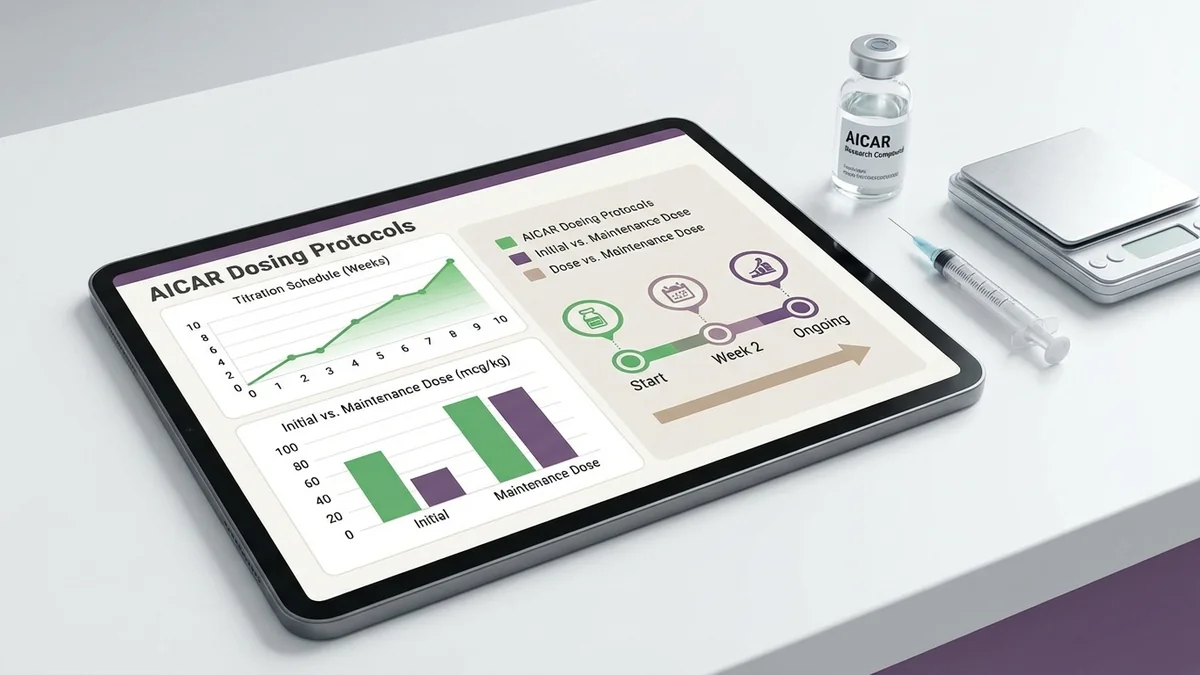
Research protocols investigating 5-Amino-1MQ typically employ gradual dose escalation over 2-4 weeks to assess tolerability and optimize NAD+ pathway modulation.[3] The titration approach allows for monitoring of potential metabolic changes and cellular energy status alterations that may occur with NNMT inhibition.
Most investigational studies begin with 50mg daily for the first week, followed by increases of 25-50mg weekly based on biomarker responses and tolerability. This conservative approach accounts for the compound's effects on cellular metabolism and the potential for individual variability in NNMT expression levels.
| Week | Dose | Notes |
|---|---|---|
| 1 | 50mg daily | Baseline NAD+ assessment |
| 2 | 75mg daily | Monitor metabolic markers |
| 3 | 100mg daily | Evaluate tolerability |
| 4+ | 100-200mg daily | Maintenance based on response |
The titration schedule allows researchers to identify the minimum effective dose for NAD+ elevation while minimizing potential adverse effects. Some protocols extend the titration period to 6 weeks for individuals with baseline metabolic dysfunction or those taking concurrent medications that may affect NAD+ metabolism.
Administration Method
5-Amino-1MQ is administered orally in research settings, typically as capsules or tablets containing 25-50mg of the compound.[4] The oral route provides consistent absorption patterns and allows for precise dose titration, though bioavailability remains relatively low at 15-25% due to first-pass hepatic metabolism.
Research protocols typically recommend administration on an empty stomach, 30-60 minutes before meals, to optimize absorption and minimize potential food interactions. The compound should be stored at room temperature (68-77°F or 20-25°C) in a dry environment away from light exposure to maintain stability. Reconstitution is not required as the compound is provided in solid form for oral administration.
Timing considerations include taking the dose at the same time daily to maintain consistent plasma levels, typically in the morning to align with natural circadian NAD+ fluctuations. Some research protocols investigate divided dosing (twice daily) for doses above 150mg to maintain more stable plasma concentrations throughout the 24-hour period.
Storage requirements specify keeping the compound in original containers with desiccant packets to prevent moisture absorption, which can degrade the active compound. Research facilities typically maintain storage logs documenting temperature and humidity conditions to ensure compound integrity throughout study periods.
Dosing by Use Case
NAD+ Enhancement Research
Research investigating NAD+ elevation typically employs doses of 100-150mg daily, with studies measuring intracellular NAD+ levels through tissue biopsies or blood biomarkers.[5] These protocols often run for 8-12 weeks to assess sustained NAD+ elevation and downstream metabolic effects. Biomarker monitoring includes NAD+/NADH ratios, nicotinamide metabolite levels, and markers of mitochondrial function.
Metabolic Research Studies
Investigations into metabolic effects often utilize higher doses of 150-200mg daily, focusing on parameters such as insulin sensitivity, glucose metabolism, and lipid profiles. These studies typically require 12-16 weeks of administration to observe meaningful metabolic changes, with frequent monitoring of liver function tests given NNMT's hepatic expression patterns.
Aging Research Protocols
Research examining anti-aging effects commonly employs doses of 100-150mg daily over extended periods of 6-12 months. These long-term studies monitor cellular senescence markers, DNA repair capacity, and mitochondrial biogenesis indicators. The extended duration allows assessment of sustained NNMT inhibition effects on age-related cellular processes.
Cellular Energy Research
Studies focusing on cellular energy metabolism typically use doses of 75-125mg daily, with particular attention to ATP production, mitochondrial function, and oxidative stress markers. These protocols often include exercise testing and metabolic chamber assessments to quantify energy expenditure changes.
Factors That Affect Dosing
Body weight significantly influences 5-Amino-1MQ dosing considerations, with research protocols often calculating doses based on mg/kg body weight rather than fixed amounts. Studies suggest optimal dosing ranges from 1.5-3.0mg/kg daily, meaning a 70kg individual might require 105-210mg daily for equivalent exposure to preclinical effective doses.
Age-related factors include decreased hepatic metabolism capacity in older adults, potentially requiring dose reductions of 25-50% in individuals over 65 years. Conversely, younger adults may require higher doses due to increased metabolic clearance rates and higher baseline NNMT activity levels.
Hepatic function significantly affects 5-Amino-1MQ metabolism, as NNMT is primarily expressed in liver tissue. Individuals with elevated liver enzymes (ALT >2x upper limit of normal) may require dose reductions or increased monitoring intervals. Renal function appears less critical, as the compound undergoes primarily hepatic metabolism rather than renal elimination.
Concurrent medications that affect NAD+ metabolism, including nicotinamide riboside or resveratrol, may require dose adjustments to prevent excessive NAD+ elevation. Some research protocols reduce 5-Amino-1MQ doses by 25-50% when administered with other NAD+ precursors or SIRT1 activators.
What Happens If You Miss a Dose
Research protocols typically advise taking a missed dose within 8-12 hours of the scheduled time, given the compound's estimated 4-6 hour half-life. If more than 12 hours have elapsed, most studies recommend skipping the missed dose and resuming the regular schedule rather than doubling up, which could cause excessive NNMT inhibition.
The timing window reflects the compound's pharmacokinetic profile and the need to maintain consistent NNMT inhibition without causing dramatic fluctuations in NAD+ levels. Some research protocols allow for dose timing flexibility of ±2 hours from the scheduled administration time to accommodate participant schedules while maintaining study integrity.
Missing multiple consecutive doses (>48 hours) may require restarting the titration schedule in some research protocols, particularly for doses above 150mg daily. This conservative approach accounts for potential tolerance development and ensures participant safety during re-initiation of NNMT inhibition.