
Key Takeaways
- Follistatin 315 is not FDA-approved and is available only for research purposes.
- Typical dosing protocols for Follistatin 315 are not standardized due to its research status.
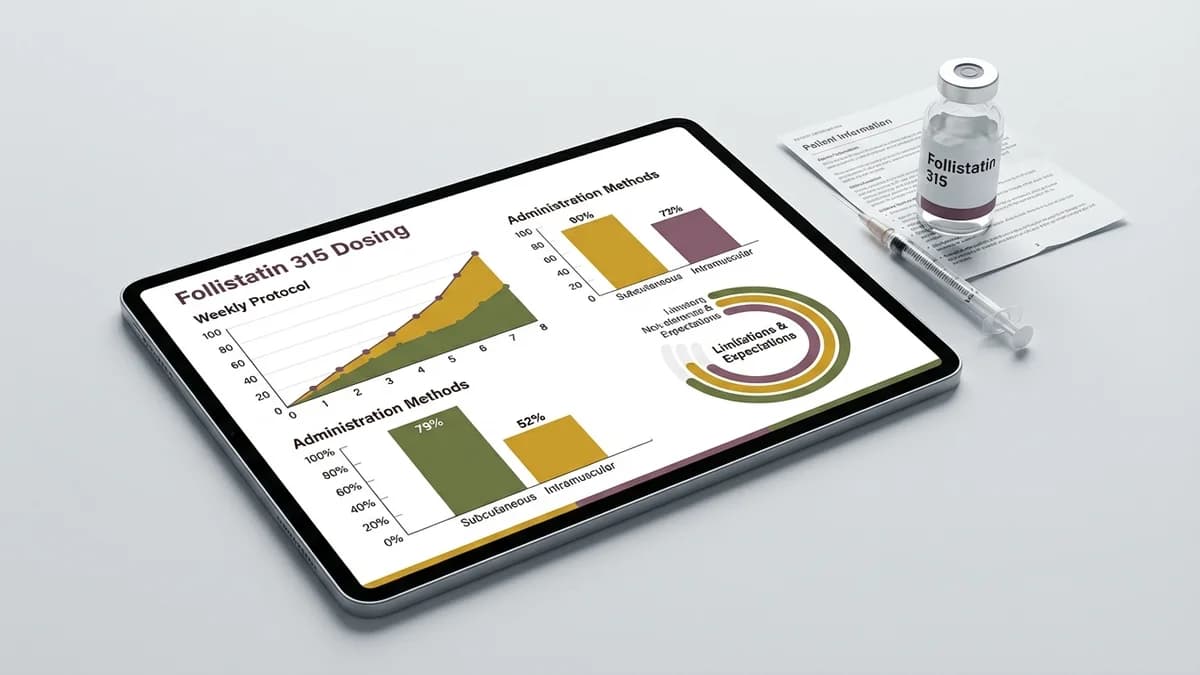
- Administration is typically via subcutaneous injection, with specific guidance on injection sites and preparation.
- Dosing adjustments may be necessary based on individual factors such as body weight and treatment goals.
- Medical supervision is crucial when using Follistatin 315 due to its research-only status and potential side effects.
What Is Follistatin 315?
Follistatin 315 is a research peptide that functions by binding and neutralizing activins and myostatin, thereby modulating signaling pathways in the TGF-β family. This action promotes muscle cell differentiation through Smad-dependent inhibition. Follistatin 315 is one of the isoforms of follistatin, characterized by its 315 amino acid sequence. Despite its potential, it is important to note that Follistatin 315 is not FDA-approved and is available solely for research purposes. For a detailed profile, visit the Follistatin 315 page.
Standard Dosing Protocols
Currently, there is no FDA-approved dosing protocol for Follistatin 315 as it remains a research peptide. Most dosing information comes from experimental settings and preclinical studies. Research protocols often explore various dosing regimens, but these are not standardized or universally accepted. A study on recombinant human follistatin (PMID 1906804) highlights the biochemical properties of Follistatin 315, but does not provide a clinical dosing framework.
Titration Schedules
In research settings, titration schedules for Follistatin 315 are developed to optimize both efficacy and tolerability. Titration involves gradually increasing the dose to monitor the body's response, which can help in minimizing adverse effects. While specific timelines can vary, titration is typically conducted over several weeks. This gradual approach is crucial in research contexts to ensure participant safety and gather reliable data on the peptide's effects.
Administration Method
Follistatin 315 is usually administered via subcutaneous injection. This route allows for direct absorption into the bloodstream. Practitioners often recommend rotating injection sites to prevent tissue irritation, with common sites including the abdomen and thigh. A typical needle gauge for these injections is 29-31. Proper storage and reconstitution are essential, often requiring refrigeration and careful handling to maintain peptide stability.
Factors That Affect Dosing
Several factors can influence the dosing of Follistatin 315 in a research context. These include the individual's body weight, specific research goals, concurrent medications, and overall health status, particularly liver and kidney function. Researchers must adjust dosing based on these variables to ensure both the safety and efficacy of the peptide.
What Happens If You Miss a Dose
In research settings, missing a dose of Follistatin 315 should be addressed by consulting the supervising researcher or clinician. Typically, the recommendation is not to double the next dose but to resume the regular dosing schedule as soon as possible. This approach helps maintain consistent peptide levels in the body, which is crucial for accurate research outcomes.
Dosing Compared to Similar Peptides
Follistatin 315 is often compared to other peptides like Follistatin 344 and Myostatin inhibitors. While Follistatin 344 is another isoform with similar functions, it differs in amino acid sequence and potential effects. Myostatin inhibitors, on the other hand, specifically target myostatin pathways but may have different safety profiles and efficacy levels.
What the Evidence Does Not Show
The current body of research on Follistatin 315 is limited, particularly concerning long-term safety and efficacy. While preclinical studies (PMID 19208403) suggest potential benefits in muscle growth modulation, these findings have not been confirmed in large-scale human trials. The long-term effects of Follistatin 315 dosing remain unknown, underscoring the need for further research.
FAQ
What is the typical dosage for Follistatin 315?
There is no standardized dosage for Follistatin 315 due to its research-only status. Dosing is determined by specific research protocols.
How is Follistatin 315 administered?
Follistatin 315 is typically administered via subcutaneous injection, with careful attention to injection site rotation and peptide reconstitution.
Can Follistatin 315 be used for muscle growth?
While preclinical data suggest potential muscle growth benefits, Follistatin 315 is not approved for therapeutic use and remains a research peptide.
What should I do if I miss a dose in a research study?
Consult the supervising researcher or clinician. Do not double the next dose; instead, resume the regular schedule.
Are there any known side effects of Follistatin 315?
As a research peptide, the full side effect profile of Follistatin 315 is not well-documented. Research settings monitor for any adverse reactions.
This content is for informational purposes only and does not constitute medical advice. Consult a licensed healthcare provider before starting any treatment.