Key Takeaways
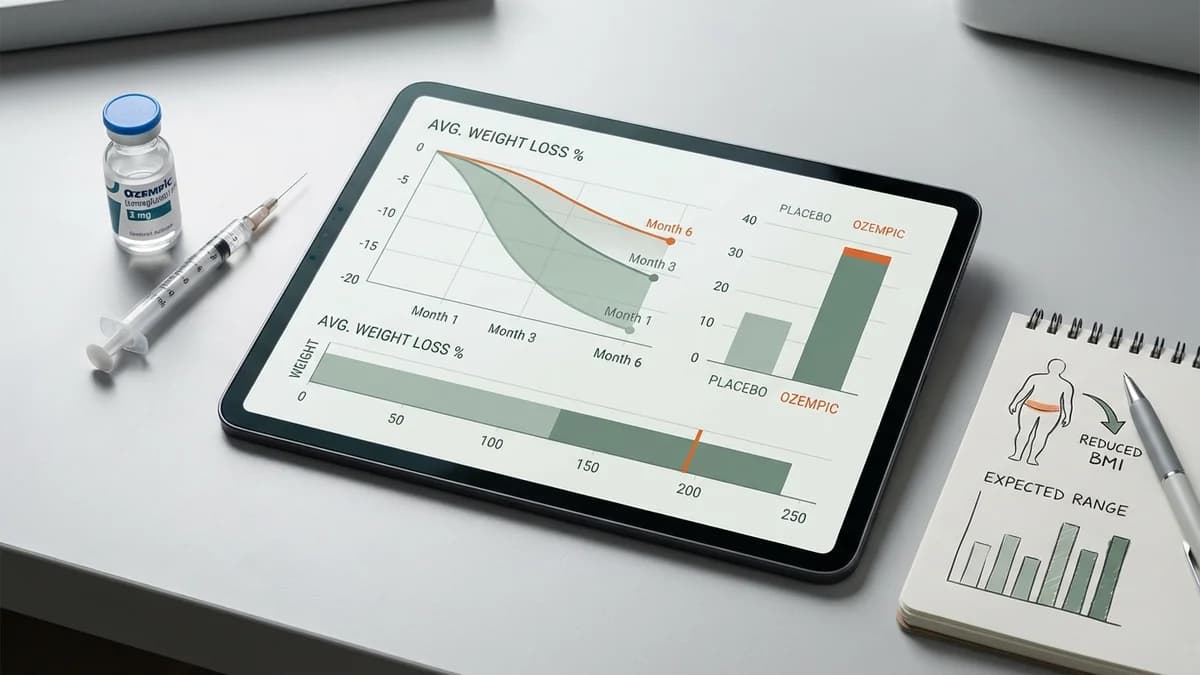
- Many patients report significant weight loss with Ozempic, with clinical trials showing average reductions of 10-15% of body weight over 68 weeks.
- Most patients begin to notice weight loss within the first month of treatment, with more pronounced results by three to six months.
- Factors such as dosing compliance, diet, and exercise significantly impact the effectiveness of Ozempic.
- While effective for many, Ozempic may not work for everyone, and individual results can vary widely.
- Long-term data on Ozempic's effectiveness and safety beyond two years is limited.
What Is Ozempic Weight Loss Success?
Ozempic, a glucagon-like peptide-1 receptor agonist (GLP-1 RA), is primarily used for managing type 2 diabetes and aiding weight loss. It works by enhancing insulin secretion, suppressing glucagon release, and slowing gastric emptying, which collectively help reduce food intake and body weight. For more detailed information, visit the full profile.
What Clinical Trials Show
Clinical trials have demonstrated the efficacy of Ozempic in promoting weight loss. In the STEP 1 trial (NCT03548935), participants using semaglutide, the active ingredient in Ozempic, experienced an average weight reduction of 14.9% over 68 weeks, compared to 2.4% in the placebo group (PMID 40281304). Additionally, 86% of participants achieved at least a 5% weight loss, and 69% achieved at least a 10% reduction in body weight (PMID 34626851).
Realistic Timeline
Patients typically begin to notice weight loss within the first four weeks of starting Ozempic. Initial changes are often modest, with more significant reductions occurring over time. By three months, many patients report noticeable weight loss, with the most substantial changes observed between three to six months. However, individual timelines can vary, and some patients may experience slower progress.
Factors That Affect Results
Several factors can influence the success of Ozempic for weight loss:
- Dosing Compliance: Adhering to the prescribed dosing schedule is crucial. Ozempic is typically administered once weekly, with doses ranging from 0.25 mg to 1 mg (PMID 39181497).
- Diet and Exercise: Incorporating a balanced diet and regular physical activity enhances weight loss outcomes.
- Underlying Conditions: Conditions like hypothyroidism or polycystic ovary syndrome (PCOS) may affect results.
- Concurrent Medications: Some medications can interfere with Ozempic's effectiveness. Consult with a healthcare provider to assess potential interactions.
- Individual Variation: Genetic factors and metabolic differences can lead to varying responses to treatment.
What Results Look Like in Practice
In practice, many patients using Ozempic report significant weight loss, improved glycemic control, and enhanced cardiovascular health. Clinical data suggests that Ozempic is effective for the majority of users, with many achieving sustained weight loss over the course of treatment (PMID 37430117). However, it's essential to manage expectations, as individual results can differ, and not all patients will experience the same degree of success.