
GHK Basic Dosage Guide: How Much Should You Take? (2026)
Key Takeaways
- Standard Dosage Range: Typically ranges from 1-5 mg per administration, depending on the form and therapeutic goal.
- Administration Method: Primarily subcutaneous or topical, with bioavailability varying by route.
- Typical Cycle Length: Treatment cycles often last 4-8 weeks, with monitoring for efficacy and side effects.
- Regulatory Status: GHK Basic is not FDA-approved and is available for research purposes only.
- Medical Supervision: Essential for determining appropriate dosing and monitoring response.
How GHK Basic Works in the Body
GHK Basic, a naturally occurring tripeptide, plays a critical role in cellular signaling and gene regulation. Its mechanism of action involves high affinity binding to metal ions, particularly copper, which facilitates processes like collagen synthesis, wound modulation, and antioxidant regulation. Understanding these mechanisms is crucial for determining appropriate dosage.
The peptide's receptor binding affinity allows it to influence extracellular matrix remodeling, making it a candidate for applications in wound healing and anti-aging therapies. However, its half-life and bioavailability can significantly affect its efficacy. Studies such as the one published in Pharmaceutical Development and Technology highlight the challenges of its biological stability and the need for optimized delivery methods.
"GHK-Cu complexes demonstrate promising potential in dermal applications, though stability under physiological conditions remains a challenge." — Pharmaceutical Development and Technology (PMID 25384620)
Another study, published in ACS Applied Materials & Interfaces (PMID 40019920), explored the use of GHK in nanoparticle form to enhance wound healing, further emphasizing the importance of understanding its pharmacokinetic properties for effective dosing.
Standard GHK Basic Dosage Ranges (By Form)
Subcutaneous Administration
- Dosage Range: 1-3 mg per injection
- Frequency: Typically administered once daily
- Bioavailability: Moderate, with direct tissue delivery
- Common Use: Preferred for systemic effects due to efficient absorption
Topical Application
- Dosage Range: 1-5 mg per application
- Frequency: Once or twice daily
- Bioavailability: Variable, dependent on skin permeability
- Common Use: Popular for localized effects such as skin rejuvenation
Comparison
Subcutaneous administration is often favored for its consistent bioavailability and systemic effects, while topical forms are utilized for targeted applications. The choice between forms should consider the desired therapeutic outcome and patient preference.
GHK Basic Dosage by Use Case
Wound Healing
- Typical Dosage Range: 2-3 mg subcutaneously or topically
- Administration Method: Subcutaneous for systemic support, topical for direct wound application
- Cycle Length: 4-6 weeks
- Clinical Reference: Enhanced wound healing observed with GHK-Cu complexes (PMID 17603859)
- Practical Guidance: Many clinics recommend a combination of subcutaneous and topical application for optimal results.
Anti-Aging
- Typical Dosage Range: 1-5 mg topically
- Administration Method: Topical application
- Cycle Length: 6-8 weeks
- Clinical Reference: Studies suggest improved skin elasticity and reduced wrinkles
- Practical Guidance: Topical formulations are commonly prescribed for facial rejuvenation protocols.
Inflammatory Conditions
- Typical Dosage Range: 1-3 mg subcutaneously
- Administration Method: Subcutaneous injection
- Cycle Length: 4-8 weeks
- Clinical Reference: Anti-inflammatory effects noted in preclinical studies (PMID 24468583)
- Practical Guidance: Subcutaneous administration is preferred for systemic inflammatory conditions.
How Long Should You Take GHK Basic?
The duration of GHK Basic therapy varies based on the therapeutic goal. Typical cycles range from 4 to 8 weeks, with some protocols extending to 12 weeks for chronic conditions. Patients may begin noticing changes as early as week 2, with more pronounced effects by week 6. Tapering is generally not required, but discontinuation should be monitored for any return of symptoms.
Administration Protocol: How to Take GHK Basic
Injection Technique
- Needle Gauge: 29-31 gauge
- Injection Sites: Rotate between abdomen, thigh, and upper arm
- Rotation Schedule: Alternate sites daily to minimize tissue irritation
Topical Application
- Timing: Apply to clean, dry skin; avoid exposure to sunlight immediately after application
- Storage Requirements: Store at room temperature, away from light and moisture
Reconstitution Instructions
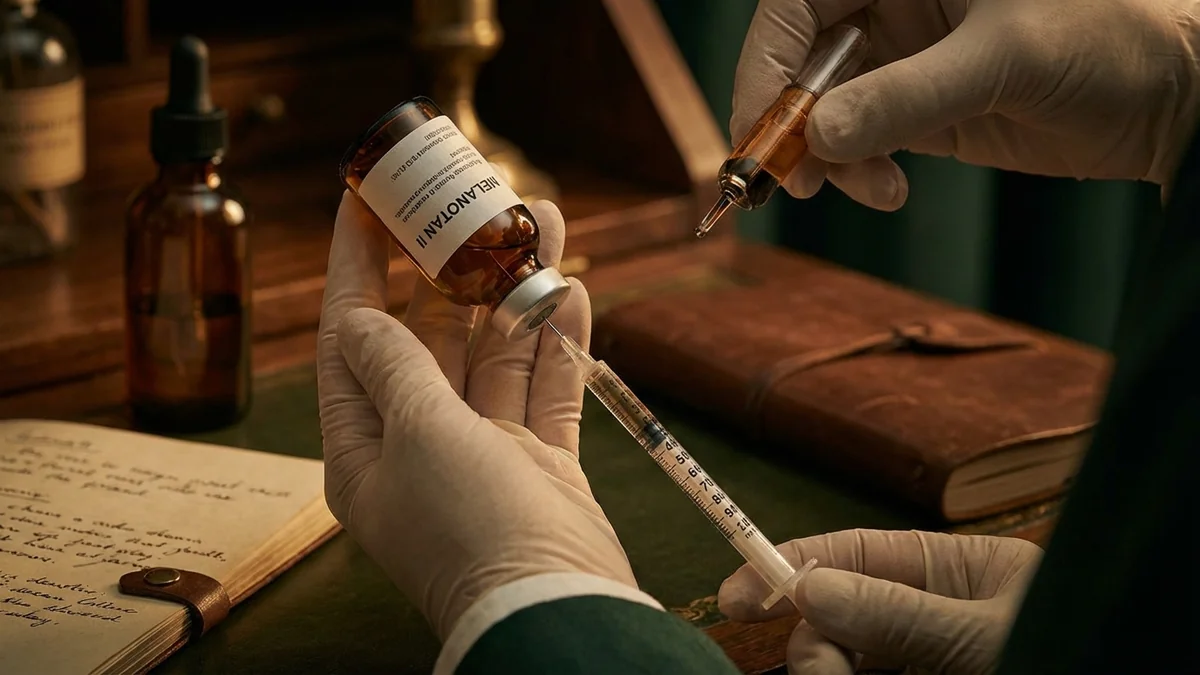
For injectable forms, follow reconstitution guidelines carefully. Use sterile water for injection and ensure complete dissolution before administration. Refer to our reconstitution guide for detailed instructions.
Stacking GHK Basic for Better Results
GHK Basic and BPC-157
- Combination: Enhances tissue repair and reduces inflammation
- Dosing Synergy: GHK Basic 2 mg + BPC-157 250 mcg per day
- Common Protocols: Used in recovery protocols post-surgery or injury
- Link: BPC-157
GHK Basic and Epitalon
- Combination: Promotes anti-aging and longevity
- Dosing Synergy: GHK Basic 1 mg + Epitalon 5 mg per day
- Common Protocols: Employed in anti-aging regimens
- Link: Epitalon
Factors That Affect Your GHK Basic Dosage
Dosing adjustments may be necessary based on factors such as body weight, age, treatment goals, and individual response. Providers consider these variables to tailor therapy, ensuring optimal efficacy and minimizing side effects. Renal and hepatic function can also influence peptide metabolism and should be evaluated before starting treatment.
Common Dosing Mistakes to Avoid
- Dosing Too High/Too Low: Follow prescribed ranges to avoid adverse effects or diminished efficacy.
- Inconsistent Timing: Maintain a regular schedule to ensure steady therapeutic levels.
- Wrong Injection Site: Rotate sites to prevent tissue damage and ensure proper absorption.
- Not Accounting for Regulatory Status: GHK Basic is for research use; ensure compliance with local regulations.
- Poor Storage/Handling: Protect from light and moisture to maintain peptide stability.
What the Evidence Does Not Show
While preclinical studies highlight GHK Basic's potential, long-term safety data in humans is lacking. Current research is primarily in vitro or animal-based, with limited clinical trials. Dose-response relationships and optimal therapeutic windows remain under investigation.
FAQ — Your Top GHK Basic Dosage Questions Answered
Best time of day to take it?
GHK Basic can be administered at any time, but consistency is key. Choose a time that fits your schedule and stick to it daily.
What if you miss a dose?
If you miss a dose, take it as soon as you remember. If it's close to your next dose, skip the missed one and resume your schedule.
Can men and women use the same dose?
Yes, dosing is generally similar for both genders, but individual factors may necessitate adjustments.
Can you stack it with other peptides?
Yes, GHK Basic is often stacked with peptides like BPC-157 and Epitalon for enhanced effects.
How long until you see results?
Results may be noticed within 2-4 weeks, with more significant changes by week 6.
Do you need to cycle off?
Cycling off is not typically required, but monitoring for efficacy and side effects is important.
Is a loading dose needed?
Loading doses are not standard practice. Follow regular dosing protocols.
How to adjust dose if side effects occur?
Consult your healthcare provider to evaluate and adjust your dose if necessary.
Conclusion — Finding the Right Dosage for You
Determining the right GHK Basic dosage involves understanding its pharmacokinetics, therapeutic goals, and individual patient factors. Medical supervision is crucial to tailor dosing and monitor outcomes. For more information on peptide therapy, explore our clinic finder and related content like BPC-157 and Epitalon.
Medical Disclaimer — "This content is for informational purposes only and does not constitute medical advice. Dosage information is compiled from published research and clinical protocols. Consult a licensed healthcare provider before starting any peptide therapy. Use our clinic finder to locate a qualified provider near you."
Related Tools
Find a Peptide Therapy Clinic Near You
Browse our directory of verified peptide therapy clinics across the United States. Compare providers, read reviews, and request a consultation.
Frequently Asked Questions
How do I calculate my dose safely?
What changes dosing recommendations?
Do I need a prescription or supervision?
MyPeptideMatch.com does not provide medical advice. Always consult a qualified healthcare provider before starting any peptide therapy. Regulatory status may change.