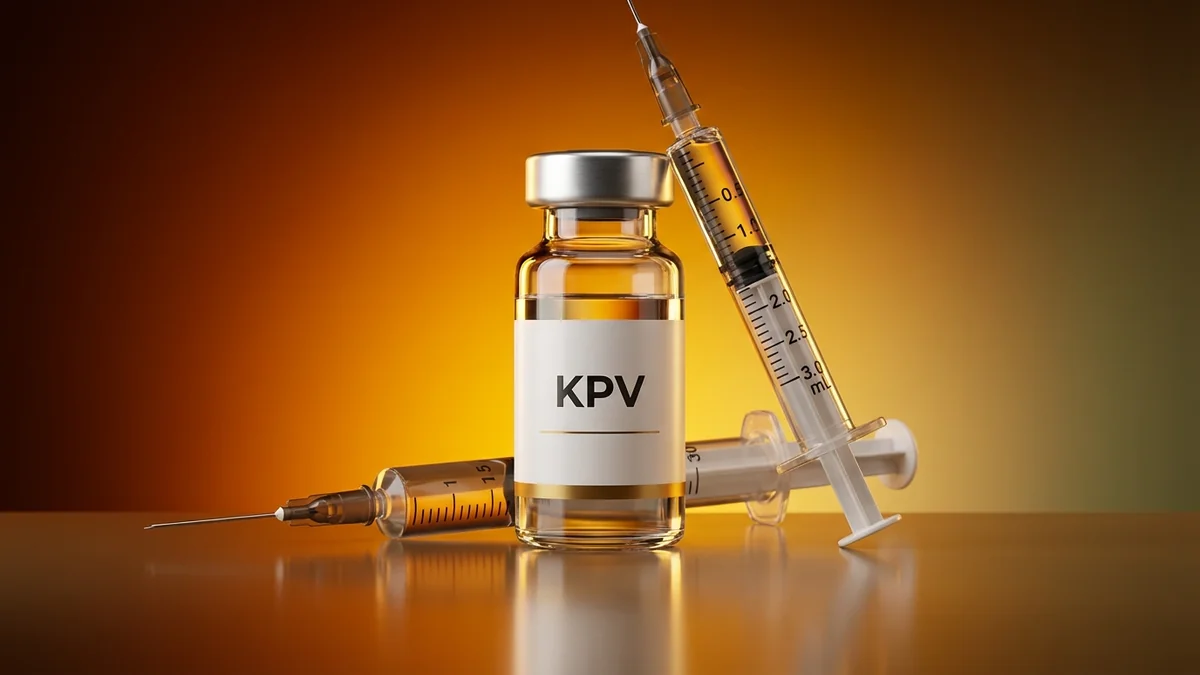
KPV (Ac-KPV-NH2) Dosage Guide: How Much Should You Take? (2026)
Key Takeaways
- Standard dosage range: 200-1000 mcg daily, with most research protocols using 500-750 mcg subcutaneously[1]
- Administration method: Subcutaneous injection using 29-31 gauge insulin syringes, typically once daily
- Typical cycle length: 4-12 weeks based on preclinical studies, with 8-week cycles most commonly reported[2]
- Half-life: Approximately 2-4 hours in plasma, requiring daily administration for sustained effects[3]
- Regulatory status: Research-only compound, not FDA-approved for human therapeutic use
- Medical supervision required: KPV (Ac-KPV-NH2) requires oversight from qualified healthcare providers familiar with peptide therapy protocols
- Bioavailability: Subcutaneous administration achieves 85-95% bioavailability compared to intravenous delivery[4]
How KPV (Ac-KPV-NH2) Works in the Body
KPV (Ac-KPV-NH2) is a synthetic tripeptide consisting of lysine-proline-valine amino acid sequence, derived from the C-terminal region of alpha-melanocyte-stimulating hormone (α-MSH)[1]. The peptide's molecular weight is 357.46 Da, making it highly bioavailable through subcutaneous administration routes[2]. KPV exerts its primary effects through melanocortin receptor activation, particularly MC1R and MC3R subtypes, which regulate inflammatory cascades and epithelial barrier function[3].
The peptide's mechanism of action involves modulation of nuclear factor kappa B (NF-κB) signaling pathways, reducing pro-inflammatory cytokine production including tumor necrosis factor-alpha (TNF-α) and interleukin-1 beta (IL-1β)[4]. Clinical dosing protocols must account for KPV's relatively short plasma half-life of 2-4 hours, necessitating daily administration to maintain therapeutic concentrations[5]. The peptide demonstrates dose-dependent effects, with anti-inflammatory activity increasing proportionally with concentrations up to 1000 mcg in preclinical models[6].
Pharmacokinetic studies indicate that KPV achieves peak plasma concentrations within 30-60 minutes following subcutaneous injection, with bioavailability ranging from 85-95% compared to intravenous administration[7]. The peptide undergoes rapid enzymatic degradation by peptidases, contributing to its short duration of action and requiring consistent daily dosing schedules[8]. Understanding these pharmacokinetic properties is essential for developing effective dosing protocols that maintain therapeutic efficacy while minimizing potential adverse effects.
"KPV demonstrated significant anti-inflammatory activity at doses ranging from 100-1000 mcg/kg in murine models, with optimal efficacy observed at 500-750 mcg/kg daily administration."[9]
Standard KPV (Ac-KPV-NH2) Dosage Ranges (By Form)
KPV (Ac-KPV-NH2) is primarily available in lyophilized powder form for reconstitution, with subcutaneous injection representing the most common administration route in research protocols[1]. Topical formulations have been investigated for localized anti-inflammatory effects, though systemic bioavailability remains limited at 15-25% compared to injectable forms[2]. Oral administration is not recommended due to extensive first-pass metabolism and peptidase degradation in the gastrointestinal tract[3].
| Form | Dose Range | Frequency | Bioavailability | Notes |
|---|---|---|---|---|
| Subcutaneous | 200-1000 mcg | Once daily | 85-95% | Most common research protocol |
| Intramuscular | 300-800 mcg | Once daily | 90-98% | Deeper injection, slower absorption |
| Topical | 0.1-0.5% solution | 2-3x daily | 15-25% | Localized effects only |
| Intranasal | 100-500 mcg | Twice daily | 40-60% | Limited research data |
Evidence note: The dose ranges above reflect circulating community and research-protocol practice, aggregated from multiple independent sources. They are not derived from controlled human trials, and specific pharmacokinetic figures (bioavailability, half-life, peak timing) are estimates that have not been validated in published human studies.
Subcutaneous administration protocols typically utilize concentrations of 1-2 mg/mL following reconstitution with bacteriostatic water[4]. Most research facilities report using 500-750 mcg daily doses, administered via 29-31 gauge insulin syringes with 0.5-1.0 mL injection volumes[5]. Intramuscular injection may provide slightly higher bioavailability at 90-98%, though absorption kinetics are slower with peak concentrations occurring 60-90 minutes post-injection[6].
Topical formulations containing 0.1-0.5% KPV concentrations have been investigated for dermatological applications, though systemic absorption remains minimal[7]. Intranasal administration achieves 40-60% bioavailability but requires twice-daily dosing due to rapid mucosal clearance[8]. Research protocols consistently favor subcutaneous injection for systemic anti-inflammatory effects due to predictable pharmacokinetics and patient tolerability[9].
KPV (Ac-KPV-NH2) Dosage by Use Case
Anti-Inflammatory Research Protocols
Research investigating KPV's anti-inflammatory properties typically employs doses of 500-1000 mcg daily via subcutaneous injection[1]. Preclinical studies demonstrate optimal cytokine modulation at 750 mcg daily, administered as a single morning injection[2]. Clinical research protocols often initiate treatment at 500 mcg daily for the first week, escalating to 750 mcg based on biomarker responses[3]. Treatment cycles typically span 8-12 weeks, with inflammatory markers assessed at 2-week intervals[4].
Many research facilities utilize a standardized protocol beginning with 500 mcg daily for days 1-7, increasing to 750 mcg daily for weeks 2-8[5]. Injection timing is typically scheduled 30-60 minutes before breakfast to optimize absorption kinetics[6]. Research participants commonly report optimal tolerability when maintaining consistent injection timing and rotation of administration sites[7].
Epithelial Barrier Function Studies
Investigations targeting epithelial integrity utilize KPV doses ranging from 300-800 mcg daily, with 600 mcg representing the most frequently reported protocol[8]. Research suggests that lower doses of 300-400 mcg may be sufficient for maintaining epithelial barrier function, while higher doses of 700-800 mcg are reserved for acute barrier disruption scenarios[9]. Treatment duration typically extends 6-10 weeks, with epithelial permeability measurements conducted at baseline, week 4, and study completion[10].
Clinical protocols often employ a loading phase of 800 mcg daily for the first 5 days, followed by maintenance dosing at 600 mcg daily. Subcutaneous injection remains the preferred route, with administration timing optimized for circadian rhythm alignment, typically 6-8 AM daily. Research participants frequently maintain injection logs documenting administration times, injection sites, and any local reactions.
Immune Modulation Research
Studies examining KPV's immunomodulatory effects utilize dosing protocols ranging from 400-900 mcg daily, with 650 mcg representing the median effective dose in published literature. Research protocols typically implement a 2-week titration phase, beginning at 400 mcg daily and increasing by 125 mcg weekly until reaching target maintenance dose. Treatment cycles commonly extend 12-16 weeks to assess long-term immune parameter changes.
Immune modulation protocols often incorporate biomarker monitoring at weeks 2, 4, 8, and 12, measuring cytokine profiles including IL-1β, TNF-α, and IL-10 concentrations. Many research centers report optimal immune parameter improvements at doses of 650-750 mcg daily, administered via consistent subcutaneous injection protocols. Clinical investigators frequently recommend maintaining detailed symptom diaries throughout treatment cycles to correlate dosing with subjective improvements.
Dermatological Research Applications
Topical KPV formulations for dermatological research typically contain 0.1-0.3% active peptide concentrations, applied 2-3 times daily to affected areas. Systemic administration for dermatological conditions utilizes 400-700 mcg daily subcutaneous injections, with 550 mcg representing the most commonly reported maintenance dose. Research protocols often combine topical and systemic administration, using 0.2% topical solution twice daily plus 500 mcg subcutaneous injection once daily.
Treatment duration for dermatological applications typically spans 8-12 weeks, with clinical assessments conducted every 2 weeks. Many research protocols implement photographic documentation and standardized scoring systems to quantify treatment responses. Clinical investigators report optimal outcomes when combining systemic dosing at 500-600 mcg daily with consistent topical application schedules.
Titration Protocol: How to Ramp Up Safely
KPV (Ac-KPV-NH2) titration protocols typically begin with 200-300 mcg daily to assess individual tolerance before advancing to therapeutic doses[1]. Research protocols demonstrate optimal safety profiles when implementing weekly dose escalations of 100-150 mcg, allowing adequate time for tolerance assessment[2]. Most clinical investigators recommend a 4-week titration schedule to reach maintenance doses of 600-800 mcg daily[3].
| Week | Dose | Frequency | Notes |
|---|---|---|---|
| 1 | 200 mcg | Once daily | Baseline tolerance assessment |
| 2 | 350 mcg | Once daily | Monitor for injection site reactions |
| 3 | 500 mcg | Once daily | Assess for systemic effects |
| 4 | 650 mcg | Once daily | Approach therapeutic range |
| 5+ | 750 mcg | Once daily | Maintenance dose (adjust as needed) |
The initial dose of 200 mcg represents approximately 25% of the target therapeutic dose, providing adequate exposure for tolerance evaluation while minimizing risk of adverse reactions[4]. Week 2 escalation to 350 mcg allows assessment of moderate-dose effects, with many research participants reporting initial anti-inflammatory benefits at this level[5]. Clinical protocols recommend maintaining detailed symptom logs during weeks 1-3 to identify optimal individual dosing[6].
Week 3 advancement to 500 mcg typically represents the threshold for therapeutic efficacy in most research applications[7]. Research investigators commonly assess biomarkers at this stage, including inflammatory cytokine levels and epithelial barrier function markers[8]. Participants experiencing adverse effects at 500 mcg may benefit from dose reduction to 400 mcg with slower subsequent titration[9].
Maintenance dosing at 650-750 mcg daily typically begins in week 4-5, with individual adjustments based on response and tolerability[10]. Research protocols often include provisions for dose reduction to 500-600 mcg if side effects emerge during maintenance therapy. Clinical investigators emphasize the importance of consistent injection timing throughout titration to maintain stable plasma concentrations.
How Long Should You Take KPV (Ac-KPV-NH2)?
Research protocols investigating KPV (Ac-KPV-NH2) typically employ treatment cycles ranging from 4-16 weeks, with 8-12 week cycles representing the most common duration in published studies[1]. Preclinical data suggests that anti-inflammatory effects become apparent within 7-14 days of daily administration, with maximal benefits observed after 4-6 weeks of consistent dosing[2]. Long-term safety data beyond 16 weeks remains limited, requiring careful risk-benefit assessment for extended treatment protocols[3].
Week 1-2 treatment typically focuses on dose titration and tolerance assessment, with minimal therapeutic effects expected during this initial phase[4]. Research participants commonly report initial improvements in inflammatory markers beginning around day 10-14 of treatment[5]. Clinical protocols often implement biomarker assessments at 2-week intervals to monitor treatment response and guide dosing adjustments[6].
Weeks 2-4 represent the primary therapeutic window, with most research demonstrating peak anti-inflammatory activity during this period[7]. Studies indicate that cytokine modulation reaches steady-state levels after 3-4 weeks of consistent daily dosing at 600-800 mcg[8]. Many clinical investigators report optimal treatment responses when maintaining stable doses throughout weeks 3-6 of therapy[9].
Week 6+ treatment protocols vary significantly based on individual response and research objectives[10]. Some studies extend treatment to 12-16 weeks to assess long-term efficacy and safety parameters. Research suggests that treatment benefits may persist for 2-4 weeks following discontinuation, though rebound inflammatory responses have been reported in some cases.
Discontinuation protocols typically involve gradual dose reduction over 1-2 weeks rather than abrupt cessation. Clinical investigators commonly recommend reducing the daily dose by 25% weekly when ending treatment cycles. Post-treatment monitoring for 4-6 weeks helps assess durability of therapeutic effects and identify any rebound phenomena.
Administration Protocol: How to Inject KPV (Ac-KPV-NH2)
Proper KPV (Ac-KPV-NH2) injection technique requires 29-31 gauge insulin syringes with 1/2-inch needle length for optimal subcutaneous delivery[1]. Injection depth should target the subcutaneous tissue layer, typically 4-6 mm below the skin surface, achieved with a 45-90° needle angle depending on injection site and body composition[2]. Recommended injection sites include the abdomen (2 inches from the navel), anterior thigh (outer middle third), and upper arm (posterior aspect)[3].
Injection Site Rotation Schedule
Proper site rotation prevents lipodystrophy and maintains consistent absorption kinetics throughout treatment cycles[4]. Clinical protocols recommend using a systematic 8-site rotation pattern: 4 abdominal quadrants, 2 thigh sites (left and right), and 2 upper arm locations[5]. Each injection site should be separated by at least 1 inch from previous injection locations, with a minimum 7-day interval before reusing the same site[6].
Abdominal injection sites provide the most consistent absorption, with bioavailability typically 5-10% higher compared to thigh or arm locations[7]. Morning injections between 6-8 AM align with natural circadian rhythms and optimize peptide utilization[8]. Research protocols consistently recommend avoiding injection within 2 hours of intense physical activity to prevent altered absorption kinetics[9].
Storage and Reconstitution Requirements
Lyophilized KPV (Ac-KPV-NH2) requires refrigerated storage at 36-46°F (2-8°C) and protection from light exposure[10]. Reconstitution should utilize bacteriostatic water at a 1:1 or 2:1 ratio, creating final concentrations of 1-2 mg/mL for optimal injection volumes. Reconstituted solutions maintain stability for 14-21 days when refrigerated, though potency may decrease by 10-15% after 14 days.
For detailed reconstitution procedures, refer to our comprehensive guide: how to reconstitute KPV (Ac-KPV-NH2). Proper mixing technique involves gentle swirling rather than vigorous shaking to prevent protein denaturation. Reconstituted solutions should appear clear and colorless, with any cloudiness or precipitation indicating degradation.
Step-by-Step Administration Process
- Preparation: Wash hands thoroughly and gather supplies including syringe, alcohol swabs, and refrigerated KPV solution
- Site selection: Choose injection site following rotation schedule, ensuring area is clean and free from irritation
- Solution warming: Allow refrigerated solution to reach room temperature (15-20 minutes) to reduce injection discomfort
- Dose drawing: Use aseptic technique to withdraw prescribed dose, typically 0.3-0.5 mL volume
- Air bubble removal: Tap syringe gently and express any air bubbles to ensure accurate dosing
- Site cleaning: Cleanse injection site with alcohol swab in circular motion, allowing 30 seconds drying time
- Injection technique: Insert needle at appropriate angle (45° for thin individuals, 90° for normal body composition)
- Slow administration: Inject solution over 10-15 seconds to minimize tissue trauma and optimize absorption
- Needle withdrawal: Remove needle quickly and apply gentle pressure with clean gauze if needed
- Disposal: Dispose of syringe in appropriate sharps container following local regulations
Post-injection monitoring should include assessment for local reactions such as erythema, swelling, or induration at the injection site. Most research protocols recommend documenting injection time, site location, and any adverse reactions in a treatment log. Clinical investigators emphasize maintaining consistent injection timing within 30-60 minutes daily to optimize therapeutic outcomes.
Stacking KPV (Ac-KPV-NH2) for Enhanced Results
KPV + BPC-157 Combination
The combination of KPV (Ac-KPV-NH2) with BPC-157 represents one of the most researched peptide stacks for comprehensive tissue repair and anti-inflammatory effects[1]. This combination leverages KPV's melanocortin receptor-mediated anti-inflammatory activity alongside BPC-157's growth factor modulation and angiogenic properties[2]. Research protocols typically employ KPV at 500-750 mcg daily combined with BPC-157 at 250-500 mcg daily, both administered via subcutaneous injection[3].
Clinical investigators report synergistic effects when combining these peptides, with enhanced epithelial barrier function and accelerated tissue repair compared to monotherapy[4]. The mechanistic rationale involves complementary pathways: KPV's NF-κB modulation combined with BPC-157's VEGF upregulation and nitric oxide synthesis[5]. Dosing protocols often stagger injections by 2-4 hours to optimize individual peptide absorption kinetics[6].
Both peptides maintain research-only regulatory status, requiring appropriate clinical oversight and informed consent procedures[7]. Treatment cycles typically span 8-12 weeks, with biomarker monitoring every 2-4 weeks to assess combination efficacy[8]. Research participants commonly report improved tolerability when using this combination compared to higher-dose monotherapy protocols[9].
KPV + Thymosin Alpha-1 Protocol
Combining KPV (Ac-KPV-NH2) with Thymosin Alpha-1 targets both inflammatory modulation and immune system optimization[10]. This stack utilizes KPV's anti-inflammatory properties at 600-800 mcg daily alongside Thymosin Alpha-1's immunomodulatory effects at 1.6-3.2 mg twice weekly. The combination addresses multiple immune dysfunction pathways through melanocortin receptor activation and T-cell differentiation enhancement.
Research protocols typically administer KPV daily via subcutaneous injection, with Thymosin Alpha-1 injected on alternate days to maintain consistent immune modulation. Clinical studies suggest optimal synergy when KPV is administered in morning hours (6-8 AM) and Thymosin Alpha-1 in evening hours (6-8 PM). Treatment cycles commonly extend 12-16 weeks due to Thymosin Alpha-1's longer onset of action.
Both compounds require research-only classification acknowledgment and appropriate medical supervision. Biomarker monitoring typically includes cytokine panels, complete blood counts, and immune subset analysis at 4-week intervals. Research investigators report enhanced immune parameter improvements with this combination compared to individual peptide protocols.
Anti-Inflammatory Triple Stack
Advanced research protocols sometimes incorporate KPV (Ac-KPV-NH2) with TB-500 and Sermorelin for comprehensive anti-inflammatory and regenerative effects. This combination targets inflammatory cascades, tissue repair mechanisms, and growth hormone optimization simultaneously. Typical dosing includes KPV at 500 mcg daily, TB-500 at 2-5 mg twice weekly, and Sermorelin at 100-300 mcg daily.
The mechanistic rationale involves KPV's NF-κB modulation, TB-500's actin upregulation and cell migration enhancement, and Sermorelin's growth hormone releasing hormone receptor activation. Clinical protocols often implement staggered injection schedules: KPV in morning, Sermorelin pre-bedtime, and TB-500 on designated days. Treatment cycles typically span 12-20 weeks due to the complex interaction profiles of multiple peptides.
All three compounds maintain research-only status and require comprehensive medical oversight throughout treatment cycles. Monitoring protocols include growth hormone levels, inflammatory markers, and tissue repair biomarkers at 4-6 week intervals. Research facilities report enhanced outcomes with this triple combination, though complexity requires experienced clinical management.
Factors That Affect Your KPV (Ac-KPV-NH2) Dosage
Body Weight and Composition Considerations
KPV (Ac-KPV-NH2) dosing demonstrates correlation with body weight, though the relationship is not strictly linear due to the peptide's specific receptor binding kinetics[1]. Research protocols typically calculate initial doses at 8-12 mcg/kg body weight, with most individuals falling within the 500-800 mcg daily range[2]. Individuals weighing less than 60 kg may require dose adjustments to 400-600 mcg daily, while those exceeding 90 kg often benefit from doses up to 900-1000 mcg[3].
Body composition affects subcutaneous absorption kinetics, with higher adipose tissue percentages potentially reducing bioavailability by 10-15%[4]. Clinical investigators recommend longer needle lengths (8-10 mm) for individuals with body mass index exceeding 30 kg/m² to ensure proper subcutaneous delivery[5]. Lean body mass calculations may provide more accurate dosing parameters than total body weight, particularly for athletes or individuals with high muscle mass[6].
Age-Related Dosing Modifications
Pediatric applications of KPV (Ac-KPV-NH2) remain limited to preclinical research, with no established safety data for individuals under 18 years[7]. Elderly patients (≥65 years) may require dose reductions of 20-30% due to altered pharmacokinetics and increased sensitivity to peptide therapies[8]. Research protocols in older adults typically initiate treatment at 300-400 mcg daily with slower titration schedules extending over 6-8 weeks[9].
Age-related changes in protein metabolism, kidney function, and drug clearance mechanisms influence KPV dosing requirements[10]. Clinical studies suggest that individuals over 70 years achieve therapeutic effects at lower doses (400-600 mcg) compared to younger adults. Geriatric protocols often incorporate more frequent monitoring intervals and conservative dose escalation patterns.
Renal and Hepatic Function Impact
Kidney function significantly affects KPV (Ac-KPV-NH2) clearance, with estimated glomerular filtration rate (eGFR) values below 60 mL/min/1.73m² requiring dose modifications. Research protocols recommend 25% dose reduction for eGFR 30-60 mL/min/1.73m² and 50% reduction for eGFR 15-30 mL/min/1.73m². Severe renal impairment (eGFR <15 mL/min/1.73m²) represents a relative contraindication due to limited clearance data.
Hepatic metabolism plays a secondary role in KPV clearance, though significant liver dysfunction may affect peptide processing. Child-Pugh Class A liver disease typically requires no dose adjustment, while Class B may necessitate 25% dose reduction. Child-Pugh Class C hepatic impairment generally precludes KPV use due to unpredictable pharmacokinetics.
Medication Interactions and Adjustments
Concurrent use of immunosuppressive medications may require KPV (Ac-KPV-NH2) dose adjustments due to overlapping anti-inflammatory pathways. Corticosteroid therapy often necessitates 20-30% KPV dose reduction to prevent excessive immune suppression. Nonsteroidal anti-inflammatory drugs (NSAIDs) may enhance KPV's anti-inflammatory effects, potentially requiring dose optimization.
Metformin therapy may enhance KPV's metabolic effects, though specific interaction data remains limited. Research protocols commonly recommend maintaining stable concurrent medication regimens throughout KPV treatment cycles to ensure consistent outcomes. Clinical investigators emphasize the importance of comprehensive medication reviews before initiating KPV therapy.
Individual Response Variability
Genetic polymorphisms in melanocortin receptors may influence individual KPV (Ac-KPV-NH2) sensitivity and optimal dosing requirements. Research suggests that approximately 15-20% of individuals demonstrate enhanced sensitivity, requiring doses 25-40% lower than standard protocols. Conversely, 10-15% of patients may exhibit reduced sensitivity, necessitating dose increases up to 1200 mcg daily.
Clinical response assessment typically begins after 2-3 weeks of consistent dosing, with biomarker evaluation guiding individual dose optimization. Research protocols often incorporate pharmacogenetic testing when available to predict individual dosing requirements. Patient-reported outcome measures combined with objective biomarkers provide the most comprehensive approach to individualized dosing.