Thymosin Alpha-1: Dosage, Benefits, FDA Status & Clinics
Thymosin Alpha-1
Research Only
modulation of T-cell-related pathwaystoll-like receptor activationcytokine-associated signaling
Last reviewed September 2026·MyPeptideMatch Team
What Is Thymosin Alpha-1?
Your thymus gland — the small organ behind your sternum that most people forget exists after childhood — is where T-cells mature and learn to distinguish friend from foe. Thymosin Alpha-1 (Tα-1) is a peptide hormone your thymus naturally produces to orchestrate that process. The version used in research is a synthetic 28-amino acid polypeptide derived from thymosin fraction 5, a thymic extract first isolated in the 1970s.[1]
What makes Tα-1 clinically interesting is the breadth of its immune effects. It doesn't just push one lever. It activates Toll-like receptors, shifts macrophage behavior, enhances T-cell differentiation, and modulates cytokine signaling — all of which matter in diseases where the immune system is either underperforming (chronic viral infections, cancer) or needs recalibration (aging-related immune decline).[2] It's been approved under the brand name Zadaxin in roughly 35 countries for hepatitis B and C treatment, though it has never cleared FDA approval in the US.[1]
The honest framing: this is a peptide with a long research history, genuine clinical data in specific infectious disease contexts, and a growing body of evidence in oncology and aging — but it remains investigational in the United States, and the evidence base is uneven depending on which indication you're looking at.
Key Takeaways
Thymosin Alpha-1 is a naturally occurring 28-amino acid thymic peptide with well-documented immunomodulatory effects, including T-cell stimulation and Toll-like receptor activation.
It has the most clinical evidence in chronic hepatitis B and C, where it has been studied in Phase II and Phase III trials and is approved in roughly 35 countries.
In the US, Tα-1 has no FDA approval and no legal commercial pathway — it is available for research purposes only.
Injection site reactions are the most commonly reported adverse effect; serious adverse events appear rare based on available trial data.
Emerging research suggests potential roles in oncology (reversing immunosuppression in the tumor microenvironment) and age-related immune decline, but this evidence is largely preclinical or early-phase.
1.6 mg subcutaneously twice weekly has been used in clinical trials; 6 mg dosing is not established in available human clinical data
Half-life
~2 hours (synthetic form)[6]
Primary Uses
Chronic hepatitis B and C, cancer immunotherapy adjunct, age-related immune decline
Brand Name (International)
Zadaxin (SciClone Pharmaceuticals)
Dosing — What the Trials Used
No FDA-approved dosing exists
The dose ranges below are drawn from published clinical trial protocols and pharmacological reviews. Thymosin Alpha-1 has no FDA-approved indication in the United States, meaning there is no official prescribing information. These figures represent what has been used in research settings — not a prescription recommendation.
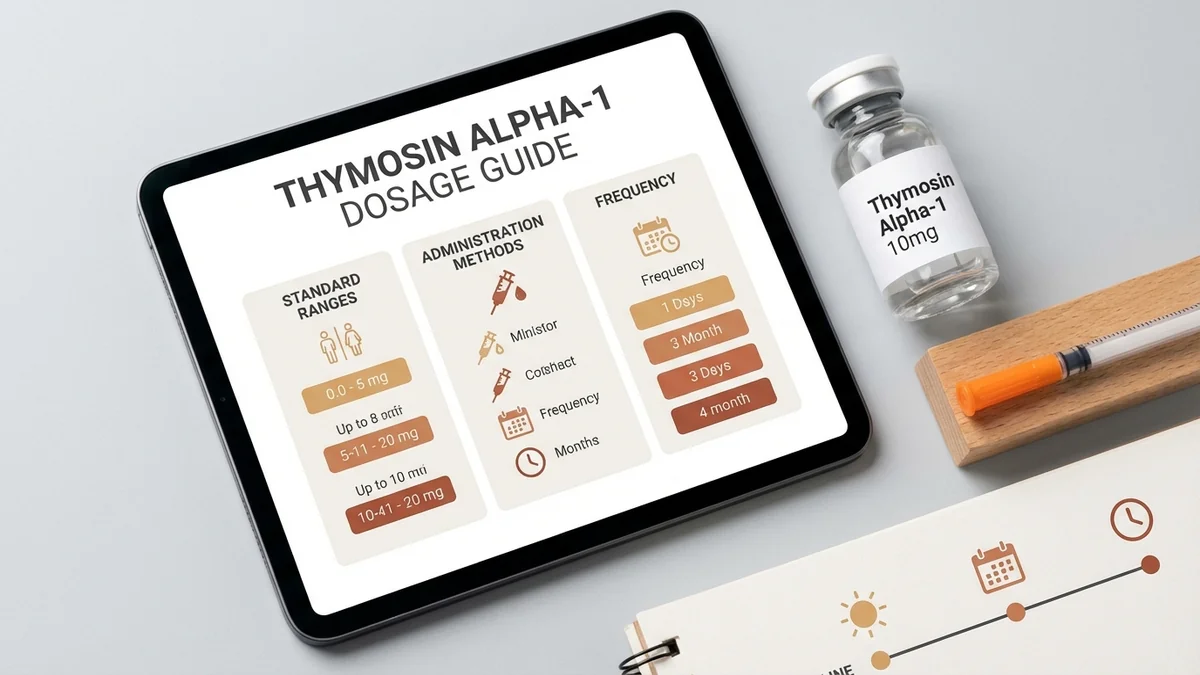
The most consistently used dose across published clinical research is 1.6 mg administered subcutaneously twice weekly.[1] This is the dose used in hepatitis B and C trials and the one most frequently referenced in the pharmacological literature. Some oncology and aging-focused protocols have explored daily administration or once-weekly dosing, but these are less standardized.[3]
The 1.6 mg twice-weekly protocol typically runs for 6 months in hepatitis B treatment contexts, sometimes extended to 12 months when used in combination with nucleos(t)ide analogs.[4] In cancer research settings, duration is highly variable and tied to the treatment protocol being studied.
One practical note: Tα-1 is administered subcutaneously — most commonly in the arm or abdomen — and the injection volume is small. Reconstitution from lyophilized powder with bacteriostatic water is standard in research settings, though the exact reconstitution volume varies by preparation.
1.6 mgsubcutaneous dose used twice weekly in Phase II/III hepatitis trials — the most consistently documented research dose
What Makes Thymosin Alpha-1 Different
Most immunomodulatory compounds work on a single pathway. Tα-1 doesn't. It operates across both innate and adaptive immune responses simultaneously — activating Toll-like receptors (the immune system's first-responder sensors) while also promoting T-cell differentiation and shifting how macrophages behave in disease environments.[2] That breadth is rare.
The tumor microenvironment finding
A 2022 study published in Cancer Research found that Tα-1 significantly reversed M2 polarization of tumor-associated macrophages during efferocytosis — the process by which dead cancer cells are cleared after chemotherapy. M2 macrophages suppress immune responses; Tα-1 appeared to shift them toward a more pro-inflammatory, anti-tumor state. This is a mechanistically meaningful finding because efferocytosis is normally an immunologically silent process that helps tumors evade immune detection.[5]
The aging angle is also worth understanding. As the thymus involutes with age — it starts shrinking in your 20s and is largely replaced by fat tissue by your 60s — T-cell output drops, chronic low-grade inflammation rises, and immune surveillance weakens. Tα-1 is one of the few compounds with direct evidence of stimulating thymic output and restoring some of that lost T-cell production in aged models.[3] Whether that translates to meaningful clinical benefit in healthy older adults is still being worked out, but the biological rationale is solid.
How Does Thymosin Alpha-1 Work?
Tα-1's mechanism starts at the cell surface. It binds to and activates Toll-like receptors (TLRs) — pattern-recognition proteins that sit on the surface of immune cells and function as the immune system's early warning system. When a TLR detects a threat (a virus, a bacterial fragment, a dying cell), it triggers an intracellular signaling cascade. Tα-1 engages this system through the MyD88/NF-κB pathway, which is the downstream signaling chain that translates TLR activation into actual immune responses: cytokine production, macrophage activation, dendritic cell maturation.[2]
On the adaptive immune side — the slower, more targeted arm of your immune system — Tα-1 promotes differentiation of thymocytes into mature T-cells and can convert immature or inactive T-cells into functional ones.[1] This is particularly relevant in chronic viral infections like hepatitis B, where the immune system often develops a kind of exhaustion: it recognizes the virus but can't mount an effective response. Tα-1 appears to help restore that responsiveness.
Macrophage polarization is another key mechanism, especially in oncology contexts. Macrophages exist on a spectrum: M1 macrophages are pro-inflammatory and help kill tumors; M2 macrophages are anti-inflammatory and often facilitate tumor immune evasion. Tα-1 has been shown to shift macrophages from M2 toward M1 in tumor environments, which is why the cancer research community has taken notice.[5]
The net effect across all these pathways is immune recalibration rather than immune suppression or stimulation in a single direction. What Tα-1 does depends heavily on the immune environment it's operating in — which is both its strength and part of why it's been difficult to characterize simply.
What the Clinical Evidence Actually Shows
Hepatitis B and C
This is where the most substantial human data lives. In chronic hepatitis B (CHB), Tα-1 has been studied both as monotherapy and in combination with nucleos(t)ide analogs. The evidence suggests it can enhance T-cell responses in CHB patients, and combination therapy with antiviral agents has shown meaningful virological responses in multiple trials.[4] It's approved for this indication in a number of Asian countries where CHB prevalence is high.
For hepatitis C, Tα-1 reached Phase III trials, studied in combination with interferon-based regimens.[1] This research predates the development of direct-acting antivirals, which have largely displaced older hepatitis C treatment approaches — so the hepatitis C data, while real, is less clinically relevant today than it was 15 years ago.
Cancer
The oncology evidence is earlier-stage but mechanistically compelling. The 2022 Cancer Research paper demonstrated Tα-1's ability to reverse immunosuppressive macrophage polarization in breast tumor microenvironments during efferocytosis — a finding that suggests Tα-1 could enhance the immunogenic effects of chemotherapy rather than allowing tumor cell death to be immunologically silent.[5] Tα-1 has also been explored as an adjunct in hepatocellular carcinoma and malignant melanoma, though this evidence base is thinner.[1]
Aging and Immune Restoration
A 2025 review in the International Journal of Molecular Sciences synthesized evidence on Tα-1 in the context of thymic involution and age-related immune decline.[3] The review found preclinical and early clinical evidence that Tα-1 can stimulate T-cell differentiation, enhance thymic output, improve vaccine responsiveness in older adults, and modulate dendritic cell and macrophage activity in ways that could counter age-related immune dysfunction. Vaccine enhancement is a particularly interesting application — the idea being that Tα-1 could improve immune responses to vaccines in immunosenescent populations.
What the Evidence Does Not Show
Long-term safety in healthy adults — Most clinical trial data comes from patients with chronic disease (hepatitis, cancer). We don't have robust long-term safety data for Tα-1 use in otherwise healthy people pursuing immune optimization.
FDA-approved efficacy for any indication — Despite reaching Phase III trials in hepatitis C and having substantial international use, Tα-1 has never been approved by the FDA. The reasons are partly regulatory and partly commercial, but the absence of approval means no US prescribing information exists.
Validated anti-aging outcomes in humans — The aging evidence is promising but largely preclinical or based on mechanistic reasoning. Controlled human trials specifically testing longevity or healthspan outcomes haven't been completed.
Head-to-head comparisons with modern hepatitis C treatments — Direct-acting antivirals have >95% cure rates for hepatitis C. No meaningful head-to-head data exists comparing Tα-1 to current standard of care for that indication.
Optimal dosing for non-hepatitis indications — The 1.6 mg twice-weekly protocol is well-documented for hepatitis. For oncology adjunct use, aging, or immune optimization, dosing protocols are not standardized and the evidence base is insufficient to make firm recommendations.
Side Effects — What to Actually Expect
Based on available clinical trial data, Tα-1 has a notably clean tolerability profile compared to other immunomodulatory agents — particularly when compared to interferon-based therapies it has been studied alongside.[1]
Most commonly reported:
Injection site reactions — mild redness, tenderness, or transient swelling at the injection site; the most frequently documented adverse effect across trials. Rotating injection sites reduces this.
Transient fatigue — reported by some patients, particularly early in treatment. Generally mild and self-resolving.
Rare or not well-characterized:
Immune activation effects — because Tα-1 modulates immune signaling broadly, theoretical concerns exist about exacerbating autoimmune conditions. This hasn't been well-studied in autoimmune populations, and caution is warranted.
Drug interactions — in combination with interferon or nucleos(t)ide analogs (as used in hepatitis trials), the combination was generally tolerated, but interactions with other immunomodulatory drugs are not well-characterized.[4]
One honest note: most of the safety data comes from disease populations (hepatitis, cancer) who are often on other treatments simultaneously. If you're considering Tα-1 outside a clinical trial context, the safety picture in healthy adults is genuinely less clear — not because there are known serious risks, but because that population simply hasn't been studied systematically.
If you develop significant fatigue, fever, or any signs of immune overactivation after starting Tα-1, that warrants prompt contact with your prescribing provider — not a wait-and-see approach.
Regulatory & Access Status
US access status as of September 2026
Thymosin Alpha-1 has no FDA approval and no legal commercial pathway in the United States. It is classified as research-only. It is not available through licensed US compounding pharmacies under standard prescribing pathways, and it cannot be legally marketed or sold as a therapeutic agent in the US. Access is limited to enrolled participants in clinical trials or, in practice, the gray-market research chemical space — which carries meaningful quality and legal risks. Thymosin Alpha-1 was removed from FDA Category 2 in September 2024 after its nomination was withdrawn, which lifted a restriction without authorizing compounding.
Internationally, the situation is different. Under the brand name Zadaxin (manufactured by SciClone Pharmaceuticals), Tα-1 is approved in approximately 35 countries across Asia, Eastern Europe, and parts of Latin America for the treatment of chronic hepatitis B, chronic hepatitis C, and as an immunostimulant in cancer treatment.[1] This international approval history is why Tα-1 has a more substantial clinical evidence base than many research-only peptides — the trials that generated that data were real, conducted in real patients, and published in peer-reviewed journals.
In the US, the FDA has not approved any Tα-1 product. Patients and providers looking to understand current regulatory status or any enforcement actions related to unapproved Tα-1 products should consult FDA.gov and the FDA's MedWatch program directly.
Sourcing & Safety
Because Tα-1 has no US commercial pathway, anyone accessing it outside a clinical trial is operating in a gray market. That's worth being direct about.
What to look for in a research-use source:
Third-party Certificate of Analysis (COA) — from an independent analytical lab, not the vendor's own testing. Should confirm identity, purity, and absence of common contaminants.
HPLC purity report — for a 28-amino acid peptide like Tα-1, purity of ≥98% is the standard you want to see. Lower purity can mean truncated sequences or synthesis byproducts that may not be inert.
Sequence verification — mass spectrometry confirmation that the product is actually the correct 28-amino acid sequence. This matters more for peptides with complex sequences.
Lyophilized format — properly manufactured research peptides are typically sold as lyophilized (freeze-dried) powder, not pre-dissolved solutions. Pre-dissolved peptides have stability concerns.
Red flags:
No COA or in-house testing only — the most common indicator of a low-quality vendor. Independent verification is non-negotiable.
Price significantly below market — peptide synthesis and proper quality testing have real costs. Unusually cheap products typically reflect shortcuts in synthesis or testing.
Vague sourcing claims — "pharmaceutical grade" is a marketing phrase, not a regulatory standard in the research chemical market. Ask for documentation, not descriptions.
Pre-mixed or pre-dosed vials — legitimate research peptide suppliers don't pre-mix peptides with bacteriostatic water for you. This is a preparation step done at point of use.
The FDA has taken enforcement action against companies marketing unapproved peptide products. Patients and providers should consult FDA.gov and the FDA's MedWatch program for current enforcement activity.
The most honest answer: it depends on what you mean by "work" and what condition you're addressing. For chronic hepatitis B, there's genuine Phase II and Phase III trial data showing meaningful immune enhancement and virological responses when used alone or with antiviral agents.[4] For general immune optimization in healthy adults, the evidence is thinner — the biological mechanisms are plausible and the aging research is promising, but controlled human trials in healthy populations are limited.
Is Thymosin Alpha-1 the same as TB-500 or Thymosin Beta-4?
No — these are distinct peptides despite sharing the "thymosin" name. Thymosin Alpha-1 is a 28-amino acid immunomodulatory peptide derived from thymosin fraction 5, primarily affecting T-cell function and innate immune signaling.[1]Thymosin Beta-4 (and its research analog TB-500) is a different 43-amino acid peptide with primary roles in tissue repair and actin regulation. They share a common historical origin in thymic extract research but have different sequences, different mechanisms, and different evidence bases.
Can a doctor prescribe Thymosin Alpha-1 in the US?
Not through standard commercial channels. There is no FDA-approved Tα-1 product in the United States, and it is not currently on the FDA's list of bulk drug substances approved for compounding. Some physicians working in integrative or anti-aging medicine may discuss it in the context of clinical trials or research use, but there is no standard legal prescribing pathway. If you're exploring this option, look for a provider who is transparent about the regulatory status rather than one who glosses over it.
How does Thymosin Alpha-1 compare to other immunomodulatory peptides?
Among thymic peptides, Tα-1 has the most substantial published human data — more than BPC-157 (which is primarily studied for tissue repair) and substantially more than newer research-stage immune peptides. Its closest comparators in the immunomodulatory space are other thymic hormones like thymalin and thymulin, but neither has Tα-1's depth of clinical trial data or international approval history.[2] The tradeoff is that Tα-1's most validated use cases (hepatitis B and C) are narrow, and the broader immune optimization applications that interest many patients today are extrapolations from that data.
What happened to Thymosin Alpha-1's FDA approval efforts?
Tα-1 reached Phase III trials in the US for hepatitis C, conducted in the late 1990s and early 2000s.[1] The combination regimens being tested at the time were interferon-based, and the subsequent development of direct-acting antivirals — which are dramatically more effective for hepatitis C — effectively made the clinical question moot. The commercial incentive to continue pursuing FDA approval for an indication where the standard of care had moved on was limited. For hepatitis B, the regulatory pathway remains theoretically open, but we are not aware of an active FDA approval process as of 2026.
Related Peptides & Comparisons
If immune modulation is what you're after, the peptide landscape offers a few other compounds worth understanding in context. BPC-157 is often discussed alongside Tα-1 in integrative medicine settings, but their mechanisms are quite different — BPC-157 is primarily a tissue repair and gut-healing peptide, while Tα-1 works upstream in immune cell differentiation and innate immune signaling. They're not interchangeable.
For patients specifically interested in the thymic and T-cell angle, Thymosin Beta-4 is the other major thymic peptide in research use, though as noted above it operates through an entirely different mechanism (actin polymerization and tissue regeneration rather than T-cell modulation). The naming overlap causes genuine confusion — if a provider or vendor conflates them, that's a sign to ask more questions.
Thymic & Immunomodulatory Peptides Compared
Parameter
Thymosin Alpha-1
Thymosin Beta-4
BPC-157
Amino acids
28
43
15
Primary mechanism
T-cell differentiation; TLR activation
Actin regulation; tissue repair
Growth factor modulation; gut repair
Best-evidenced use
Hepatitis B/C; cancer adjunct
Wound healing; anti-inflammatory
Gut healing; tendon repair
FDA status
Research only
Research only
Research only
Human trial data
Phase II/III (hepatitis)
Limited
Limited
References
PubMed PMID: 11314066 — supporting ~2 hours
Goldstein AL, et al. "Thymosin alpha-1." American Journal of Health-System Pharmacy. 2001;58(10):879-888. PMID: 11381492
Low TL, et al. "Thymosin α-1 in cancer therapy: Immunoregulation and potential applications." International Immunopharmacology. 2023;116:109741. PMID: 36812669
Caruso C, et al. "Aging and Thymosin Alpha-1." International Journal of Molecular Sciences. 2025. PMID: 41373628
Zhang L, et al. "Thymosin alpha-1 treatment in chronic hepatitis B." Expert Opinion on Biological Therapy. 2015;15(4):501-508. PMID: 25640173
Ye Z, et al. "Thymosin α-1 Reverses M2 Polarization of Tumor-Associated Macrophages during Efferocytosis." Cancer Research. 2022;82(10):1991-2002. PMID: 35364609
This content is for informational purposes only and does not constitute medical advice. Consult a licensed healthcare provider before starting any treatment.
Where to Buy Thymosin Alpha-1 Online (Legally, 2026)
Thymosin Alpha-1 is in a narrow legal window in 2026 — it was removed from the FDA's Category 2 restricted compounding list but has not yet been formally added to the 503A Bulks List. A small number of telehealth clinics partner with 503A pharmacies to prescribe it under individual physician orders. We list 2 options below. Programs start around $199/month.
These are licensed US telehealth clinics that prescribe Thymosin Alpha-1 for patient use. Some links are affiliate links; editorial selection is independent. See our affiliate disclosure.
Where to Buy Thymosin Alpha-1 for Research
Research Use Only — not intended for human consumption
MyPeptideMatch.com does not provide medical advice. Always consult a qualified healthcare provider before starting any peptide therapy. Regulatory status may change.