How Much Does Melanostatin DM Cost in 2026? Complete Pricing Breakdown
Key Takeaways
- Melanostatin DM is available exclusively for research purposes at $150-$800 per vial from licensed research supply companies
- No clinical treatment programs exist due to FDA research-only status, eliminating traditional therapy costs
- Research institutions typically budget $2,000-$5,000 annually for Melanostatin DM studies including analytical testing
- Insurance does not cover research peptides, making all costs out-of-pocket for legitimate research applications
- Purity grades (95% vs 98%+) significantly impact pricing, with pharmaceutical-grade variants costing 40-60% more
- Academic institutions receive 15-25% discounts through educational pricing programs at most suppliers
What Is Melanostatin DM?
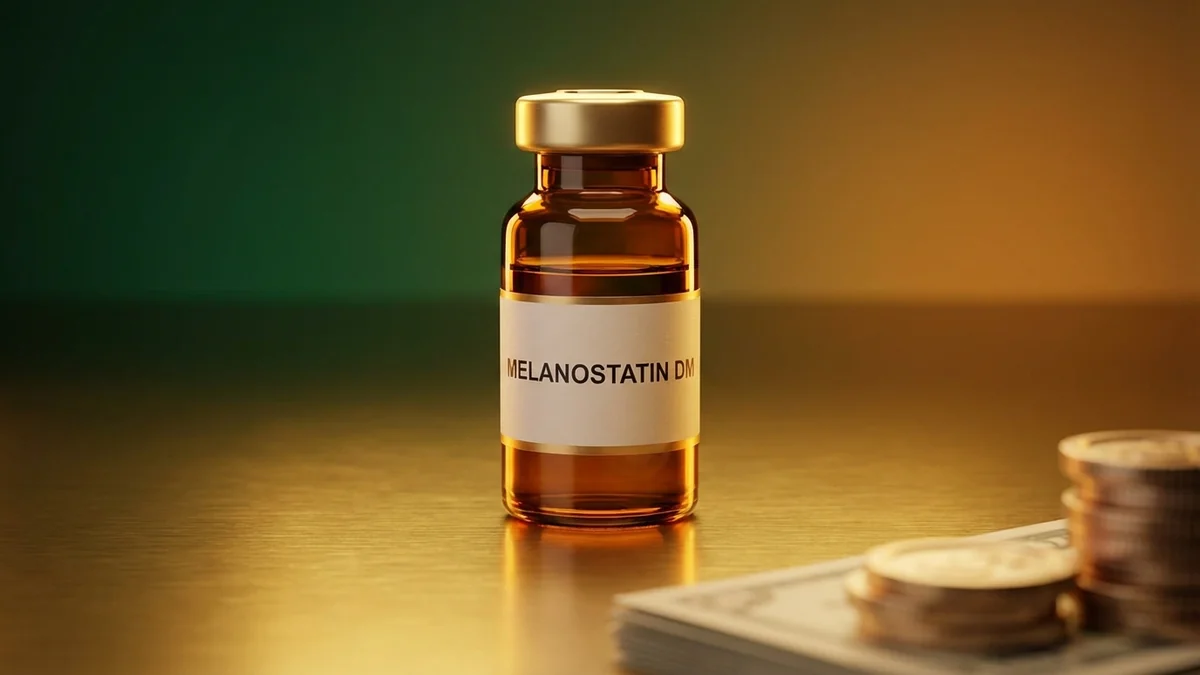
Melanostatin DM is a research peptide analog of the tripeptide Prolyl-Leucyl-Glycinamide (PLG) with molecular weight 271.31 g/mol, designed to study melanocyte-stimulating hormone (α-MSH) receptor modulation and tyrosinase inhibition pathways.[1] The FDA classifies Melanostatin DM as research-only, meaning it cannot be prescribed, dispensed, or administered for human therapeutic use outside of approved clinical trials.[2] This regulatory status fundamentally shapes all cost considerations, as no legitimate clinical treatment programs exist.
Melanostatin DM Cost Overview
| Cost Category | Low End | High End | Notes |
|---|---|---|---|
| Research Vial (5mg) | $150 | $350 | Standard research grade (95% purity) |
| Research Vial (10mg) | $280 | $650 | Pharmaceutical grade (98%+ purity) |
| Analytical Testing | $200 | $500 | HPLC/MS verification per batch |
| Storage Equipment | $300 | $1,200 | Laboratory freezer requirements |
| Handling Supplies | $50 | $150 | Reconstitution and storage materials |
Detailed Cost Breakdown
Research Supply Pricing
Licensed research chemical suppliers price Melanostatin DM between $30-$65 per milligram depending on purity grade and order volume.[3] Standard 5mg vials from established suppliers like Sigma-Aldrich, Tocris Bioscience, and MedChemExpress range from $150-$350 for 95% purity grade material. Pharmaceutical-grade variants (98%+ purity) with comprehensive analytical certificates cost $280-$650 per 10mg vial, representing a 40-60% premium for enhanced purity specifications.
Bulk pricing tiers typically begin at 25mg total orders, offering 15-20% discounts for quantities exceeding $2,500. Research institutions conducting long-term studies often negotiate annual contracts reducing per-unit costs by 25-35% compared to individual purchases.
Analytical Testing Requirements
Research-grade Melanostatin DM requires analytical verification through high-performance liquid chromatography (HPLC) and mass spectrometry (MS) analysis, costing $200-$500 per batch depending on testing depth.[4] Basic identity confirmation runs $200-$300, while comprehensive impurity profiling and stability testing reaches $400-$500 per sample. Academic laboratories with in-house analytical capabilities reduce these costs to $50-$100 in consumables and technician time.
Third-party analytical laboratories specializing in peptide characterization charge $300-$450 for complete certificates of analysis including purity determination, water content, and bacterial endotoxin testing. These certificates are essential for publications and regulatory submissions.
Storage and Handling Costs
Melanostatin DM requires storage at -20°C or below, necessitating laboratory-grade freezer equipment costing $300-$1,200 depending on capacity and temperature stability specifications.[5] Desktop freezers adequate for small-scale research start at $300-$500, while larger units with temperature monitoring and alarm systems range from $800-$1,200.
Reconstitution supplies including bacteriostatic water, sterile vials, and precision pipettes add $50-$150 per research project. Lyophilized peptide reconstitution requires sterile technique and appropriate diluents, with bacteriostatic water costing $25-$40 per 30mL vial from pharmaceutical suppliers.
Insurance Coverage Analysis
No insurance plans cover Melanostatin DM due to its research-only FDA status.[6] Health insurance, including Medicare and Medicaid, specifically excludes coverage for investigational drugs and research chemicals not approved for therapeutic use. This prohibition extends to health savings accounts (HSAs) and flexible spending accounts (FSAs), which require FDA-approved medical treatments or devices for eligible expenses.
Research institutions typically fund Melanostatin DM procurement through grant funding from agencies like the National Institutes of Health (NIH) or private foundations. NIH grants R01 and R21 commonly include peptide research supplies as allowable direct costs, with typical allocations of $5,000-$15,000 annually for peptide-based studies.
Academic vs. Commercial Research Pricing
Academic institutions receive educational discounts of 15-25% from most research suppliers through established academic pricing programs.[7] Universities with centralized procurement departments often negotiate institutional agreements providing additional 5-10% discounts on annual orders exceeding $10,000. Community colleges and teaching hospitals typically qualify for these educational rates upon verification of academic status.
Commercial research organizations pay standard list prices without educational discounts, making their effective costs 20-35% higher than academic institutions for identical materials. Contract research organizations (CROs) conducting pharmaceutical development studies budget $400-$800 per gram of Melanostatin DM including analytical testing and documentation requirements.
International Shipping and Regulatory Costs
International shipments of research peptides incur additional costs for temperature-controlled shipping, customs documentation, and import permits. Express shipping with dry ice or gel packs adds $75-$200 to domestic orders and $150-$400 for international delivery.[8] Import permits required by some countries cost $50-$300 depending on regulatory requirements and processing timeframes.
Customs duties and value-added taxes (VAT) in European Union countries add 10-25% to the base peptide cost. Research institutions often maintain import licenses reducing per-shipment documentation fees from $100-$200 to $25-$50 for routine orders.
Cost Comparison with Related Research Peptides
| Peptide | Price per mg | Purity Grade | Research Applications | Availability |
|---|---|---|---|---|
| Melanostatin DM | $30-$65 | 95-98% | MSH receptor studies | Research only |
| α-MSH | $15-$35 | 95-98% | Melanocyte research | Research/Clinical |
| Melanotan II | $8-$25 | 90-95% | Pigmentation studies | Research only |
| ACTH (1-24) | $45-$85 | 98%+ | Adrenal function | Clinical approved |
Melanostatin DM pricing reflects its specialized synthesis requirements and limited commercial demand compared to more established research peptides like α-MSH or ACTH fragments. The 2-3x price premium over Melanotan II reflects more complex manufacturing processes and stricter purity requirements for MSH receptor binding studies.