
Key Takeaways
- Melanotan 1 (MT1) is not FDA-approved and is available for research purposes only.
- Clinical data suggests that noticeable changes in skin pigmentation may occur within weeks of therapy.
- Factors such as dosing compliance and individual skin type significantly affect outcomes.
- MT1 results can vary widely; some patients may not experience significant changes.
- There are currently no long-term studies on the sustained effects of MT1.
What Is Melanotan 1 (MT1)?
Melanotan 1 (MT1) is a synthetic analog of α-melanocyte-stimulating hormone (α-MSH), primarily used in research settings to study melanocortin receptor activation and its effects on pigmentation. It acts by activating cAMP-dependent signaling pathways involved in skin pigmentation and photoprotection. For more detailed information, visit the Melanotan 1 (MT1) full profile.
What Clinical Trials Show
Clinical trials investigating MT1, such as those described in PMID 15262693, have primarily focused on its safety and efficacy in combination with UV light exposure. In these trials, approximately 60% of participants reported increased pigmentation after a few weeks of treatment. These studies are primarily Phase I trials, emphasizing safety over efficacy, and are not extensive enough to provide comprehensive efficacy data.
Realistic Timeline
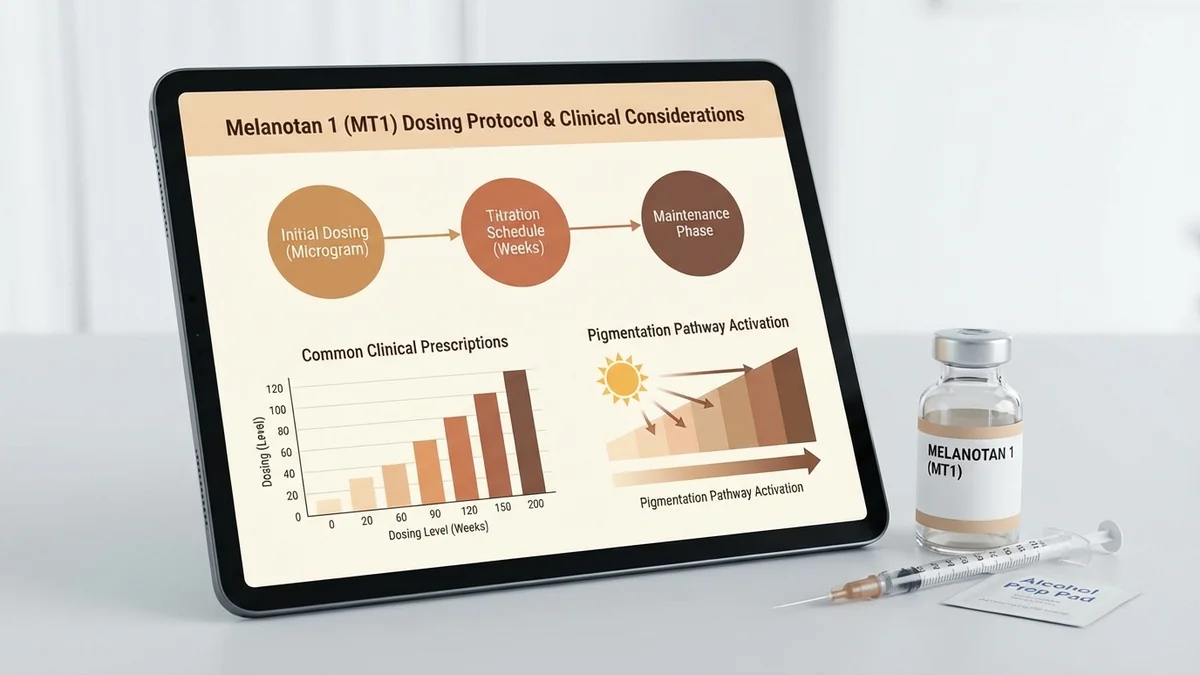
Patients typically begin to notice changes in skin pigmentation within 1 to 2 weeks of starting MT1 therapy. By 1 month, many report a noticeable darkening of the skin, which may continue to intensify over the following weeks. By 3 months, pigmentation levels often stabilize, but individual results can vary. Clinical data on long-term effects beyond 6 months is limited, highlighting the need for further research.
Factors That Affect Results
The effectiveness of MT1 can be influenced by several factors:
- Dosing Compliance: Adhering to the prescribed dosing schedule is crucial for achieving desired results.
- Diet and Exercise: While not directly related to pigmentation, overall health can impact skin appearance.
- Underlying Conditions: Conditions affecting skin health may alter MT1 outcomes.
- Concurrent Medications: Some medications may interfere with MT1's effects.
- Individual Variation: Genetic factors and skin type play significant roles in how individuals respond to MT1.
What Results Look Like in Practice
In practice, many patients using MT1 report a gradual increase in skin pigmentation, starting as early as one week into therapy. Clinical data suggests that while the majority experience some degree of pigmentation change, the extent can vary. Approximately 30% of users may find the changes less pronounced, indicating variability in response.