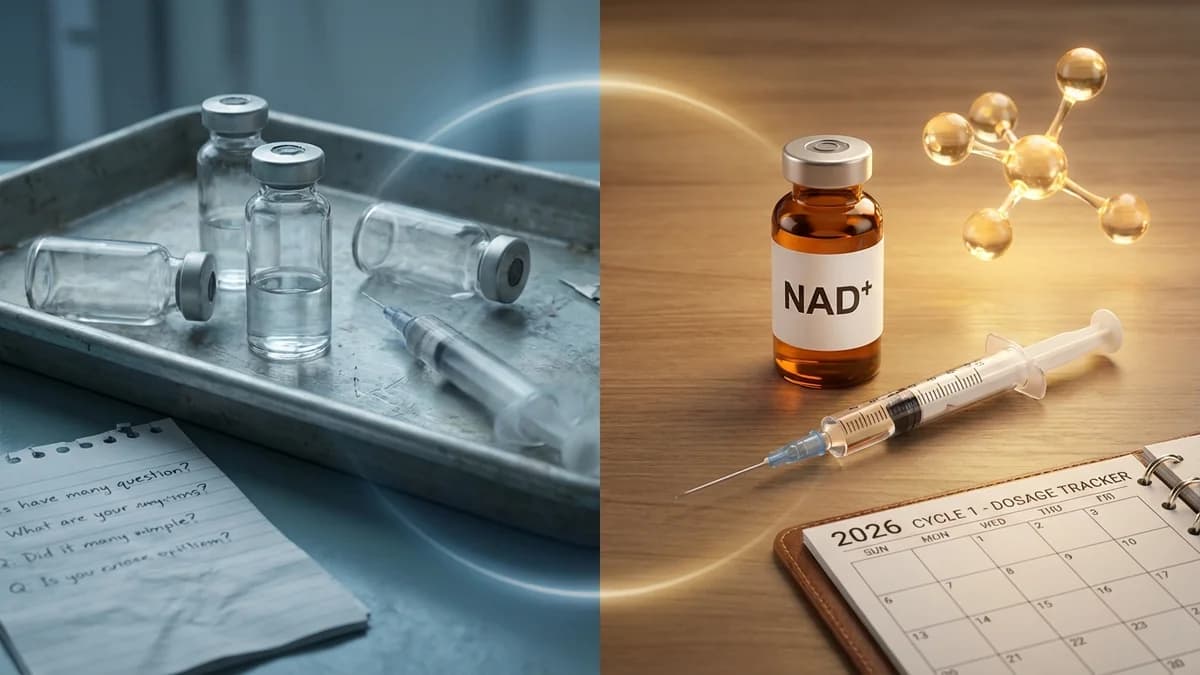
NAD+ Dosage Guide: How Much Should You Take? (2026)
Key Takeaways
- Standard Dosage Range: NAD+ is typically administered in doses ranging from 250 mg to 1000 mg, depending on the form and therapeutic goal.
- Administration Method: Common methods include intravenous infusion and subcutaneous injection, each with different bioavailability and absorption rates.
- Typical Cycle Length: Treatment cycles can vary from a few weeks to several months, often requiring medical supervision for optimal results.
- Regulatory Status: NAD+ is classified as a supplement, not an FDA-approved drug, which impacts its availability and regulation.
- Medical Supervision: Due to potential side effects and varying individual responses, it is crucial to consult with a healthcare provider before starting NAD+ therapy.
How NAD+ Works in the Body
Nicotinamide adenine dinucleotide (NAD+) plays a pivotal role in cellular energy production and DNA repair, making it essential for maintaining cellular health and longevity. As a coenzyme, NAD+ is involved in redox reactions, transferring electrons between molecules to facilitate metabolic processes. Its mechanism of action is closely tied to the activation of sirtuins, a family of proteins that regulate cellular health and longevity.
NAD+ influences several cellular pathways, including those related to mitochondrial function and oxidative stress. The half-life of NAD+ in the body is relatively short, necessitating regular supplementation to maintain optimal levels. Bioavailability varies significantly between administration routes, impacting dosing decisions. For instance, intravenous infusion provides direct access to the bloodstream, offering higher bioavailability compared to oral forms, which must pass through the digestive system.
"Sirtuins are NAD-dependent deacetylases that regulate important biological processes. Sirt5, in particular, is an efficient protein lysine desuccinylase and demalonylase, highlighting NAD+'s role in cellular regulation." (PMID 22076378)
Clinical studies have demonstrated NAD+'s potential in neuroprotection and anti-aging. For example, research indicates that NAD+ supplementation can attenuate oxidative DNA damage induced by amyloid beta-peptide, a key factor in Alzheimer's disease pathology (PMID 24678962).
Standard NAD+ Dosage Ranges (By Form)
Intravenous Infusion
- Dosage Range: 500 mg to 1000 mg per session
- Frequency: Weekly or bi-weekly
- Bioavailability: High, as it bypasses the digestive tract
- Common Use: Preferred for rapid restoration of NAD+ levels due to direct bloodstream access
Subcutaneous Injection
- Dosage Range: 250 mg to 500 mg per injection
- Frequency: Daily or every other day
- Bioavailability: Moderate, with slower absorption compared to IV
- Common Use: Offers a convenient alternative to IV, suitable for at-home administration
Oral Supplementation
- Dosage Range: 300 mg to 600 mg daily
- Frequency: Once or twice daily
- Bioavailability: Low, subject to first-pass metabolism
- Common Use: Widely used for ease of administration, though less effective in raising NAD+ levels compared to injectable forms
Topical and Intranasal Forms
- Dosage Range: Varies widely, less commonly used
- Bioavailability: Variable, often lower than systemic administration
- Common Use: Primarily experimental or for localized effects
NAD+ Dosage by Use Case
Anti-Aging and Longevity
- Typical Dosage Range: 500 mg IV or 300 mg oral daily
- Administration Method: Intravenous or oral
- Cycle Length: 8 to 12 weeks
- Clinical Reference: Studies suggest NAD+ can enhance mitochondrial function and reduce markers of aging (PMID 31754102)
- Practical Guidance: Many clinics recommend an initial loading phase with higher doses, followed by maintenance dosing.
Neuroprotection
- Typical Dosage Range: 1000 mg IV weekly
- Administration Method: Intravenous
- Cycle Length: 4 to 6 weeks
- Clinical Reference: Research supports NAD+'s role in reducing oxidative stress in neurodegenerative conditions (PMID 24678962)
- Practical Guidance: Often combined with other neuroprotective agents for synergistic effects.
Cellular Energy Enhancement
- Typical Dosage Range: 250 mg subcutaneous daily
- Administration Method: Subcutaneous injection
- Cycle Length: 6 to 8 weeks
- Clinical Reference: Enhanced energy production and reduced fatigue reported in clinical settings
- Practical Guidance: Commonly used in conjunction with lifestyle interventions such as diet and exercise.
How Long Should You Take NAD+?
The duration of NAD+ therapy can vary based on individual goals and responses. Initial phases often last between 4 to 12 weeks, with adjustments made based on clinical outcomes. Patients may notice increased energy and cognitive clarity within the first few weeks, though sustained benefits typically require longer treatment periods.
Tapering is generally not necessary, though some protocols suggest a gradual reduction in dose to assess the body's response. Upon cessation, NAD+ levels may gradually return to baseline, emphasizing the need for ongoing supplementation for continuous benefits.
Administration Protocol: How to Take NAD+
Intravenous Infusion
- Procedure: Administered by a healthcare professional in a clinical setting
- Needle Gauge: Typically 22-24 gauge
- Session Duration: 1 to 2 hours
- Storage: Store vials at room temperature, protect from light
Subcutaneous Injection
- Technique: Use a 29-31 gauge needle, rotate injection sites to prevent irritation
- Sites: Abdomen, thigh, or upper arm
- Timing: Consistent daily timing recommended
- Storage: Keep refrigerated, use within specified stability period after reconstitution
Oral Administration
- Timing: Preferably taken on an empty stomach for better absorption
- Storage: Store in a cool, dry place away from direct sunlight
Stacking NAD+ for Better Results
NAD+ and Glutathione
- Rationale: Combined for enhanced detoxification and antioxidant protection
- Dosing Synergy: 500 mg NAD+ IV with 600 mg glutathione IV weekly
- Common Protocols: Often used in wellness and anti-aging clinics
NAD+ and BPC-157
- Rationale: Supports tissue repair and recovery
- Dosing Synergy: 250 mg NAD+ subcutaneous with 200 mcg BPC-157 daily
- Common Protocols: Popular in sports medicine for injury recovery