
Key Takeaways
- Typical Dosing Ranges: Pal-AHK is primarily used in research settings, with dosing protocols varying widely.
- Titration Schedules: Gradual dose escalation is crucial for assessing tolerability and efficacy.
- Medical Supervision: Due to its research-only status, Pal-AHK should be used under professional guidance.
- Administration: Typically applied topically, leveraging its palmitic acid modification for enhanced skin absorption.
- Clinical Evidence: Current data is limited to preclinical studies, highlighting the need for more research.
What Is Pal-AHK?
Pal-AHK is a tripeptide conjugated with palmitic acid, designed to enhance skin absorption and bioavailability. It is primarily researched for its potential in tissue regeneration and protein remodeling through mechanisms involving copper-dependent redox signaling and TGF-β modulation. For a detailed overview, visit Pal-AHK's full profile.
Standard Dosing Protocols
Pal-AHK is not FDA-approved and is available for research purposes only. As such, there are no standardized dosing protocols approved by regulatory bodies. Research studies typically explore varying concentrations to assess efficacy and safety. It is crucial for researchers to adhere to the specific dosing guidelines outlined in their study protocols (PMID 29395804).
Titration Schedules
In research settings, titration schedules for Pal-AHK typically involve starting with a minimal effective dose and gradually increasing it. This approach helps in monitoring tolerability and optimizing therapeutic outcomes. While specific timelines can vary, gradual escalation over several weeks is common to minimize potential side effects and assess efficacy.
Administration Method
Pal-AHK is administered topically, taking advantage of its palmitic acid modification for enhanced dermal absorption. Proper administration involves applying the peptide to clean, dry skin. It is essential to store the peptide as recommended by the manufacturer, often in a cool, dry place to maintain stability.
Factors That Affect Dosing
Dosing of Pal-AHK can be influenced by several factors, including:
- Body Weight: Heavier individuals may require adjusted dosing.
- Treatment Goals: Specific objectives, such as enhanced tissue regeneration, may dictate dosing variations.
- Concurrent Medications: Interactions with other treatments could necessitate dose adjustments.
- Organ Function: Impaired kidney or liver function may alter peptide metabolism and clearance.
What Happens If You Miss a Dose
In research settings, missing a dose of Pal-AHK should be addressed by consulting the study protocol or research supervisor. Typically, the missed dose should be applied as soon as remembered, unless it is close to the time of the next scheduled application.
Dosing Compared to Similar Peptides
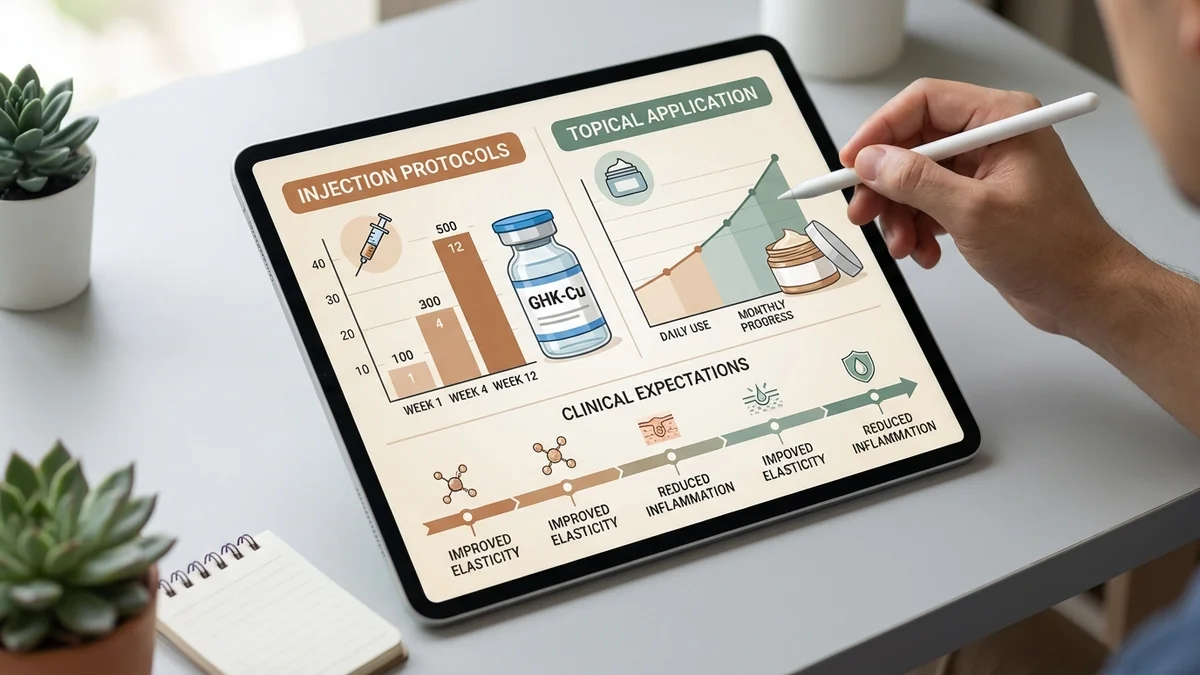
Compared to other peptides like GHK-Cu, which also targets skin and tissue regeneration, Pal-AHK's topical application and skin absorption properties offer a distinct administration route. However, both peptides share some mechanistic similarities in promoting extracellular matrix synthesis.
What the Evidence Does Not Show
Currently, the evidence for Pal-AHK is limited to preclinical studies, and there is a lack of long-term safety data in humans. While initial research suggests potential benefits in tissue regeneration, comprehensive clinical trials are necessary to establish efficacy and safety profiles (PMID 9643626).
FAQ
What is the recommended dose of Pal-AHK?
There is no standardized recommended dose for Pal-AHK as it is used for research purposes only. Dosing varies based on specific research protocols.
Can Pal-AHK be self-administered?
Pal-AHK should be used under professional supervision, especially given its research-only status and the need for precise dosing.
How does Pal-AHK differ from other peptides?
Pal-AHK is unique due to its palmitic acid modification, enhancing skin absorption when applied topically, unlike many peptides that require injection.
Are there any known side effects of Pal-AHK?
As a research peptide, detailed side effect profiles are not well-documented. Research settings should monitor for adverse reactions.
Is Pal-AHK safe for long-term use?
Long-term safety data for Pal-AHK is currently unavailable, emphasizing the need for further research to understand its implications fully.
Medical Disclaimer: This content is for informational purposes only and does not constitute medical advice. Consult a licensed healthcare provider before starting any treatment.