# Tirzepatide Legal Status in 2026: Approved as Mounjaro & Zepbound, Compounding Now Banned

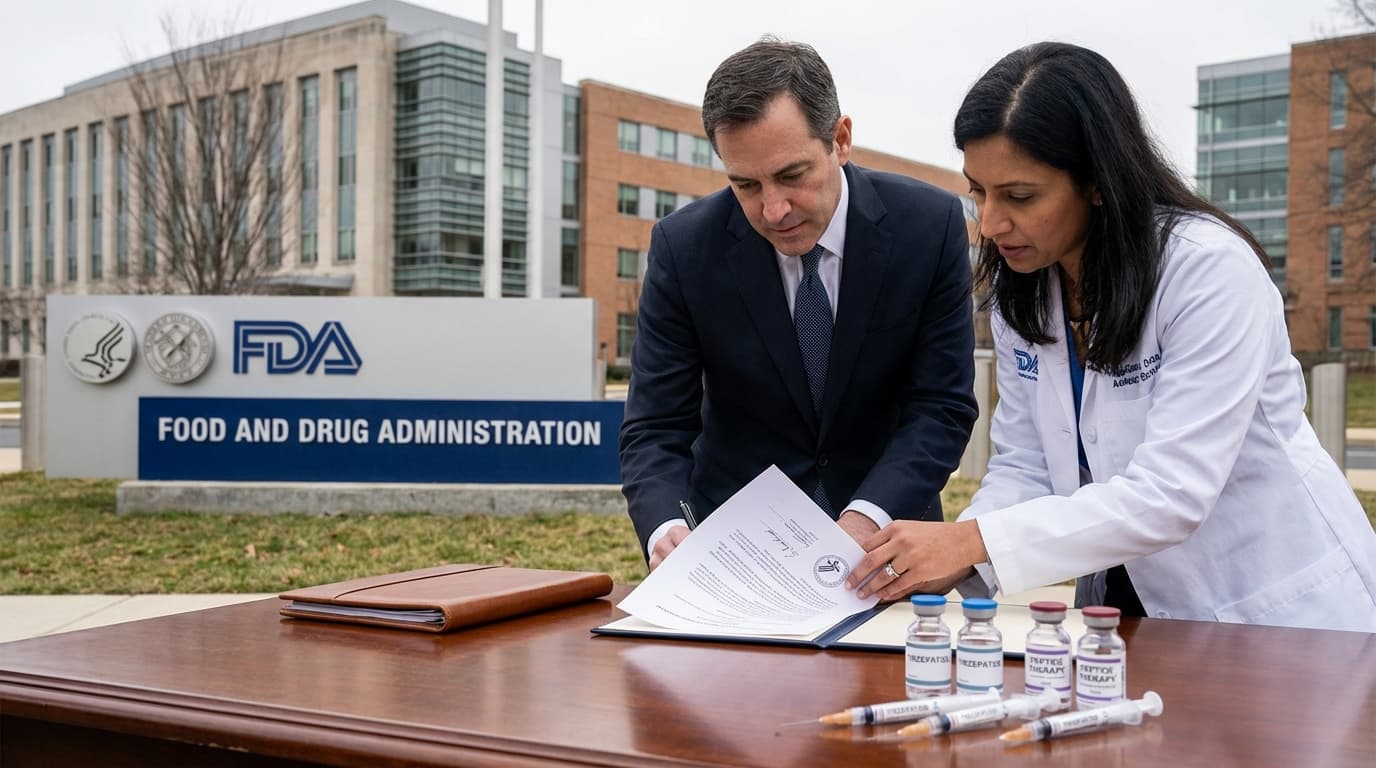
Tirzepatide occupies an unusual position among GLP-1 diabetes and weight-loss drugs: it is fully FDA-approved — sold as **Mounjaro** for type 2 diabetes and **Zepbound** for chronic weight management — yet the compounded versions that millions of patients relied on during the 2022–2024 shortage became largely illegal once the FDA declared that shortage resolved in late 2024. So unlike research-only peptides such as [BPC-157](/blog/bpc-157-legal-status) or [tesofensine](/blog/tesofensine-legal-status), the question with tirzepatide isn't whether a legal version exists — it's *which* version is legal, and for whom. Below we break down exactly where brand-name, compounded, and so-called "research-use-only" tirzepatide stand under U.S. federal law in 2026.

## Key Takeaways

- **Tirzepatide is FDA-approved** under two brand names: **Mounjaro** (for type 2 diabetes, approved May 2022) and **Zepbound** (for chronic weight management, approved November 2023).<sup>[1][2]</sup>
- Because it's FDA-approved, compounding pharmacies face strict limitations — the FDA's position is that compounding an approved drug is generally not permitted unless a documented shortage exists or a patient has a specific documented need that the branded product can't meet.<sup>[3]</sup>
- The FDA declared tirzepatide shortages resolved in late 2024, which triggered enforcement actions against compounding pharmacies that had been producing it during the shortage period.<sup>[4]</sup>
- Buying tirzepatide online from unregulated or foreign sources is illegal under US federal law, regardless of whether you have a prescription for the branded product.
- "Research use only" tirzepatide sold by peptide vendors is not a legal workaround — it's an unapproved drug product, and purchasing it for human use carries real legal risk.
- Your safest path to legal tirzepatide in 2026 is a prescription for Mounjaro or Zepbound through a licensed provider, filled at a licensed retail or specialty pharmacy.

---

## Regulatory Status at a Glance

| Category | Status | Detail |
|---|---|---|
| **FDA Approval** | ✅ Approved | Mounjaro (type 2 diabetes, May 2022); Zepbound (chronic weight management, November 2023) |
| **Compounding Status** | ⚠️ Restricted | Permitted during documented shortage; shortage declared resolved late 2024; compounding now generally prohibited |
| **DEA Scheduling** | Not Scheduled | Tirzepatide is not a controlled substance under the Controlled Substances Act |
| **Prescription Requirement** | ✅ Required | Prescription required for all legal human use in the US |
| **International Availability** | Varies | Approved in EU, UK, Canada, Australia under various brand names and indications |
| **Research Use** | ⚠️ Restricted | Legitimate research use requires IND or institutional oversight; "RUO" labeling does not authorize human use |

---

## Current FDA Status

Tirzepatide's FDA story is actually two stories told about two years apart, and understanding both matters for understanding tirzepatide legality today.

The first approval came in **May 2022**, when the FDA cleared tirzepatide as **Mounjaro** (NDA 215866) for the treatment of type 2 diabetes in adults, to be used alongside diet and exercise.<sup>[1]</sup> Eli Lilly developed it as a first-in-class **dual GIP/GLP-1 receptor agonist** — meaning it activates both the glucose-dependent insulinotropic polypeptide (GIP) receptor and the glucagon-like peptide-1 (GLP-1) receptor simultaneously, unlike semaglutide, which targets only GLP-1.<sup>[5]</sup> The approval was based on the SURPASS clinical trial program, which enrolled over 10,000 patients across five Phase 3 trials.<sup>[6]</sup>

The second approval arrived in **November 2023**, when the FDA cleared tirzepatide as **Zepbound** for chronic weight management in adults with a BMI ≥30 kg/m², or ≥27 kg/m² with at least one weight-related comorbidity.<sup>[2]</sup> The SURMOUNT-1 trial, which enrolled 2,539 adults, showed participants on the 15 mg dose achieved a mean body weight reduction of approximately 20.9% over 72 weeks — the largest weight loss result recorded in a Phase 3 trial for any anti-obesity medication at the time of publication.<sup>[7]</sup>

Both approvals are **full NDA approvals**, not accelerated approvals or breakthrough designations. That matters because it means the FDA has reviewed complete efficacy and safety data for both indications and determined the benefit-risk profile is favorable for those specific uses.

What this means practically: tirzepatide is a **legal, prescription drug** in the United States when dispensed as Mounjaro or Zepbound by a licensed pharmacy pursuant to a valid prescription. There's no ambiguity there.

The ambiguity — and there's quite a bit of it — lives in the compounding space.

---

## Compounding Status

This is where tirzepatide legality gets complicated, and where a lot of patients have been caught off guard.

### The Shortage Window (2022–2024)

When Mounjaro launched in 2022 and demand exploded, supply couldn't keep up. The FDA added tirzepatide to its **Drug Shortage Database**, which opened a legal window for **503A compounding pharmacies** (those serving individual patients with a prescription) and **503B outsourcing facilities** (those producing larger quantities for healthcare providers) to compound tirzepatide.<sup>[3]</sup> Under Section 503A of the Federal Food, Drug, and Cosmetic Act, a compounding pharmacy can prepare a copy of an FDA-approved drug if that drug appears on the FDA's shortage list.<sup>[3]</sup>

During this window — roughly 2022 through late 2024 — hundreds of compounding pharmacies began producing tirzepatide injections, often at substantially lower prices than the branded products. Many telehealth companies built entire business models around compounded tirzepatide.

### The Shortage Resolution and Its Aftermath

The FDA declared the tirzepatide shortage **resolved in late 2024**.<sup>[4]</sup> That resolution had immediate legal consequences. Once a drug is off the shortage list, the shortage-based compounding exemption disappears. Compounding pharmacies that continued producing tirzepatide after the shortage resolution were no longer operating within the legal window.

The FDA issued guidance giving compounding pharmacies a wind-down period to stop production and work through existing inventory, but that grace period has now passed.<sup>[4]</sup> As of early 2026, compounding tirzepatide for routine use is generally not permitted under federal law.

### When Compounding Is Still Permitted

There are narrow exceptions. A licensed 503A compounding pharmacy can still prepare a compounded tirzepatide product for an **individual patient** if:

1. The patient has a documented allergy, intolerance, or sensitivity to an inactive ingredient in the commercially available product that the compounder can address.<sup>[3]</sup>
2. A licensed prescriber documents that the commercially available product doesn't meet the patient's specific clinical needs.

These exceptions are narrow and require genuine clinical documentation — they're not a backdoor for price shopping. A prescriber writing "patient prefers compounded" without clinical justification isn't sufficient, and pharmacies filling such prescriptions are operating outside the law.

503B outsourcing facilities face even stricter rules. They cannot compound copies of FDA-approved drugs that are not on the shortage list, with very limited exceptions for office use.<sup>[3]</sup>

---

## Enforcement Actions

The FDA's enforcement posture on compounded tirzepatide has been active and escalating since the shortage resolution in late 2024.

The FDA has issued **warning letters** to compounding pharmacies and telehealth companies marketing compounded tirzepatide after the shortage resolution, citing violations of the Federal Food, Drug, and Cosmetic Act related to compounding copies of approved drugs outside permitted conditions.<sup>[4]</sup> The FTC has also engaged on deceptive marketing claims made by some sellers.

Beyond warning letters, the FDA has taken action against companies marketing tirzepatide products labeled "for research use only" or "not for human use" that were clearly being sold for human injection. These products — often sold by peptide vendors online — don't qualify for any compounding exemption and represent straightforward violations of federal drug law.

If you're looking for current, confirmed enforcement actions with specific case details, the best source is **FDA.gov's Warning Letters database** and the **DOJ press release archive**, both of which are updated in real time. The FDA has taken enforcement action against companies marketing unapproved tirzepatide products; consult FDA.gov and the FDA's MedWatch program for current enforcement activity.

What's clear from the pattern: the FDA is not treating this as a low-priority issue. The combination of high patient demand, significant revenue at stake, and a clear legal line (shortage resolved = compounding prohibited) has made tirzepatide one of the more actively enforced peptide-adjacent regulatory areas right now.

---

## Prescription vs. Over-the-Counter vs. Research Use

### Prescription Use

Tirzepatide is a **prescription-only drug** under federal law. A valid prescription from a licensed prescriber — MD, DO, NP, or PA with prescribing authority — is required for any legal human use. That prescription must be for the FDA-approved branded product (Mounjaro or Zepbound) filled at a licensed pharmacy, or for a compounded version under one of the narrow exceptions described above.

Telehealth prescribing is legal in most states, provided the prescriber is licensed in the state where the patient is located and conducts an adequate evaluation before prescribing. Many legitimate telehealth platforms now offer Mounjaro or Zepbound prescriptions with pharmacy partnerships for branded product fulfillment.

### Over-the-Counter

Tirzepatide is not available over the counter, and there's no pathway for that under current FDA regulations. Any product marketed as tirzepatide without a prescription requirement is operating outside the law.

### "Research Use Only" — The Loophole That Isn't

Here's something a lot of people misunderstand: vendors selling tirzepatide labeled "for research use only" or "not for human use" are not operating in a legal gray zone. They're operating in a clearly illegal zone.

The "research use only" (RUO) label is a **regulatory category** that applies to reagents and materials used in laboratory research, not to drug products intended for human administration. A vendor cannot sell an injectable peptide formulated in bacteriostatic water — clearly designed for human injection — and avoid FDA jurisdiction by stamping "not for human use" on the label. The FDA looks at the **intended use**, not just the label.<sup>[8]</sup> If the product is formulated, marketed, and sold in a way that makes its intended human use obvious, the RUO label provides no legal protection.

Buying these products for self-injection isn't a gray area either. You're purchasing an unapproved new drug without a prescription, which violates federal law. Customs seizures of international peptide shipments are common, and while individual buyers are rarely prosecuted, the legal risk is real.

### International Purchasing

Importing tirzepatide from foreign pharmacies — even licensed ones — without FDA authorization is generally illegal under the Federal Food, Drug, and Cosmetic Act. The FDA's personal importation policy provides some discretion for small quantities of drugs for personal use when no US equivalent exists, but that exception explicitly does not apply to drugs that have FDA-approved equivalents.<sup>[9]</sup> Mounjaro and Zepbound are FDA-approved, so that exception doesn't help you here.

---

## What "Off-Label" Actually Means

This distinction matters, and it's one that even some healthcare providers get wrong.

"Off-label prescribing" refers to a physician prescribing an **FDA-approved drug** for an indication, population, or dose not specified in its approved labeling. Off-label prescribing is legal, common, and clinically legitimate. Physicians prescribe drugs off-label constantly — it's estimated that roughly 20% of all prescriptions in the US are off-label.<sup>[10]</sup>

But off-label prescribing only applies to **FDA-approved drugs**. Tirzepatide is FDA-approved — so prescribing Mounjaro for, say, non-alcoholic steatohepatitis (a condition under active investigation but not yet an approved indication) would be off-label prescribing. That's legal.

What's different is prescribing a **compounded tirzepatide** product outside the permitted compounding conditions. That's not off-label prescribing — that's prescribing a drug product that lacks FDA approval for the specific formulation being dispensed. The liability implications for providers are meaningfully different. A provider who prescribes Mounjaro off-label for an unapproved indication is on familiar legal ground. A provider who prescribes compounded tirzepatide from a pharmacy that's no longer operating within the shortage exemption is prescribing an unapproved drug product, which creates greater malpractice exposure and potential regulatory scrutiny from state medical boards.

If you're a provider reading this: the distinction is worth discussing with your malpractice carrier.

---

## State-Level Variations

Federal law sets the floor for tirzepatide legality, but states add their own layers.

**State pharmacy boards** have been active in issuing guidance on compounding. Several state boards issued their own advisories following the FDA's shortage resolution, instructing in-state compounding pharmacies to wind down tirzepatide production. California, Florida, and Texas — three of the largest markets for compounded GLP-1 products — all saw pharmacy board activity in this area in 2024 and 2025.

**State medical boards** have also weighed in on prescribing standards. Some boards have issued guidance specifying that prescribing compounded tirzepatide without adequate clinical documentation of a patient-specific need may constitute unprofessional conduct.

**Telemedicine rules** vary significantly by state. Some states require an in-person visit before a controlled substance or certain prescription drugs can be prescribed via telehealth; others permit fully remote prescribing after a synchronous video evaluation. Since tirzepatide is not a controlled substance, the strictest telemedicine rules generally don't apply — but prescribers still need to be licensed in the patient's state and must conduct an adequate evaluation. The DEA's telemedicine prescribing rules, which tightened post-COVID, don't directly govern tirzepatide since it's unscheduled, but state-level telehealth standards still apply.

For state-specific guidance, the relevant resources are your state's pharmacy board website and medical board website. Rules change frequently in this space.

---

## International Status

Tirzepatide has received regulatory approval in multiple major markets outside the US, though the approved indications and brand names vary.

**European Union (EMA):** The EMA granted marketing authorization for Mounjaro for type 2 diabetes, with approval for the obesity indication (Zepbound is marketed as Mounjaro for both indications in the EU) following. Compounding rules in EU member states are governed by national pharmacy law and vary significantly by country.<sup>[11]</sup>

**United Kingdom (MHRA):** The MHRA approved Mounjaro for type 2 diabetes and subsequently for weight management. The UK has seen significant demand and its own supply challenges, with the MHRA issuing guidance on prescribing and compounding similar to the FDA's position.<sup>[12]</sup>

**Australia (TGA):** The Therapeutic Goods Administration approved tirzepatide (Mounjaro) for type 2 diabetes. Australia has strict rules on importing unapproved medicines, and compounding is regulated at the state/territory level.<sup>[13]</sup>

**Canada (Health Canada):** Health Canada approved Mounjaro for type 2 diabetes. The obesity indication has also received approval. Canadian compounding rules are governed provincially, and cross-border importation into the US from Canada does not benefit from any FDA personal importation exemption for tirzepatide.<sup>[14]</sup>

The key practical point for US patients: being approved in another country doesn't change US law. You can't legally import tirzepatide from Canada, the UK, or anywhere else for personal use when FDA-approved equivalents exist domestically.

---

## What This Means for Patients

If you're trying to access tirzepatide legally in 2026, here's the practical picture.

**The straightforward path:** Get a prescription for Mounjaro or Zepbound from a licensed provider, filled at a licensed retail or specialty pharmacy. This is unambiguously legal. Supply issues that existed in 2022–2024 have largely resolved, and both products are generally available, though insurance coverage and cost remain significant barriers for many patients.

**Red flags that suggest illegal activity:**
- A vendor selling tirzepatide without requiring a prescription
- Products labeled "tirzepatide" at prices dramatically below Mounjaro/Zepbound retail (which typically signals a compounded product or counterfeit)
- "Research use only" tirzepatide sold with dosing guides for human injection
- Online pharmacies based outside the US offering to ship tirzepatide without a US prescription
- Providers who offer compounded tirzepatide without asking about allergies to inactive ingredients or other clinical justification for compounding

**Questions to ask your provider:**
- Is this branded Mounjaro or Zepbound, or a compounded product?
- If compounded: what's the clinical basis for compounding rather than dispensing the branded product?
- Is the compounding pharmacy 503A or 503B accredited?
- Is the pharmacy PCAB (Pharmacy Compounding Accreditation Board) accredited?

**To report suspicious sellers:** Use the FDA's MedWatch Safety Reporting Portal at FDA.gov/safety/medwatch, or report online pharmacies to the National Association of Boards of Pharmacy (NABP) at nabp.pharmacy/programs/not-recommended-sites.

---

## Legal Alternatives

If access to branded tirzepatide is a barrier — cost, insurance, availability — there are legal options worth knowing about.

**Semaglutide (Ozempic/Wegovy):** Also FDA-approved for type 2 diabetes and chronic weight management respectively, semaglutide is a GLP-1 receptor agonist with a robust evidence base. Like tirzepatide, compounded semaglutide faced similar shortage-based compounding rules and subsequent enforcement following shortage resolution. See our full profile on [semaglutide](/peptides/semaglutide).

**Liraglutide (Saxenda/Victoza):** FDA-approved for both weight management and type 2 diabetes. An older GLP-1 agonist with a longer track record and more established insurance coverage in some plans. See our [liraglutide profile](/peptides/liraglutide).

**Retatrutide:** A triple GIP/GLP-1/glucagon receptor agonist currently in Phase 3 trials, not yet FDA-approved. Not available for legal human use outside clinical trials. See our [retatrutide profile](/peptides/retatrutide).

**AOD-9604:** A fragment of human growth hormone studied for fat metabolism. Regulatory status is distinct from GLP-1 agonists. See our [AOD-9604 profile](/peptides/aod-9604).

For a broader look at peptides used in weight management, see our [weight loss peptides guide](/peptides/weight-loss) and use our [clinic finder](/clinics) to locate providers who can discuss legal options with you directly.

---

## What the Evidence Does Not Show

Tirzepatide's legal status is clearer than many peptides covered on this site — it's FDA-approved, it has a defined prescription pathway, and the compounding rules (while contentious) are relatively well-articulated. But there are genuine areas of ongoing regulatory uncertainty worth knowing about.

**Pending indications:** Eli Lilly has ongoing clinical trials investigating tirzepatide for additional indications including obstructive sleep apnea (the SURMOUNT-OSA trial), heart failure with preserved ejection fraction (SUMMIT trial), and non-alcoholic steatohepatitis.<sup>[15]</sup> If any of these receive FDA approval, the approved label will expand — but until that happens, prescribing tirzepatide specifically for those conditions is off-label use of an approved drug.

**Compounding litigation:** Several compounding pharmacies and telehealth companies have challenged the FDA's shortage resolution determination in federal court, arguing the shortage was not genuinely resolved given ongoing access barriers. As of early 2026, litigation in this space is active. A court ruling in favor of plaintiffs could reopen the compounding window; a ruling affirming the FDA's position would close it further. The legal landscape here could change materially in 2026.

**Long-term safety data:** The FDA-approved labeling includes a boxed warning regarding thyroid C-cell tumors observed in rodent studies, though human relevance has not been established.<sup>[1]</sup> Long-term cardiovascular outcome data is still accumulating — the SURPASS-CVOT trial results will add to the evidence base but were not fully published at the time of this article.

**Insurance coverage evolution:** Coverage for Zepbound for obesity varies significantly by insurer and continues to evolve. The legal pathway exists; the practical access pathway remains uneven.

---

## FAQ

### Is tirzepatide legal in the US?

Yes — tirzepatide is legal in the US when obtained by prescription as Mounjaro or Zepbound, dispensed by a licensed pharmacy. Compounded tirzepatide is now generally prohibited following the FDA's declaration that the shortage is resolved, with narrow exceptions for patients with documented clinical needs that the branded product can't meet.

### Can my doctor prescribe tirzepatide?

Yes. Any licensed prescriber — MD, DO, NP, or PA with prescribing authority — can prescribe Mounjaro for type 2 diabetes or Zepbound for chronic weight management. They can also prescribe either product off-label for other indications, though insurance coverage for off-label use is typically limited. What your doctor generally cannot do in 2026 is prescribe compounded tirzepatide without documented clinical justification.

### Is it legal to buy tirzepatide online?

It depends entirely on the source. Purchasing Mounjaro or Zepbound through a licensed online pharmacy (one that requires a valid US prescription and is licensed in your state) is legal. Purchasing tirzepatide from unregulated websites, peptide vendors, or foreign pharmacies is not legal under US federal law, regardless of whether you have a prescription for the branded product.

### What happens if I'm caught with tirzepatide I bought illegally?

Individual buyers are rarely prosecuted for personal-use quantities, but the product can be seized by customs or law enforcement. There's no guarantee of non-prosecution, and the risk increases with quantity. Sellers face far more serious consequences, including FDA warning letters, injunctions, and potential criminal charges.

### Is tirzepatide a controlled substance?

No. Tirzepatide is not scheduled under the Controlled Substances Act and is not regulated by the DEA. It's a prescription drug regulated by the FDA, but it doesn't carry the additional restrictions that apply to controlled substances like Schedule II or III drugs.

### Can compounding pharmacies make tirzepatide?

Generally no, as of early 2026. The FDA declared the tirzepatide shortage resolved in late 2024, which ended the shortage-based compounding exemption. Narrow exceptions exist for patients with documented allergies to inactive ingredients or other specific clinical needs that the branded product can't address, but routine compounding for cost or convenience reasons is not permitted.

### Is "research use only" tirzepatide legal to buy and inject?

No. "Research use only" labeling doesn't create a legal exemption for human use. The FDA evaluates intended use, not just labeling. Tirzepatide sold by peptide vendors as RUO is an unapproved drug product, and purchasing it for human injection violates federal drug law.

### Has anyone been prosecuted for tirzepatide-related violations?

Enforcement has primarily targeted sellers and distributors rather than individual buyers. The FDA has issued warning letters to compounding pharmacies and online vendors operating outside the permitted compounding conditions. For current confirmed enforcement actions with specific details, consult the FDA's Warning Letters database at FDA.gov and the DOJ's press release archive.

### How do I find a legitimate provider who can prescribe tirzepatide legally?

Use our [clinic finder](/clinics) to locate licensed providers in your area who offer tirzepatide as part of medically supervised weight management or diabetes care. Look for providers who prescribe branded Mounjaro or Zepbound, ask about their prescribing and monitoring protocols, and verify their licensure through your state medical board.

---

## References

1. FDA. "FDA Approves Novel, Dual-Targeted Treatment for Type 2 Diabetes." FDA News Release. May 13, 2022. Available at: FDA.gov. [NDA 215866 — Mounjaro (tirzepatide)]

2. FDA. "FDA Approves New Medication for Chronic Weight Management." FDA News Release. November 8, 2023. Available at: FDA.gov. [NDA 217806 — Zepbound (tirzepatide)]

3. FDA. "Compounding and the FDA: Questions and Answers." FDA Guidance. Available at: FDA.gov. [Sections 503A and 503B of the Federal Food, Drug, and Cosmetic Act]

4. FDA. Drug Shortages Database — Tirzepatide. FDA Drug Shortage Resolution Notice, 2024. Available at: FDA.gov/drugs/drug-safety-and-availability/drug-shortages

5. Frias JP, et al. "Tirzepatide versus Semaglutide Once Weekly in Patients with Type 2 Diabetes." SURPASS-2 Trial (NCT03987919). *N Engl J Med*. 2021;385(6):503-515. PMID: 34170647

6. Rosenstock J, et al. "Efficacy and Safety of a Novel Dual GIP and GLP-1 Receptor Agonist Tirzepatide in Patients with Type 2 Diabetes (SURPASS-1)." SURPASS-1 Trial (NCT03954834). *Lancet*. 2021;398(10295):143-155. PMID: 34186022

7. Jastreboff AM, et al. "Tirzepatide Once Weekly for the Treatment of Obesity." SURMOUNT-1 Trial (NCT04184622). *N Engl J Med*. 2022;387(3):205-216. PMID: 35658024

8. FDA. "Regulatory Considerations for Human Cells, Tissues, and Cellular and Tissue-Based Products: Minimal Manipulation and Homologous Use." FDA Guidance, 2017. [Regarding intended use determinations and RUO labeling.] Available at: FDA.gov

9. FDA. "Personal Importation." FDA Policy on Personal Importation. Available at: FDA.gov/industry/import-program-center-drug-evaluation-and-research/personal-importation

10. Dresser R, Frader J. "Off-Label Prescribing: A Call for Heightened Professional and Government Oversight." *J Law Med Ethics*. 2009;37(3):476-486. PMID: 19723253

11. European Medicines Agency. "Mounjaro (tirzepatide) — Summary of Product Characteristics." EMA/H/C/005955. Available at: EMA.europa.eu

12. UK Medicines and Healthcare products Regulatory Agency (MHRA). "Mounjaro (tirzepatide) UK Public Assessment Report." Available at: GOV.UK/MHRA

13. Australian Therapeutic Goods Administration (TGA). "Mounjaro (tirzepatide) — Australian Register of Therapeutic Goods." Available at: TGA.gov.au

14. Health Canada. "Mounjaro Product Monograph." Available at: Canada.ca/health-canada

15. ClinicalTrials.gov. "SURMOUNT-OSA: Tirzepatide for Obstructive Sleep Apnea." NCT05765084. Available at: ClinicalTrials.gov

---

*Legal status verified as of March 2026. Regulatory status for tirzepatide, including compounding rules and enforcement posture, is subject to change. Consult FDA.gov for the most current information.*

---

**Medical Disclaimer:** This content is for informational purposes only and does not constitute medical advice, legal advice, or a substitute for consultation with a licensed healthcare provider or attorney. Tirzepatide is a prescription drug; do not use it without the supervision of a licensed medical professional. If you're trying to determine your legal options for accessing tirzepatide, speak with a board-certified physician or a licensed compounding pharmacist in your state — they can review your specific clinical situation and tell you what's currently available and legal in your jurisdiction.