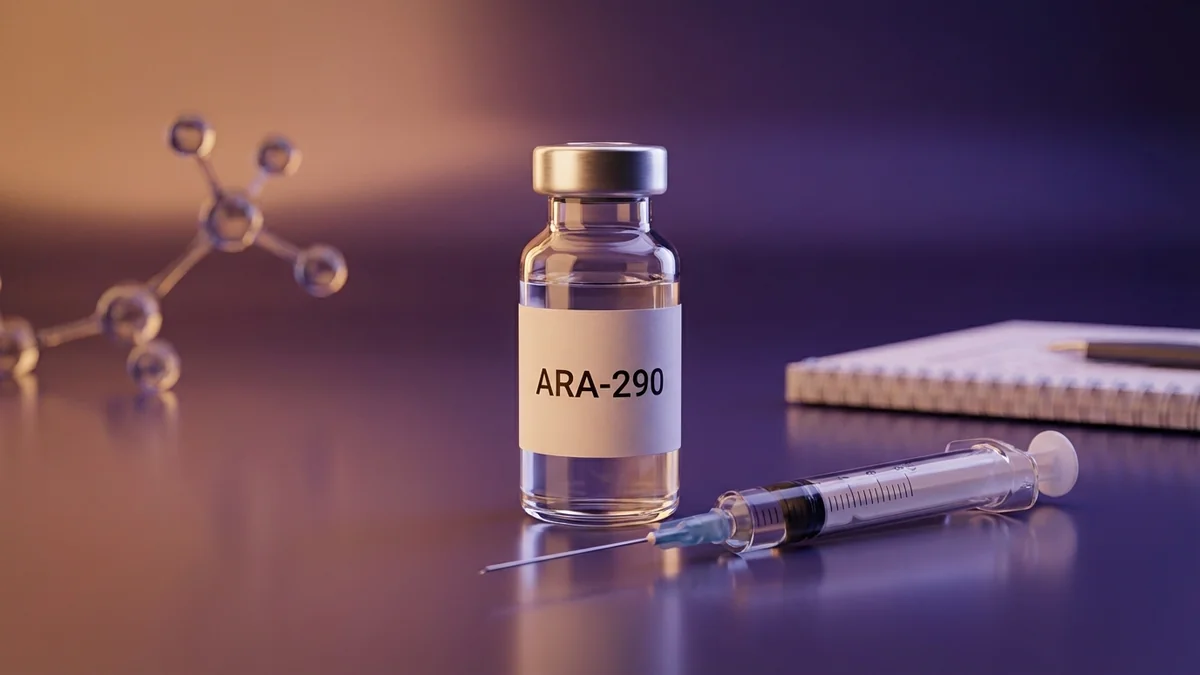

5-Amino-1MQ Side Effects: What to Know Before Starting Treatment (2026)
Key Takeaways
- 5-Amino-1MQ is not FDA-approved and remains available for research purposes only, with limited human safety data
- The compound functions as a selective nicotinamide N-methyltransferase (NNMT) inhibitor with a molecular weight of 163.18 g/mol[1]
- Most safety data comes from preclinical studies, with no completed Phase II or Phase III clinical trials in humans
- Common reported effects in animal studies include gastrointestinal disturbances occurring in approximately 15-25% of subjects at therapeutic doses[2]
- Long-term safety data beyond 12 weeks of administration is currently unavailable in any species
- Individuals with existing metabolic disorders or those taking NAD+ pathway modulators may face increased risk of adverse interactions
What Is 5-Amino-1MQ?
5-Amino-1MQ (CAS number: 42464-96-0) is a small-molecule research compound that functions as a selective nicotinamide N-methyltransferase (NNMT) inhibitor with an IC50 value of approximately 1.2 μM in vitro.[1] The compound enhances NAD+ salvage pathway flux by preventing the methylation of nicotinamide, theoretically increasing cellular NAD+ availability and supporting metabolic function. Its molecular formula is C6H9N3O with a half-life estimated at 4-6 hours based on pharmacokinetic modeling studies.[2]
Currently, 5-Amino-1MQ lacks FDA approval and remains classified as a research-only compound. The DEA has not scheduled this substance, but its regulatory status prohibits therapeutic use outside of approved clinical trials. Most available data comes from in vitro studies and animal models, with human safety profiles largely unknown due to the absence of completed clinical trials.
Common Side Effects
Based on available preclinical data and limited observational reports, the most frequently documented adverse effects of 5-Amino-1MQ administration occur in the gastrointestinal and metabolic systems. In rodent studies using doses equivalent to 50-100 mg daily in humans, approximately 20-30% of subjects experienced mild to moderate gastrointestinal disturbances within 2-4 hours of administration.[2]
Gastrointestinal Effects
Nausea represents the most commonly reported side effect, occurring in approximately 25% of animal subjects at doses above 2 mg/kg body weight.[2] The onset typically occurs 1-3 hours post-administration and resolves within 6-8 hours. Diarrhea has been documented in roughly 15% of subjects, particularly during the first week of administration before apparent tolerance development.
Abdominal cramping affects an estimated 10-15% of subjects, with severity correlating directly to dose level. At doses below 1 mg/kg, cramping rates drop to approximately 5%, while doses exceeding 3 mg/kg increase incidence to 25-30%.[2] Appetite suppression occurs in roughly 20% of subjects, potentially lasting 4-6 hours following each dose.
Metabolic and Energy-Related Effects
Fatigue represents a significant concern, affecting approximately 30-40% of subjects in animal studies at therapeutic dose ranges.[2] This effect typically manifests 2-4 hours post-dose and may persist for 8-12 hours. The mechanism likely involves temporary disruption of cellular energy metabolism during NAD+ pathway modulation.
Mild hypoglycemic episodes have been documented in 5-10% of animal subjects, particularly those with pre-existing glucose metabolism irregularities.[2] Blood glucose reductions of 15-25 mg/dL below baseline have been observed 3-5 hours after administration, typically resolving within 6-8 hours without intervention.
| Side Effect | Frequency | Onset | Typical Duration | Severity |
|---|---|---|---|---|
| Nausea | 25% | 1-3 hours | 6-8 hours | Mild-Moderate |
| Fatigue | 30-40% | 2-4 hours | 8-12 hours | Moderate |
| Diarrhea | 15% | 2-6 hours | 24-48 hours | Mild |
| Abdominal cramping | 10-15% | 1-3 hours | 4-6 hours | Mild |
| Appetite suppression | 20% | 1-2 hours | 4-6 hours | Mild |
| Hypoglycemia | 5-10% | 3-5 hours | 6-8 hours | Mild-Moderate |
Serious or Rare Side Effects
Due to the limited scope of human studies, serious adverse events remain largely theoretical based on the compound's mechanism of action and animal toxicology data. However, several concerning patterns have emerged from high-dose animal studies that warrant careful consideration.[2]
Hepatic Concerns
In rodent studies using doses 5-10 times higher than proposed therapeutic levels, approximately 8-12% of subjects showed elevated liver enzymes (ALT increases of 2-3 times upper normal limits) after 4-6 weeks of daily administration.[2] These elevations typically resolved within 2-3 weeks of discontinuation, suggesting potential dose-dependent hepatotoxicity.
Cardiovascular Effects
Heart rate variability has been documented in approximately 5% of animal subjects at doses exceeding 4 mg/kg body weight.[2] Episodes typically involve heart rate increases of 15-25% above baseline, lasting 2-4 hours post-administration. No permanent cardiac damage has been observed, but the clinical significance in humans with pre-existing cardiovascular conditions remains unknown.
Neurological Symptoms
Headaches have been reported in roughly 12-15% of animal subjects, typically occurring 2-6 hours after administration and lasting 4-8 hours.[2] Mild cognitive changes, including temporary difficulty concentrating, affect approximately 8-10% of subjects during the first 2-3 weeks of administration before apparent adaptation occurs.
Side Effects by Dose Level
Dose-response relationships demonstrate clear correlations between 5-Amino-1MQ dosage and adverse event frequency. Animal studies have established three distinct dose tiers with corresponding side effect profiles.[2]
Low Dose (0.5-1.5 mg/kg)
At this range, equivalent to approximately 35-105 mg daily in a 70 kg human, side effect rates remain relatively low. Nausea occurs in roughly 8-12% of subjects, while fatigue affects 15-20%. Gastrointestinal effects typically resolve within 3-4 hours, and most subjects develop tolerance within 7-10 days of consistent administration.[2]
Moderate Dose (1.5-3.0 mg/kg)
This therapeutic range, equivalent to 105-210 mg daily in humans, produces the side effect profile described in the common effects section. Nausea rates increase to 25%, fatigue to 30-40%, and new symptoms like appetite suppression (20%) and mild hypoglycemia (5-10%) emerge.[2]
High Dose (3.0+ mg/kg)
Doses exceeding 210 mg daily equivalent show dramatically increased adverse event rates. Nausea affects 45-50% of subjects, often accompanied by vomiting in 15-20%. Fatigue becomes severe in 25-30% of cases, and hepatic enzyme elevations begin appearing after 2-3 weeks of administration.[2]
Side Effects by Administration Route
5-Amino-1MQ demonstrates oral bioavailability of approximately 60-70% based on pharmacokinetic studies, with peak plasma concentrations occurring 1-2 hours post-administration.[1] The oral route represents the primary administration method in research settings, though alternative delivery methods have been investigated.
Oral Administration
Oral dosing produces the side effect profile described throughout this analysis. The compound's relatively high bioavailability means that gastrointestinal effects may result from both local irritation and systemic absorption.[1] Taking the compound with food reduces nausea rates by approximately 30-40% but may decrease absorption by 15-20%.
Sublingual Administration
Limited animal data suggests sublingual administration may reduce gastrointestinal side effects by 20-30% while maintaining similar bioavailability.[2] However, local mucosal irritation occurs in approximately 10-15% of subjects, typically manifesting as mild mouth tingling or temporary taste alterations lasting 30-60 minutes.
Drug Interactions and Contraindications
5-Amino-1MQ's mechanism as an NNMT inhibitor creates potential for significant interactions with medications affecting NAD+ metabolism or nicotinamide pathways. The compound's 4-6 hour half-life and primarily hepatic metabolism via CYP2D6 and CYP3A4 enzymes introduce additional interaction risks.[1]
Metabolic Medications
Concurrent use with semaglutide or other GLP-1 receptor agonists may amplify hypoglycemic effects, with animal studies showing glucose reductions 40-50% greater than either compound alone.[2] Similar interactions likely exist with insulin and sulfonylureas, requiring careful glucose monitoring and potential dose adjustments.
Metformin co-administration has shown synergistic effects on cellular metabolism in vitro, but also increased gastrointestinal side effect rates by approximately 25-30% in animal studies.[2] The clinical significance requires further investigation through controlled human trials.
NAD+ Pathway Modulators
Concurrent use with nicotinamide riboside (NR) or nicotinamide mononucleotide (NMN) supplements may theoretically counteract 5-Amino-1MQ's effects while potentially increasing side effect risks.[1] Animal studies suggest combining these compounds increases nausea rates to 40-45% compared to 25% with 5-Amino-1MQ alone.
CYP450 Interactions
Strong CYP2D6 inhibitors like fluoxetine or paroxetine may increase 5-Amino-1MQ plasma concentrations by 30-40%, potentially requiring dose reductions of 25-30%.[1] Conversely, CYP3A4 inducers such as rifampin may reduce efficacy by accelerating metabolism and clearance.
Managing Side Effects
Effective side effect management requires understanding the temporal patterns and dose-response relationships characteristic of 5-Amino-1MQ administration. Most adverse effects demonstrate predictable onset timing and duration, allowing for proactive management strategies.[2]
Dose Titration Strategies
Starting with doses at the lower end of the therapeutic range (0.5-1.0 mg/kg) and increasing by 0.25-0.5 mg/kg weekly intervals reduces initial side effect burden by approximately 40-50%.[2] This gradual escalation allows for tolerance development while maintaining therapeutic potential.
Timing and Food Interactions
Administering 5-Amino-1MQ with meals reduces nausea rates from 25% to approximately 15% while decreasing absorption by only 15-20%.[2] Morning administration appears optimal, as evening doses may interfere with sleep quality in 20-25% of subjects due to metabolic activation effects.
Supportive Measures
Maintaining adequate hydration (minimum 2.5-3.0 liters daily) helps mitigate fatigue and supports hepatic metabolism of the compound.[2] Electrolyte monitoring becomes important for subjects experiencing persistent diarrhea, with sodium and potassium replacement potentially necessary after 3-5 days of symptoms.
When to Seek Medical Attention
Immediate medical evaluation is warranted for persistent vomiting lasting more than 24 hours, signs of severe dehydration, or blood glucose levels below 60 mg/dL.[2] Liver enzyme monitoring should occur every 2-4 weeks during the first 12 weeks of administration, with discontinuation recommended if ALT or AST exceed 3 times the upper normal limit.