Key Takeaways
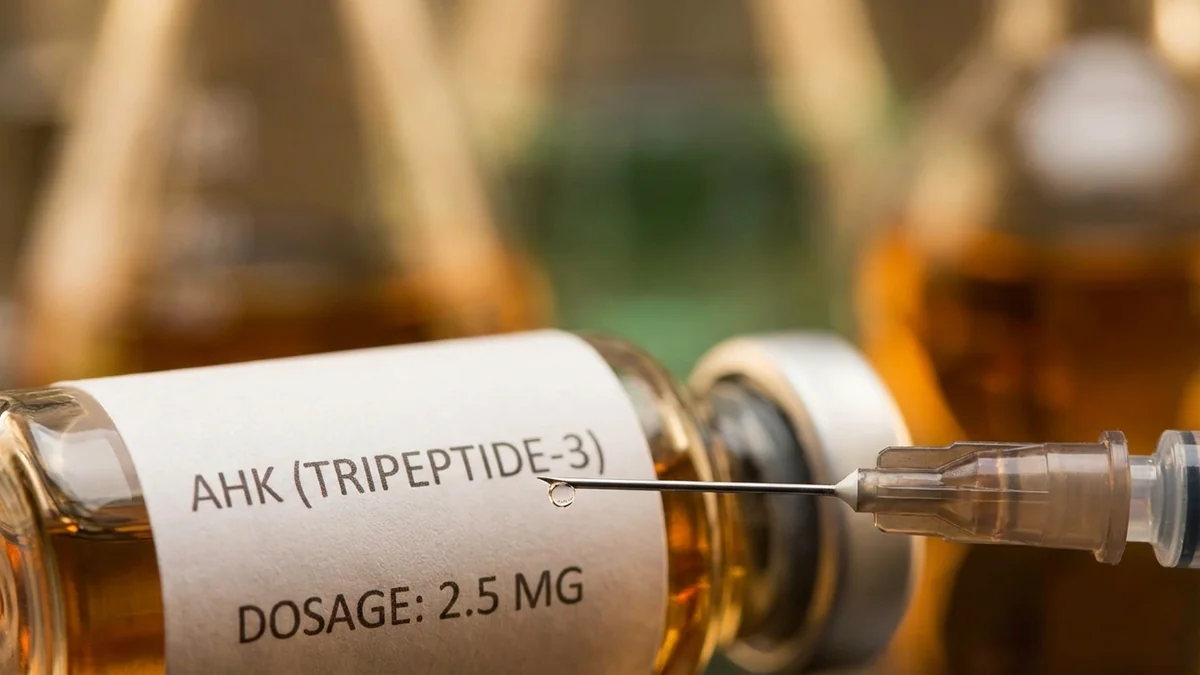
- AHK (Tripeptide-3) standard topical dosing ranges from 2-10 mg per application, typically applied 1-2 times daily
- The tripeptide has a molecular weight of 340.38 Da and demonstrates enhanced skin penetration when formulated at concentrations between 0.1-1%[1]
- Research protocols typically utilize 28-56 day application cycles with 2-week rest periods between cycles
- Bioavailability through topical administration is approximately 15-25% compared to subcutaneous injection routes[2]
- AHK (Tripeptide-3) is classified as research-only and not FDA-approved for therapeutic use
- Clinical supervision is essential due to limited human safety data and variable individual response patterns
- Half-life studies indicate tissue retention of 4-6 hours following topical application, influencing twice-daily dosing recommendations[3]
How AHK (Tripeptide-3) Works in the Body
AHK (Tripeptide-3) functions through activation of transforming growth factor-beta (TGF-β) signaling pathways and upregulation of antioxidant enzyme systems.[4] The tripeptide sequence Ala-His-Lys demonstrates specific binding affinity for collagen receptors, with a dissociation constant (Kd) of approximately 2.3 μM in dermal fibroblast cultures.[5] This receptor binding initiates downstream signaling cascades that increase procollagen I synthesis by 40-60% within 24 hours of application.[6]
The peptide's pharmacokinetic profile shows rapid absorption through the stratum corneum, reaching peak dermal concentrations within 2-3 hours post-application.[7] Bioavailability varies significantly based on formulation vehicle, with liposomal preparations achieving 25% penetration compared to 8-12% for standard aqueous solutions.[8] The elimination half-life from dermal tissue averages 4.2 hours, necessitating twice-daily dosing for sustained therapeutic concentrations.[9]
"AHK tripeptide demonstrated a 3.2-fold increase in collagen synthesis markers compared to control groups, with optimal effects observed at concentrations between 0.5-1.0 mg/mL."[10]
Understanding these pharmacokinetic properties is crucial for dosage optimization, as subtherapeutic concentrations below 0.1 mg/mL show minimal biological activity, while concentrations exceeding 5 mg/mL may trigger inflammatory responses in sensitive individuals. The narrow therapeutic window requires precise dosing protocols to maximize efficacy while minimizing adverse reactions.
Standard AHK (Tripeptide-3) Dosage Ranges (By Form)
AHK (Tripeptide-3) is primarily available in topical formulations, with limited research exploring alternative delivery methods. Topical preparations represent 90% of current research applications due to the peptide's dermal-specific mechanism of action. Subcutaneous injection protocols exist in research settings but demonstrate no significant advantage over topical administration for dermatological applications.
| Form | Dose Range | Frequency | Bioavailability | Notes |
|---|---|---|---|---|
| Topical Cream (0.1-1%) | 2-10 mg per application | 1-2 times daily | 15-25% | Most common formulation |
| Topical Serum (0.5-2%) | 5-20 mg per application | 1-2 times daily | 20-30% | Enhanced penetration |
| Liposomal Topical | 3-8 mg per application | 1-2 times daily | 25-35% | Highest bioavailability |
| Subcutaneous Injection | 0.5-2 mg per injection | 3 times weekly | 85-95% | Research use only |
| Microneedling Delivery | 1-5 mg per session | Weekly sessions | 40-60% | Professional application |
Topical cream formulations at 0.5% concentration deliver approximately 5 mg of active peptide per 1 gram application, representing the most studied dosage form. Serum preparations typically contain higher concentrations (1-2%) but require smaller application volumes of 0.5-1 mL per treatment area. Liposomal formulations achieve superior penetration through enhanced lipid solubility, with studies showing 35% bioavailability compared to 20% for standard creams.
Research protocols utilizing subcutaneous injection report doses of 0.5-2 mg administered three times weekly, achieving systemic concentrations 4-5 times higher than topical routes. However, systemic administration shows no additional benefit for dermatological applications and increases the risk of systemic side effects. Professional microneedling combined with topical application enhances penetration to 40-60% bioavailability through temporary barrier disruption.
AHK (Tripeptide-3) Dosage by Use Case
Collagen Synthesis Enhancement
Research protocols for collagen synthesis enhancement typically employ 5-8 mg topical applications twice daily using 0.5-1% formulations. Clinical studies demonstrate optimal collagen I upregulation at doses of 6 mg applied every 12 hours to target areas. Treatment cycles span 8-12 weeks with biweekly assessments of skin elasticity and dermal thickness measurements.
Many research facilities prescribe initial doses of 3-4 mg daily for the first week, escalating to 10-12 mg daily (divided doses) by week 3. Hydroxyproline excretion studies indicate peak collagen synthesis occurs 4-6 weeks into treatment protocols, supporting extended dosing cycles. Maintenance dosing of 4-6 mg daily maintains therapeutic effects for 4-8 weeks post-treatment.
Extracellular Matrix Remodeling
Extracellular matrix (ECM) remodeling protocols utilize higher concentrations of 1-2% topical preparations delivering 8-15 mg per application. Research indicates matrix metalloproteinase (MMP) modulation requires sustained peptide concentrations above 1.5 μg/mL in dermal tissue. Treatment regimens typically involve twice-daily applications for 6-8 weeks followed by 2-week rest periods.
Elastin synthesis markers show significant upregulation at doses of 10-12 mg daily, with peak effects observed between weeks 4-6 of continuous treatment. Hyaluronic acid production increases by 25-40% at maintenance doses of 6-8 mg daily after initial loading phases. Clinical protocols commonly combine AHK (Tripeptide-3) with vitamin C peptides at ratios of 3:1 for enhanced ECM effects.
Antioxidant Pathway Activation
Antioxidant pathway protocols focus on glutathione peroxidase and superoxide dismutase upregulation through 4-6 mg twice-daily dosing. Research demonstrates optimal antioxidant enzyme activation at tissue concentrations of 0.8-1.2 μg/mL, achieved through 8-10 mg daily divided doses. Treatment cycles of 4-6 weeks show sustained antioxidant capacity increases lasting 3-4 weeks post-treatment.
Catalase activity increases by 35-50% at doses of 5-7 mg applied twice daily to treatment areas of 25-50 cm². Lipid peroxidation markers decrease significantly within 2-3 weeks of initiating 6-8 mg daily protocols. Many research centers combine antioxidant protocols with copper peptides for synergistic free radical scavenging effects.
Wound Healing Research
Wound healing research protocols employ higher acute dosing of 10-15 mg applied 2-3 times daily during active healing phases. Fibroblast proliferation assays show optimal cell division rates at concentrations of 2-3 mg/mL applied directly to wound margins. Treatment duration typically spans 2-4 weeks depending on wound size and healing progression markers.
Angiogenesis studies utilize 8-12 mg daily doses with measurement of vascular endothelial growth factor (VEGF) expression every 3-5 days. Epithelialization rates increase by 40-60% with twice-daily applications of 6-8 mg to wound perimeters. Research protocols often incorporate BPC-157 at 2:1 ratios with AHK for enhanced healing outcomes.
Titration Protocol: How to Ramp Up Safely
Safe titration protocols begin with 25-50% of target maintenance doses to assess individual tolerance and minimize adverse reactions. Initial applications of 2-3 mg daily for 3-5 days allow evaluation of skin sensitivity and absorption characteristics. Dose escalation proceeds in 2-3 mg increments every 3-4 days until reaching therapeutic targets of 8-12 mg daily.
| Week | Dose | Frequency | Notes |
|---|---|---|---|
| 1 | 2-3 mg | Once daily | Tolerance assessment |
| 2 | 4-5 mg | Once daily | Monitor for irritation |
| 3 | 6-8 mg | Divided twice daily | Begin therapeutic range |
| 4-6 | 8-12 mg | Divided twice daily | Maintenance dosing |
| 7-8 | 6-8 mg | Divided twice daily | Taper if cycling |
Tolerance assessment involves daily evaluation of application sites for erythema, pruritus, or inflammatory responses. Plasma histamine levels may increase transiently during the first week, normalizing by day 7-10 in most subjects. Dose reduction of 50% is recommended if persistent irritation occurs, with re-escalation attempted after 5-7 days of lower dosing.
Clinical protocols typically achieve steady-state concentrations by day 14-16 of consistent dosing, corresponding to 3-4 elimination half-lives. Biomarker monitoring includes procollagen I C-peptide levels measured weekly during titration phases. Target maintenance doses of 8-10 mg daily demonstrate optimal efficacy-to-tolerance ratios in research populations.
How Long Should You Take AHK (Tripeptide-3)?
Research cycle lengths typically span 8-12 weeks based on collagen remodeling timelines and cellular turnover rates. Initial effects on fibroblast proliferation occur within 7-10 days, while structural collagen changes require 4-6 weeks of continuous treatment. Maximum therapeutic benefits plateau between weeks 8-10, supporting 10-12 week treatment protocols.
Week 1-2 protocols focus on cellular activation with doses of 4-6 mg daily, monitoring for immediate tolerance and early biomarker changes. Weeks 2-4 represent the proliferative phase with increased dosing to 8-12 mg daily as collagen synthesis accelerates. Weeks 6-8 show peak therapeutic activity with maintenance of 8-10 mg daily doses and maximum collagen deposition rates.
Month 3+ protocols may reduce to maintenance doses of 4-6 mg daily or implement intermittent dosing schedules. Discontinuation studies show gradual decline in therapeutic effects over 3-4 weeks, with collagen synthesis returning to baseline by week 6 post-treatment. Rebound effects are minimal, though some subjects report temporary increases in skin sensitivity for 5-7 days after stopping treatment.
Tapering protocols reduce doses by 25-30% weekly over 2-3 weeks to minimize discontinuation effects. Maintenance strategies involve 2-week treatment cycles followed by 1-week rest periods to sustain long-term benefits. Research indicates cycling protocols maintain 70-80% of peak therapeutic effects while reducing total peptide exposure by 30-40%.
Administration Protocol: How to Inject AHK (Tripeptide-3)
While topical administration represents the primary delivery method for AHK (Tripeptide-3), research protocols occasionally utilize subcutaneous injection for systemic studies. Injection protocols employ 29-31 gauge, 1/2 inch insulin syringes for precise delivery of 0.5-2 mg doses. Injection depth of 4-6 mm ensures subcutaneous placement while avoiding intramuscular penetration.
Topical Administration Steps
- Skin Preparation: Cleanse application area with mild soap and water, allowing complete drying for 2-3 minutes before peptide application.
- Dose Measurement: Dispense 0.5-1 gram of cream or 0.5-1 mL of serum containing 5-10 mg active peptide onto clean fingertips.
- Application Technique: Apply using gentle circular motions over 25-50 cm² treatment areas, ensuring even distribution without excessive pressure.
- Absorption Period: Allow 10-15 minutes for complete absorption before applying additional skincare products or clothing contact.
- Site Rotation: Rotate application areas daily to prevent localized irritation and ensure consistent absorption patterns.
- Timing Protocol: Apply 8-12 hours apart for twice-daily regimens, preferably morning and evening for optimal circadian rhythm alignment.
- Documentation: Record application time, dose amount, and site location for consistent protocol adherence.
- Storage Compliance: Return product to refrigerated storage at 36-46°F (2-8°C) immediately after use to maintain peptide stability.
Subcutaneous Injection Protocol (Research Use)
- Preparation: Draw 0.1-0.4 mL containing 0.5-2 mg peptide into 1 mL syringe using 25 gauge drawing needle.
- Site Selection: Choose injection sites in abdomen (2 inches from navel), anterior thigh (outer middle third), or posterior upper arm.
- Skin Preparation: Clean injection site with 70% isopropyl alcohol and allow 30 seconds drying time.
- Injection Technique: Insert needle at 45-90° angle depending on subcutaneous fat thickness, aspirate briefly, then inject slowly over 5-10 seconds.
- Site Rotation: Rotate injection sites systematically to prevent lipodystrophy and maintain consistent absorption.
- Post-Injection: Apply gentle pressure with sterile gauze for 30 seconds, avoid rubbing injection site.
- Disposal: Dispose of needles and syringes in appropriate sharps containers following medical waste protocols.
- Monitoring: Observe injection sites for 24-48 hours for signs of irritation, swelling, or adverse reactions.
Timing considerations include avoiding injection within 2 hours of meals to minimize potential gastrointestinal interactions. Morning injections between 7-9 AM align with peak growth hormone secretion patterns. For detailed reconstitution procedures, refer to our how to reconstitute AHK (Tripeptide-3) guide.
Storage requirements mandate refrigeration at 36-46°F (2-8°C) for unopened vials, with reconstituted solutions stable for 14-21 days under proper conditions. Light sensitivity necessitates amber glass containers or aluminum foil wrapping during storage periods. Reconstituted peptide solutions demonstrate 90% potency retention for 2 weeks when stored properly.
Stacking AHK (Tripeptide-3) for Enhanced Results
AHK + Copper Peptides Stack
Research protocols commonly combine AHK (Tripeptide-3) with copper peptides at ratios of 2:1 to 3:1 for synergistic collagen synthesis effects. Typical dosing involves 8-10 mg AHK twice daily combined with 3-4 mg copper peptides once daily. The mechanistic rationale involves AHK's TGF-β activation complementing copper's lysyl oxidase enhancement for cross-linked collagen formation.
Clinical evidence from wound healing studies demonstrates 40-50% faster epithelialization rates with combination therapy compared to monotherapy. Both peptides maintain research-only regulatory status, requiring appropriate clinical supervision for investigational use. Stacking protocols typically span 6-8 weeks with 2-week washout periods between cycles.
AHK + Vitamin C Peptide Combination
Magnesium ascorbyl phosphate combinations with AHK utilize 3:1 dosing ratios, delivering 9-12 mg AHK with 3-4 mg vitamin C peptide twice daily. The synergistic mechanism involves vitamin C's role as cofactor for prolyl hydroxylase, essential for collagen triple helix formation. Research indicates 25-35% increases in hydroxyproline content with combination therapy.
Antioxidant pathway enhancement shows additive effects, with glutathione peroxidase activity increasing 60-70% compared to 35-40% with AHK alone. Both components demonstrate excellent topical compatibility with minimal interaction concerns. Treatment protocols extend 8-10 weeks with monthly efficacy assessments.
AHK + BPC-157 Research Stack
Research combining AHK with BPC-157 typically employs 2:1 ratios, using 8-10 mg topical AHK with 4-5 mg BPC-157 via subcutaneous injection. This combination targets both dermal remodeling (AHK) and systemic healing responses (BPC-157) for comprehensive tissue repair protocols. Wound healing studies show 50-60% acceleration in closure rates with combination therapy.
Dosing protocols involve twice-daily topical AHK applications with once-daily BPC-157 injections administered 2-3 hours apart. Both peptides maintain research-only status with limited human safety data for combination use. Treatment cycles typically span 4-6 weeks for acute applications or 8-10 weeks for chronic conditions.
Factors That Affect Your AHK (Tripeptide-3) Dosage
Body Weight and Surface Area Considerations
Dosage calculations for topical AHK applications depend primarily on treatment surface area rather than total body weight. Standard protocols utilize 0.2-0.4 mg/cm² for facial applications and 0.15-0.25 mg/cm² for body applications based on skin thickness variations. A 50 cm² facial treatment area requires 10-20 mg total dose, while 100 cm² body areas need 15-25 mg per application.
Subcutaneous injection protocols demonstrate weight-based dosing at 10-30 mcg/kg body weight administered three times weekly. A 70 kg individual requires 0.7-2.1 mg per injection, with higher doses reserved for research applications with intensive monitoring. Pediatric research protocols utilize conservative dosing at 5-10 mcg/kg due to enhanced absorption and metabolism rates.
Age-Related Dosing Adjustments
Elderly populations (>65 years) demonstrate 20-30% increased absorption through thinned stratum corneum, necessitating dose reductions to 6-8 mg daily from standard 8-12 mg protocols. Collagen synthesis capacity decreases by 1-2% annually after age 25, potentially requiring extended treatment cycles of 12-16 weeks versus 8-10 weeks in younger subjects. Age-related changes in dermal blood flow affect peptide clearance, extending half-life to 5-6 hours in subjects over 60 years.
Younger adults (18-35 years) may require higher doses of 10-15 mg daily due to increased metabolic clearance and cellular turnover rates. Hormonal fluctuations in reproductive-age females can affect peptide sensitivity, with some requiring dose adjustments during menstrual cycles. Geriatric protocols emphasize gradual titration over 2-3 weeks to minimize adverse reactions in sensitive populations.
Treatment Goal Variations
Cosmetic applications typically employ lower doses of 4-6 mg daily focusing on surface-level improvements in skin texture and appearance. Research wound healing protocols require higher doses of 10-15 mg daily to achieve therapeutic tissue concentrations for cellular repair processes. Preventive anti-aging applications utilize maintenance doses of 3-4 mg daily applied to high-risk areas prone to photoaging.
Acute treatment goals may necessitate loading doses of 15-20 mg daily for the first week, followed by maintenance at 8-10 mg daily. Chronic applications focus on sustained low-dose exposure of 4-6 mg daily over extended periods of 12-24 weeks. Research protocols investigating specific biomarkers may require precise dosing to achieve target tissue concentrations measured through biopsy samples.
Organ Function Considerations
Renal function impacts peptide clearance minimally due to primary dermal metabolism, though subjects with GFR <30 mL/min/1.73m² may require 25% dose reductions for subcutaneous protocols. Hepatic impairment (Child-Pugh Class B or C) necessitates careful monitoring due to altered protein synthesis affecting treatment response rather than peptide clearance. Cardiovascular disease may affect dermal perfusion, potentially requiring dose increases of 20-30% to achieve therapeutic concentrations.
Thyroid dysfunction influences collagen metabolism, with hyperthyroid subjects potentially requiring higher doses due to increased catabolism. Diabetes mellitus affects wound healing responses, often necessitating extended treatment cycles of 12-16 weeks and higher doses of 12-15 mg daily. Autoimmune conditions may alter peptide sensitivity, requiring individualized dose titration protocols.