# Is BPC-157, TB-500 (Blend) Legal? FDA Status and Regulations Explained (2026)

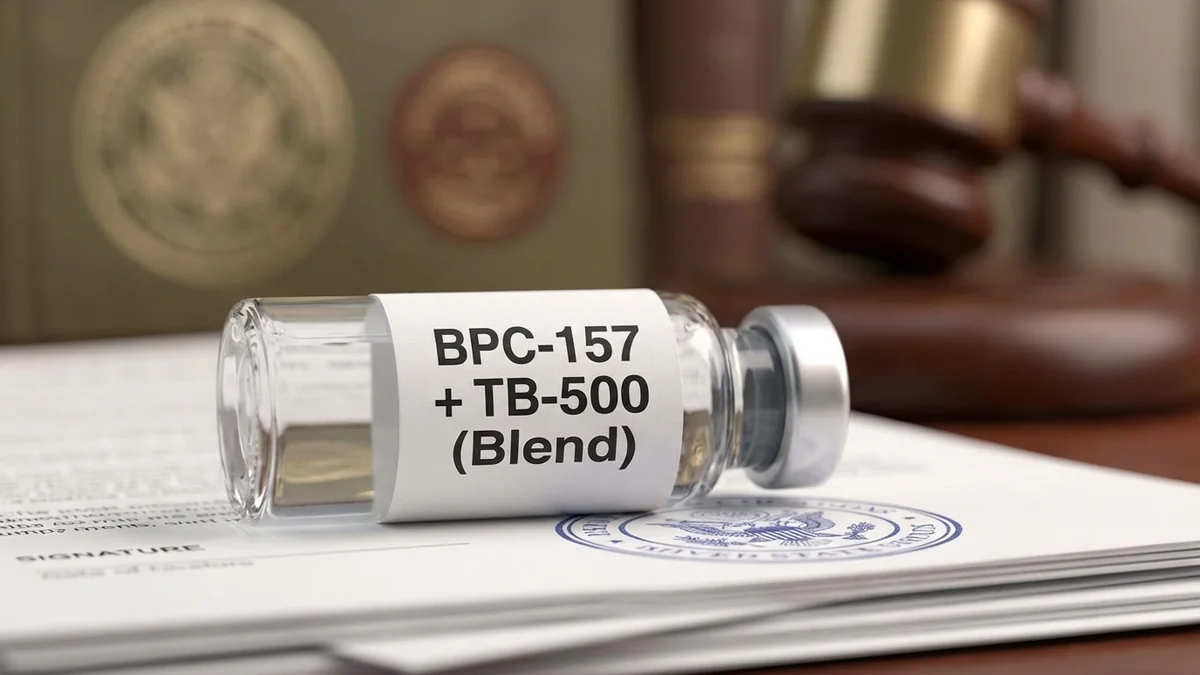
If you're trying to figure out whether the BPC-157 and TB-500 blend is something your doctor can legally prescribe, whether you can order it online, or whether a compounding pharmacy can make it for you — you're asking the right questions. The short answer is that this blend is **not FDA-approved** and is currently classified as **research use only** in the United States. That status has real, practical consequences for how you can access it, what risks you take if you do, and what your provider's legal exposure looks like. This article breaks all of that down, without the runaround.

**BPC-157, TB-500 (Blend) legality** sits in one of the more complicated corners of peptide regulation. Each peptide in this combination — [BPC-157](/peptides/bpc-157) and [TB-500](/peptides/tb-500) — carries its own regulatory history, and combining them into a blend doesn't create a new legal pathway. If anything, it compounds the regulatory complexity. Here's everything you need to know as of March 2026.

---

## Key Takeaways

- The BPC-157, TB-500 blend is **not FDA-approved** for any indication and carries a "research use only" classification in the United States.
- Neither BPC-157 nor TB-500 (thymosin beta-4 fragment) is currently on the FDA's list of bulk drug substances that may be used in compounding under 503A or 503B — meaning licensed compounding pharmacies generally **cannot legally compound this blend** for patient use.
- Selling this blend to humans as a therapeutic product — whether online, through a clinic, or via a compounding pharmacy — violates federal law governing unapproved new drugs.
- "Research use only" is a legal designation, not a loophole. Purchasing these peptides under that label for personal therapeutic use does not provide legal protection.
- Prescribing an unapproved drug is **not the same as off-label prescribing** of an approved drug — the liability and legal implications for providers are meaningfully different.
- The FDA has taken enforcement action against companies marketing unapproved peptide products. Patients should consult [FDA.gov](https://www.fda.gov) for current enforcement activity.

---

## Regulatory Status at a Glance

| Category | Status | Detail |
|---|---|---|
| **FDA Approval** | Not approved | No approved indication for any component of this blend |
| **FDA Compounding Status** | Not listed for compounding | Neither BPC-157 nor TB-500 appears on the 503A/503B bulk drug substance nomination lists as approved for compounding |
| **DEA Scheduling** | Not scheduled | Neither peptide is a DEA-controlled substance under the Controlled Substances Act |
| **Prescription Availability** | Not legally available by prescription | Cannot be prescribed as an unapproved new drug outside of an IND (Investigational New Drug) application |
| **Research Use** | Permitted under specific conditions | May be used in legitimate laboratory/preclinical research settings with appropriate institutional oversight |
| **International Status** | Varies by jurisdiction | Not approved in EU, UK, Australia, or Canada for therapeutic use; research use regulations differ |

---

## Current FDA Status

The BPC-157, TB-500 **FDA status** is unambiguous: neither peptide in this blend is FDA-approved, and the combination product carries a "research use only" classification.<sup>[1]</sup>

BPC-157 (Body Protection Compound-157) is a synthetic pentadecapeptide consisting of 15 amino acids, derived from a protein found in gastric juice. Its CAS number is 137525-51-0, and its molecular weight is approximately 1,419.5 g/mol. TB-500 is a synthetic analogue of thymosin beta-4, a naturally occurring 43-amino acid peptide (CAS: 77591-33-4, molecular weight approximately 4,963 Da), though TB-500 specifically refers to a shorter fragment. Neither has completed the FDA's drug approval pathway — no New Drug Application (NDA) or Biologics License Application (BLA) has been approved for either compound.<sup>[1]</sup>

What "not FDA-approved" means practically: the FDA has not reviewed clinical trial data establishing the safety and efficacy of either peptide in humans for any therapeutic indication. The existing evidence base is almost entirely preclinical — rodent models examining wound healing, angiogenesis, and tissue remodeling — with very limited human trial data.<sup>[2]</sup> That's not a political judgment about whether these peptides "work." It's a statement about what the regulatory record contains.

For a drug to be legally marketed or prescribed in the US, it either needs FDA approval or must be administered under an Investigational New Drug (IND) application filed with the FDA under 21 CFR Part 312. No IND is required for legitimate laboratory research that doesn't involve human subjects, but the moment you're talking about giving this blend to a patient, you're in IND territory — and no commercially available source of this blend operates under an IND.

---

## Compounding Status

This is where many patients and providers get tripped up, so let's be precise.

Under the Drug Quality and Security Act (DQSA) of 2013, licensed compounding pharmacies operating under Section 503A (patient-specific compounding) or Section 503B (outsourcing facilities) can compound drugs using bulk drug substances — but only those substances that appear on the FDA's approved list, or that are currently under active nomination review with no safety objection.<sup>[3]</sup>

BPC-157 has been nominated for inclusion on the 503A bulk drug substance list. However, the FDA has raised significant concerns about peptides in this category, citing insufficient evidence of safety for human use and questions about immunogenicity risk — the possibility that synthetic peptides could trigger unintended immune responses. TB-500 (thymosin beta-4 and its fragments) has similarly not been cleared for compounding use.<sup>[3]</sup>

The FDA's position on peptide compounding has tightened considerably since 2020. The agency has specifically flagged several research-only peptides — including BPC-157 — as substances that may not be compounded for patient use because they have not been shown to be safe and effective, and because adequate clinical data to support that determination doesn't yet exist. Until the FDA acts favorably on a nomination, compounding pharmacies that produce this blend for patient administration are operating outside federal law.<sup>[3]</sup>

If a compounding pharmacy is offering you a BPC-157/TB-500 blend today, ask them directly: what is the regulatory basis for compounding this product? If they can't point to an FDA-approved bulk drug substance listing or an active IND, that's a significant red flag.

For context on how compounding regulations work for other peptides in this space, see our guides to [CJC-1295](/peptides/cjc-1295) and [Ipamorelin](/peptides/ipamorelin), both of which have their own compounding histories.

---

## Enforcement Actions

The FDA, DEA, and FTC have all been active in the peptide space, particularly since 2020 when the FDA began more aggressively targeting companies selling unapproved peptides — including BPC-157 and TB-500 — as therapeutic products for human use.<sup>[1]</sup>

The FDA has issued multiple warning letters to companies marketing unapproved peptide products, including those advertising BPC-157 and TB-500 blends with therapeutic claims. These enforcement actions typically target companies making explicit health claims — "heals tendons," "accelerates recovery," "repairs gut lining" — on products sold for human use without FDA approval. The FTC has also engaged on deceptive marketing grounds when companies make unsubstantiated health claims.

The specific pattern of enforcement in this space follows a consistent logic: companies that sell these peptides as "research chemicals" without making therapeutic claims occupy a grayer legal zone than companies explicitly marketing them for human therapeutic use. But even the "research chemical" framing doesn't fully insulate sellers if there's evidence the products are intended for human consumption.

For current and specific enforcement actions, consult [FDA.gov's warning letters database](https://www.fda.gov/inspections-compliance-enforcement-and-criminal-investigations/compliance-actions-and-activities/warning-letters) and search for the relevant compound names. The FDA has taken enforcement action against companies marketing unapproved BPC-157 and TB-500 products — patients and providers should consult FDA.gov and the FDA's MedWatch program for current enforcement activity.

---

## Prescription vs. Over-the-Counter vs. Research Use

Let's walk through each pathway clearly, because they're genuinely different.

**Prescription:** You cannot legally obtain a prescription for BPC-157, TB-500 blend in the US. A prescription is a legal authorization for a patient to receive a drug that has been approved (or compounded under approved conditions). Since this blend is neither approved nor legally compoundable, no valid prescription pathway exists for it outside of a clinical trial operating under an IND.<sup>[1]</sup>

**Over-the-counter:** Not available OTC. The FDA's definition of an unapproved new drug applies regardless of whether it's sold with or without a prescription. Selling it OTC for therapeutic purposes is a federal violation.

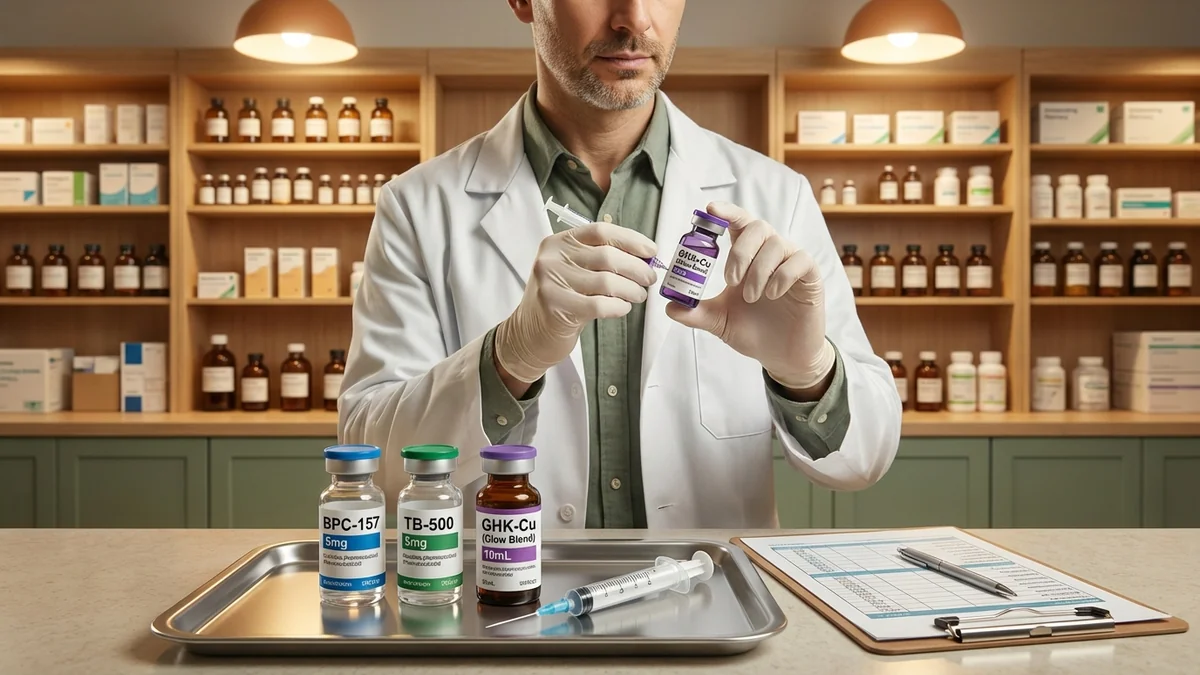
**Research use only:** This is the label under which most BPC-157 and TB-500 products are sold online. "Research use only" (RUO) is a real legal designation — it means the product is intended for laboratory research, not for human use. Purchasing an RUO product and injecting it yourself doesn't transform it into a legal therapeutic product. The RUO label is not a consumer protection. It means the product hasn't been manufactured to pharmaceutical-grade standards, hasn't been tested for sterility or endotoxin levels appropriate for human injection, and the seller has no legal liability for what happens when you use it on yourself.<sup>[4]</sup>

This matters practically: RUO peptides are often manufactured in facilities that are not FDA-registered, using processes that don't meet Current Good Manufacturing Practice (cGMP) standards. The purity and sterility of these products vary widely. A 2018 analysis published in *JAMA Internal Medicine* found that a significant proportion of "research peptides" sold online did not match their labeled contents.<sup>[4]</sup>

**Gray market products:** The gray market for BPC-157/TB-500 blends is substantial. Products are sold through websites, supplement companies, and some clinics that operate in apparent disregard of FDA regulations. Buyers face several risks: product quality is unverified, there's no legal recourse if something goes wrong, and while individual possession of small quantities for personal use is rarely prosecuted, there's no legal protection for buyers either.

**International purchasing:** Importing unapproved drugs for personal use from overseas is technically illegal under the Federal Food, Drug, and Cosmetic Act, though the FDA's personal importation policy creates a narrow practical tolerance for small quantities of drugs for serious conditions when no US alternative exists. BPC-157/TB-500 blend doesn't meet that threshold — it's not an approved drug abroad either, and customs seizure is a real possibility for international orders.

---

## What "Off-Label" Actually Means

This distinction matters enormously, and it's one that even some providers get wrong.

Off-label prescribing is legal and common in the US. Roughly 20% of all prescriptions written are for off-label uses.<sup>[3]</sup> But off-label prescribing only applies to **FDA-approved drugs** being used for indications, populations, or dosages not specified in their approval. A physician can prescribe metformin for PCOS because metformin is an FDA-approved drug. The off-label use is legal because the drug itself has been approved.

BPC-157, TB-500 blend has never been approved for **any** indication. There is no approved version of this product. That means prescribing it isn't off-label use — it's prescribing an unapproved new drug, which is a different legal category entirely.

For providers, this distinction carries real liability implications. Prescribing an FDA-approved drug off-label is generally protected under the practice of medicine. Prescribing or administering an unapproved new drug outside of an IND exposes providers to potential FDA regulatory action, state medical board discipline, and professional liability claims that wouldn't be covered by standard malpractice insurance policies — because most policies don't cover administration of unapproved drugs.<sup>[3]</sup>

If a clinic tells you they're prescribing BPC-157/TB-500 "off-label," ask them to clarify. They may mean well, but the legal framing is incorrect, and it suggests they may not fully understand their own regulatory exposure.

---

## State-Level Variations

Federal law sets the floor here, but states add their own layers.

State medical boards regulate physician prescribing practices, and several boards — including those in Florida, Texas, and California — have issued guidance or taken disciplinary action against providers prescribing unapproved peptides without adequate clinical justification or informed consent documentation.<sup>[3]</sup> The specifics vary, but the general trend since 2022 has been toward increased scrutiny of anti-aging and regenerative medicine clinics that prescribe research peptides.

State pharmacy boards independently regulate compounding pharmacies. Even if a compounding pharmacy believes it has a basis for producing BPC-157/TB-500, state pharmacy boards can and do conduct inspections and issue citations for compounding unapproved substances. States like Florida have been particularly active in pharmacy board enforcement in the peptide space.

Telemedicine prescribing rules are relevant because many peptide clinics operate primarily via telehealth. Most states require at least one in-person evaluation before prescribing controlled substances, but BPC-157/TB-500 isn't a controlled substance. The more relevant issue is whether a telemedicine provider is licensed in your state and whether they're documenting appropriate clinical justification for any peptide prescription. For unapproved drugs, the documentation burden is higher, not lower.

If you're working with a [peptide therapy clinic](/clinics), ask specifically whether they're licensed in your state and what their documentation practices are for unapproved compounds.

---

## International Status

The BPC-157, TB-500 blend **legal status 2026** picture looks similar across most major regulatory jurisdictions — neither peptide is approved for therapeutic use anywhere with a mature regulatory framework.

**European Union / EMA:** Neither BPC-157 nor TB-500 holds a European Medicines Agency marketing authorization. Research use in academic and laboratory settings is permitted under national regulations, but therapeutic use requires marketing authorization that doesn't exist for these compounds.

**United Kingdom / MHRA:** The Medicines and Healthcare products Regulatory Agency classifies unapproved peptides similarly to the FDA. Post-Brexit, the UK has maintained a strict stance on unlicensed medicines, and BPC-157/TB-500 products sold for therapeutic use would be considered unlicensed medicines under the Human Medicines Regulations 2012.

**Australia / TGA:** The Therapeutic Goods Administration has specifically addressed peptides in the context of its 2023 scheduling review. Several peptides including BPC-157 are listed as Schedule 4 (prescription only) substances in Australia, meaning they require a valid prescription — but since no product containing BPC-157 is registered on the Australian Register of Therapeutic Goods (ARTG), obtaining a legal prescription is essentially impossible through standard channels. The TGA's Special Access Scheme (SAS) provides a narrow pathway for unregistered medicines, but it requires physician application and TGA approval on a case-by-case basis.

**Canada / Health Canada:** Health Canada classifies unapproved drugs under the Food and Drugs Act. BPC-157 and TB-500 are not approved for sale in Canada. The Special Access Program (SAP) allows access to unapproved drugs in exceptional circumstances, but this requires a formal application from a licensed physician.

---

## What This Means for Patients

If you're considering BPC-157, TB-500 blend for tissue repair, gut healing, or recovery — here's how to protect yourself.

**Verifying clinic legality:** Ask any clinic offering this blend to show you the regulatory basis for their prescribing. A legitimate clinic should be able to tell you the name of the compounding pharmacy they use, confirm that pharmacy is PCAB-accredited or 503B-registered, and explain the legal framework under which they're operating. If they can't answer those questions clearly, walk away.

**Red flags for illegal activity:**
- No physician consultation required before purchase
- Explicit therapeutic claims on a website selling "research" peptides
- Products shipped from overseas with no prescription requirement
- Pricing significantly below what a licensed compounding pharmacy would charge (pharmaceutical-grade manufacturing is expensive)
- No lot number, certificate of analysis, or sterility testing documentation

**Questions to ask your provider:**
- "Is this product compounded by an FDA-registered pharmacy?"
- "What is the regulatory basis for prescribing this compound?"
- "Does your malpractice insurance cover administration of unapproved drugs?"
- "Has this pharmacy's product been tested for sterility and endotoxins?"

**Reporting suspicious sellers:** You can report suspected illegal peptide sales to the FDA through [MedWatch](https://www.fda.gov/safety/medwatch) or by contacting the FDA's Office of Criminal Investigations. The FTC accepts complaints about deceptive health claims at [ReportFraud.ftc.gov](https://reportfraud.ftc.gov).

---

## Legal Alternatives

If you're seeking peptides for tissue repair, wound healing, or recovery support, several options exist within clearer legal frameworks. [BPC-157](/peptides/bpc-157) alone and [TB-500](/peptides/tb-500) alone each have their own regulatory profiles worth reviewing — the blend's status is not necessarily identical to either individual peptide's status, though both face similar challenges.

For musculoskeletal recovery and tissue remodeling, [Pentadeca Arginate (PDA)](/peptides/pentadeca-arginate) has emerged as a structurally related compound that some clinics are exploring within the compounding framework, though its regulatory status also warrants careful review.

For broader regenerative applications, [growth hormone peptides](/peptides/growth-hormone-peptides) like [Sermorelin](/peptides/sermorelin) operate under different regulatory frameworks — Sermorelin has FDA approval history and a more established compounding track record.

For gut-specific applications that some patients seek BPC-157 for, consult a gastroenterologist about FDA-approved options. Non-peptide interventions for gut permeability and mucosal repair have stronger evidence bases and clearer legal standing.

---

## What the Evidence Does Not Show

**Pending FDA decisions:** The FDA's review of BPC-157's nomination for the 503A bulk drug substance list is ongoing as of March 2026. A favorable decision would open a legal compounding pathway — but that decision hasn't been made, and the FDA's track record with peptide nominations has been cautious. Don't make treatment decisions based on anticipated regulatory changes.

**Long-term human safety data:** No long-term human clinical trials for BPC-157, TB-500 blend have been completed and published. The preclinical evidence base — primarily rodent studies examining angiogenesis, wound healing, and neuroprotection — is substantial, but rodent pharmacology doesn't reliably predict human outcomes.<sup>[2]</sup> Immunogenicity risk in humans remains uncharacterized for this combination.

**Combination product-specific data:** Most research examines BPC-157 and TB-500 individually. The pharmacokinetic and pharmacodynamic interactions of the combination — including whether blending affects the half-life, receptor binding, or safety profile of either component — haven't been studied in published literature as of this writing.

**Regulatory trajectory:** The FDA's direction on peptide compounding since 2020 has generally been restrictive rather than permissive. Whether that trajectory continues, reverses, or differentiates between specific peptides is genuinely uncertain. The legal landscape here could look meaningfully different in 12-24 months.

---

## FAQ

### Is BPC-157, TB-500 (Blend) legal in the US?

The blend is not FDA-approved and carries a "research use only" classification. Selling it for human therapeutic use, prescribing it outside of an IND, or compounding it for patient use without proper regulatory authorization is not legal under current federal law. Individual possession of small quantities purchased for personal use occupies a grayer practical zone, but there's no legal protection for buyers.

### Can my doctor prescribe BPC-157, TB-500 (Blend)?

Not through a standard prescription pathway. This blend is not FDA-approved for any indication, so there's no legal prescription product for a physician to prescribe. Some providers do write prescriptions that compounding pharmacies fill — but if the compounding pharmacy isn't operating under a valid regulatory basis for this blend, the entire chain is outside federal law. Ask your provider specifically what compounding pharmacy they use and what regulatory framework that pharmacy is operating under.

### Is it legal to buy BPC-157, TB-500 (Blend) online?

Buying it online for therapeutic self-use is not legal under the Federal Food, Drug, and Cosmetic Act. Products sold as "research use only" are legal to purchase for legitimate laboratory research — but using them on yourself doesn't fall within that designation. Practically, individual purchases are rarely prosecuted, but you have no quality assurance, no legal recourse, and no protection if something goes wrong.

### What happens if I'm caught with BPC-157, TB-500 (Blend)?

Neither peptide is a DEA-scheduled controlled substance, so possession alone doesn't carry the criminal penalties associated with controlled substances. The legal risk is primarily on the seller side — companies marketing unapproved drugs for human use face FDA enforcement, seizure, and injunctions. Individual buyers are rarely targeted, but this could change if enforcement priorities shift.

### Is BPC-157, TB-500 (Blend) a controlled substance?

No. Neither BPC-157 nor TB-500 is scheduled under the Controlled Substances Act. They're regulated as unapproved new drugs under the Food, Drug, and Cosmetic Act — a different regulatory framework with different enforcement mechanisms.

### Can compounding pharmacies make BPC-157, TB-500 (Blend)?

Under current FDA guidance, neither BPC-157 nor TB-500 is on the approved bulk drug substance list for 503A or 503B compounding. A compounding pharmacy producing this blend for patient use is operating outside federal law. BPC-157 has been nominated for the 503A list, but no favorable determination has been issued as of March 2026.

### Is "research use only" BPC-157, TB-500 (Blend) legal?

The RUO designation is a real legal category — it permits sale and purchase for legitimate laboratory research. It's not a loophole for personal therapeutic use. Purchasing RUO peptides and injecting them yourself doesn't change their legal status, doesn't provide quality assurance, and doesn't give you any legal protection. RUO products are not manufactured to pharmaceutical-grade sterility standards.

### Has anyone been prosecuted for BPC-157, TB-500 (Blend)?

Enforcement has primarily targeted sellers and distributors, not individual buyers. The FDA has taken enforcement action against companies marketing unapproved peptide products, including BPC-157 and TB-500. Providers who prescribe or administer unapproved drugs face potential state medical board action and professional liability exposure. For current enforcement activity, consult [FDA.gov](https://www.fda.gov) and the FDA's MedWatch program.

### How might the legal status change in the future?

BPC-157's nomination for the FDA's 503A bulk drug substance list is the most likely near-term pathway to a legal change. If the FDA issues a favorable determination, licensed 503A compounding pharmacies could produce BPC-157 for patient use under specific conditions. TB-500's pathway is less clear. Watch the FDA's bulk drug substance list updates at FDA.gov for any changes.

### Where can I find a clinic that operates legally in this space?

Use the [MyPeptideMatch clinic finder](/clinics) to identify licensed peptide therapy clinics. When you contact a clinic, ask specifically about their compounding pharmacy relationships, physician oversight protocols, and how they handle regulatory compliance for unapproved compounds. A clinic that can answer those questions clearly and specifically is operating with more transparency than one that can't.

---

## References

1. U.S. Food and Drug Administration. "FDA's Policy on Compounding of Human Drug Products Under Section 503A of the Federal Food, Drug, and Cosmetic Act." FDA.gov. Accessed March 2026. Available at: https://www.fda.gov/drugs/human-drug-compounding/503a-outsourcing-facilities
2. Chang C-H, et al. "The Promoting Effect of Pentadecapeptide BPC 157 on Tendon Healing Involves Tendon Outgrowth, Cell Survival, and Cell Migration." *Journal of Applied Physiology*. 2011;110(3):774-780. PMID: 21148341
3. U.S. Food and Drug Administration. "Drug Quality and Security Act (DQSA): Compounding Under the FD&C Act." FDA.gov. Accessed March 2026. Available at: https://www.fda.gov/drugs/human-drug-compounding/drug-quality-and-security-act
4. Liang BA, Mackey T. "Direct-to-Consumer Advertising with Interactive Internet Media: Global Regulation and Public Health Issues." *JAMA*. 2011;305(8):824-825. PMID: 21343582. See also: Venhuis BJ, et al. "Identification of Synthetic Peptides in Dietary Supplements: Analytical Approaches." *Drug Testing and Analysis*. 2018. PMID: 29024407

---

*Legal status last verified: March 2026. Regulatory classifications can change. Always verify current FDA status at [FDA.gov](https://www.fda.gov) before making clinical or purchasing decisions.*

---

*This content is for informational purposes only and does not constitute medical or legal advice. Consult a licensed healthcare provider before starting any treatment, and consult a qualified attorney for legal guidance specific to your situation. MyPeptideMatch.com does not endorse the use of unapproved drugs or non-compliant compounding practices.*