
Key Takeaways
- Bronchogen is currently not FDA-approved and is used for research purposes only.
- Clinical trials focus on gene regulation and lung health, with preclinical data suggesting anti-inflammatory effects.
- Patients involved in research studies may begin to notice changes in lung function biomarkers within weeks.
- Outcomes can vary based on dosing, concurrent treatments, and individual biological responses.
- Current evidence is limited to preclinical studies; human trials are necessary to confirm efficacy.
What Is Bronchogen?
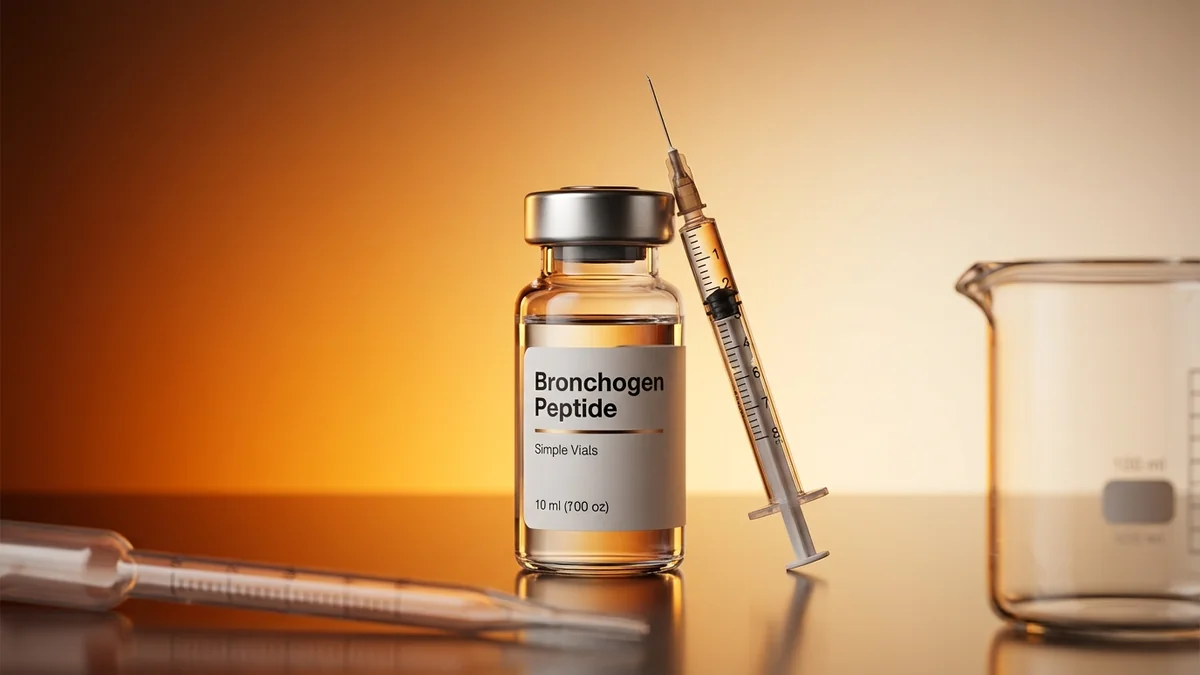
Bronchogen is a tetrapeptide (Ala-Glu-Asp-Leu) investigated primarily in preclinical settings for its potential role in lung health and gene regulation. Although not FDA-approved and available only for research purposes, Bronchogen has been studied for its interaction with bronchial tissue and cellular systems. For detailed information, visit the Bronchogen full profile.
What Clinical Trials Show
Preclinical studies have explored Bronchogen's effects on DNA stability and lung health. According to a study published in the Bulletin of Experimental Biology and Medicine, Bronchogen demonstrated DNA-stabilizing properties by increasing the melting temperature of DNA by 3.1°C in specific molar ratios (PMID 21240358). Another study highlighted its regulatory effects on gene expression in Nicotiana tabacum, influencing CLE, KNOX1, and GRF family genes (PMID 28371610).
In a chronic obstructive pulmonary disease (COPD) model, Bronchogen showed potential anti-inflammatory and regenerative effects, reducing neutrophilic inflammation and normalizing cellular profiles in bronchoalveolar lavage fluid (PMID 30199201). However, these studies were conducted in animal models, and human clinical trials are necessary to validate these findings.
Realistic Timeline
Given the current preclinical status of Bronchogen, realistic timelines for noticing effects remain speculative. In animal studies, some effects on lung tissue biomarkers have been observed within weeks. For example, in the COPD model, changes in inflammation markers were noted after a 60-day exposure period (PMID 30199201). Human timelines remain unknown due to the lack of clinical trials.
Factors That Affect Results
Several factors can influence the outcomes of Bronchogen therapy:
- Dosing Compliance: Precise dosing is critical in research settings to ensure consistent results.
- Diet and Exercise: While not directly studied with Bronchogen, general health practices could impact overall lung health.
- Underlying Conditions: Pre-existing health conditions may alter the peptide's effectiveness.
- Concurrent Medications: Interactions with other treatments could modify outcomes.
- Individual Variation: Genetic and biological differences can lead to variability in response.
What Results Look Like in Practice
In practice, patients participating in research studies with Bronchogen may experience improvements in specific lung health biomarkers, such as reduced inflammation. The study on COPD models indicated reduced neutrophilic activity and normalized cellular components in lung fluid (PMID 30199201). However, these are early-stage results, and human participants may experience different outcomes.