
CJC-1295 / Ipamorelin Side Effects: What to Know Before Starting
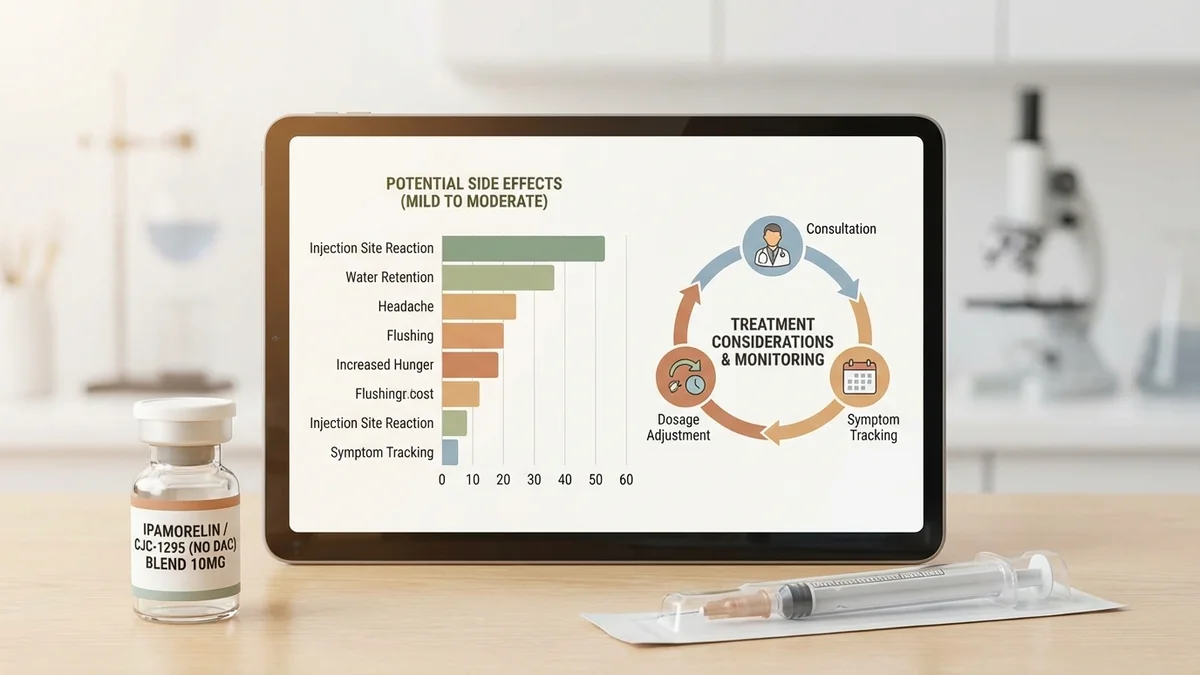
CJC-1295 and ipamorelin are growth hormone-releasing peptides commonly prescribed together. Both are generally considered to have mild side effect profiles compared to direct HGH therapy, but side effects do occur — particularly in the early weeks of a protocol.
Side Effects Summary
Most commonly reported:
- Water retention / mild edema (especially in hands, feet, wrists)
- Fatigue or lethargy, particularly after injection
- Tingling or numbness in the extremities (paresthesia)
- Headache
- Flushing or warmth at injection site
Less common:
- Nausea (more associated with ipamorelin than CJC-1295)
- Mild dizziness immediately post-injection
- Increased appetite (can be a desired effect in some protocols)
- Temporary joint discomfort or stiffness
- Cortisol suppression with prolonged high-dose use
Rare / theoretical:
- Insulin resistance (with chronic supraphysiologic GH elevation)
- Pituitary desensitization (with continuous — non-pulsatile — administration)
Does Ipamorelin Affect Blood Pressure?
Ipamorelin does not significantly raise or lower blood pressure in most users at standard doses. This is one of the advantages of ipamorelin over older GH secretagogues like GHRP-2 and GHRP-6, which were more likely to cause cardiovascular side effects.
Specifically:
- Ipamorelin does not meaningfully stimulate cortisol or aldosterone release (unlike GHRP-2/6), which are the primary peptide-mediated mechanisms for blood pressure elevation
- Standard ipamorelin doses (200–300 mcg) do not produce clinically significant changes in systolic or diastolic blood pressure in healthy adults based on available clinical data
- Exception: Immediately post-injection, some users notice transient flushing, a mild warmth, or a brief drop in blood pressure — this resolves quickly and is not a sign of sustained cardiovascular effect
If you have hypertension or cardiovascular disease: Discuss with your physician before starting. While ipamorelin is generally considered cardiovascular-neutral, individual responses vary and baseline BP monitoring is advisable.
Does CJC-1295 affect blood pressure?
CJC-1295 works by stimulating GHRH receptors to increase GH pulse amplitude. It does not directly act on cardiovascular receptors. Blood pressure effects from CJC-1295 are typically indirect (via GH-mediated fluid retention) rather than direct, and are generally mild. Significant hypertension attributable to CJC-1295 alone has not been a prominent finding in clinical use.
CJC-1295 vs. Ipamorelin Side Effects: What's Different?
| Side Effect | CJC-1295 | Ipamorelin |
|---|---|---|
| Water retention | More common (GH-mediated) | Less common |
| Hunger increase | Minimal | Minimal (key advantage over GHRP-6) |
| Cortisol elevation | Minimal | Minimal |
| Flushing | Occasional | Occasional |
| Nausea | Less common | More common |
| Headache | Moderate frequency | Moderate frequency |
Why combine them? CJC-1295 extends the GH pulse duration; ipamorelin amplifies GH pulse height. Together they create a more physiological GH release pattern than either alone.
Side Effects by Time Period
First 2–4 weeks
Water retention is most common during this period as GH levels rise. Many users report feeling heavier, with mild puffiness in hands and face. This typically resolves as the body adjusts.
Weeks 4–12
Most side effects diminish significantly. Positive effects (improved sleep, body composition changes) begin to become more noticeable.
Beyond 12 weeks
Long-term protocols (6+ months) should include periodic IGF-1 monitoring to ensure GH/IGF-1 levels are not chronically supraphysiologic, which could cause joint pain and insulin sensitivity changes.