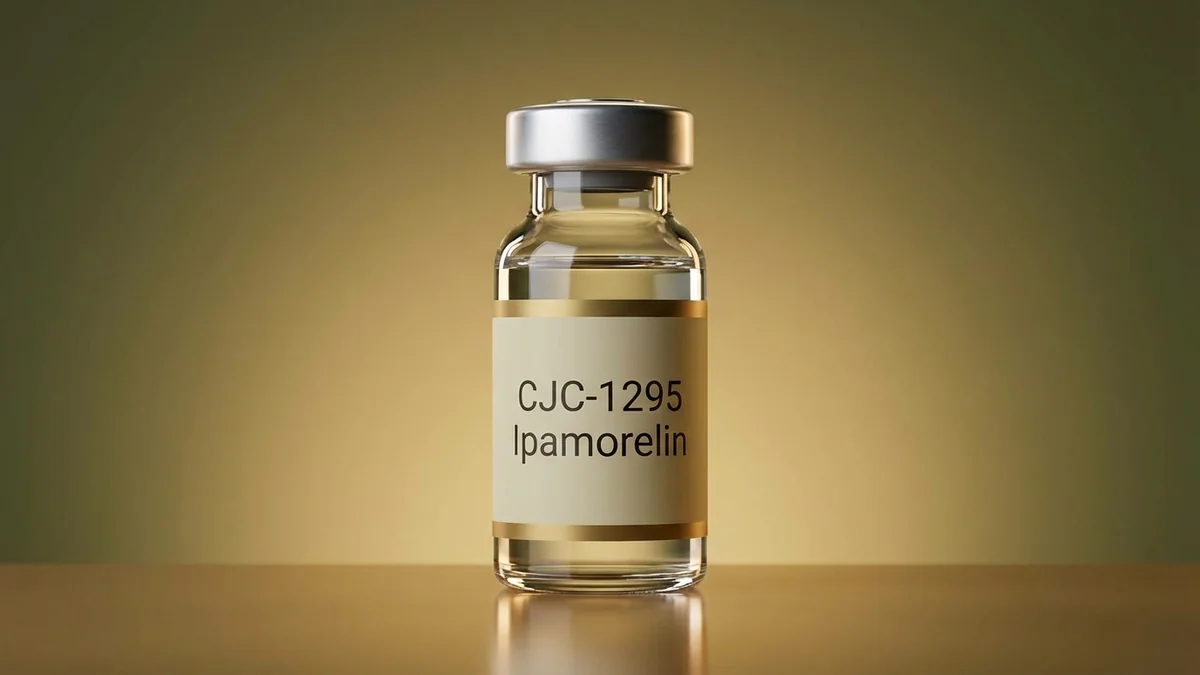
CJC-1295: Dosage, Benefits, FDA Status & Clinics (2026)
CJC-1295
Research
Growth Hormone Releasing Hormone Analog
Growth Hormone ReleaseAnti-AgingBody Composition
Last reviewed March 2026·MyPeptideMatch Team
What Is CJC-1295?
CJC-1295 is a synthetic 29-amino-acid analog of GHRH (growth hormone-releasing hormone) that was engineered to solve one specific problem: natural GHRH has a half-life of minutes, which makes it practically useless as a therapeutic. CJC-1295 fixes that by attaching a reactive maleimidopropionic acid group — marketed as the Drug Affinity Complex, or DAC — that covalently bonds to circulating albumin in your bloodstream. Once bound, a single dose can stimulate measurable GH release for more than six days.[1]
That's not a minor pharmacological tweak. That's the difference between a compound you'd need to inject multiple times daily and one you could theoretically dose once or twice a week. The 2006 trial published in the Journal of Clinical Endocrinology and Metabolism demonstrated this in healthy adults, which is still the primary human clinical data supporting the compound's mechanism.[1]
CJC-1295 has no FDA approval and no ongoing Phase 3 trials. In the US, it exists in a research-only gray zone — which means if you've seen it offered by a telehealth clinic or purchased it online, you're operating outside FDA-approved medicine. That reality shapes everything about how to evaluate this compound.
Key Takeaways
CJC-1295 is a GHRH analog that binds albumin via its DAC group, extending its half-life to approximately 6–8 days and sustaining GH and IGF-1 elevation well beyond what natural GHRH can achieve.
The primary human clinical evidence is a single Phase 1-style dose-escalation study from 2006 in healthy adults — not a randomized controlled trial for any clinical endpoint like body composition or aging.
CJC-1295 has no FDA approval and no legal commercial pathway in the US; it is a research-only compound.
Reported side effects reflect GH excess: water retention, tingling in the extremities, injection site reactions, and transient flushing.
It is frequently combined with a GHRP (growth hormone-releasing peptide) like ipamorelin in practitioner protocols, though no published RCT data supports that combination.
Class
Growth Hormone Releasing Hormone (GHRH) Analog
Amino Acids
29 (plus C-terminal amide)
Mechanism
GHRH receptor agonism + albumin binding via DAC group
FDA Status
Research only — no approved indication
Administration
Subcutaneous injection
Typical Dose (Research)
30–120 mcg/kg single dose (published trial); CJC-1295 dosing has not been established in human clinical trials — available data are from animal studies and mechanistic research only. Practitioner protocols vary but lack peer-reviewed human safety and efficacy data.
There are no published randomized clinical trials establishing an official therapeutic dose for CJC-1295. The only human dosing data comes from a single dose-escalation study that tested 30, 60, and 120 mcg/kg as single subcutaneous injections in healthy adults — a study designed to characterize pharmacokinetics, not to establish a treatment protocol.[1]
Not clinical dosing data
The ranges described below are not derived from randomized controlled trials testing therapeutic endpoints. They reflect practitioner consensus and community-reported usage. Dosing should be discussed with a licensed healthcare provider familiar with this compound.
In the published trial, a single dose of 30 mcg/kg produced a mean 2–3 fold increase in GH levels that persisted for more than 6 days, with IGF-1 levels elevated for 9–11 days after injection.[1] Higher doses of 60 and 120 mcg/kg produced greater peak GH responses but with a similar duration profile.[1]
Practitioner protocols in the gray market typically use fixed doses rather than weight-based dosing. Commonly reported ranges are 1,000–2,000 mcg (1–2 mg) administered subcutaneously once or twice weekly — though CJC-1295 dosing in humans has not been established in clinical trials; these ranges are based on practitioner use only and lack peer-reviewed human clinical trial support. CJC-1295 is frequently stacked with a GHRP such as ipamorelin — typically 100–300 mcg per injection, though again, practitioner-reported with no clinical trial data available — on the theory that combining a GHRH analog with a ghrelin-receptor agonist produces a synergistic GH pulse. That combination is widely used in anti-aging clinics but lacks published RCT support.
6–8 daysduration of elevated GH levels from a single CJC-1295 injection — published human pharmacokinetics data
CJC-1295 Dose Response — Published Human Trial
Outcome
30 mcg/kg
60 mcg/kg
120 mcg/kg
Mean GH increase (peak)
2–3 fold
2–3 fold
2–3 fold
GH elevation duration
>6 days
>6 days
>6 days
IGF-1 elevation duration
9–11 days
9–11 days
9–11 days
IGF-1 increase (mean)
~1.5–3 fold
~1.5–3 fold
~1.5–3 fold
All values above come from the Teichman et al. 2006 trial in healthy adults.[1] The trial did not test doses below 30 mcg/kg or above 120 mcg/kg.
What Makes CJC-1295 Different
Most GHRH analogs and growth hormone secretagogues share the same core limitation: they work, but briefly. Sermorelin, for example, has a half-life of roughly 10–20 minutes.[3] You get a GH pulse, it clears fast, and you're back to baseline within hours. That's not inherently bad — it mimics the pulsatile nature of endogenous GH release — but it does mean frequent dosing and a narrow therapeutic window.
CJC-1295's DAC group changes the math entirely. The maleimidopropionic acid moiety at the C-terminus reacts with free thiols on circulating albumin, forming a covalent bond.[2] Albumin has a half-life of about 19–21 days in humans, so once CJC-1295 is bound, it rides along with albumin's circulation time rather than being rapidly cleared by proteases. The result: one injection, six-plus days of sustained GH stimulation.
The DAC mechanism in plain English
Think of albumin as a long-lived carrier protein floating in your blood. CJC-1295 chemically hooks onto albumin the moment it enters your bloodstream. From that point on, instead of being broken down in minutes, it circulates for days — continuously activating GHRH receptors on the pituitary and driving GH release the whole time.
That sustained stimulation is precisely what makes CJC-1295 interesting for anti-aging and body composition applications — and also what raises questions about physiological appropriateness. Natural GH secretion is pulsatile, with most release happening during deep sleep. Sustained, non-pulsatile GH elevation from a compound like CJC-1295 is a different physiological state, and the long-term implications of that difference haven't been studied.
How Does CJC-1295 Work?
Your pituitary gland releases growth hormone in pulses, triggered largely by GHRH — a 44-amino-acid peptide produced in the hypothalamus. GHRH binds to specific receptors on somatotroph cells in the pituitary, which then release stored GH into circulation. GH travels to the liver and other tissues, where it stimulates production of IGF-1 (insulin-like growth factor 1), which handles most of GH's downstream effects: protein synthesis, fat metabolism, tissue repair, and bone density maintenance.
CJC-1295 is a truncated, modified version of GHRH. The first 29 amino acids of native GHRH contain the full receptor-binding activity — the remaining 15 amino acids are essentially a spacer that doesn't contribute to potency.[1] So CJC-1295 at 29 amino acids retains the full agonist activity of the 44-amino-acid parent molecule. The modifications to the amino acid sequence also make it more resistant to enzymatic degradation than native GHRH, which extends its intrinsic half-life even before the DAC group is factored in.
Once injected subcutaneously, CJC-1295 absorbs into the bloodstream, binds albumin via the DAC group, and begins activating GHRH receptors on the pituitary. The pituitary responds by releasing GH in amplified pulses over the following days. Elevated circulating GH then drives hepatic IGF-1 production. In the 2006 trial, mean IGF-1 levels increased 1.5–3 fold above baseline and remained elevated for 9–11 days after a single injection.[1]
IGF-1 is the number most practitioners and patients actually track, because it's measurable with a standard blood test and reflects the cumulative anabolic signal from GH over time. GH itself is harder to measure meaningfully due to its pulsatile release pattern.
What the Clinical Evidence Actually Shows
The foundational human data comes from a single study: Teichman et al., published in the Journal of Clinical Endocrinology and Metabolism in 2006.[1] This was a dose-escalation study in healthy adults testing single subcutaneous doses of 30, 60, and 120 mcg/kg. All three doses produced a 2–3 fold increase in mean GH levels that persisted for more than 6 days, and IGF-1 levels remained elevated for 9–11 days. The study also tested multiple doses over 28 days and found that GH and IGF-1 elevations were maintained without tachyphylaxis — meaning the pituitary didn't appear to downregulate its response over that short observation window.[1]
That's a meaningful pharmacokinetic result. It confirms the DAC mechanism works as intended in humans, and it establishes that the compound reaches its target and produces the expected hormonal response.
What the 2006 study did not do: test any clinical endpoint. No body composition data. No bone density measurements. No cardiovascular markers. No quality-of-life outcomes. The study was designed to characterize pharmacokinetics and safety signals, not to demonstrate that CJC-1295 actually does anything useful for patients beyond raising a number on a lab report.
Beyond that trial, the human evidence base is sparse. A 2016 netnography study examined online communities of women using CJC-1295 for muscle enhancement, fat loss, and skin quality — documenting self-reported use patterns and motivations, but not clinical outcomes.[4] Two additional published studies from 2019 focused entirely on detection methodology for anti-doping purposes in equine plasma, confirming the compound's presence in illicit performance enhancement contexts but contributing nothing to clinical efficacy data.[2][5]
What We Don't Know Yet
Clinical efficacy for any indication — No randomized controlled trial has tested CJC-1295 against a placebo for body composition, aging, or any other endpoint in humans. The GH and IGF-1 elevations are real; whether they translate to meaningful clinical outcomes hasn't been established.
Long-term safety — The longest human data comes from a 28-day observation window in the 2006 trial.[1] We have no data on sustained use over months or years.
Pulsatility concerns — Natural GH release is pulsatile. CJC-1295 produces sustained, non-pulsatile GH stimulation. Whether that distinction has metabolic consequences — particularly for insulin sensitivity — is unknown.
IGF-1 and cancer risk — Chronically elevated IGF-1 has been associated with increased cancer risk in observational studies, though causality is debated. No CJC-1295 trial has examined this relationship.
Combination protocols — The CJC-1295 + ipamorelin stack is widely used in clinics but has no published RCT data supporting it as a combination. Synergistic effects are plausible based on mechanism but unproven in human trials.
Side Effects — What to Actually Expect
The side effect profile of CJC-1295 reflects what you'd expect from sustained GH and IGF-1 elevation. The 2006 trial reported that most adverse events were mild and transient.[1] Specific incidence percentages from that trial should be interpreted cautiously — it was a small pharmacokinetic study, not a powered safety trial.
Around the time of injection:
Injection site reactions — redness, mild swelling, or tenderness at the injection site; standard for subcutaneous peptide injections and generally resolves within 24–48 hours.
Transient flushing or warmth — reported in the 2006 trial, typically occurring shortly after injection and resolving within hours.[1]
Headache — reported by some participants in the published trial; mechanism unclear but possibly related to rapid GH pulse.[1]
With ongoing use (GH-elevation effects):
Water retention — one of the more commonly reported effects in community use; reflects GH's action on fluid and electrolyte balance. Usually dose-dependent and reversible.
Tingling or numbness in the hands and feet — a recognized effect of elevated GH and IGF-1, related to fluid shifts and potential carpal tunnel-like pressure. Adverse effect frequency at different doses has not been established in human clinical trials.
Joint discomfort — joint discomfort has been reported with growth hormone excess generally; adverse event data specific to CJC-1295 in humans are not established in published clinical trials.
Fatigue or somnolence — some users report increased drowsiness, particularly around injection timing; this may reflect the GH pulse effect.
Rare but worth knowing:
Hypoglycemia — GH has complex effects on insulin sensitivity; transient blood sugar changes are theoretically possible, particularly when CJC-1295 is stacked with other compounds.
Pituitary desensitization — the concern that sustained GHRH receptor stimulation could downregulate pituitary responsiveness over time. The 2006 trial did not observe this over 28 days,[1] but longer-term data doesn't exist.
If you develop persistent numbness, significant edema, or any signs of blood sugar dysregulation while using CJC-1295, those are specific reasons to stop and consult a provider — not just generic reasons to "monitor for side effects."
Regulatory & Access Status
Access status — March 2026
CJC-1295 has no FDA approval for any indication. It is classified as a research compound in the United States. It is not on the FDA's list of bulk drug substances approved for compounding, which means licensed compounding pharmacies cannot legally prepare it for human use. Access in the US occurs through gray-market research chemical suppliers — a market with no regulatory oversight, inconsistent purity, and real contamination risk.
The FDA's position on peptides like CJC-1295 is that they require an approved new drug application (NDA) or investigational new drug (IND) exemption before human use. No active IND for CJC-1295 appears in publicly available registries, though this hasn't been independently confirmed across all sources. The 2006 trial was conducted under a research protocol, not as part of a sponsored drug development program aimed at approval.
In anti-doping contexts, CJC-1295 is detectable in equine plasma by both LC-MS/MS and immunoassay methods,[2][5] and its presence in illicitly manufactured pharmaceutical preparations was confirmed by Norwegian law enforcement as early as 2009.[3] CJC-1295 is subject to restrictions by sports anti-doping organizations including WADA — verify current status at wada-ama.org before competing.
Practically speaking: if a US telehealth clinic is offering CJC-1295 as a prescription treatment, that clinic is operating outside current FDA guidance. That doesn't mean every provider offering it is acting in bad faith, but it does mean the compound hasn't cleared the regulatory bar that FDA approval requires, and patient protections that come with approved drugs don't apply.
Sourcing & Safety
Because CJC-1295 is purchased almost exclusively through gray-market research chemical channels in the US, sourcing quality varies enormously. The 2010 forensic analysis that identified CJC-1295 in an illicit pharmaceutical preparation found the compound present but made no claims about purity or sterility of such products.[3] That's the market you're operating in if you're sourcing outside a clinical trial.
What to look for:
Third-party Certificate of Analysis (COA) — must be from an independent analytical lab, not the vendor's own testing. Look for the lab name, date, and a specific lot number matching your product.
HPLC purity report — minimum 98% purity is the standard for therapeutic-grade peptides. Anything below that or absent entirely is a red flag.
Mass spectrometry confirmation — confirms the peptide sequence is actually what's claimed. HPLC alone can't confirm identity, only purity.
Sterility testing — peptide solutions intended for injection should be tested for endotoxins and microbial contamination. Most gray-market vendors skip this.
Red flags:
No COA or "tested in-house only" — the most common sign of a low-quality operation. Independent verification is the minimum standard.
Price significantly below market — peptide synthesis and proper analytical testing cost real money. Prices that seem too good usually reflect corners being cut somewhere.
Vague amino acid sequence claims — a legitimate vendor should be able to tell you the exact sequence and modification of what you're buying. "CJC-1295 with DAC" and "CJC-1295 without DAC" (also called Modified GRF 1-29) are different compounds with different pharmacokinetics.
No sterility or endotoxin data — for anything going subcutaneous, this is not optional.
FAQ
What's the difference between CJC-1295 with DAC and without DAC?
CJC-1295 with DAC contains the maleimidopropionic acid group that covalently binds albumin, giving it a half-life of approximately 6–8 days.[2] The version without DAC — sometimes called Modified GRF 1-29 or Mod GRF 1-29 — clears in hours and produces a single GH pulse rather than sustained stimulation. They're pharmacologically distinct compounds. Most published clinical data, including the 2006 Teichman trial, refers to the DAC version.[1]
Can CJC-1295 be prescribed legally in the US?
No. CJC-1295 is not FDA-approved and is not on the FDA's list of bulk drug substances permitted for compounding. Providers who prescribe it are operating outside current FDA guidance, and patients should understand that the standard regulatory protections of approved drugs don't apply. If a clinic is offering it, ask specifically what legal basis they're using.
How is CJC-1295 typically injected?
Subcutaneous injection into pinched skin — abdomen, upper thigh, or lateral hip are the most common sites. Rotate injection sites to reduce localized tissue irritation. Standard insulin syringes (27–31 gauge, 0.5 inch needle) work well for subcutaneous peptide injections. Inject the reconstituted peptide solution slowly. Refrigerate reconstituted vials and discard after the window specified by your source.
Does CJC-1295 actually build muscle or burn fat?
Elevated GH and IGF-1 support anabolic processes and fat metabolism in principle. But no published RCT has tested whether CJC-1295 produces measurable body composition changes in humans. The 2006 trial confirmed GH and IGF-1 elevation; it didn't measure lean mass, fat mass, or strength.[1] The body composition claims come from extrapolation and community reports, not controlled human data.
Is CJC-1295 detectable in drug testing?
Yes. Anti-doping researchers have developed both LC-MS/MS and immunoassay methods capable of detecting CJC-1295 and its albumin conjugates in plasma.[2][5] Detection windows are extended by the albumin-binding mechanism — the compound's long half-life means it stays in circulation for days after injection, making it more detectable than short-acting peptides. Athletes subject to WADA testing should verify current prohibited substance status at wada-ama.org.
Related Peptides & Comparisons
If CJC-1295 interests you for GH stimulation, the closest comparison is sermorelin — another GHRH analog, but without the DAC group. Sermorelin has a much shorter half-life (minutes rather than days), requires more frequent dosing, and has a longer history of clinical use in pediatric GH deficiency. It's also the compound most commonly prescribed by anti-aging clinics that want to stay within clearer regulatory lines, since sermorelin has a different regulatory history than CJC-1295.
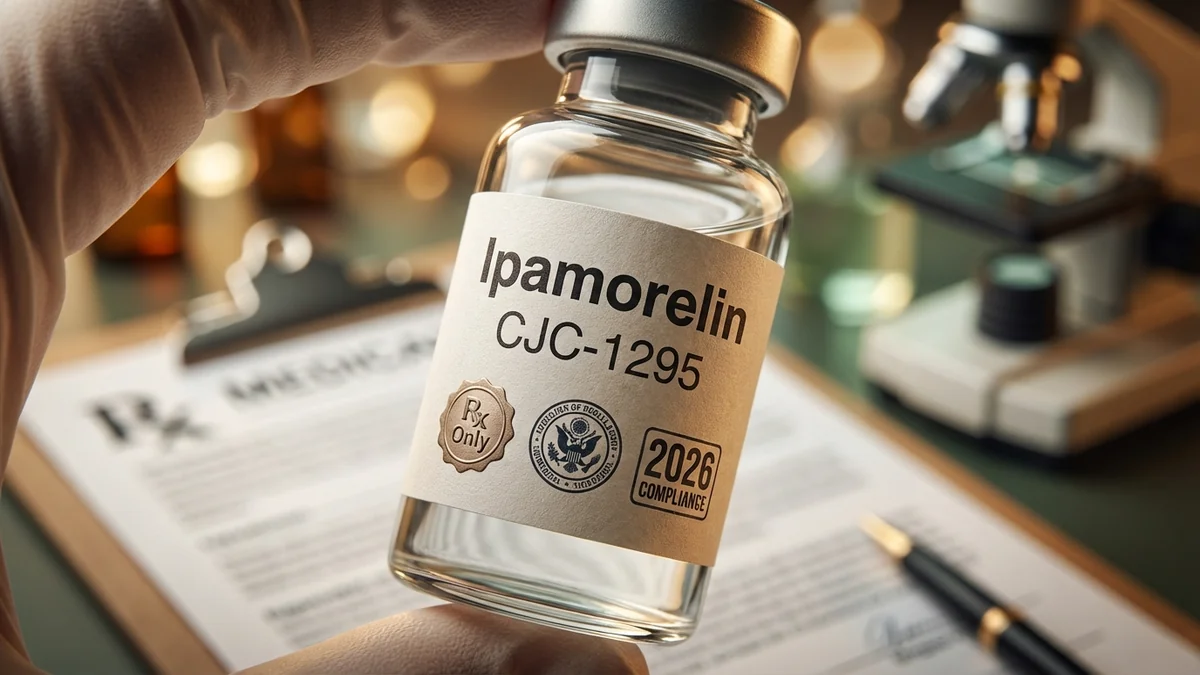
Ipamorelin is the GHRP most often paired with CJC-1295 in practitioner protocols. Where CJC-1295 acts on GHRH receptors to amplify the pituitary's GH-releasing capacity, ipamorelin acts on ghrelin receptors to trigger a discrete GH pulse. The combination is theoretically synergistic — you're hitting two separate pathways simultaneously. Whether that synergy translates to better clinical outcomes than either compound alone hasn't been tested in a published RCT.
GHRH Analogs & Secretagogues: Key Differences
Parameter
CJC-1295 (with DAC)
Sermorelin
Ipamorelin
Mechanism
GHRH receptor agonist + albumin binding
GHRH receptor agonist
Ghrelin receptor agonist (GHRP)
Half-life
~6–8 days
~10–20 min
~2 hours (practitioner-reported, no clinical trial data available)
Dosing frequency
Once or twice weekly (practitioner-reported, no clinical trial data available)
Daily or nightly
Daily (practitioner-reported, no clinical trial data available)
FDA status
Research only
Research only
Research only
Human RCT data
Single PK study (2006)
Pediatric GH deficiency history
Limited (not established in humans)
References
Teichman SL, et al. "Prolonged stimulation of growth hormone (GH) and insulin-like growth factor I secretion by CJC-1295, a long-acting analog of GH-releasing hormone, in healthy adults." J Clin Endocrinol Metab. 2006;91(3):799-805. PMID: 16352683
Dobersztyn L, et al. "A method for confirming CJC-1295 abuse in equine plasma samples by LC-MS/MS." Drug Test Anal. 2019;11(6):854-862. PMID: 30938069
Walpurgis K, et al. "Identification of CJC-1295, a growth-hormone-releasing peptide, in an unknown pharmaceutical preparation." Drug Test Anal. 2010;2(7):330-335. PMID: 21204297
Brennan R, et al. "Netnography of Female Use of the Synthetic Growth Hormone CJC-1295: Pulses and Potions." Subst Use Misuse. 2016;51(14):1965-1974. PMID: 26771670
Piper T, et al. "An immuno polymerase chain reaction screen for the detection of CJC-1295 and other growth-hormone-releasing hormone analogs in equine plasma." Drug Test Anal. 2019;11(3):448-457. PMID: 30489688
This content is for informational purposes only and does not constitute medical advice. Consult a licensed healthcare provider before starting any treatment.
Where to Buy CJC-1295 Online (Legally, 2026)
CJC-1295 is not FDA-approved as a finished drug. The clinics listed below dispense CJC-1295 under individual physician prescriptions through licensed compounding pharmacies — not as a research-only product. Programs start around $199/month.
These are licensed US telehealth clinics that prescribe CJC-1295 for patient use. Some links are affiliate links; editorial selection is independent. See our affiliate disclosure.
Where to Buy CJC-1295 for Research
Research Use Only — not intended for human consumption
MyPeptideMatch.com does not provide medical advice. Always consult a qualified healthcare provider before starting any peptide therapy. Regulatory status may change.