Copper Peptides Dosage Guide: How Much Should You Take? (2026)
Key Takeaways
- Standard Copper Peptides dosage ranges from 1-2 mg per application for topical forms.
- Administration is primarily topical, but research into other routes is ongoing.
- Typical cycle length for skin rejuvenation is 8-12 weeks.
- Copper Peptides are not FDA-approved as a drug but are available as a cosmetic ingredient.
- Medical supervision is crucial for optimizing dosage and monitoring side effects.
How Copper Peptides Works in the Body
Copper Peptides, particularly GHK-Cu, play a significant role in skin health by promoting collagen synthesis, wound healing, and hair growth. The mechanism of action involves binding to copper ions, which are essential cofactors for various enzymatic processes. This binding facilitates the activation of enzymes like lysyl oxidase, crucial for collagen cross-linking and skin tissue repair (PMID 39625713).
The bioavailability of Copper Peptides varies with the form of administration. Topical application is common due to its direct action on the skin, although systemic absorption is limited. The half-life of Copper Peptides when applied topically is not well-documented, but the effects on skin can last several hours post-application. Bioavailability studies are sparse, but topical formulations are designed to optimize skin penetration.
"Copper Peptides have demonstrated significant potential in enhancing skin rejuvenation through mechanisms involving copper ion binding and enzymatic activation." — ACS Nano, 2024 (PMID 39625713)
Standard Copper Peptides Dosage Ranges (By Form)
Topical Application
- Dosage Range: 1-2 mg per application
- Frequency: Once or twice daily
- Bioavailability: Primarily local with minimal systemic absorption
- Common Usage: Preferred for skin rejuvenation due to ease of application
Topical Copper Peptides are the most common form, offering targeted delivery to the skin. They are often formulated in concentrations ranging from 0.1% to 2% in creams and serums. The topical route ensures direct interaction with skin cells, making it ideal for cosmetic purposes.
Oral and Other Routes
- Oral Dosage: Not commonly used due to low systemic absorption and lack of supporting data
- Intranasal and Injectable Forms: Research is ongoing, but these are not widely available or recommended due to insufficient evidence on efficacy and safety.
Copper Peptides Dosage by Use Case
Skin Rejuvenation
- Typical Dosage: 1-2 mg per application
- Administration Method: Topical
- Cycle Length: 8-12 weeks
- Study Reference: Clinical studies have shown improved skin elasticity and reduced wrinkles with consistent use over 12 weeks (PMID 33147237).
Hair Growth
- Typical Dosage: 1-2 mg per application
- Administration Method: Topical, focusing on the scalp
- Cycle Length: 12-24 weeks
- Clinical Protocols: Many clinics recommend daily application for optimal results, with improvements noted after several months of use.
Wound Healing
- Typical Dosage: 1 mg per application
- Administration Method: Topical, directly on the wound site
- Cycle Length: Until wound closure, typically 4-8 weeks
- Clinical Reference: Studies suggest accelerated healing times with Copper Peptide application (PMID 40470882).
How Long Should You Take Copper Peptides?
The typical cycle length for Copper Peptides varies depending on the therapeutic goal. For skin rejuvenation, an 8-12 week cycle is common, with noticeable effects often emerging within the first 4 weeks. Hair growth applications may require longer durations, up to 24 weeks, to see significant changes. Tapering is generally not necessary due to the topical nature of the product, and discontinuation typically does not result in rebound effects.
Administration Protocol: How to Inject Copper Peptides
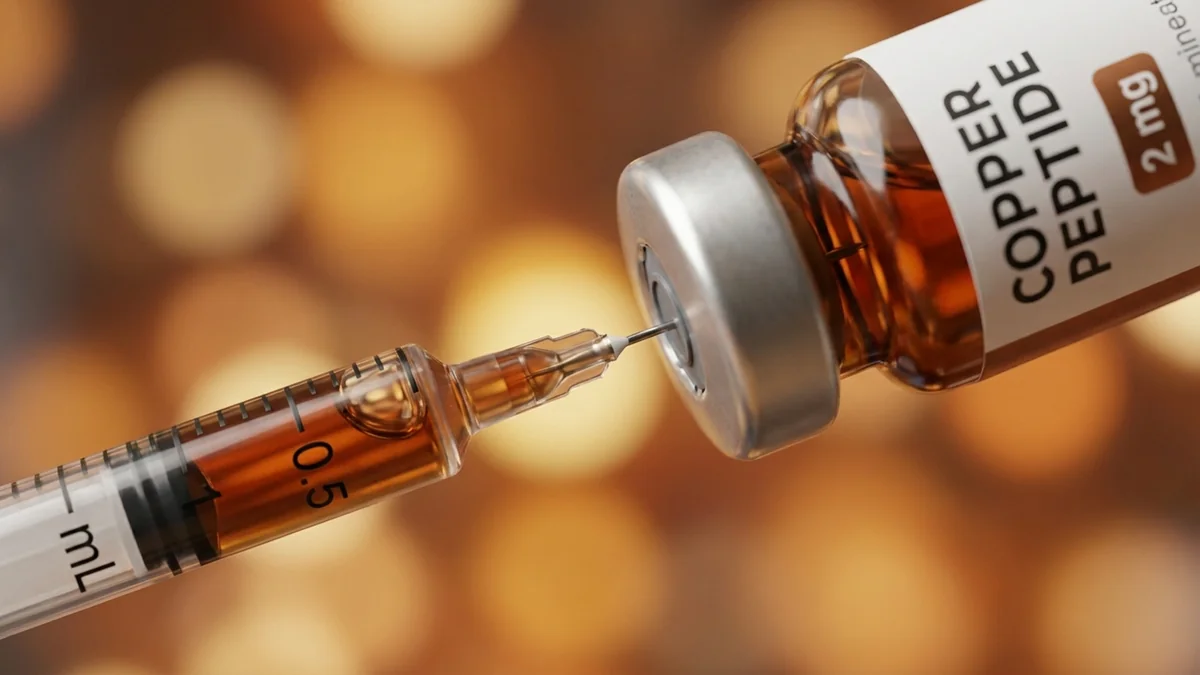
Although Copper Peptides are primarily administered topically, understanding injection protocols is beneficial for potential future applications.
Injection Technique
- Needle Gauge: 29-31 gauge, 1/2 inch insulin syringe
- Injection Depth: Subcutaneous
- Injection Angle: 45 degrees
Injection Sites
- Recommended Sites: Abdomen (2 inches from navel), thigh, upper arm
- Rotation Schedule: Rotate sites daily to prevent tissue irritation
Timing
- Relative to Meals: Not applicable for topical forms
- Time of Day: Morning or evening applications are common
- Frequency: Once or twice daily depending on formulation
Storage Requirements
- Temperature: 36-46°F (2-8°C)
- Light Sensitivity: Store in a dark container
- Reconstituted Stability: Use within 24 hours if applicable
Reconstitution Instructions
For injectable forms, refer to our reconstitution guide.
Step-by-Step Administration Process
- Wash hands thoroughly.
- Disinfect the chosen injection site with an alcohol swab.
- Prepare the syringe with the appropriate dose.
- Pinch the skin to create a firm injection site.
- Insert the needle at a 45-degree angle.
- Inject the peptide slowly.
- Withdraw the needle and apply slight pressure with a clean swab.
Stacking Copper Peptides for Better Results
Common Combinations
- With Hyaluronic Acid: Enhances skin hydration and elasticity.
- With Retinoids: Potentiates anti-aging effects, although alternating application days is recommended to avoid irritation.
- Wolverine Protocol: Often includes Thymosin Beta-4 for wound healing and recovery.
These combinations are used in various clinical protocols to maximize therapeutic outcomes. When stacking, adjust dosages of each peptide according to specific protocol guidelines.