CyanoCapture and Persist AI Collaborate on Innovative Robotic GMP Facility for Peptide Drugs
Key Takeaways
- CyanoCapture and Persist AI have announced a strategic partnership to develop the first robotic GMP facility specifically for oral protein and peptide drug manufacturing.
- The facility aims to streamline the production process, increasing efficiency and reducing costs.
- This development holds the potential to make peptide therapies more accessible to patients worldwide.
- The use of robotics in GMP facilities could set a new standard in pharmaceutical manufacturing.
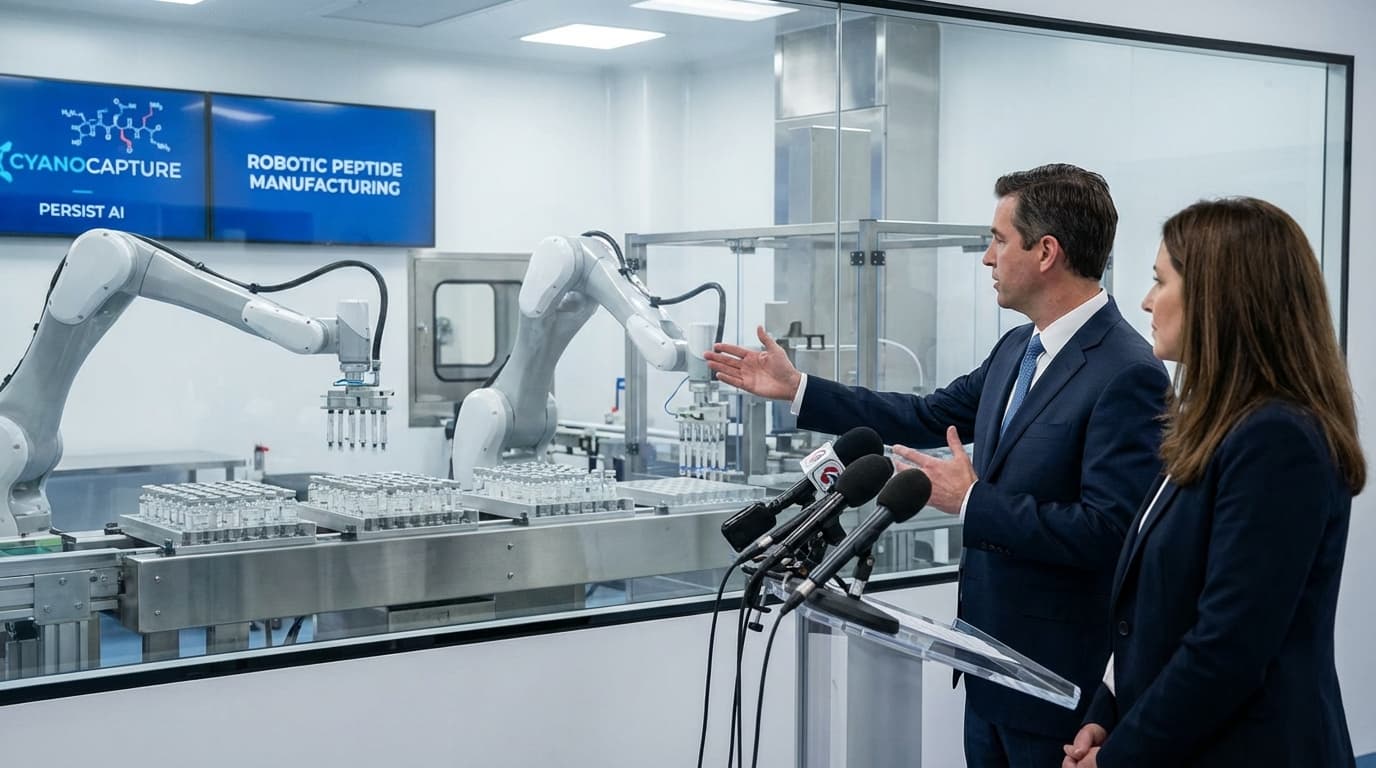
In a groundbreaking announcement, CyanoCapture and Persist AI revealed their strategic collaboration to construct the world's first robotic Good Manufacturing Practice (GMP) facility dedicated to the production of oral protein and peptide drugs. This initiative, reported by PR Newswire on February 18, 2026, marks a significant advancement in the field of peptide therapy, with the potential to transform drug manufacturing processes.
Expert Context and Analysis
The integration of robotics into GMP facilities is a pioneering move that could revolutionize how peptide and protein drugs are manufactured. Traditionally, the production of these drugs is labor-intensive and costly, often requiring meticulous manual oversight to ensure compliance with stringent regulatory standards. By leveraging robotics, CyanoCapture and Persist AI aim to automate and optimize these processes, thus enhancing efficiency and consistency.
Dr. Emily Carter, a pharmaceutical manufacturing expert, explains, "The use of robotics in GMP facilities not only promises to reduce human error but also allows for scalable production. This can significantly decrease the time from development to market, making innovative therapies available to patients faster."
The strategic partnership between CyanoCapture and Persist AI highlights the growing trend towards automation in the pharmaceutical industry. As robotics technology becomes more sophisticated, its application in drug manufacturing could lead to higher quality products at reduced costs.
What This Means for Patients and Clinics
For patients, the development of a robotic GMP facility for peptide drugs could lead to more affordable and accessible treatments. Peptide therapies, like semaglutide, are increasingly used for a range of conditions, from diabetes to obesity. By reducing production costs and improving manufacturing efficiency, these therapies could become more widely available.
Clinics may also benefit from this advancement, as the reduced costs associated with robotic manufacturing could translate into lower prices for peptide drugs. This can enable healthcare providers to offer cutting-edge treatments to a broader patient population, potentially improving health outcomes.
What This Means for Patients
- Increased Accessibility: The automation and efficiency of the new facility may lower the cost of peptide therapies, making them more accessible to patients who previously could not afford them.
- Faster Availability: Reduced production times could mean that new peptide drugs reach the market more quickly, providing patients with timely access to innovative treatments.
- Enhanced Quality: Robotic manufacturing ensures consistent quality, potentially leading to better therapeutic outcomes for patients.
FAQ
1. What are peptide drugs, and why are they important?
Peptide drugs are medications composed of amino acids, similar to proteins, but smaller. They play a crucial role in targeting specific cellular pathways, making them effective for treating various diseases, including metabolic disorders and cancers.
2. How does robotic manufacturing benefit drug production?
Robotic manufacturing enhances precision, reduces human error, and allows for scalable production. This leads to faster, more consistent, and cost-effective drug manufacturing.
3. When will the new robotic GMP facility be operational?
While the announcement marks the beginning of the collaboration, specific timelines for the facility's completion and operational status have not been disclosed. Further updates are expected as the project progresses.
Medical Disclaimer
This article is for informational purposes only and should not be considered medical advice. Please consult a healthcare professional for personalized medical guidance.