
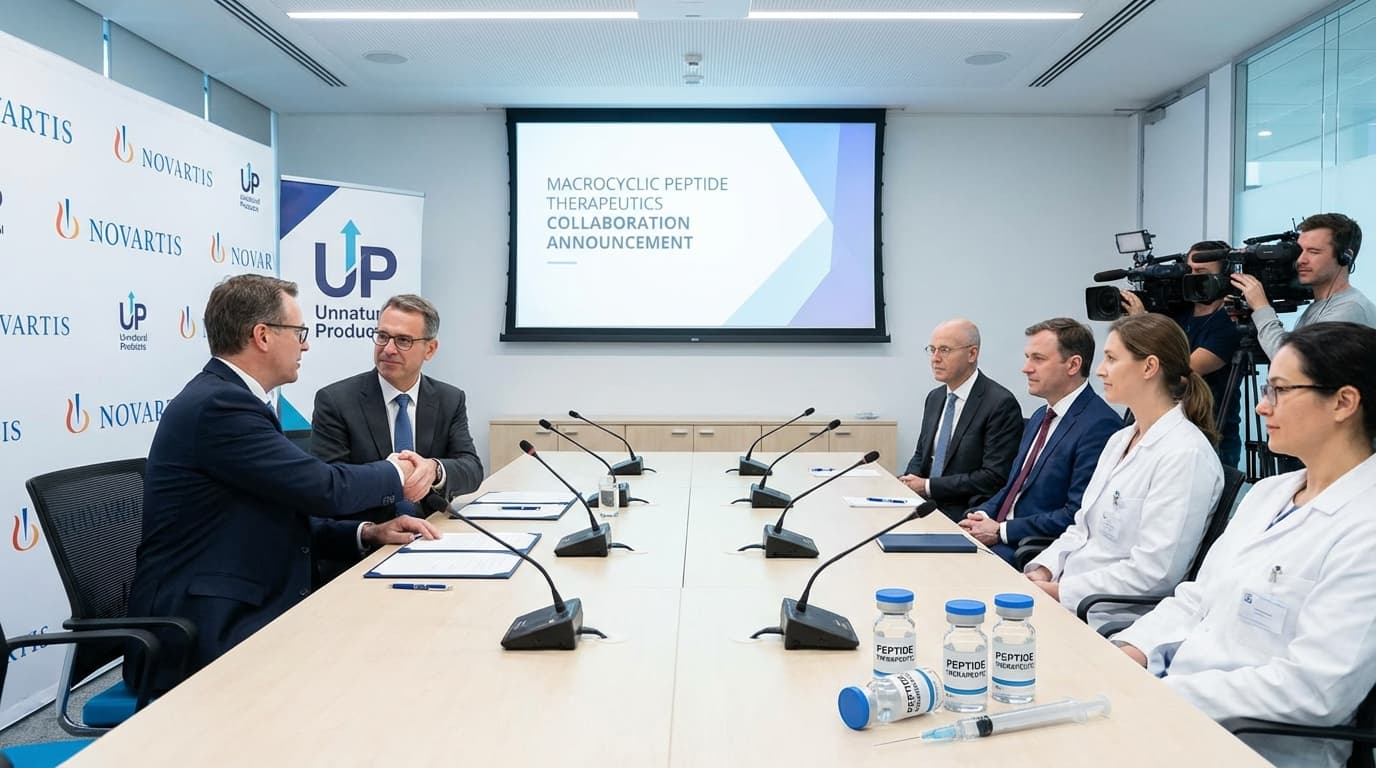
Unnatural Products and Novartis Collaborate on Macrocyclic Peptide Therapeutics
Key Takeaways
- Unnatural Products has entered a licensing agreement with Novartis to develop macrocyclic peptide therapeutics.
- This partnership aims to enhance drug delivery systems and improve the efficacy of peptide-based treatments.
- Macrocyclic peptides offer a promising avenue for targeting difficult-to-treat diseases.
- This development could potentially broaden treatment options for patients with unmet medical needs.
In a significant advancement for the field of peptide therapeutics, Unnatural Products has announced a licensing agreement with pharmaceutical giant Novartis to develop macrocyclic peptide therapeutics. The announcement, reported by Yahoo Finance Australia, marks a notable collaboration aimed at leveraging the unique properties of macrocyclic peptides to tackle complex medical challenges.
Expert Context and Analysis
Macrocyclic peptides are a class of compounds characterized by their cyclic structure, which imparts enhanced stability and bioavailability compared to linear peptides. These properties make them particularly attractive for drug development, as they can more effectively target proteins that are often considered "undruggable" by traditional small molecules.
Dr. Alice Thompson, a leading researcher in peptide chemistry at the University of Sydney, explains, "Macrocyclic peptides have the potential to revolutionize the treatment landscape for various diseases, particularly those where conventional drugs have failed. Their ability to bind with high specificity and affinity to target proteins makes them a powerful tool in precision medicine."
The collaboration between Unnatural Products and Novartis is expected to accelerate the development of these novel therapeutics, combining Unnatural Products' expertise in peptide synthesis with Novartis's extensive drug development and commercialization capabilities.
What This Means for Patients and Clinics
For patients, the development of macrocyclic peptide therapeutics could translate into more effective treatment options for conditions that currently have limited therapies. This is particularly relevant for diseases such as cancer, autoimmune disorders, and infectious diseases, where precise targeting of disease mechanisms is crucial.
Clinics and healthcare providers might soon have access to a new class of drugs that offer improved outcomes and reduced side effects, potentially reshaping treatment protocols and improving patient quality of life.
What This Means for Patients
- Broader Treatment Options: Patients with difficult-to-treat conditions may benefit from new therapies that target disease mechanisms more precisely.
- Improved Drug Efficacy: The enhanced stability and bioavailability of macrocyclic peptides can lead to more effective and longer-lasting treatments.
- Fewer Side Effects: The specificity of macrocyclic peptides may result in fewer off-target effects, reducing the overall side-effect profile of treatments.
FAQ
What are macrocyclic peptides?
Macrocyclic peptides are a type of peptide characterized by a cyclic structure, which enhances their stability and bioavailability, making them effective in drug development.
Why is this collaboration significant?
This collaboration combines the strengths of Unnatural Products in peptide synthesis with Novartis's drug development capabilities, potentially accelerating the creation of innovative therapies for complex diseases.
How soon will these therapies be available?
While the exact timeline is uncertain, the collaboration aims to expedite the development process, with clinical trials likely to follow preclinical success.
Medical Disclaimer
This article is for informational purposes only and is not intended as medical advice. Always consult a healthcare professional for medical concerns or before starting new treatments.
For more information on peptide therapies, visit our semaglutide page.