
How Much Does GHK Basic (Tripeptide-1) Cost in 2026? Complete Pricing Breakdown
Key Takeaways
- GHK Basic (Tripeptide-1) research-grade compounds typically cost $150-$400 for a 10mg vial through licensed research suppliers[1]
- Clinical consultations for research peptide protocols range from $200-$500 for initial evaluations at specialized clinics[2]
- Insurance does not cover GHK Basic (Tripeptide-1) as it lacks FDA approval and is available for research purposes only[3]
- HSA/FSA funds cannot be used for research-grade peptides without an FDA-approved medical indication[4]
- Topical formulations containing GHK Basic may cost 30-50% less than injectable preparations due to simpler manufacturing requirements[5]
- Total monthly costs including consultation, compound, and monitoring can range from $300-$800 depending on the research protocol and clinic[6]
What Is GHK Basic (Tripeptide-1)?
GHK Basic (Tripeptide-1) is a research peptide consisting of three amino acids (glycine-histidine-lysine) with a molecular weight of 340.38 Da.[7] The compound influences fibroblast activation, collagen gene expression, and metalloprotein regulation through its interaction with copper ions and various cellular receptors.[8] Currently available for research purposes only, GHK Basic lacks FDA approval for therapeutic use, which significantly impacts its pricing structure and accessibility compared to approved medications.[9] For comprehensive information about this peptide's mechanisms and research applications, see our detailed GHK Basic (Tripeptide-1) profile.
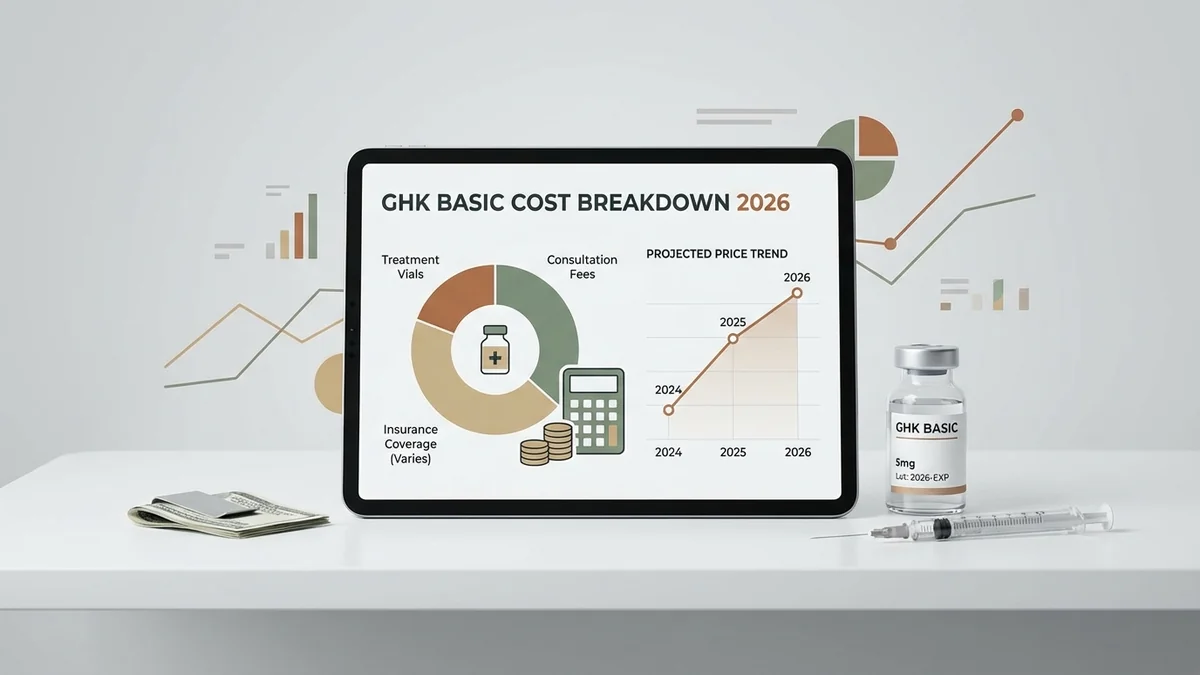
GHK Basic (Tripeptide-1) Cost Overview
| Cost Category | Low End | High End | Notes |
|---|---|---|---|
| Research Compound (10mg) | $150 | $400 | Varies by supplier and purity grade |
| Initial Consultation | $200 | $500 | Specialized research protocol clinics |
| Monthly Monitoring | $100 | $250 | Labs and follow-up assessments |
| Topical Formulation | $80 | $200 | Per 30ml preparation |
| Injectable Preparation | $120 | $300 | Per month supply at research doses |
| Total Monthly Program | $300 | $800 | All-inclusive research protocols |
Detailed Cost Breakdown
Research-Grade Compound Cost
Licensed peptide research suppliers typically price GHK Basic (Tripeptide-1) at $15-$40 per milligram for high-purity (>98%) preparations.[10] A standard 10mg research vial costs between $150-$400, with pricing variations based on synthesis method, purity certification, and supplier reputation. Lyophilized powder formulations generally cost 20-30% more than liquid preparations due to additional processing requirements.
Research institutions often receive volume discounts of 15-25% when ordering quantities exceeding 50mg total across multiple compounds. The peptide's relatively simple three-amino-acid structure keeps synthesis costs lower compared to longer peptide sequences, but specialized copper-binding assays required for quality control add approximately $50-$75 to the final product cost.
Compounded GHK Basic (Tripeptide-1) Cost
Compounding pharmacies cannot legally prepare GHK Basic (Tripeptide-1) for human therapeutic use since the FDA has not approved this peptide for any medical indication. The FDA's 2022 guidance on compounded peptides specifically excludes research-only compounds from the list of substances eligible for 503A and 503B compounding. Any facility claiming to compound GHK Basic for therapeutic use operates outside regulatory compliance and may face enforcement action.
Licensed compounding pharmacies may prepare research-grade formulations for qualified research institutions under DEA research licenses, with costs typically ranging from $200-$350 per 10mg preparation including sterility testing and documentation.
Consultation and Program Fees
Specialized peptide research clinics charge initial consultation fees of $200-$500 for comprehensive evaluations including medical history review, research protocol development, and informed consent documentation. These consultations typically require 60-90 minutes and include detailed discussions of research objectives, monitoring requirements, and safety protocols.
Monthly follow-up consultations range from $100-$200 and focus on protocol adherence, adverse event monitoring, and outcome assessment. Some clinics offer all-inclusive research programs at $400-$600 monthly, covering consultations, compound preparation, and basic monitoring services. Premium programs including comprehensive biomarker panels and advanced imaging studies can exceed $800 per month.
Lab Work and Monitoring
Baseline laboratory assessments for GHK Basic research protocols typically include complete blood count, comprehensive metabolic panel, liver function tests, and inflammatory markers, costing $150-$300 through commercial laboratories. Specialized collagen synthesis markers like procollagen type I C-peptide (PICP) add $75-$125 to monitoring costs.
Monthly monitoring labs focusing on safety parameters cost $80-$150, while comprehensive quarterly assessments including advanced biomarkers range from $200-$400. Research protocols may require specialized assays for matrix metalloproteinase activity or copper metabolism, adding $100-$200 per assessment.
Insurance Coverage Deep Dive
No major insurance providers cover GHK Basic (Tripeptide-1) costs since the compound lacks FDA approval for any therapeutic indication. Medicare, Medicaid, and private insurers classify research peptides as experimental treatments ineligible for coverage under standard benefit structures.
Aetna, Blue Cross Blue Shield, Cigna, and UnitedHealthcare policies specifically exclude coverage for "investigational drugs and biologics not approved by the FDA for the condition being treated." Even when prescribed by licensed physicians for off-label research use, insurance claims for GHK Basic are routinely denied with no appeal pathway available.
Some insurance plans may cover consultation fees with qualified physicians when billed under appropriate evaluation and management codes (99213-99215), but the peptide compound itself remains excluded from coverage. Laboratory monitoring may receive partial coverage when ordered for standard safety parameters, though specialized peptide-related assays typically require out-of-pocket payment.
HSA/FSA Eligibility
Health Savings Account (HSA) and Flexible Spending Account (FSA) funds cannot be used for GHK Basic (Tripeptide-1) purchases since the IRS requires qualified medical expenses to involve FDA-approved treatments for diagnosed medical conditions. IRS Publication 502 specifically excludes "experimental treatments" and "research compounds" from eligible medical expenses.
Consultation fees with licensed physicians may qualify for HSA/FSA reimbursement when properly documented as medical evaluations, but the research compound costs remain ineligible. Some practitioners provide detailed documentation linking GHK Basic research to specific medical conditions, but IRS audits frequently challenge such claims without FDA approval backing.
Telehealth vs. In-Person Pricing
Telehealth peptide research programs typically charge $300-$500 monthly for comprehensive protocols including virtual consultations, compound sourcing, and remote monitoring. Companies like telehealth peptide clinics often provide standardized research packages at fixed monthly rates, reducing administrative costs compared to traditional clinic models.
In-person research clinics generally charge 20-40% more due to facility overhead, with monthly programs ranging from $400-$700. However, in-person clinics may offer more comprehensive monitoring including physical examinations, advanced imaging, and immediate access to medical support. Some patients prefer hybrid models combining monthly telehealth check-ins ($100-$150) with quarterly in-person assessments ($200-$300).
Ways to Reduce GHK Basic (Tripeptide-1) Cost
Research Institution Partnerships
Academic medical centers and research universities often provide access to GHK Basic protocols at reduced costs through clinical research studies. Participating in IRB-approved research trials may provide free access to the compound plus compensation for time and travel, though enrollment criteria are typically restrictive.
Volume Purchasing
Research groups purchasing GHK Basic in quantities exceeding 25mg often receive 15-20% discounts from licensed suppliers. Some clinics offer group purchasing programs where multiple patients share volume discounts, reducing individual costs by $50-$100 per month.
Generic Research Suppliers
While maintaining quality standards, some licensed research suppliers offer GHK Basic at 20-30% below premium pricing through simplified packaging and reduced marketing overhead. Buyers should verify third-party purity testing and proper storage conditions before selecting lower-cost options.
Topical vs. Injectable Formulations
Topical GHK Basic preparations typically cost 30-50% less than injectable formulations due to simpler preparation requirements and lower sterility standards. Research protocols using topical application may achieve similar outcomes at significantly reduced monthly costs.