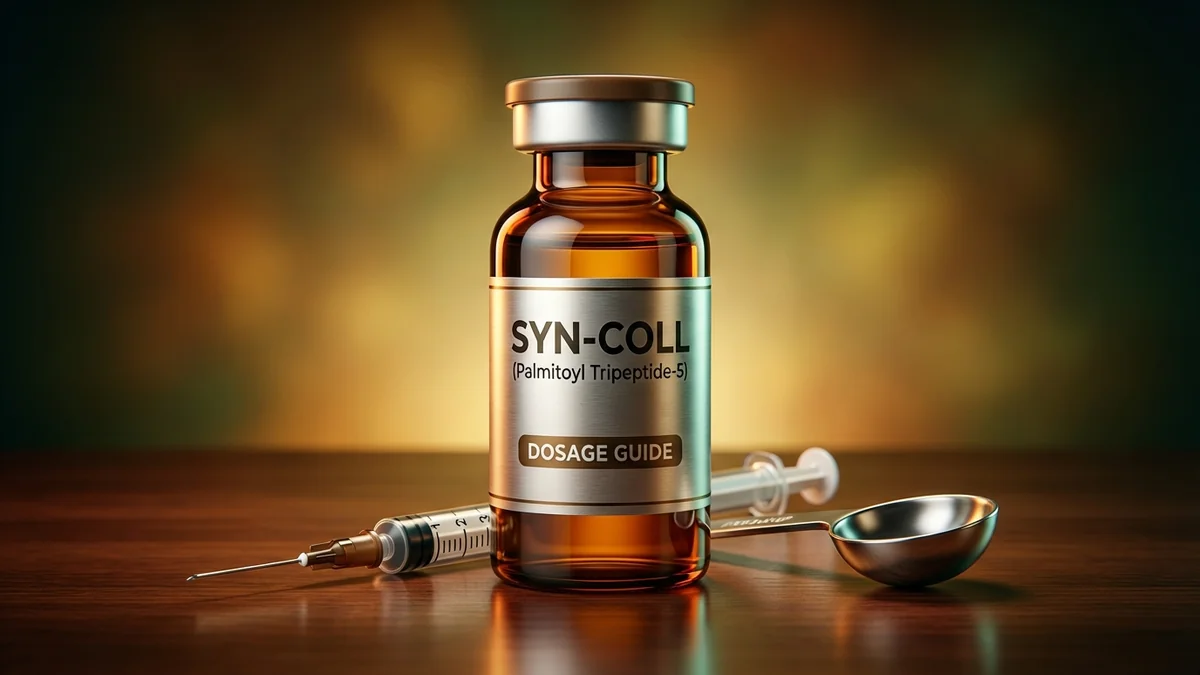

Semax Dosage Guide: How Much Should You Take? (2026)
Key Takeaways
- Standard Dosage Range: Semax is typically administered in microgram doses, with specific ranges depending on the delivery form.
- Administration Methods: Commonly used forms include intranasal and subcutaneous injections, each with distinct bioavailability.
- Typical Cycle Length: Users often follow cycles of 2 to 4 weeks, with potential breaks to assess efficacy and side effects.
- Regulatory Status: Semax is not FDA-approved and is available for research purposes only.
- Medical Supervision: Due to its research status, Semax should be used under the guidance of a qualified healthcare provider.
How Semax Works in the Body
Semax is a synthetic peptide derived from the ACTH(4-10) fragment, known for its neuroprotective and cognitive-enhancing properties. It functions by modulating neurotrophic factors such as BDNF and TrkB, which play crucial roles in neuronal survival and plasticity. Semax's mechanism involves influencing neurogenic transcription factors like NGF and GAP-43, which are essential for cognitive processes and recovery post-neurological injury.
The pharmacokinetics of Semax, including its receptor binding affinity and half-life, significantly influence dosing decisions. Semax exhibits a relatively short half-life, necessitating frequent dosing to maintain therapeutic levels. Its bioavailability varies by administration route, with intranasal delivery being particularly effective due to direct access to the central nervous system.
"Semax has demonstrated the ability to modulate gene expression related to immune and vascular systems, contributing to its neuroprotective effects" (PMID 24661604).
"Research indicates that Semax can affect amyloid beta aggregation, a hallmark of Alzheimer's pathology, suggesting potential therapeutic applications" (PMID 35080861).
Standard Semax Dosage Ranges (By Form)
Intranasal Administration
- Dosage Range: Typically 300-600 mcg per dose.
- Frequency: Administered 1-2 times daily.
- Bioavailability: High due to direct nasal-brain pathway, bypassing first-pass metabolism.
- Common Use: Preferred for cognitive enhancement and neuroprotection.
Subcutaneous Injection
- Dosage Range: Ranges from 100-500 mcg per injection.
- Frequency: Once daily or as prescribed by a healthcare provider.
- Bioavailability: Moderate, with systemic distribution.
- Considerations: Requires proper injection technique and site rotation.
Comparison
Intranasal administration is favored for its ease and direct brain access, making it suitable for cognitive applications. Subcutaneous injections, while more invasive, offer controlled systemic effects and are used in specific research settings.
Semax Dosage by Use Case
Cognitive Enhancement
- Typical Dosage: 300-600 mcg intranasally once daily.
- Cycle Length: 2-4 weeks, with periodic assessments.
- Study Reference: Effects on cognitive functions and stress response modulation (PMID 34201112).
- Practical Guidance: Many clinics recommend starting at the lower end of the dosage range and adjusting based on response.
Neuroprotection Post-Injury
- Typical Dosage: 500 mcg subcutaneously once daily.
- Cycle Length: Up to 6 weeks, depending on recovery progress.
- Study Reference: Impact on recovery after spinal cord injury (PMID 40692165).
- Practical Guidance: Clinical protocols often incorporate Semax as part of a broader rehabilitation strategy.
Alzheimer's Disease Research
- Typical Dosage: 300-600 mcg intranasally twice daily.
- Cycle Length: Varies based on study design.
- Study Reference: Modulation of amyloid aggregation and oxidative stress (PMID 40496623).
- Practical Guidance: Research settings may employ higher frequencies or doses under strict supervision.
How Long Should You Take Semax?
Semax cycles typically last between 2 to 6 weeks, depending on the therapeutic goal and individual response. Initial effects may be observed within the first week, with more pronounced benefits accruing over subsequent weeks. Tapering is generally not required, but periodic breaks are advised to evaluate efficacy and minimize potential side effects. Long-term data on continuous use is limited, emphasizing the need for regular medical evaluations.
Administration Protocol: How to Take Semax
Intranasal Administration
- Preparation: Ensure the nasal spray is at room temperature.
- Technique: Tilt head back slightly, insert nozzle into nostril, and spray while inhaling gently.
- Frequency: Follow prescribed dosing schedule, typically 1-2 times daily.
- Storage: Store in a cool, dry place away from direct sunlight.
Subcutaneous Injection
- Preparation: Use a sterile needle (e.g., 29-gauge) and syringe.
- Injection Sites: Rotate between sites such as abdomen or thigh to minimize irritation.
- Technique: Clean the site with alcohol, pinch skin, and inject at a 45-degree angle.
- Storage: Keep vials refrigerated and use within recommended stability period.
For detailed reconstitution instructions, refer to our reconstitution guide.
Stacking Semax for Better Results
Semax and Cerebrolysin
- Combination: Used for enhanced neuroprotection and cognitive support.
- Dosing Synergy: Semax 300-600 mcg intranasally with Cerebrolysin 5 ml intramuscularly.
- Common Protocols: Often used in post-stroke rehabilitation settings.
Semax and BPC-157
- Combination: Supports tissue repair and cognitive function.
- Dosing Synergy: Semax 300 mcg intranasally with BPC-157 250 mcg subcutaneously.
- Common Protocols: Employed in injury recovery and cognitive enhancement.