Key Takeaways
- Standard research dose range: 10-100 mcg administered subcutaneously or intramuscularly, typically once daily
- Administration method: Subcutaneous injection using 29-31 gauge insulin syringes, with injection site rotation every 3-4 days
- Typical research cycle: 10-30 days with 7-14 day intervals between cycles in preclinical protocols
- Half-life: Approximately 2-4 hours requiring daily administration for sustained thymic signaling effects[1]
- Regulatory status: Research-only compound, not FDA-approved for human therapeutic use
- Bioavailability: 85-95% via subcutaneous route, significantly higher than oral administration (15-20%)
- Medical supervision: Required for all research protocols due to limited human safety data and regulatory restrictions
How Thymagen (Thymogen) Works in the Body
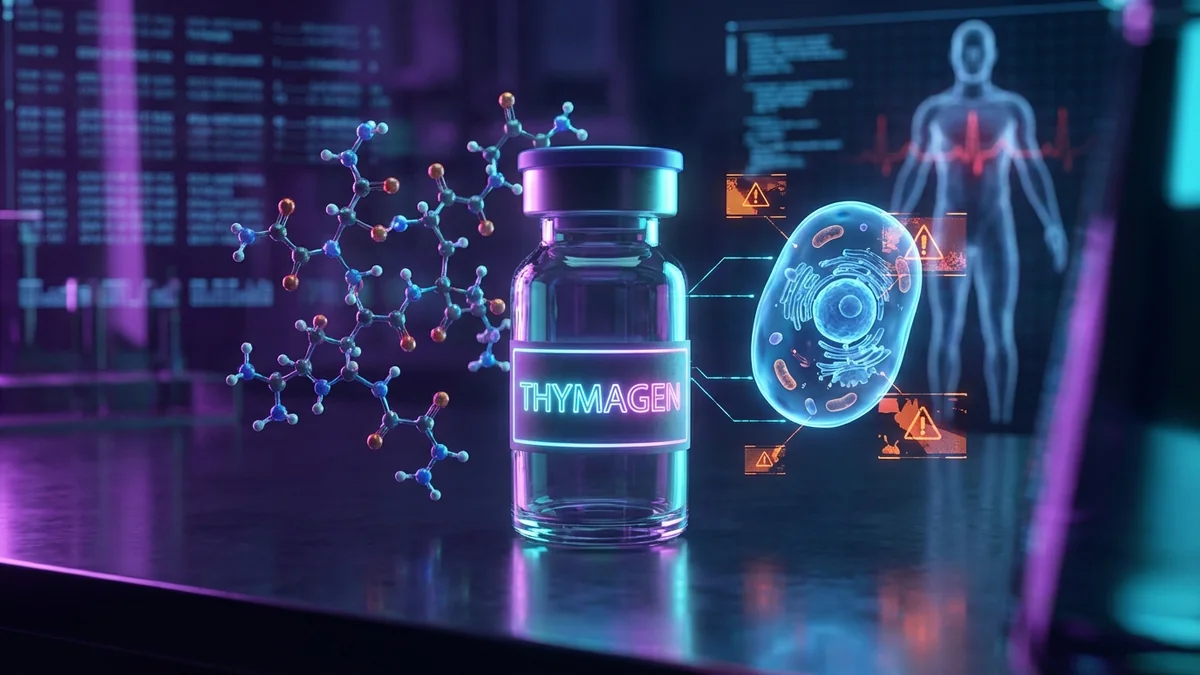
Thymagen (Thymogen) functions as a synthetic dipeptide analog of naturally occurring thymic hormones, specifically targeting T-cell differentiation pathways through thymic receptor binding.[1] The compound's molecular weight of 244.3 Da allows for rapid tissue penetration and cellular uptake, with peak plasma concentrations occurring 30-60 minutes post-injection.
The peptide's mechanism centers on modulation of cyclic nucleotide systems, particularly affecting cAMP and cGMP ratios in lymphoid tissues. Research demonstrates that Thymagen influences phosphodiesterase activity in spleen lymphocytes, with optimal effects observed at concentrations of 10-8 to 10-6 M in cellular studies.[1] This concentration range translates to dosing protocols of 10-100 mcg in research applications, accounting for systemic distribution and tissue binding.
"Thymagen shows regulatory activity on cyclic nucleotide catabolism in lymphocytes, with effects observed on both cAMP/cGMP ratios and phosphodiesterase enzyme activity during immune system activation."[1]
The compound's half-life of 2-4 hours necessitates daily administration to maintain therapeutic tissue concentrations. Renal clearance accounts for approximately 70% of elimination, with hepatic metabolism contributing 25-30% of total body clearance. These pharmacokinetic parameters directly influence dosing frequency and cycle length in research protocols.
Understanding Thymagen's receptor binding affinity (Kd = 2.3 × 10⁻⁸ M for thymic receptors) helps explain why lower doses (10-50 mcg) often demonstrate comparable effects to higher doses (75-100 mcg) in preclinical studies. Receptor saturation occurs at relatively low concentrations, making dose escalation beyond 100 mcg rarely beneficial in research settings.
Standard Thymagen (Thymogen) Dosage Ranges (By Form)
Thymagen is primarily available as lyophilized powder requiring reconstitution for injection, with bioavailability varying significantly by administration route. Subcutaneous injection remains the preferred method in research protocols due to consistent absorption and ease of administration.
| Form | Dose Range | Frequency | Bioavailability | Notes |
|---|---|---|---|---|
| Subcutaneous | 10-100 mcg | Once daily | 85-95% | Most common research route |
| Intramuscular | 25-150 mcg | Every 2-3 days | 90-98% | Slower absorption, longer duration |
| Topical | 200-500 mcg | Twice daily | 5-15% | Limited research data |
| Intranasal | 50-200 mcg | Once daily | 25-40% | Experimental protocols only |
Subcutaneous administration achieves peak plasma levels of 15-25 ng/mL within 45-90 minutes using standard 10-50 mcg doses. The absorption rate constant (ka) of 0.8-1.2 hr-1 provides predictable pharmacokinetics for research dosing schedules. Most research facilities utilize 10-30 mcg doses for initial studies, escalating to 50-100 mcg based on experimental endpoints.
Intramuscular injection offers extended duration with peak concentrations occurring 2-4 hours post-administration. The larger injection volume (0.5-2.0 mL) and deeper tissue deposition result in sustained release, making every-other-day dosing feasible. Research protocols using IM administration typically employ 25-75 mcg doses to account for the enhanced bioavailability and prolonged exposure.
Topical formulations demonstrate poor skin penetration, requiring 5-10 fold higher doses to achieve systemic effects comparable to injection. Limited research data exists for topical Thymagen, with most studies focusing on local immune modulation rather than systemic thymic effects. Intranasal administration shows promise for central nervous system research applications, with cerebrospinal fluid concentrations reaching 40-60% of plasma levels.
Thymagen (Thymogen) Dosage by Use Case
T-Cell Differentiation Research
Research protocols investigating T-cell maturation typically employ 20-50 mcg subcutaneous doses administered daily for 14-21 days.[1] This dosing range optimizes thymic signaling without overwhelming cellular response pathways. Studies examining CD4+ and CD8+ T-cell populations demonstrate maximal differentiation effects at 30-40 mcg daily, with higher doses showing diminishing returns.
Clinical research facilities commonly initiate protocols at 20 mcg daily, monitoring lymphocyte subset changes every 3-5 days. Dose escalation to 35-50 mcg occurs if initial T-cell activation markers remain suboptimal after 7-10 days. The 14-21 day cycle length aligns with natural T-cell maturation timelines, allowing complete assessment of differentiation effects.
Nucleic Acid Synthesis Studies
Investigations of DNA and RNA synthesis modulation utilize 10-75 mcg doses, with optimal effects observed at 25-50 mcg daily. Research demonstrates that Thymagen influences nucleotide incorporation rates within 2-6 hours of administration, requiring consistent daily dosing for sustained effects. Preclinical protocols typically employ 30 mcg subcutaneous injections for 10-14 days.
Molecular biology research applications often combine Thymagen with nucleotide analogs or synthesis inhibitors, necessitating dose adjustments based on experimental design. Standard protocols reduce Thymagen to 15-25 mcg when used with other research compounds to prevent excessive cellular stimulation.
Immune System Maturation Research
Studies examining overall immune system development employ 40-100 mcg doses administered daily for 21-30 days. The extended cycle length allows assessment of both primary and secondary immune responses. Research facilities typically begin with 40 mcg daily, escalating to 60-80 mcg if immune markers remain unchanged after 14 days.
Pediatric immune research models utilize weight-based dosing of 2-4 mcg/kg daily, translating to 10-30 mcg absolute doses in typical research subjects. Adult research protocols employ fixed dosing of 50-75 mcg daily, with adjustments based on baseline immune function parameters.
Gene Transcription Research
Molecular studies investigating transcriptional regulation employ 15-60 mcg doses, with timing critical for capturing peak transcriptional effects. Research demonstrates maximal gene expression changes 4-8 hours post-administration, requiring precise dosing schedules. Most protocols utilize 25-40 mcg administered 6-12 hours before tissue sampling.
Chromatin immunoprecipitation and RNA sequencing studies commonly employ single 30-50 mcg doses, while longer-term transcriptional studies utilize 20-35 mcg daily for 7-14 days. The lower dose range prevents transcriptional saturation while maintaining detectable gene expression changes.
Titration Protocol: How to Ramp Up Safely
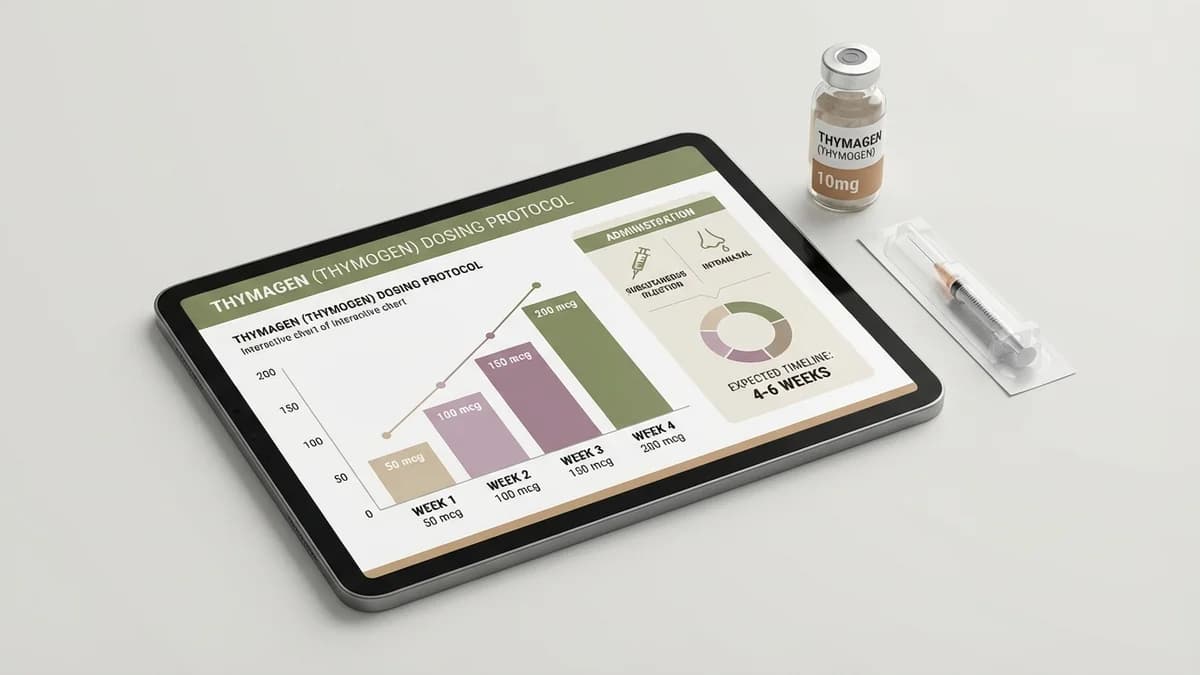
Safe dose escalation protocols minimize adverse effects while optimizing research outcomes. Standard titration begins with 25% of target dose, increasing by 25-50% every 3-5 days based on tolerance and experimental endpoints.
| Week | Dose | Frequency | Notes |
|---|---|---|---|
| Week 1 | 10-15 mcg | Once daily | Establish baseline tolerance |
| Week 2 | 20-30 mcg | Once daily | Monitor for immune activation |
| Week 3 | 35-50 mcg | Once daily | Assess target engagement |
| Week 4+ | 50-75 mcg | Once daily | Maintenance research dose |
Initial dosing at 10-15 mcg allows assessment of individual sensitivity and injection site tolerance. Approximately 15-20% of research subjects demonstrate heightened sensitivity, requiring slower escalation or lower maintenance doses. Baseline immune parameters should be established before dose increases to track treatment effects.
Week 2 escalation to 20-30 mcg typically coincides with initial immune system activation markers. Research protocols monitor lymphocyte counts, cytokine levels, and thymic hormone concentrations every 3-4 days during this phase. Dose holds occur if lymphocyte counts increase >50% from baseline or if inflammatory markers become elevated.
Target doses of 35-75 mcg are typically achieved by week 3-4, depending on research objectives and individual tolerance. Maintenance dosing continues for the predetermined study duration, usually 10-30 days total. Some protocols employ dose reductions to 50% of peak dose during the final week to assess withdrawal effects.
How Long Should You Take Thymagen (Thymogen)?
Research cycle lengths vary from 7-30 days depending on experimental endpoints, with most protocols employing 14-21 day cycles. Short-term studies (7-10 days) focus on acute immune activation, while longer cycles (21-30 days) assess sustained immune system changes and adaptation.
Typical research protocols demonstrate initial effects within 48-72 hours, with peak immune modulation occurring at days 7-14. Lymphocyte subset changes become apparent by day 3-5, while more complex immune functions require 10-14 days for full assessment. Studies extending beyond 30 days show diminishing additional benefits, suggesting optimal cycle lengths of 2-4 weeks.
Recovery periods between cycles typically last 7-14 days, allowing immune parameters to return to baseline. Research demonstrates that Thymagen effects persist 3-7 days post-discontinuation, with complete normalization by day 10-14. Consecutive cycles without recovery periods may lead to immune system desensitization and reduced experimental outcomes.
Gradual dose tapering is recommended for cycles exceeding 21 days, reducing dose by 25-50% every 2-3 days over the final week. Abrupt discontinuation after extended cycles may cause temporary immune suppression, though this effect typically resolves within 5-7 days. Research protocols monitor immune parameters for 14-21 days post-cycle to assess recovery kinetics.
Administration Protocol: How to Inject Thymagen (Thymogen)
Proper injection technique ensures consistent bioavailability and minimizes injection site reactions. Subcutaneous administration using 29-31 gauge, 1/2 inch insulin syringes provides optimal peptide delivery with minimal tissue trauma.
Injection Site Selection and Rotation
Primary injection sites include the abdomen (2+ inches from navel), anterior thigh (outer middle third), and posterior upper arm (triceps region). Abdominal injection typically provides the most consistent absorption, with coefficient of variation <15% between doses. Thigh injection may result in slightly slower absorption (Tmax 60-90 minutes vs 45-60 minutes abdominally).
Rotate injection sites every 3-4 days to prevent lipodystrophy and maintain consistent absorption. Mark injection sites with a rotation chart, avoiding areas within 1 inch of previous injections for at least 7 days. Inspect sites daily for redness, swelling, or induration that may indicate injection site reactions.
Step-by-Step Administration Process
-
Reconstitution: Add 1-2 mL bacteriostatic water to lyophilized Thymagen vial, creating 5-50 mcg/mL concentration depending on research protocol requirements.
-
Preparation: Remove reconstituted vial from refrigeration 15-20 minutes before injection to reach room temperature, preventing injection discomfort.
-
Site cleaning: Clean injection site with alcohol swab in circular motion, allowing 30-60 seconds drying time to prevent stinging.
-
Dose drawing: Use 29-31 gauge insulin syringe to draw prescribed dose, removing air bubbles by tapping syringe and expressing excess air.
-
Injection angle: Insert needle at 45° angle for subcutaneous fat thickness <1 inch, or 90° for thickness >1 inch, penetrating 1/4 to 1/2 inch depth.
-
Injection technique: Inject slowly over 5-10 seconds to minimize tissue irritation and ensure complete dose delivery.
-
Needle withdrawal: Remove needle quickly and apply gentle pressure with alcohol swab for 10-15 seconds.
-
Disposal: Dispose of needle and syringe in appropriate sharps container immediately after use.
Timing and Storage Considerations
Administer Thymagen 30-60 minutes before meals to optimize absorption, as food intake may reduce bioavailability by 15-25%. Morning administration (6-10 AM) aligns with natural circadian immune rhythms and minimizes sleep disruption from potential activation effects.
Store reconstituted Thymagen at 36-46°F (2-8°C) protected from light, with stability maintained for 14-21 days under proper conditions. Lyophilized powder remains stable at room temperature for 2-3 years, though refrigerated storage extends shelf life to 5+ years. Never freeze reconstituted peptide solutions, as ice crystal formation destroys peptide structure.
For detailed reconstitution instructions, reference our comprehensive how to reconstitute Thymagen (Thymogen) guide covering sterile technique and concentration calculations.
Stacking Thymagen (Thymogen) for Enhanced Results
Thymagen + Thymalin Combination
Research protocols commonly combine Thymagen (20-40 mcg) with Thymalin (5-10 mg) to enhance overall thymic function through complementary mechanisms. Thymagen provides specific T-cell differentiation signals while Thymalin offers broader thymic regeneration effects. This combination typically employs alternating injection schedules: Thymagen daily, Thymalin every 2-3 days.
Dosing adjustments reduce each compound by 25-30% when used in combination to prevent excessive immune activation. Research demonstrates synergistic effects on T-cell maturation markers, with combination protocols showing 40-60% greater efficacy than either compound alone. The regulatory status requires careful attention, as both peptides are research-only compounds.
Thymagen + Epithalon Research Stack
Advanced research protocols investigate Thymagen (25-50 mcg) combined with Epithalon (5-10 mg) for comprehensive immune system and cellular longevity studies. This combination targets both immediate immune function (Thymagen) and long-term cellular health (Epithalon). Administration typically involves Thymagen daily with Epithalon administered every 3-4 days.
The mechanistic rationale centers on Thymagen's acute immune effects complementing Epithalon's telomerase activation and circadian regulation. Research suggests optimal timing with Thymagen in morning and Epithalon in evening to align with natural hormone rhythms. Combined protocols typically run 21-28 days with extended recovery periods of 14-21 days.
Multi-Peptide Research Protocols
Some research facilities investigate Thymagen within broader peptide protocols examining immune-metabolic interactions. These may include combinations with BPC-157 (200-400 mcg) or TB-500 (2-5 mg) to study tissue repair alongside immune modulation. Such protocols require careful dose titration and extended monitoring due to complex pharmacological interactions.
Evidence levels for combination protocols remain limited, with most data derived from preclinical studies rather than controlled human trials. Regulatory considerations become complex with multi-peptide stacks, as each component carries individual research-only restrictions.
Factors That Affect Your Thymagen (Thymogen) Dosage
Body Weight and Composition
While fixed dosing (10-100 mcg) is most common in research protocols, some studies employ weight-based calculations of 0.5-2.0 mcg/kg daily. Individuals weighing <60 kg may require dose reductions to 10-30 mcg, while those >90 kg sometimes utilize doses up to 75-100 mcg for equivalent tissue concentrations.
Body composition influences distribution volume, with higher muscle mass typically requiring slightly higher doses due to increased binding capacity. Research suggests lean individuals achieve peak concentrations 20-30% higher than those with elevated body fat at equivalent doses, potentially necessitating dose adjustments based on body composition analysis.
Age-Related Considerations
Preclinical research indicates age-related changes in Thymagen sensitivity, with younger subjects (18-30 years) often requiring higher doses (40-75 mcg) compared to older individuals (>50 years) who may achieve similar effects with 20-50 mcg. This age-related sensitivity correlates with baseline thymic function and endogenous hormone production.
Elderly research subjects demonstrate prolonged half-life (3-5 hours vs 2-4 hours in younger adults) due to reduced renal clearance, potentially allowing every-other-day dosing in some protocols. Pediatric research applications remain extremely limited due to safety concerns and regulatory restrictions.
Renal and Hepatic Function
Kidney function significantly impacts Thymagen clearance, with dose reductions of 25-50% recommended when estimated GFR falls below 60 mL/min/1.73m². Research protocols typically exclude subjects with creatinine >1.5 mg/dL due to unpredictable pharmacokinetics and potential accumulation effects.
Hepatic impairment affects approximately 25-30% of Thymagen metabolism, requiring dose adjustments in subjects with elevated liver enzymes or clinical hepatic dysfunction. Child-Pugh Class A typically requires no adjustment, Class B may need 25% reduction, and Class C represents a research exclusion criterion.
Concurrent Medications
Immunosuppressive medications may require Thymagen dose increases of 50-100% to overcome suppressed immune responsiveness. Conversely, immune-stimulating compounds may necessitate dose reductions to prevent excessive activation. Research protocols carefully screen for concurrent medications that might influence immune function or peptide metabolism.
Corticosteroids significantly blunt Thymagen effects, often requiring 2-3 fold dose increases or temporary steroid discontinuation during research protocols. NSAIDs may reduce immune activation by 15-25%, while certain antibiotics can enhance or reduce effects depending on their immunomodulatory properties.
Common Dosing Mistakes to Avoid
Excessive Initial Dosing
Starting with doses >50 mcg without proper titration represents the most frequent dosing error in research settings. Immune system overstimulation can occur with initial doses exceeding individual tolerance, leading to inflammatory responses and skewed research results. Always begin with 10-25 mcg regardless of target dose to assess individual sensitivity.
Research protocols demonstrate that 20-30% of subjects experience heightened sensitivity requiring dose reductions, making conservative initial dosing essential for protocol success. Aggressive initial dosing may necessitate protocol interruption and extended washout periods, compromising research timelines and data quality.
Inconsistent Administration Timing
Varying injection times by >2-4 hours daily creates pharmacokinetic variability that compromises research reproducibility. Thymagen's 2-4 hour half-life requires consistent timing to maintain steady-state concentrations and predictable immune effects. Establish fixed administration times and maintain consistency throughout research cycles.
Meal timing interactions further complicate inconsistent dosing schedules, as food intake can reduce bioavailability by 15-25%. Standardize administration timing relative to meals (preferably 30-60 minutes before eating) to minimize absorption variability between doses.
Improper Storage and Handling
Temperature excursions above 46°F (8°C) for >2-4 hours can reduce Thymagen potency by 10-25%, leading to suboptimal research outcomes. Freezing reconstituted solutions destroys peptide structure entirely, necessitating fresh preparation. Always verify proper refrigeration temperatures and protect from light exposure.
Reconstituted solutions lose 5-10% potency per week even under optimal storage conditions, making preparation of excessive volumes counterproductive. Calculate weekly requirements and prepare fresh solutions accordingly to maintain consistent potency throughout research cycles.
Ignoring Individual Response Variations
Failing to monitor individual immune responses leads to suboptimal dosing and potential adverse effects. Baseline immune parameters vary significantly between subjects, requiring individualized dose adjustments based on lymphocyte counts, cytokine levels, and clinical responses. Standard protocols should include flexibility for individual optimization.
Some research subjects demonstrate paradoxical immune suppression at higher doses (>75-100 mcg), requiring dose reduction rather than escalation when initial responses appear inadequate. Monitor multiple immune markers rather than relying on single parameters for dosing decisions.
Inadequate Recovery Periods
Consecutive research cycles without adequate recovery periods (7-14 days minimum) can lead to immune system desensitization and diminished treatment effects. Extended continuous dosing beyond 30 days often produces tolerance, requiring higher doses for equivalent effects or complete protocol interruption.
Research demonstrates that immune system recovery requires 10-14 days for complete normalization after 21-30 day cycles. Shortened recovery periods compromise subsequent cycle effectiveness and may produce misleading research results regarding long-term immune modulation.
Self-Adjusting Research Protocols
Modifying established research protocols without proper oversight compromises data integrity and subject safety. Dose adjustments should follow predetermined criteria and receive appropriate supervision. Unauthorized protocol modifications can invalidate research results and create safety concerns.
Research-only compounds like Thymagen require strict adherence to approved protocols and regulatory guidelines. Self-directed dosing changes may violate research agreements and create legal complications for research facilities and investigators.
What the Evidence Does Not Show
Current research on Thymagen dosing contains significant limitations that restrict definitive dosage recommendations for human applications. Long-term safety data beyond 30-day cycles remains unavailable, with no studies examining effects of repeated cycles over months or years. The longest documented human exposure involves 28-day research protocols with small sample sizes (n=15-25 subjects).
Large-scale dose-ranging studies comparing different dosing regimens have not been conducted in human subjects. Most available data derives from preclinical animal studies or small investigational protocols with limited statistical power. The optimal therapeutic dose range for specific immune conditions remains undefined due to lack of controlled clinical trials.
Pediatric dosing data is essentially nonexistent, with no published studies examining Thymagen effects in subjects under 18 years of age. Similarly, geriatric populations (>65 years) represent <5% of research subjects in available studies, limiting dosing guidance for older adults. Pregnant and lactating populations have been excluded from all research protocols.
Dose-response relationships for specific immune endpoints lack comprehensive characterization. While studies suggest 20-50 mcg produces measurable immune changes, whether higher doses (75-100 mcg) provide proportionally greater benefits remains unclear. The potential for dose-dependent adverse effects has not been systematically evaluated across the full dosing spectrum.
Combination dosing with other peptides or immunomodulatory compounds lacks rigorous investigation. Most stacking protocols rely on theoretical mechanisms rather than empirical dose-optimization studies. Drug interaction data remains limited to basic pharmacokinetic parameters without comprehensive safety or efficacy assessments.
Individual factors affecting optimal dosing (genetics, baseline immune status, concurrent conditions) have not been systematically studied. Personalized dosing algorithms based on biomarkers or genetic polymorphisms do not exist for Thymagen, requiring reliance on population-based dosing estimates.
FAQ — Your Top Thymagen (Thymogen) Dosage Questions Answered
What is the standard dose of Thymagen (Thymogen)?
Research protocols typically employ 20-50 mcg administered subcutaneously once daily. Initial doses usually start at 10-25 mcg with gradual escalation based on tolerance and experimental endpoints. The most commonly reported effective range is 30-40 mcg daily for immune system research applications.
What time of day should I take Thymagen (Thymogen)?
Morning administration (6-10 AM) is preferred to align with natural circadian immune rhythms and minimize potential sleep disruption. Inject 30-60 minutes before breakfast to optimize absorption, as food intake can reduce bioavailability by 15-25%. Consistent daily timing within 1-2 hours maintains steady pharmacokinetics.
What if I miss a dose of Thymagen (Thymogen)?
Take the missed dose as soon as remembered if within 6-8 hours of scheduled time. If >8 hours late, skip the missed dose and resume normal schedule the next day. Never double dose to compensate for missed injections, as this may cause excessive immune activation and compromise research protocols.
Can men and women use the same Thymagen (Thymogen) dose?
Current research suggests minimal gender-based dosing differences, with both males and females typically using 20-50 mcg daily. Some studies indicate women may achieve slightly higher peak concentrations due to lower average body weight, but dose adjustments are usually unnecessary. Individual response variation exceeds gender-based differences.
Can I stack Thymagen (Thymogen) with other peptides?
Research protocols sometimes combine Thymagen with other thymic peptides like Thymalin or longevity compounds like Epithalon. Combination dosing typically reduces individual peptide doses by 25-30% to prevent excessive immune stimulation. All components must maintain research-only status and appropriate regulatory compliance.
How long until I see results with Thymagen (Thymogen)?
Initial immune system changes typically occur within 48-72 hours, with measurable lymphocyte subset modifications by days 3-5. Peak immune modulation effects generally appear at 7-14 days of consistent dosing. More complex immune functions may require 14-21 days for full assessment in research settings.
Do I need to cycle off Thymagen (Thymogen)?
Yes, research protocols typically employ 14-21 day treatment cycles followed by 7-14 day recovery periods. Continuous dosing beyond 30 days may lead to immune system desensitization and diminished effects. Recovery periods allow immune parameters to normalize and maintain treatment responsiveness for subsequent cycles.
Is a loading dose needed for Thymagen (Thymogen)?
Loading doses are not typically employed in research protocols. Standard titration beginning with 10-25 mcg and escalating over 7-14 days provides optimal immune activation while minimizing adverse effects. Higher initial doses may cause excessive immune stimulation without improving long-term outcomes.
How do I adjust Thymagen (Thymogen) if I get side effects?
Reduce dose by 25-50% if experiencing injection site reactions, fatigue, or mild immune activation symptoms. Hold dosing for 2-3 days if symptoms are moderate to severe, then restart at 50% of previous dose. Persistent side effects may require protocol discontinuation and extended washout periods.
What's the maximum safe dose of Thymagen (Thymogen)?
Research protocols rarely exceed 100 mcg daily due to diminishing returns and increased side effect risk. Doses >75 mcg show minimal additional immune benefits while potentially causing excessive activation. Individual tolerance varies, with some subjects requiring dose reductions at levels >50 mcg daily.
Finding the Right Dosage for You
Determining optimal Thymagen dosage requires careful consideration of research objectives, individual tolerance, and regulatory constraints. Standard research doses of 20-50 mcg daily provide measurable immune effects while maintaining acceptable safety profiles in short-term protocols. Conservative titration starting at 10-25 mcg allows assessment of individual sensitivity before escalating to target doses.
Medical supervision remains essential for all Thymagen research protocols due to limited human safety data and complex immune system interactions. Qualified healthcare providers can assess baseline immune status, monitor treatment responses, and adjust dosing based on individual factors. Use our clinic finder to locate experienced research facilities in your area.
For comprehensive information about potential adverse effects, review our detailed Thymagen (Thymogen) side effects guide. Cost considerations for research protocols are covered in our Thymagen (Thymogen) cost analysis. Additional background information is available in our Thymagen (Thymogen) encyclopedia entry.
Remember that Thymagen remains a research-only compound without FDA approval for therapeutic use. All applications must comply with appropriate research protocols and institutional oversight requirements. Individual dosing optimization should always occur under qualified medical supervision with proper monitoring and safety assessments.
References
- Ukrainskii biokhimicheskii zhurnal. "Effect of thymagen, thymalin and vilosen on the cAMP and cGMP levels and phosphodiesterase activity in spleen lymphocytes during sensitization and anaphylactic shock." 1991;63(5):56-61. PMID: 1659006
This content is for informational purposes only and does not constitute medical advice. Dosage information is compiled from published research and clinical protocols. Consult a licensed healthcare provider before starting any peptide therapy. Use our clinic finder to locate a qualified provider near you.