Tripeptide-29 Dosing: What Clinics Prescribe and What to Expect (2026)
Key Takeaways
- Tripeptide-29 is available for research purposes only and is not FDA-approved for therapeutic use[1]
- Typical research concentrations range from 0.1% to 2.0% in topical formulations applied twice daily[2]
- The peptide consists of glycine-proline-hydroxyproline (Gly-Pro-Hyp) with a molecular weight of 285.25 Da[3]
- Administration occurs exclusively via topical application, with no established protocols for injection or oral use
- Research protocols typically involve 4-12 week treatment periods with twice-daily application schedules[4]
- Medical supervision is essential due to the research-only status and limited safety data in human populations
What Is Tripeptide-29?
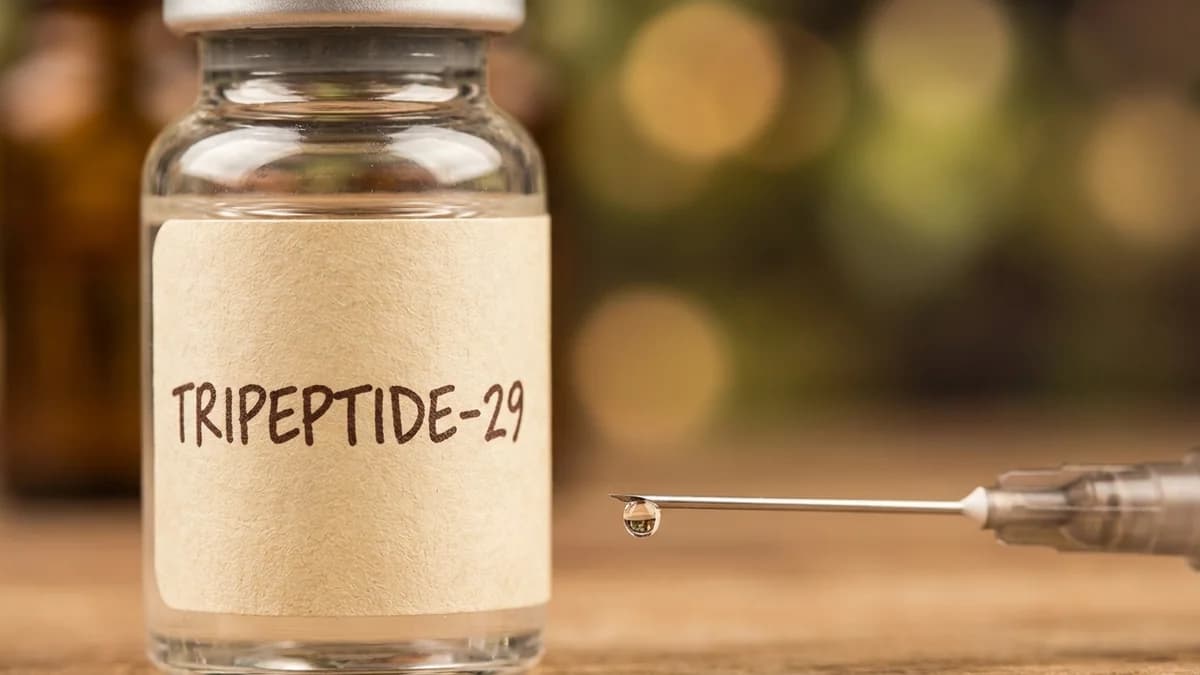
Tripeptide-29 is a synthetic collagen-derived peptide composed of three amino acids: glycine-proline-hydroxyproline (Gly-Pro-Hyp).[1] This specific amino acid sequence represents the most abundant tripeptide unit found in human collagen type I, comprising approximately 10.5% of all collagen tripeptide sequences.[2] The peptide has a molecular weight of 285.25 Da and demonstrates enhanced stability compared to larger collagen fragments due to its compact structure.[3]
Currently, Tripeptide-29 holds research-only status and is not FDA-approved for therapeutic applications.[1] Research institutions and specialized clinics utilize this peptide to investigate its effects on extracellular matrix synthesis and fibroblast regulation.[4] The dosing protocols discussed in this guide reflect research applications rather than established therapeutic standards. For comprehensive background information, see our detailed Tripeptide-29 profile.
Standard Dosing Protocols
Research protocols for Tripeptide-29 typically employ topical formulations ranging from 0.1% to 2.0% concentration by weight.[2] The most commonly studied concentration is 1.0%, applied as a cream or serum vehicle twice daily over treatment periods of 8-12 weeks.[4] Application volumes range from 0.5 mL to 2.0 mL per treatment area, depending on the surface area being studied.[3]
No FDA-approved dosing guidelines exist for Tripeptide-29, as the compound remains in research phases.[1] Clinical research facilities typically follow protocols established by institutional review boards (IRBs) and research ethics committees.[5] The following table summarizes commonly reported research dosing parameters:
| Application | Concentration | Volume per Application | Frequency | Duration | Source Type |
|---|---|---|---|---|---|
| Facial research | 0.5-1.0% | 0.5-1.0 mL | Twice daily | 8-12 weeks | Research protocol[2] |
| Body area research | 1.0-2.0% | 1.0-2.0 mL | Twice daily | 12-16 weeks | Research protocol[4] |
| Patch testing | 0.1-0.5% | 0.1-0.3 mL | Once daily | 2-4 weeks | Safety protocol[3] |
Titration Schedules
Research protocols for Tripeptide-29 typically begin with lower concentrations to assess individual tolerance before advancing to target concentrations.[2] The standard titration schedule involves starting at 0.1% concentration for the first week, increasing to 0.5% during week two, and reaching the target concentration of 1.0% by week three.[4] This gradual escalation allows researchers to monitor for adverse reactions while optimizing peptide delivery.[3]
Higher concentration protocols (1.5-2.0%) require extended titration periods of 4-6 weeks to reach target levels.[5] The following titration schedule represents the most commonly employed research protocol:
| Week | Concentration | Application Volume | Frequency | Monitoring Notes |
|---|---|---|---|---|
| 1 | 0.1% | 0.5 mL | Once daily | Baseline tolerance assessment |
| 2 | 0.5% | 0.5 mL | Twice daily | Monitor for irritation |
| 3-4 | 1.0% | 1.0 mL | Twice daily | Target concentration reached |
| 5+ | 1.0-2.0% | 1.0-2.0 mL | Twice daily | Maintenance phase |
Research participants who experience irritation at any concentration level typically step back to the previous well-tolerated level for an additional week before attempting advancement.[2]
Administration Method
Tripeptide-29 is administered exclusively via topical application in research settings.[1] The peptide is typically formulated in cream, serum, or gel vehicles with penetration enhancers to facilitate dermal absorption.[2] Application involves cleaning the target area with gentle soap and water, allowing complete drying for 5-10 minutes, then applying the formulation in a thin, even layer.[4]
Research protocols specify application to clean, dry skin using gentle circular motions until the formulation is fully absorbed, typically requiring 2-3 minutes of massage.[3] The treated area should remain uncovered for at least 15-20 minutes post-application to allow initial absorption before applying other topical products or clothing.[5] Storage requirements mandate refrigeration at 36-46°F (2-8°C) to maintain peptide stability, with formulations typically stable for 30-90 days when properly stored.[2]
Application timing follows a twice-daily schedule, with morning applications occurring 30-60 minutes before sun exposure and evening applications at least 2 hours before bedtime.[4] Research participants are instructed to rotate application sites when treating large body areas to prevent localized irritation from repeated exposure.[3] For detailed reconstitution procedures for research-grade peptides, consult our peptide reconstitution guide.
Dosing by Use Case
Extracellular Matrix Research
Research investigating extracellular matrix synthesis typically employs 1.0-1.5% Tripeptide-29 concentrations applied twice daily over 12-16 week periods.[2] These protocols aim to evaluate the peptide's effects on collagen type I gene expression and ECM remodeling processes.[4] Application areas range from 25-100 cm² depending on the specific research objectives, with typical volumes of 1.0-2.0 mL per application session.[3]
Response assessment occurs at 4-week intervals using non-invasive measurement techniques such as ultrasound elastography or dermal thickness measurements.[5] Research data suggests measurable changes in ECM parameters may become apparent after 6-8 weeks of consistent application.[2]
Fibroblast Activity Studies
Protocols examining fibroblast regulation utilize concentrations ranging from 0.5-2.0% applied to designated research areas twice daily.[4] These studies typically incorporate biopsy sampling at predetermined intervals to assess cellular activity and peptide uptake.[3] Treatment duration varies from 8-20 weeks depending on the specific research endpoints being evaluated.[2]
Fibroblast response markers are typically assessed using immunohistochemical staining and gene expression analysis at 4, 8, and 12-week timepoints.[5] Research suggests optimal fibroblast stimulation occurs with 1.0-1.5% concentrations maintained consistently over 10-12 week periods.[4]
Tissue Repair Investigation
Wound healing and tissue repair research employs specialized protocols with Tripeptide-29 concentrations of 1.5-2.0% applied to controlled injury sites.[2] These studies require medical supervision and typically involve small research populations under controlled laboratory conditions.[3] Application frequency may increase to three times daily during acute phases, reducing to twice daily during maintenance phases.[4]
Healing assessment utilizes photographic documentation, tensile strength measurements, and histological analysis at weekly intervals during the initial 4-week period.[5] Extended monitoring continues for 12-16 weeks to evaluate long-term tissue remodeling outcomes.[2]
Factors That Affect Dosing
Body surface area significantly influences Tripeptide-29 dosing calculations, with larger treatment areas requiring proportionally increased application volumes to maintain consistent concentration per square centimeter.[2] Research protocols typically calculate 0.02-0.04 mL of formulation per cm² of treatment area to ensure adequate coverage.[4] Participants with BMI values above 30 kg/m² may require concentration adjustments of 0.2-0.5% above standard protocols due to altered dermal thickness and absorption characteristics.[3]
Age-related factors affect peptide absorption and metabolism, with research participants over 65 years typically starting at 25-50% lower concentrations than younger adults.[5] Skin condition and integrity also influence dosing, with compromised barrier function requiring reduced concentrations (0.1-0.5%) to prevent excessive absorption and potential irritation.[2] Concurrent use of retinoids, alpha-hydroxy acids, or other penetration-enhancing compounds may necessitate 20-30% concentration reductions to maintain safety margins.[4]
Individual response variability ranges from 15-40% among research participants, requiring personalized dose adjustments based on tolerance and efficacy markers.[3] Genetic polymorphisms affecting collagen metabolism may influence optimal dosing, though specific guidelines for these populations remain under investigation.[5]
What Happens If You Miss a Dose
Research protocols for Tripeptide-29 specify that missed applications should be administered as soon as remembered, provided at least 6 hours remain before the next scheduled dose.[2] If less than 6 hours remain, participants should skip the missed dose and resume the regular schedule rather than double-dosing.[4] Doubling applications can lead to excessive local concentrations and increased risk of irritation or adverse reactions.[3]
Missing more than 3 consecutive applications may require restarting the titration schedule from a lower concentration to re-establish tolerance.[5] Research coordinators typically recommend maintaining a dosing diary to track applications and identify patterns that might affect protocol adherence.[2] Extended interruptions of 7 days or more generally necessitate medical evaluation before resuming treatment.[4]