Key Takeaways
- The Wolverine Healing Protocol combines BPC-157 and TB-500 for enhanced tissue repair and recovery.
- Named for its regenerative goals, the protocol targets athletes, post-surgical recovery, and anti-aging.
- Typical cycle duration is 4-8 weeks, with specific dosing for each peptide.
- Both BPC-157 and TB-500 are classified as FDA Category 2, prohibiting their compounding in the U.S.
- This protocol cannot be legally prescribed in the United States.
What Is the Wolverine Healing Protocol (BPC-157 + TB-500)?
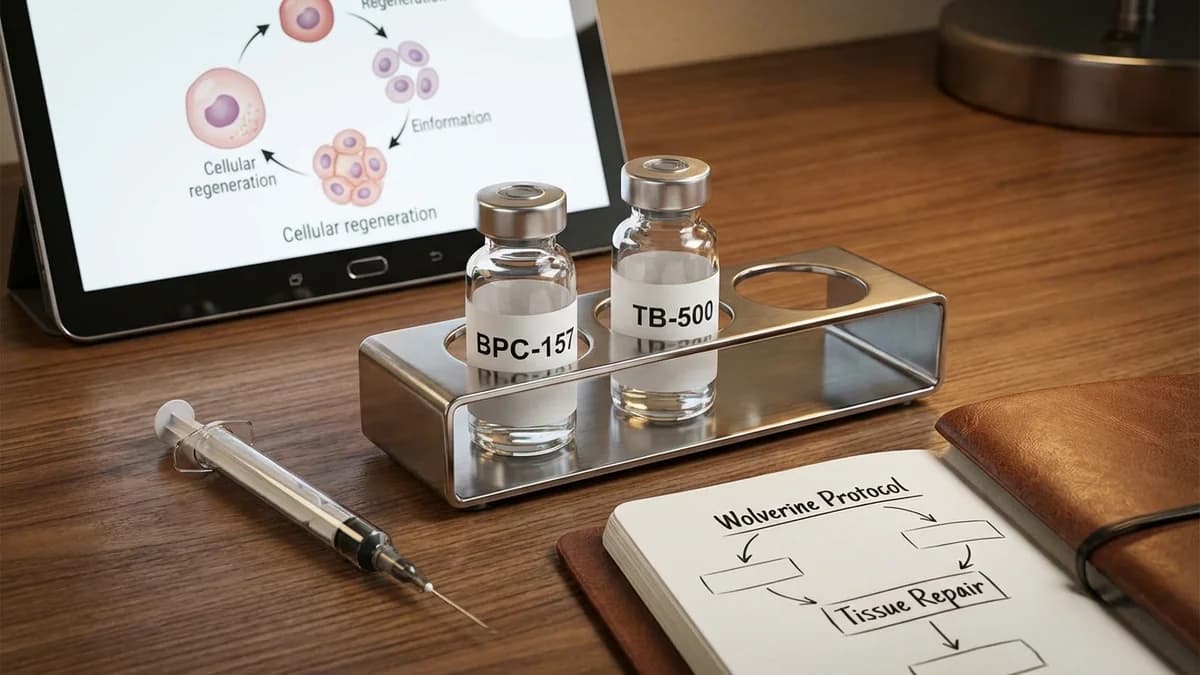
The Wolverine Healing Protocol is a peptide stacking approach that combines two potent agents, BPC-157 and TB-500, aimed at accelerating tissue repair and recovery. Named after the comic book character Wolverine, known for his rapid healing abilities, this protocol has gained popularity among athletes and individuals seeking enhanced recovery from injuries or surgeries. The protocol leverages the localized healing properties of BPC-157 alongside TB-500's systemic anti-inflammatory and tissue repair capabilities.
Regulatory Status
- BPC-157: Classified as FDA Category 2, it is prohibited for compounding in the United States. It is primarily researched for tissue repair and recovery (PMID: 40005999).
- TB-500: Also falls under FDA Category 2, making it prohibited for compounding. It is investigated for its anti-inflammatory and tissue repair properties (PMID: 41490200).
How the Wolverine Healing Protocol (BPC-157 + TB-500) Works
The synergy between BPC-157 and TB-500 lies in their complementary mechanisms of action, targeting both localized and systemic healing processes.
BPC-157
- Mechanism of Action: BPC-157 is a pentadecapeptide that promotes angiogenesis and tissue regeneration by modulating growth factor pathways (PMID: 30915550). It is known for its ability to enhance healing of musculoskeletal soft tissues.
TB-500
- Mechanism of Action: TB-500, a synthetic version of a segment of thymosin β4, facilitates actin binding and cell migration, promoting wound healing and reducing inflammation (PMID: 23084823).
Combined Effect
The combination aims to provide a comprehensive healing effect by utilizing BPC-157 for targeted repair at injury sites, while TB-500 supports overall systemic recovery and inflammation reduction.
Wolverine Healing Protocol (BPC-157 + TB-500) Dosing Protocol
The following dosing protocol outlines the typical administration for the Wolverine Healing Protocol:
| Peptide | Dose | Administration Method | Timing | Cycle Length |
|---|---|---|---|---|
| BPC-157 | 250-500 mcg 1-2x daily | Subcutaneous injection | Near injury site | 4-8 weeks |
| TB-500 | 2-5 mg weekly | Subcutaneous injection | Divided into 2-3 doses | 4-8 weeks |
Cited Protocols
These doses are based on clinical protocols and published research, although human studies are limited (PMID: 41476424).
Administration Guide
- Mixing: It is generally recommended to administer BPC-157 and TB-500 separately to avoid potential interactions in the syringe.
- Timing: BPC-157 should be injected near the injury site for localized effects, while TB-500 can be administered systemically.
- Reconstitution: Use bacteriostatic water for reconstitution. Follow specific instructions for each peptide.
- Storage: Store reconstituted peptides in a refrigerator and use within the recommended timeframe.
- Equipment: Use a 29-31 gauge needle and a 1ml syringe for injections.
Who Is This Protocol For?
Athletes Recovering from Injury
Athletes often seek the Wolverine Protocol to expedite recovery from musculoskeletal injuries due to its potential to accelerate tissue repair and reduce inflammation.
Post-Surgical Recovery
Patients recovering from surgery may use this stack to enhance healing and minimize downtime, given its reported benefits in tissue regeneration.
Anti-Aging / Longevity Goals
The protocol is also explored for anti-aging purposes, aiming to maintain tissue health and function over time.
Expected Results and Timeline
- Week 1-2: Users commonly report initial reductions in inflammation and pain.
- Week 3-4: Enhanced mobility and noticeable improvements in tissue healing are often observed.
- Week 5-8: Full effects of the protocol, including significant tissue repair and recovery, may be evident.
- Post-Cycle: Continued benefits might be experienced, although effects may gradually diminish.
Potential Side Effects and Risks
Common Side Effects
- BPC-157: Generally well-tolerated, but may cause mild injection site reactions (PMID: 34324435).
- TB-500: Potential for systemic effects such as fatigue or dizziness.
Contraindications and Interactions
- Individuals with autoimmune conditions should exercise caution.
- Medical supervision is crucial for monitoring potential interactions and managing side effects.