MyPeptideMatch logoMyPeptideMatch

Peptide Calculator — Reconstitution & Dosage

Enter your peptide vial size, the amount of bacteriostatic water you added, and your desired dose — and this free reconstitution calculator tells you exactly how many units to pull on your insulin syringe. Works for BPC-157, semaglutide, tirzepatide, TB-500, and all other injectable peptides.

How to Reconstitute Peptides

Peptides are typically delivered as lyophilized (freeze-dried) powders that must be reconstituted with bacteriostatic water before use. Following proper reconstitution technique ensures peptide stability and accurate dosing. This step-by-step guide covers everything you need to know about peptide mixing and preparation.

Want the full walkthrough? Read how to reconstitute peptides and then use the calculator above to convert your dose into exact syringe units.

1

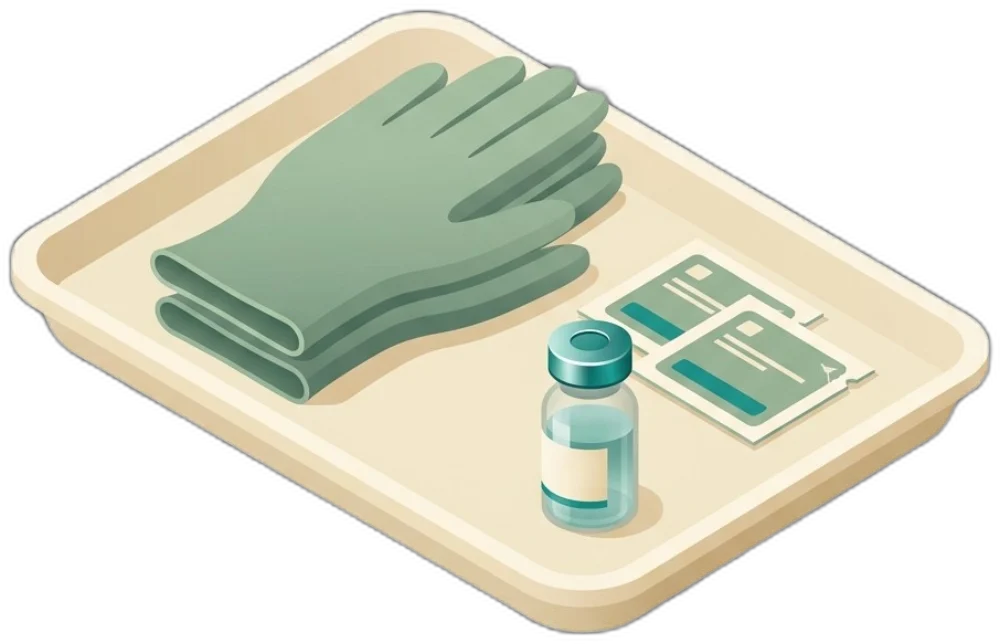
Prepare Your Workspace

Wash your hands thoroughly and put on sterile gloves. Ensure your workspace is clean. Gather your peptide vial, bacteriostatic water, sterile insulin syringes, and alcohol swabs.

2

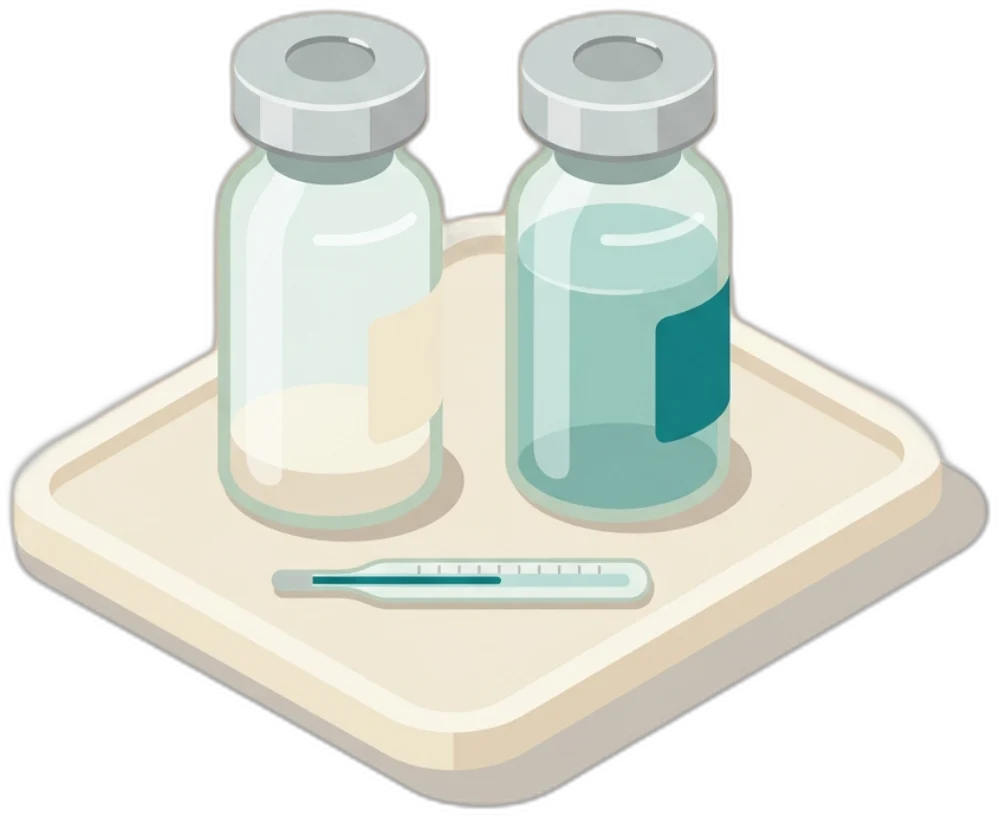
Bring to Room Temperature

If your peptide and bacteriostatic water were stored in the refrigerator or freezer, allow them to reach room temperature (20–25°C) before reconstitution. Cold solutions can interfere with proper dissolution and create foaming.

3

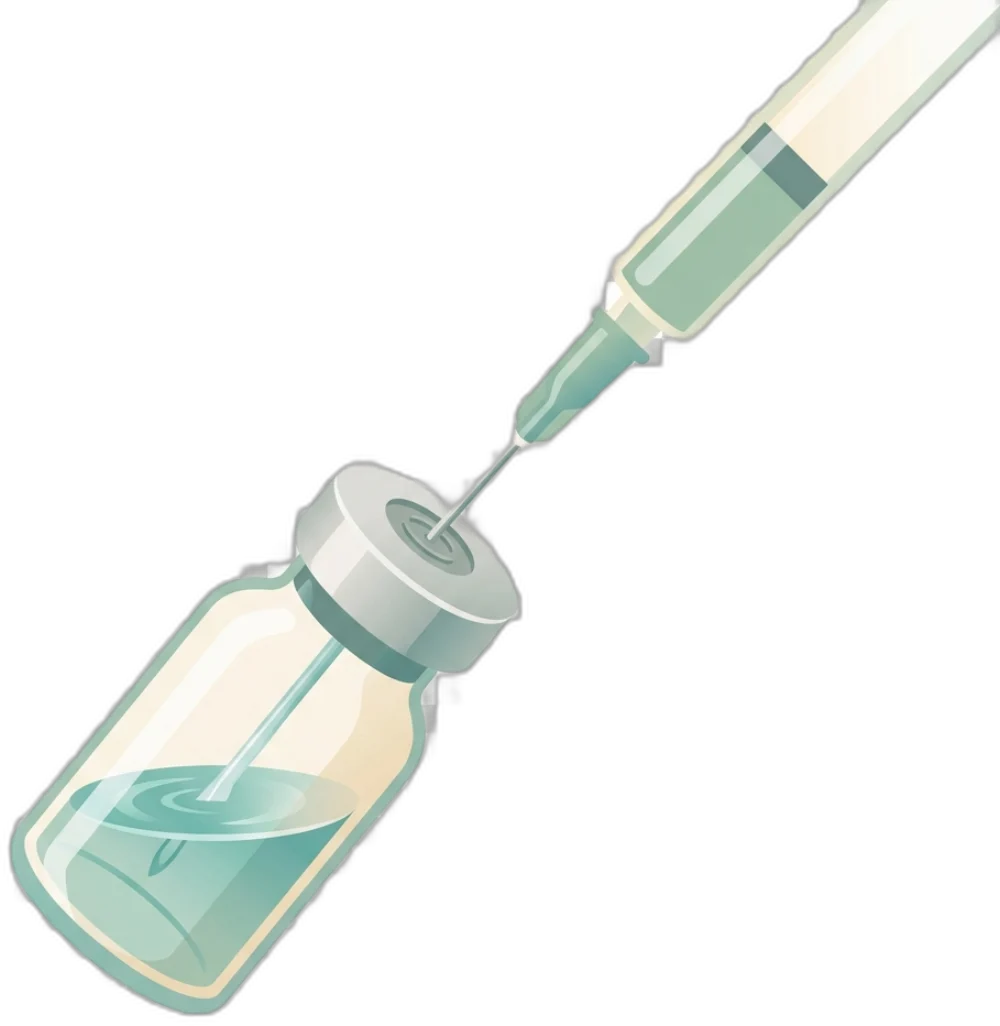
Add Bacteriostatic Water

Swab the tops of both vials with 70% isopropyl alcohol. Draw the correct amount of bacteriostatic water and slowly inject it into the peptide vial — aim at the glass wall at a 45° angle, not directly onto the powder.

4

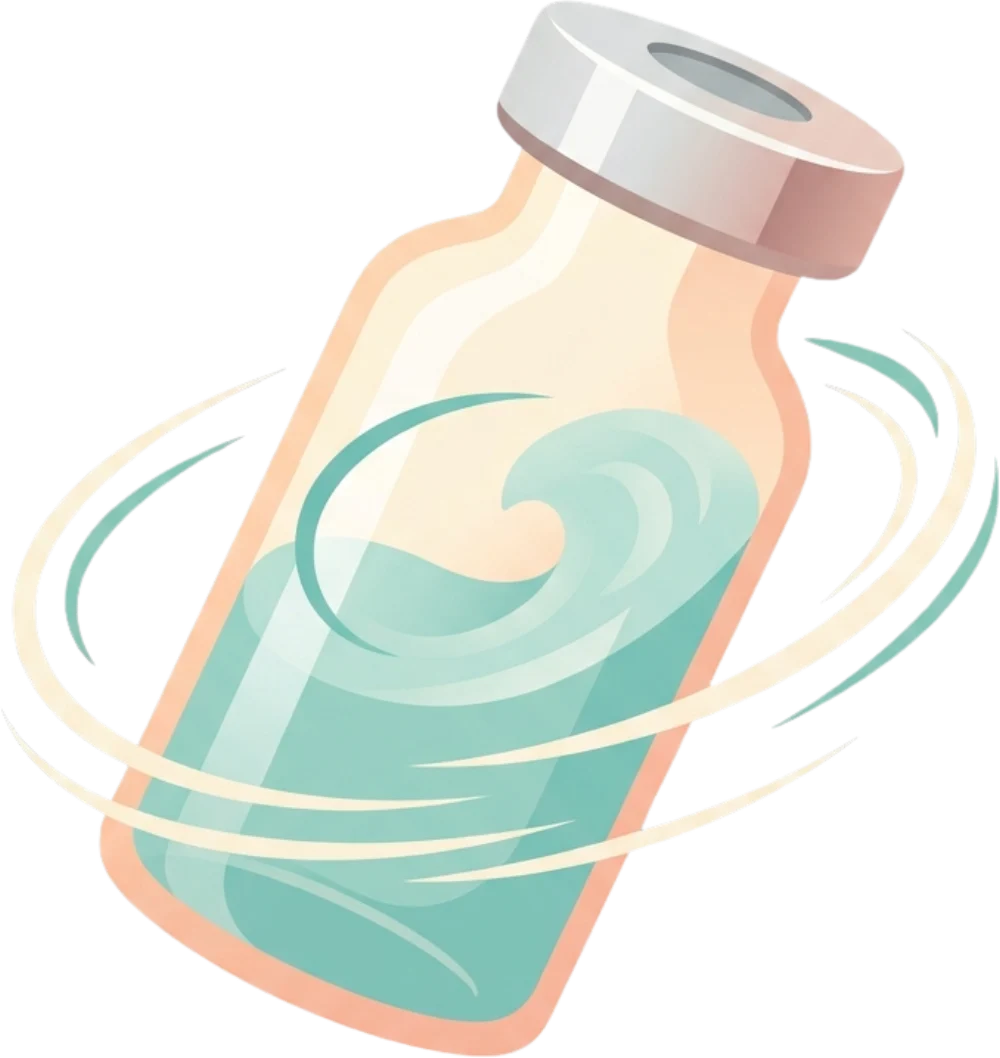
Gently Swirl Until Clear

Gently swirl the vial to dissolve the powder. Never shake vigorously — this can damage the peptide. The solution should become completely clear. If it remains cloudy, allow more time before use.

Not sure how much bacteriostatic water to add to your vial?

The amount of BAC water you add controls your concentration — less water means more concentrated (fewer syringe units per dose), more water means more dilute (more units per dose). Use our free BAC water calculator to find the recommended water volume for your specific vial size and dose.

Storing Reconstituted Peptides

Proper storage is critical for maintaining peptide potency and sterility after reconstitution. Temperature control is the most important factor.

Short-Term (3–4 Weeks)

Store reconstituted peptide solutions at 2–8°C (36–46°F) in a standard refrigerator. Avoid the door shelf where temperatures fluctuate. Keep the vial upright with the rubber stopper facing up.

Long-Term (3–4 Months)

For longer storage, freeze aliquots at -20°C (-4°F). Divide into single-use portions before freezing. Avoid repeated freeze-thaw cycles as they can degrade peptide integrity and compromise sterility.

Note: Unreconstituted (lyophilized) peptide powder is far more stable — it can be stored at room temperature for weeks, or at -20°C for years. Only reconstitute what you plan to use within the recommended timeframe.

How to Calculate Your Peptide Dose

Understanding the math behind peptide dosing is straightforward once you know the three-step formula. Our peptide dosage calculator automates this, but here is how the calculation works manually so you can verify your results.

1

Calculate the Concentration

Divide the total amount of peptide in the vial by the amount of bacteriostatic water you added.

5 mg ÷ 2 ml = 2.5 mg/ml

2

Calculate the Injection Volume

Divide your target dose by the concentration. Since the vial is in mg and your dose is in mcg, multiply by 1,000 to match units.

250 mcg ÷ (2.5 × 1,000) = 0.1 ml

3

Convert to Syringe Units

Multiply the injection volume by the number of units your syringe holds per ml to get the mark you draw to.

0.1 ml × 100 units/ml = 10 units

Dosing Examples by Peptide

Select a peptide to see a step-by-step calculation using a common reconstitution setup.

BPC-157

5 mg vial · 2 ml BAC water · 250 mcg dose · 100-unit syringe

  • Concentration: 5 mg ÷ 2 ml = 2.5 mg/ml
  • Injection volume: 250 mcg ÷ 2,500 = 0.1 ml
  • Syringe units: 0.1 ml × 100 = 10 units
  • Doses per vial: 5,000 mcg ÷ 250 mcg = 20 doses

BPC-157 dosing guide →

Semaglutide

5 mg vial · 2 ml BAC water · 250 mcg starting dose · 100-unit syringe

  • Concentration: 5 mg ÷ 2 ml = 2.5 mg/ml
  • Injection volume: 250 mcg ÷ 2,500 = 0.1 ml
  • Syringe units: 0.1 ml × 100 = 10 units
  • Doses per vial: 5,000 mcg ÷ 250 mcg = 20 weekly doses

Semaglutide reconstitution calculator →

Tirzepatide

10 mg vial · 2 ml BAC water · 2.5 mg starting dose · 100-unit syringe

  • Concentration: 10 mg ÷ 2 ml = 5.0 mg/ml
  • Injection volume: 2,500 mcg ÷ 5,000 = 0.5 ml
  • Syringe units: 0.5 ml × 100 = 50 units
  • Doses per vial: 10,000 mcg ÷ 2,500 = 4 weekly doses

Tirzepatide reconstitution calculator →

TB-500

5 mg vial · 2 ml BAC water · 2.5 mg loading dose · 100-unit syringe

  • Concentration: 5 mg ÷ 2 ml = 2.5 mg/ml
  • Injection volume: 2,500 mcg ÷ 2,500 = 1.0 ml
  • Syringe units: 1.0 ml × 100 = 100 units (full syringe)
  • Doses per vial: 5,000 mcg ÷ 2,500 = 2 doses

TB-500 dosing guide →

CJC-1295 / Ipamorelin

5 mg blend vial · 2.5 ml BAC water · 300 mcg dose · 100-unit syringe

  • Concentration: 5 mg ÷ 2.5 ml = 2.0 mg/ml
  • Injection volume: 300 mcg ÷ 2,000 = 0.15 ml
  • Syringe units: 0.15 ml × 100 = 15 units
  • Doses per vial: 5,000 mcg ÷ 300 = ≈ 16 doses

Try with CJC-1295/Ipamorelin presets →

HGH (IU-Based)

10 IU vial · 1 ml BAC water · 2 IU dose · 100-unit syringe

  • Concentration: 10 IU ÷ 1 ml = 10 IU/ml
  • Injection volume: 2 IU ÷ 10 IU/ml = 0.2 ml
  • Syringe units: 0.2 ml × 100 = 20 units
  • Doses per vial: 10 IU ÷ 2 IU = 5 doses

HGH vials use IU instead of mg. Enter your IU as "vial quantity" and your dose in IU as "dose" in the calculator above.

Peptide Reconstitution Chart

Look up your vial size and the amount of BAC water you added, then find your dose column to get the exact units to draw. All values assume a standard 100-unit (1 ml) insulin syringe.

How to read this chart: Find the row that matches your vial size and the ml of BAC water you added. Then look across to your dose amount — the number shown is the unit mark on your syringe.Example: 5 mg vial + 2 ml water + 250 mcg dose = pull to 10 units.

← scroll to see all doses →

VialBAC WaterConc.250 mcg500 mcg1 mg2.5 mg5 mg
2 mg1 ml2 mg/ml12.52550
2 mg2 ml1 mg/ml2550100
5 mg1 ml5 mg/ml5102050100
5 mg2 ml2.5 mg/ml102040100
5 mg3 ml1.67 mg/ml153060
10 mg1 ml10 mg/ml2.55102550
10 mg2 ml5 mg/ml5102050100
10 mg3 ml3.33 mg/ml7.5153075
15 mg2 ml7.5 mg/ml3.36.713.333.366.7
15 mg3 ml5 mg/ml5102050100

Syringe unit values are for a 100-unit (1 ml) insulin syringe. A dash (—) means the dose exceeds what the vial contains at that dilution. For 50-unit or 30-unit syringes, the math is the same — only fill to the unit mark shown above.

Understanding Peptide Units & Conversions

One of the most common sources of confusion in peptide dosing is the difference between weight units, volume units, and syringe units. Here is a clear breakdown of each measurement you will encounter when using a peptide mixing calculator.

UnitFull NameMeasuresUsed For
mgMilligramWeightPeptide vial contents (e.g., 5 mg vial)
mcgMicrogramWeightIndividual dose amounts (e.g., 250 mcg dose)
mlMilliliterVolumeBacteriostatic water & injection volume
IUInternational UnitBiological activityHGH and some hormone peptides
UnitsSyringe UnitsVolume (markings)Tick marks on insulin syringes

Key Conversion

1 mg = 1,000 mcg

A 5 mg vial contains 5,000 mcg total

Syringe Unit to Volume

1 unit = 0.01 ml (all syringe sizes)

30-unit = 0.3 ml · 50-unit = 0.5 ml · 100-unit = 1.0 ml

Popular Peptide Dosing Quick Reference

Below are common reconstitution setups for the most popular therapeutic peptides. These are general reference ranges — always follow your prescribing clinician's specific protocol. Click any peptide name to view its full encyclopedia entry with clinical evidence, FDA status, and detailed dosing guidance.

PeptideCategoryVial SizeTypical WaterCommon Dose
BPC-157Tissue Repair5 mg1–2 ml250–500 mcg
SemaglutideWeight Loss5 mg, 10 mg2–2.5 ml0.25–2.4 mg
TirzepatideWeight Loss5 mg, 10 mg, 15 mg2–3 ml2.5–15 mg
TB-500Tissue Repair5 mg, 10 mg1–2 ml2–5 mg
CJC-1295 / IpamorelinGrowth Hormone5 mg blend2.5 ml300 mcg
SermorelinGrowth Hormone5 mg, 9 mg, 15 mg2–3 ml200–500 mcg
AOD-9604Weight Loss5 mg2 ml300 mcg
PT-141Sexual Wellness10 mg2 ml1–2 mg

Looking for a specific peptide? Browse our complete Peptide Encyclopedia with 40+ entries covering mechanisms, clinical research, FDA status, and dosing protocols.

Frequently Asked Questions

Common questions about peptide reconstitution, dosing calculations, and using this peptide calculator.

What is a peptide reconstitution calculator?

A peptide reconstitution calculator is a tool that helps you determine the exact volume to draw in your syringe for a specific peptide dose. You input the peptide vial size (in mg), the amount of bacteriostatic water you added (in ml), and your desired dose (in mcg), and the calculator tells you how many units to draw on your insulin syringe.

How do you reconstitute peptides?

Reconstituting peptides means adding bacteriostatic water to a lyophilized (freeze-dried) peptide vial to create an injectable solution. Use sterile technique: swab the tops of both vials, inject the bacteriostatic water slowly against the glass wall, then gently swirl until fully dissolved. After reconstitution, refrigerate the vial and follow your clinician or pharmacy instructions.

How do I mix peptides with bacteriostatic water?

To mix (reconstitute) peptides, draw the recommended volume of bacteriostatic water (BAC water) into a sterile syringe, inject it slowly into the peptide vial (aiming the stream at the glass wall), and gently swirl until the solution becomes clear. Do not shake vigorously. The amount of BAC water you add determines your concentration (mg/mL) and how many insulin syringe units you draw per dose.

How do I calculate my peptide dose?

To calculate your peptide dose, use this three-step formula: (1) Divide the vial quantity in mg by the water volume in ml to get the concentration in mg/ml. (2) Divide your desired dose in mcg by the concentration × 1,000 to get the injection volume in ml. (3) Multiply the injection volume by the total syringe units divided by the syringe volume to convert to syringe units. For example, a 5mg vial reconstituted with 2ml of bacteriostatic water gives a 2.5 mg/ml concentration. A 250 mcg dose requires 0.1 ml, which equals 10 units on a 100-unit (1 ml) syringe.

How much bacteriostatic water should I add to a 5mg peptide vial?

The most common reconstitution volumes for a 5mg peptide vial are 1 ml or 2 ml of bacteriostatic water. Using 1 ml creates a 5 mg/ml concentration (more concentrated, smaller injection volume), while 2 ml creates a 2.5 mg/ml concentration (easier to measure smaller doses). Not sure how much water to add? Use our BAC water calculator to get a recommended amount based on your vial size and dose. Your prescribing clinician will also recommend the appropriate volume based on your specific peptide and dosing protocol.

What is the difference between mg and mcg?

Milligrams (mg) and micrograms (mcg) are both units of weight. 1 mg equals 1,000 mcg. Peptide vials are typically labeled in milligrams (e.g., 5 mg, 10 mg), while individual doses are usually measured in micrograms (e.g., 250 mcg, 500 mcg). This is because each dose is a small fraction of the total vial contents.

What do units mean on an insulin syringe?

Units on an insulin syringe refer to volume markings. A 100-unit syringe holds 1 ml total, so each unit equals 0.01 ml. A 50-unit syringe holds 0.5 ml (each unit = 0.01 ml), and a 30-unit syringe holds 0.3 ml (each unit = 0.01 ml). The "units" are not related to drug potency — they are simply volume markers that make it easier to measure small injection volumes accurately.

How many doses are in a peptide vial?

The number of doses per vial depends on the vial size and your dose amount. Divide the total vial quantity (in mcg) by your dose (in mcg). For example, a 5 mg vial (5,000 mcg) at 250 mcg per dose yields 20 doses. A 10 mg vial at 500 mcg per dose also yields 20 doses. Our calculator automatically shows your doses-per-vial count.

Can I use sterile water instead of bacteriostatic water?

Sterile water for injection (SWFI) can be used but is not ideal for multi-dose vials. Bacteriostatic water contains 0.9% benzyl alcohol as a preservative, which inhibits bacterial growth and allows safe use over multiple injections for up to 28 days. Sterile water has no preservative, so it should only be used for single-dose applications. Always follow your healthcare provider's instructions.

How long does a reconstituted peptide last?

Reconstituted peptides typically remain stable for 3-4 weeks when stored at 2-8°C (36-46°F) in a standard refrigerator. For longer storage, peptide solutions can be frozen at -20°C for 3-4 months. Avoid repeated freeze-thaw cycles. Unreconstituted lyophilized powder is far more stable and can be stored at -20°C for years.

What syringe size should I use for peptides?

Most peptide users use insulin syringes, which come in three common sizes: 0.3 ml (30 units), 0.5 ml (50 units), and 1.0 ml (100 units). For small doses, a 0.3 ml syringe provides the finest graduation marks and greatest accuracy. For larger doses, a 0.5 ml or 1.0 ml syringe may be necessary to hold the full injection volume. Use the smallest syringe that can accommodate your dose for the most accurate measurement.

Is this peptide calculator free to use?

Yes, our peptide reconstitution calculator is completely free to use with no signup or registration required. It works on all devices — desktop, tablet, and mobile. You can use it as many times as needed to calculate dosing for any injectable peptide.

How do I reconstitute semaglutide at home?

To reconstitute compounded semaglutide, add bacteriostatic water to the lyophilized vial using sterile technique. A common setup is 2 ml of bacteriostatic water into a 5 mg vial, yielding a 2.5 mg/ml concentration. Inject the water slowly against the glass wall at a 45° angle, then gently swirl until dissolved. Starting dose is typically 0.25 mg (250 mcg) per week, which is 0.1 ml or 10 units on a 100-unit syringe at this concentration. Always follow your prescribing provider's specific instructions.

What size needle should I use for peptide injections?

Most peptide injections use a 29-gauge or 31-gauge insulin syringe with a ½-inch needle for subcutaneous injection. Thinner gauges (higher numbers) cause less discomfort. For subcutaneous injections, a ½-inch needle is sufficient for most body composition types. Common injection sites include the lower abdomen, thigh, or upper arm. Your healthcare provider will recommend the appropriate needle gauge and injection site for your protocol.

How many units of BPC-157 should I inject?

The number of insulin syringe units for a BPC-157 dose depends on how you reconstitute it. For a common setup of 5 mg BPC-157 reconstituted with 2 ml bacteriostatic water (2.5 mg/ml concentration), a 250 mcg dose equals 10 units on a 100-unit syringe, and a 500 mcg dose equals 20 units. Use our peptide calculator above to determine the exact units for your specific reconstitution setup.

Can I mix two peptides in one syringe?

Some peptides can be drawn into the same syringe for a single injection, but they should generally not be reconstituted in the same vial. Peptides like CJC-1295 and Ipamorelin are commonly combined in one syringe since they are designed to work synergistically. However, mixing incompatible peptides can cause degradation or reduced efficacy. Always consult your healthcare provider before combining peptides, and never mix peptides that have different storage requirements or pH sensitivities.

How do I calculate peptide dosage for a 10mg vial?

For a 10 mg vial, the calculation follows the same formula. If you add 2 ml of bacteriostatic water, the concentration is 10 mg ÷ 2 ml = 5 mg/ml (5,000 mcg/ml). For a 250 mcg dose: 250 mcg ÷ 5,000 mcg/ml = 0.05 ml = 5 units on a 100-unit syringe. For a 500 mcg dose: 500 mcg ÷ 5,000 mcg/ml = 0.1 ml = 10 units. A 10 mg vial at 250 mcg per dose provides 40 doses total.

Need guidance from a professional?

Find a verified peptide therapy clinic near you for personalized dosing protocols and supervised treatment plans.

Find a Clinic

Medical Disclaimer: This peptide reconstitution calculator is provided for informational and educational purposes only. It is not a substitute for professional medical advice, diagnosis, or treatment. All dosing should be determined and supervised by a licensed healthcare provider. Always consult a qualified clinician before starting any peptide therapy protocol. MyPeptideMatch.com does not sell peptides or pharmaceutical products. The dosing references on this page are general guidelines and may not be appropriate for your individual circumstances.