Key Takeaways
- GHK-Cu is not FDA-approved and is available for research purposes only.
- Clinical studies suggest benefits in skin regeneration, wound healing, and anti-inflammatory effects.
- Patients may notice initial effects within a month, with more significant changes potentially occurring after three months.
- Results can vary based on individual factors such as compliance, diet, and concurrent treatments.
- GHK-Cu's efficacy compared to alternatives remains under-researched, with more data needed for comprehensive comparisons.
What Is GHK-Cu?
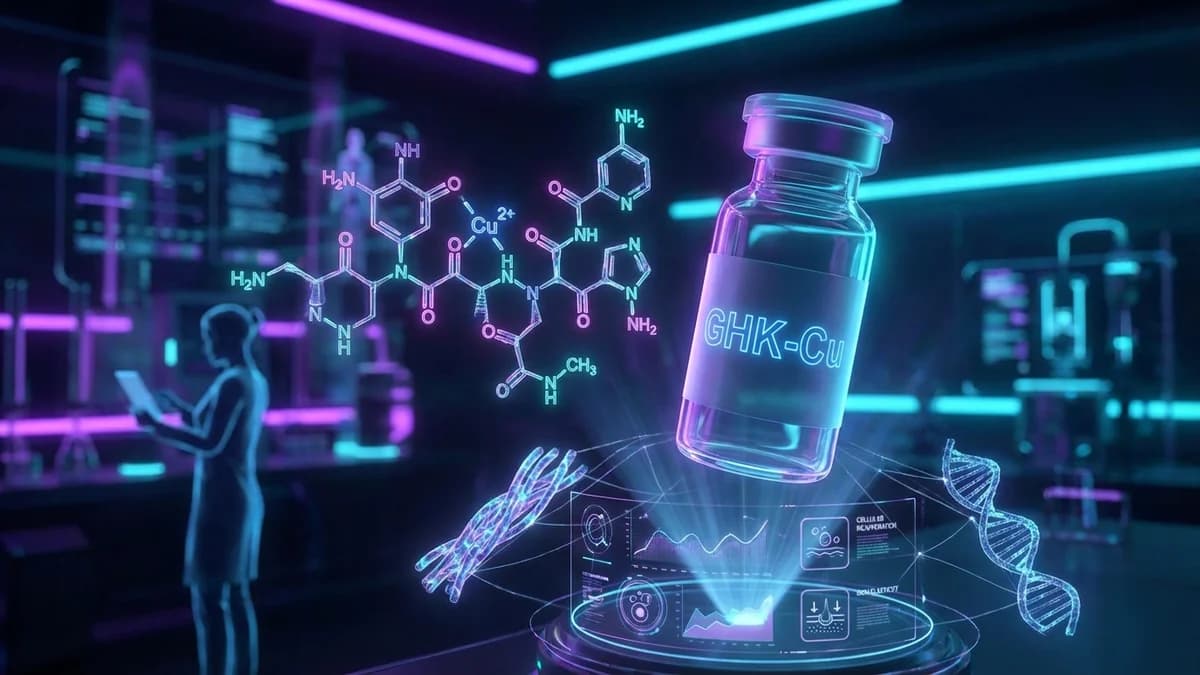
GHK-Cu is a research peptide composed of the tripeptide sequence Gly-His-Lys bound to copper(II) ions. It is primarily studied for its role in extracellular matrix modulation, cellular signaling, collagen production regulation, and gene expression regulation. While it shows promise in various biological processes, GHK-Cu is currently not FDA-approved and is available only for research purposes. For more detailed information, visit the GHK-Cu profile.
What Clinical Trials Show
Clinical research on GHK-Cu has highlighted its potential in skin regeneration and wound healing. According to a study published in the International Journal of Molecular Sciences (PMID 29986520), GHK-Cu has been shown to increase collagen, elastin, and glycosaminoglycan synthesis, supporting dermal fibroblast function. Additionally, the peptide exhibits anti-inflammatory and antioxidant properties, as noted in a study from Aging Pathobiology and Therapeutics (PMID 35083444).
While GHK-Cu has demonstrated these effects in preclinical and some clinical settings, it is crucial to note that these results are primarily from early-phase research. The peptide's full clinical potential and limitations are still being explored.
Realistic Timeline
The timeline for experiencing the effects of GHK-Cu can vary based on individual factors and adherence to treatment protocols. Generally, patients may begin to notice subtle changes within the first month of consistent use. By three months, many report more noticeable improvements in skin texture and wound healing, as supported by studies like those in BioMed Research International (PMID 26236730). However, long-term outcomes and the sustainability of these effects require further investigation.
Factors That Affect Results
Several factors can influence the results of GHK-Cu therapy:
- Dosing Compliance: Adhering to prescribed dosing regimens is crucial for achieving desired outcomes.
- Diet and Exercise: A balanced diet and regular physical activity can enhance the peptide's effects, particularly in skin health and wound healing.
- Underlying Conditions: Pre-existing health conditions may impact the peptide's effectiveness.
- Concurrent Medications: Interactions with other treatments can alter the peptide's efficacy.
- Individual Variation: Genetic and lifestyle differences can lead to variability in response.
What Results Look Like in Practice
In practical terms, many patients using GHK-Cu for skin-related purposes report improvements in skin elasticity, reduced wrinkles, and enhanced wound healing. Clinical data suggests these outcomes are linked to the peptide's ability to stimulate collagen production and modulate inflammatory responses (PMID 39963574). However, individual experiences can vary, and not all users may achieve the same results.