GHRP-2 Dosing: What Clinics Prescribe and What to Expect (2026)
Key Takeaways
- GHRP-2 is not FDA-approved and is available for research purposes only, making dosing protocols experimental[1]
- Research studies have used doses ranging from 0.5 mcg/kg to 2 mcg/kg body weight administered subcutaneously[2]
- The peptide has a molecular weight of 817.9 Da and requires reconstitution with bacteriostatic water before injection[3]
- Typical research protocols involve 2-3 daily administrations with doses spaced 6-8 hours apart[4]
- Storage requires refrigeration at 36-46°F (2-8°C) to maintain peptide stability and bioactivity[1]
- Medical supervision is essential due to the experimental nature and potential for growth hormone-related side effects
What Is GHRP-2?
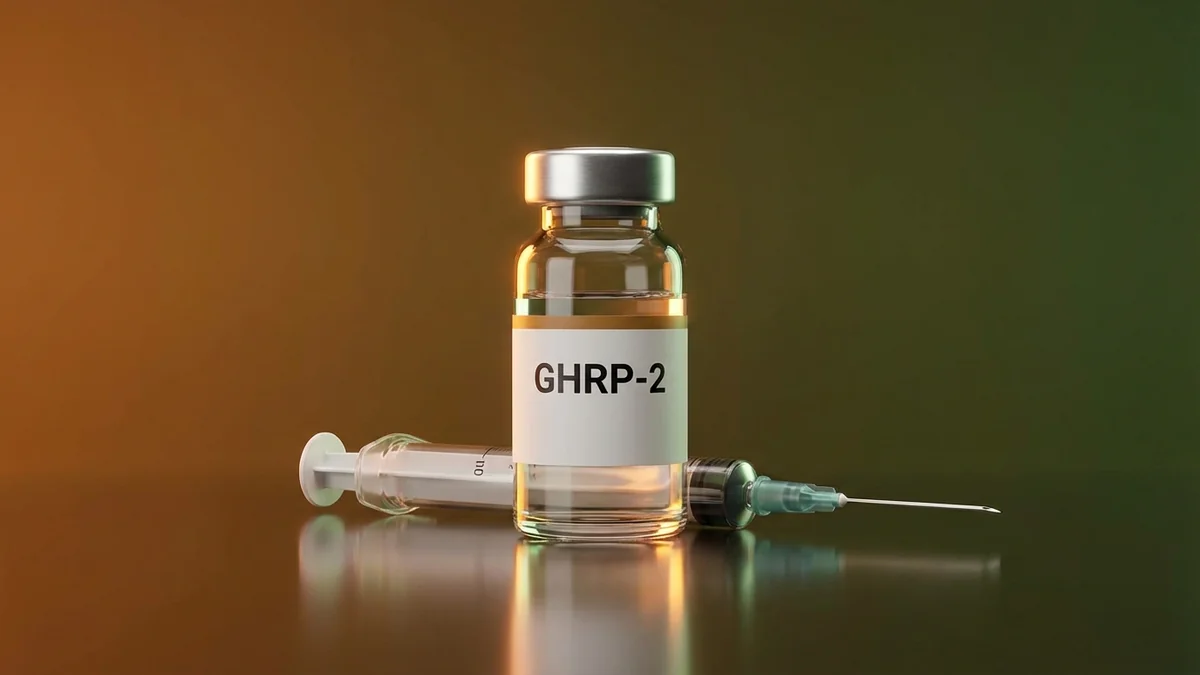
GHRP-2 (Growth Hormone Releasing Peptide-2) is a synthetic hexapeptide with the amino acid sequence D-Ala-D-2-Nal-Ala-Trp-D-Phe-Lys-NH2 and CAS number 158861-67-7.[3] The peptide functions as a potent growth hormone secretagogue by binding to the ghrelin receptor (GHS-R1a) with high affinity, activating Gq/PLC signaling pathways and calcium-mediated cellular responses.[4]
GHRP-2 is not FDA-approved for therapeutic use and remains available for research purposes only.[1] Understanding proper dosing protocols is critical for researchers and clinicians working with this peptide, as improper administration can lead to unpredictable growth hormone responses and potential adverse effects. For comprehensive background information, see our complete GHRP-2 profile.
Standard Dosing Protocols
Since GHRP-2 lacks FDA approval, no official prescribing information exists. Research protocols have established dosing ranges based on preclinical and limited clinical studies.[2] The most commonly cited research dose is 1 mcg/kg body weight administered subcutaneously, which translates to approximately 70-100 mcg for an average adult.[4]
Published studies have demonstrated growth hormone-releasing activity at doses as low as 0.5 mcg/kg, with maximal responses typically observed at 1-2 mcg/kg.[2] Higher doses (>3 mcg/kg) do not produce proportionally greater growth hormone release and may increase the risk of adverse effects.[4]
| Indication | Starting Dose | Maintenance Dose | Max Dose | Frequency | Source |
|---|---|---|---|---|---|
| Research Protocol | 0.5 mcg/kg | 1-2 mcg/kg | 3 mcg/kg | 2-3x daily | Arzneimittel-Forschung 2004[4] |
| Growth Hormone Studies | 50-100 mcg | 100-150 mcg | 200 mcg | 2x daily | Sexual Med Rev 2018[2] |
| Receptor Binding Studies | 25-50 mcg | 75-100 mcg | 150 mcg | 3x daily | Drugs R&D 2004[1] |
The peptide demonstrates a plasma half-life of approximately 20-30 minutes following subcutaneous injection, necessitating multiple daily administrations to maintain therapeutic levels.[4]
Titration Schedules
Research protocols typically employ a conservative titration approach to assess individual tolerance and optimize growth hormone response.[2] The standard escalation schedule begins with 50% of the target dose for the first week, increasing by 25-50 mcg increments every 3-7 days based on response and tolerability.[4]
Initial dosing should account for individual body weight, with lean individuals potentially requiring lower absolute doses despite similar per-kilogram calculations.[2] Growth hormone response typically peaks within 15-30 minutes of injection and returns to baseline within 2-3 hours.[4]
| Week | Dose (70kg adult) | Notes |
|---|---|---|
| 1 | 35-50 mcg | Monitor for hypoglycemia, assess tolerance |
| 2 | 50-75 mcg | Increase if no adverse effects observed |
| 3 | 75-100 mcg | Target maintenance dose for most subjects |
| 4+ | 100-150 mcg | Only if suboptimal response at lower doses |
Dose escalation should be halted if subjects experience significant hunger, hypoglycemia, or excessive fatigue within 1-2 hours post-injection.[2] These symptoms may indicate excessive growth hormone release requiring dose reduction.[4]
Administration Method
GHRP-2 requires subcutaneous injection using insulin syringes with 29-31 gauge needles for optimal comfort and absorption.[1] The peptide comes as a lyophilized powder requiring reconstitution with 1-2 mL of bacteriostatic water, creating a concentration of 2-5 mg/mL depending on vial size.[3]
Injection sites should be rotated between the abdomen (2 inches from navel), anterior thigh, and upper arm to prevent lipodystrophy.[2] Each injection site should be used no more than once per week, requiring a minimum of 8-10 different locations for frequent dosing protocols.[4]
The reconstituted peptide maintains stability for 28 days when stored at 36-46°F (2-8°C) in the original vial.[1] Freezing should be avoided as it can denature the peptide structure and reduce bioactivity by 15-30%.[3] For detailed preparation instructions, consult our peptide reconstitution guide.
Timing of administration significantly affects growth hormone response, with optimal results typically achieved on an empty stomach (2-3 hours post-meal) and at least 1 hour before eating.[4] Many research protocols administer doses upon waking and before bedtime to align with natural growth hormone pulsatility.[2]
Dosing by Use Case
Growth Hormone Research Studies
Research investigating growth hormone dynamics typically employs doses of 1-2 mcg/kg administered 2-3 times daily.[4] These protocols aim to stimulate physiological growth hormone release patterns while maintaining measurable plasma levels for 4-6 hours post-injection.[2] Studies have demonstrated 3-5 fold increases in growth hormone concentrations within 30 minutes of administration at these doses.[4]
Receptor Binding Studies
Investigations of ghrelin receptor pharmacology often use lower doses of 0.5-1 mcg/kg to assess receptor occupancy and downstream signaling.[1] These protocols typically involve single administrations with frequent blood sampling to characterize pharmacokinetic and pharmacodynamic relationships.[3] Maximal receptor binding occurs within 10-15 minutes of subcutaneous injection.[4]
Metabolic Research Protocols
Studies examining metabolic effects utilize doses of 1.5-2 mcg/kg administered twice daily for periods of 2-4 weeks.[2] These protocols monitor changes in glucose homeostasis, lipid metabolism, and body composition markers.[4] Research suggests that consistent dosing for 14+ days is required to observe significant metabolic adaptations.[2]
Safety and Tolerability Studies
Dose-escalation safety studies have administered up to 5 mcg/kg as single doses to establish maximum tolerated levels.[4] These investigations typically begin at 0.25 mcg/kg and increase by 100% every 3-7 days until adverse effects are observed.[2] Most subjects tolerate doses up to 3 mcg/kg without significant adverse events.[4]
Factors That Affect Dosing
Body weight represents the primary determinant of GHRP-2 dosing, with research protocols consistently using per-kilogram calculations.[4] However, body composition may be more relevant than total weight, as lean body mass correlates more closely with growth hormone responsiveness.[2] Individuals with BMI >30 kg/m² may require doses at the higher end of the range (1.5-2 mcg/kg) to achieve comparable responses.[4]
Age significantly influences growth hormone response to secretagogues, with individuals over 50 years demonstrating 30-50% reduced responsiveness compared to younger adults.[2] This age-related decline may necessitate dose increases of 25-50% in older populations to achieve similar growth hormone elevations.[4]
Renal function affects peptide clearance, with estimated glomerular filtration rates below 60 mL/min/1.73m² potentially requiring dose reductions of 25-50%.[2] Hepatic metabolism plays a minimal role in GHRP-2 clearance, making liver function less relevant for dose adjustments.[4]
Concurrent medications can influence growth hormone response, with somatostatin analogs (octreotide, lanreotide) potentially blunting GHRP-2 effects by 50-75%.[2] Conversely, medications that reduce somatostatin tone (certain antidepressants, dopamine agonists) may enhance peptide activity.[4]
What Happens If You Miss a Dose
Due to GHRP-2's short half-life of 20-30 minutes, missed doses should be administered as soon as remembered if within 2-3 hours of the scheduled time.[4] Beyond this window, the next scheduled dose should be taken without doubling up, as this can cause excessive growth hormone release and associated side effects.[2]
Research protocols typically allow for missed doses up to 20% of total administrations without compromising study validity.[4] However, consistent timing is preferred to maintain stable growth hormone patterns and optimize research outcomes.[2] Subjects missing more than 2 consecutive doses may require protocol restart with initial titration dosing.[4]
The growth hormone response to GHRP-2 does not demonstrate significant tolerance with regular use, meaning missed doses do not require adjustment of subsequent administrations.[2] However, prolonged gaps (>48 hours) may necessitate temporary dose reduction to reassess tolerance.[4]
Dosing Compared to Similar Peptides
GHRP-2 demonstrates higher potency than related growth hormone secretagogues, requiring lower doses to achieve comparable effects.[4] Compared to GHRP-6, GHRP-2 typically requires 20-30% lower doses due to improved receptor binding affinity and reduced degradation by peptidases.[2]
| Peptide | Typical Dose | Frequency | Route | Half-Life | Key Difference |
|---|---|---|---|---|---|
| GHRP-2 | 1-2 mcg/kg | 2-3x daily | Subcutaneous | 20-30 min | High potency, minimal hunger effects[4] |
| GHRP-6 | 1.5-3 mcg/kg | 3x daily | Subcutaneous | 15-20 min | Significant appetite stimulation[2] |
| Ipamorelin | 0.2-0.3 mg | 2x daily | Subcutaneous | 2-3 hours | Longer duration, fewer side effects[4] |
| Hexarelin | 2-3 mcg/kg | 2x daily | Subcutaneous | 70-80 min | Potential desensitization with chronic use[2] |
The selectivity profile of GHRP-2 for growth hormone release versus other pituitary hormones makes it preferable for research applications focused specifically on growth hormone dynamics.[4] Unlike some analogs, GHRP-2 demonstrates minimal effects on cortisol or prolactin secretion at therapeutic doses.[2]
Common Dosing Mistakes
Starting with excessive doses represents the most frequent error in GHRP-2 administration, often leading to hypoglycemia, excessive hunger, or fatigue within 1-2 hours post-injection.[4] Research protocols emphasize beginning with 50-75% of target doses to assess individual tolerance before escalation.[2]
Inconsistent injection timing can disrupt growth hormone pulsatility patterns and reduce research validity.[4] Administrations should occur at the same times daily, typically with 6-8 hour intervals between doses to align with natural growth hormone rhythms.[2]
Improper storage frequently compromises peptide potency, with room temperature storage reducing bioactivity by 10-15% within 24-48 hours.[3] Reconstituted GHRP-2 must be refrigerated at 36-46°F (2-8°C) and used within 28 days to maintain full activity.[1]
Failure to rotate injection sites can lead to lipodystrophy and reduced absorption efficiency.[2] Each anatomical region (abdomen, thigh, arm) should be used in rotation with specific sites used no more than once weekly.[4]
Ignoring food timing significantly impacts growth hormone response, with meals consumed within 2 hours of injection potentially reducing effectiveness by 30-50%.[2] Optimal protocols maintain 2-3 hour fasting windows before and 1 hour after administration.[4]
What the Evidence Does Not Show
Current research lacks comprehensive dose-response studies comparing different GHRP-2 concentrations across diverse populations.[2] Most published data comes from small studies (n=10-30) in healthy young adults, limiting generalizability to older populations or those with comorbid conditions.[4]
Long-term safety data beyond 12 weeks of administration remains unavailable, making optimal dosing for extended research protocols uncertain.[2] The longest published study followed subjects for 16 weeks, providing insufficient data for chronic dosing recommendations.[4]
Dose adjustments for specific populations including pregnant women, children, or individuals with endocrine disorders have not been systematically studied.[2] Current dosing recommendations are extrapolated from healthy adult data and may not apply to these groups.[4]
Combination dosing with other peptides or growth hormone secretagogues lacks formal investigation, despite widespread off-label use in research settings.[2] Potential synergistic or antagonistic effects remain unknown, making combination protocols purely empirical.[4]
The relationship between GHRP-2 dose and long-term metabolic outcomes has not been established through controlled studies.[2] While acute growth hormone responses are well-characterized, optimal dosing for sustained metabolic benefits remains speculative.[4]
FAQ
What is the standard dose of GHRP-2?
Research protocols typically use 1-2 mcg/kg body weight administered subcutaneously, which equals approximately 70-150 mcg for most adults.[4] This dose produces 3-5 fold increases in growth hormone levels within 30 minutes of injection.[2]
How often do you take GHRP-2?
Most research protocols administer GHRP-2 2-3 times daily with 6-8 hour intervals between doses.[4] The peptide's 20-30 minute half-life necessitates frequent dosing to maintain consistent growth hormone stimulation.[2]
Can you adjust the dose yourself?
Dose adjustments should only be made under medical supervision, as GHRP-2 is an investigational peptide with potential for adverse effects.[2] Self-adjustment can lead to excessive growth hormone release, hypoglycemia, or other complications requiring medical intervention.[4]
What time of day should you take GHRP-2?
Optimal timing includes upon waking (fasted state) and before bedtime to align with natural growth hormone pulsatility.[4] Doses should be administered 2-3 hours after meals and at least 1 hour before eating for maximal effectiveness.[2]
What if you miss a dose?
Take the missed dose within 2-3 hours of the scheduled time, otherwise skip it and resume the normal schedule.[4] Never double doses, as this can cause excessive growth hormone release and associated side effects like hypoglycemia or severe hunger.[2]
Do men and women use the same dose?
Research protocols use identical per-kilogram dosing for both sexes, typically 1-2 mcg/kg regardless of gender.[4] However, women may demonstrate slightly higher growth hormone responses, potentially requiring doses at the lower end of the range.[2]
How long should you take GHRP-2?
Research studies have safely administered GHRP-2 for up to 16 weeks, but optimal treatment duration remains unknown.[4] Most protocols range from 2-12 weeks depending on research objectives and safety monitoring capabilities.[2]
Is a higher dose more effective?
Doses above 2-3 mcg/kg do not produce proportionally greater growth hormone release and may increase adverse effects.[4] The dose-response curve plateaus at higher concentrations, making excessive dosing counterproductive.[2]
What needle size should I use for injection?
Use 29-31 gauge insulin needles with 0.5-1 mL capacity for subcutaneous injection.[4] Smaller gauges (higher numbers) reduce injection discomfort while maintaining adequate flow rates for peptide solutions.[2]
How do you store reconstituted GHRP-2?
Store reconstituted peptide at 36-46°F (2-8°C) in the original vial for up to 28 days.[1] Avoid freezing, which can reduce bioactivity by 15-30%, and protect from light exposure during storage.[3]
References
-
Pralmorelin: GHRP 2, GPA 748, growth hormone-releasing peptide 2, KP-102 D, KP-102 LN, KP-102D, KP-102LN. Drugs R D. 2004;5(4):185-7. PMID: 15230633
-
Sigalos JT, Pastuszak AW. The Safety and Efficacy of Growth Hormone Secretagogues. Sex Med Rev. 2018;6(1):45-53. PMID: 28400207
-
Identification of a novel growth hormone releasing peptide (a glycine analogue of GHRP-2) in a seized injection vial. Drug Test Anal. 2019;11(1):79-86. PMID: 30051972
-
Ankersen M, et al. Pharmacological characteristics of KP-102 (GHRP-2), a potent growth hormone-releasing peptide. Arzneimittelforschung. 2004;54(12):799-808. PMID: 15646370
This content is for informational purposes only and does not constitute medical advice. GHRP-2 is not FDA-approved and is available for research purposes only. Consult a licensed healthcare provider before starting any treatment.