
Key Takeaways
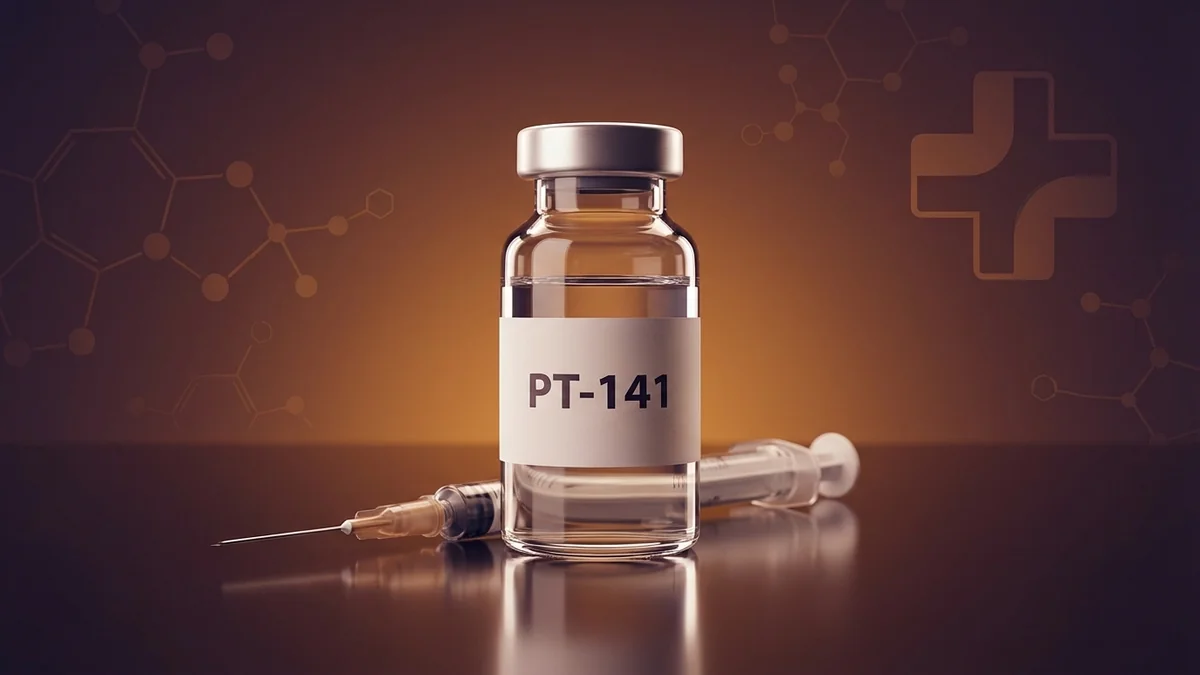
- PT-141 (bremelanotide) is not FDA-approved and is available for research purposes only.
- Common side effects include nausea, flushing, and headache, as reported in clinical trials.
- Serious side effects can include increased blood pressure and cardiovascular issues.
- Discuss potential side effects and management strategies with a healthcare provider.
What Is PT-141 (bremelanotide)?
PT-141, also known as bremelanotide, is a synthetic peptide that functions as a melanocortin receptor agonist, primarily targeting the MC4R receptor. It influences central nervous system signaling pathways and is primarily used in neuroendocrine and molecular neuroscience research. For a comprehensive overview, visit the full PT-141 (bremelanotide) profile.
Common Side Effects
Clinical trials and research studies have documented several common side effects associated with PT-141 (bremelanotide). These include:
- Nausea: Occurs in approximately 20% of patients, according to early clinical trials (PMID 31429064).
- Flushing: A transient reddening of the skin, often reported in conjunction with nausea.
- Headache: Reported by a significant percentage of users in clinical settings.
- Injection Site Reactions: Includes pain, redness, or swelling at the site of administration, typical for subcutaneous injections.
Serious or Rare Side Effects
While most side effects are mild, PT-141 can also cause more serious adverse events:
- Increased Blood Pressure: Temporary increases in blood pressure have been observed, necessitating caution in patients with cardiovascular risk factors (PMID 31429064).
- Cardiovascular Events: Rare but serious events, such as palpitations or tachycardia, have been reported in clinical trials (PMID 16839319).
- Hypersensitivity Reactions: Although rare, some individuals may experience allergic reactions.
Side Effects by Administration Route
PT-141 is typically administered via subcutaneous injection. This route can influence the side effect profile, particularly with regards to injection site reactions, which are more common compared to oral or nasal formulations.
Managing Side Effects
Patients and researchers can manage side effects through several strategies:
- Dose Titration: Gradually increasing the dose can help minimize nausea and other initial side effects.
- Timing: Administering the peptide in the evening or before meals may reduce gastrointestinal discomfort.
- Consultation: Regular communication with a healthcare provider is crucial, especially if serious side effects occur.
PT-141 (bremelanotide) vs. Similar Peptides: Side Effect Comparison
When compared to other melanocortin receptor agonists, PT-141 has a distinct side effect profile:
| Peptide | Common Side Effects | Serious Side Effects |
|---|---|---|
| PT-141 (bremelanotide) | Nausea, flushing, headache | Increased blood pressure |
| Melanotan II | Nausea, flushing | Hyperpigmentation, priapism |
What the Evidence Does Not Show
Current data on PT-141 (bremelanotide) is primarily from preclinical and early clinical trials. Long-term safety data is lacking, and its effects in diverse populations remain under-researched. The peptide is not FDA-approved and should only be used in controlled research settings.
FAQ
Q1: Is PT-141 (bremelanotide) safe for everyone?
A: PT-141 is not FDA-approved and should only be used in research settings. Individuals with cardiovascular conditions should exercise caution.
Q2: How can I reduce the side effects of PT-141?
A: Strategies include dose titration, timing of administration, and consulting with a healthcare provider.
Q3: Does PT-141 interact with other medications?
A: Potential interactions are not well-documented, so it is important to discuss all medications with a healthcare provider.
Q4: Are there any long-term side effects of PT-141?
A: Long-term side effects are not well-studied due to the lack of extensive research data.
Q5: Can PT-141 be used for conditions other than research?
A: Currently, PT-141 is only available for research purposes and is not approved for any medical conditions.
This content is for informational purposes only and does not constitute medical advice. Consult a licensed healthcare provider before starting any treatment.