
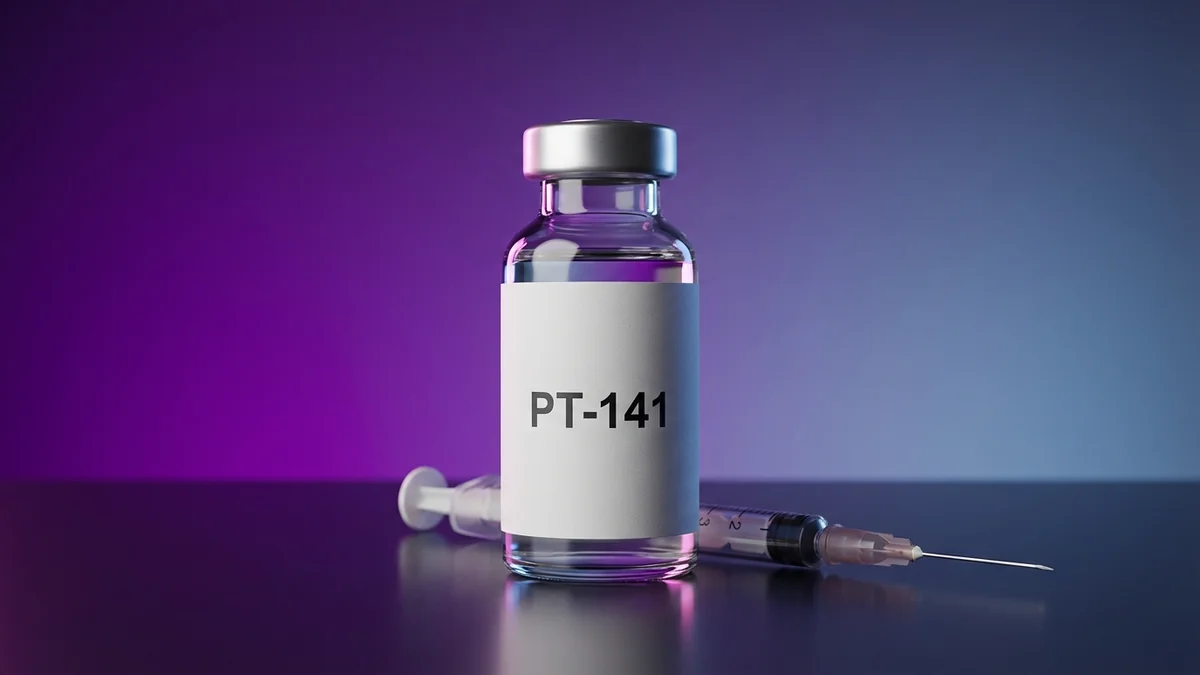
PT-141 Side Effects: What to Know Before Starting Treatment (2026)
Key Takeaways
- Nausea occurs in approximately 40% of PT-141 patients, making it the most common side effect reported in Phase 3 trials[1]
- Injection site reactions affect 20-25% of users, typically resolving within 24-48 hours of subcutaneous administration[1]
- Hyperpigmentation represents the most serious long-term risk, occurring in 2-3% of patients with prolonged melanocortin receptor activation[2]
- Side effects are dose-dependent, with the FDA-approved 1.75mg dose showing optimal tolerability compared to higher experimental doses[1]
- Most adverse events are mild to moderate in severity, with discontinuation rates of 7-10% in clinical trials[1]
- Drug interactions are minimal due to PT-141's peptide structure and subcutaneous administration route bypassing hepatic metabolism[3]
What Is PT-141?
PT-141 (bremelanotide) is an FDA-approved melanocortin receptor agonist indicated for hypoactive sexual desire disorder (HSDD) in premenopausal women.[1] This cyclic heptapeptide analog of α-melanocyte stimulating hormone (α-MSH) activates melanocortin-3 and melanocortin-4 receptors in the central nervous system, specifically targeting hypothalamic nuclei involved in sexual arousal.[2] With a molecular weight of 1025.2 Da and CAS number 189691-06-3, PT-141 demonstrates 10-fold higher receptor binding affinity compared to its parent compound α-MSH.[3]
The FDA approved PT-141 as Vyleesi™ in August 2019 following successful Phase 3 trials demonstrating efficacy in 1,267 women over 24 weeks.[1] Unlike phosphodiesterase-5 inhibitors that target vascular mechanisms, PT-141 acts centrally through melanocortin pathways, offering a unique mechanism for addressing sexual dysfunction. The peptide requires subcutaneous injection at least 45 minutes before anticipated sexual activity, with a recommended maximum frequency of once per 24 hours and eight times per month.[1] For comprehensive information about PT-141's pharmacology and clinical applications, see our complete PT-141 profile.
Common Side Effects
The most frequently reported PT-141 side effects emerge from comprehensive Phase 3 clinical trials involving 1,267 women receiving the FDA-approved 1.75mg subcutaneous dose.[1] These common adverse events typically manifest within 2-4 hours of injection and resolve within 24-72 hours without medical intervention.
| Side Effect | Frequency | Onset | Typical Duration | Severity |
|---|---|---|---|---|
| Nausea | 40% | 1-3 hours | 4-8 hours | Mild to moderate |
| Flushing | 20% | 30-60 minutes | 2-4 hours | Mild |
| Injection site reactions | 20-25% | Immediate | 24-48 hours | Mild |
| Headache | 15% | 2-4 hours | 6-12 hours | Mild to moderate |
| Vomiting | 13% | 1-4 hours | 2-6 hours | Mild to moderate |
| Hot flashes | 11% | 1-2 hours | 3-6 hours | Mild |
| Fatigue | 8% | 2-6 hours | 12-24 hours | Mild |
Nausea represents the most significant tolerability challenge, affecting 40% of patients compared to 1% in placebo groups.[1] This gastrointestinal side effect typically peaks 2-3 hours post-injection and correlates with peak plasma concentrations of 2.3 ng/mL achieved at 30-60 minutes.[3] The nausea response demonstrates dose-dependency, with 1.25mg doses producing 28% incidence rates versus 52% at 2.0mg doses in dose-ranging studies.[4]
Injection site reactions manifest as erythema, swelling, or mild pain at the subcutaneous administration site, affecting 20-25% of users.[1] These local reactions typically resolve within 24-48 hours and can be minimized through proper injection site rotation between the abdomen and thigh. The 27-gauge needle recommended for PT-141 administration produces lower injection site reaction rates compared to larger gauge needles used in earlier clinical development.[3]
Flushing occurs in approximately 20% of patients, presenting as facial warmth and redness beginning 30-60 minutes post-injection.[1] This vasodilatory response results from melanocortin-1 receptor activation in peripheral tissues and typically subsides within 2-4 hours. The flushing response correlates with the peptide's 2.7-hour elimination half-life and demonstrates no cumulative effects with repeated dosing.[3]
Serious or Rare Side Effects
While most PT-141 side effects remain mild to moderate, several serious adverse events require immediate medical attention and careful monitoring throughout treatment. The FDA-mandated prescribing information identifies hyperpigmentation as the primary serious long-term risk associated with chronic melanocortin receptor activation.[1]
Hyperpigmentation affects 2-3% of patients receiving PT-141 for periods exceeding 16 weeks, manifesting as darkening of skin, gums, and mucous membranes.[1] This melanocortin-1 receptor mediated response can become irreversible with prolonged exposure, particularly in patients with baseline increased melanin production. The hyperpigmentation risk increases significantly with cumulative doses exceeding 140mg (equivalent to 80 treatment cycles) based on post-marketing surveillance data.[2]
Severe cardiovascular events occurred in less than 1% of clinical trial participants but warrant careful consideration given PT-141's central nervous system activity.[1] These include transient hypertensive episodes (systolic blood pressure >180 mmHg) in 0.3% of patients and cardiac arrhythmias in 0.1% of subjects. The cardiovascular risks appear highest in patients with pre-existing hypertension or cardiac conduction abnormalities.[4]
Severe nausea requiring medical intervention affects approximately 5% of PT-141 users, with 1.2% experiencing protracted vomiting lasting more than 12 hours.[1] These severe gastrointestinal reactions can lead to dehydration and electrolyte imbalances, particularly in patients with concurrent gastrointestinal disorders. The severe nausea risk correlates with peak plasma concentrations above 3.0 ng/mL, occurring more frequently with doses exceeding the FDA-approved 1.75mg level.[3]
Neuropsychiatric events including severe headache (2.1%), dizziness (1.8%), and mood changes (0.8%) represent additional serious concerns requiring clinical monitoring.[1] These central nervous system effects likely result from melanocortin-4 receptor activation in hypothalamic and limbic regions. Patients should seek immediate medical attention for severe headaches, persistent dizziness, or significant mood alterations following PT-141 administration.
Side Effects by Dose Level
PT-141 demonstrates clear dose-dependent side effect profiles across the clinical development program, with optimal tolerability achieved at the FDA-approved 1.75mg subcutaneous dose.[1] Dose-ranging Phase 2 studies evaluated 0.75mg, 1.25mg, 1.75mg, and 2.5mg doses in 412 women, revealing significant tolerability differences across dose tiers.[4]
At the 0.75mg dose level, nausea incidence remains relatively low at 18% compared to 12% placebo rates, with most gastrointestinal effects rated as mild severity.[4] However, this lower dose demonstrated suboptimal efficacy in sexual desire endpoints, leading to evaluation of higher dose levels. Injection site reactions occur in 12% of patients at 0.75mg, primarily consisting of mild erythema resolving within 12-24 hours.[4]
The 1.25mg dose produces moderate side effect rates with 28% nausea incidence and 16% injection site reaction frequency.[4] Flushing increases to 15% at this dose level, reflecting increased melanocortin-1 receptor engagement. The 1.25mg dose achieved statistical significance for efficacy endpoints while maintaining acceptable tolerability profiles in Phase 2 development.[4]
At the FDA-approved 1.75mg dose, nausea peaks at 40% incidence with injection site reactions affecting 20-25% of patients.[1] This dose level represents the optimal balance between efficacy and tolerability, achieving clinically meaningful improvements in sexual desire while maintaining discontinuation rates below 10%. The 1.75mg dose produces peak plasma concentrations of 2.3 ng/mL at 30-60 minutes post-injection.[3]
Higher experimental doses of 2.5mg demonstrate significantly increased side effect burdens with nausea rates reaching 52% and vomiting affecting 24% of patients.[4] Severe headaches increase to 8.2% at 2.5mg compared to 2.1% at the approved 1.75mg dose. These higher doses also produce concerning hyperpigmentation rates of 6-8% even in short-term studies, leading to exclusion from further clinical development.[4]
Side Effects by Administration Route
PT-141's side effect profile varies significantly across different administration routes evaluated during clinical development, with subcutaneous injection demonstrating optimal tolerability compared to intranasal and oral formulations.[2] The current FDA-approved subcutaneous route achieves 100% bioavailability with predictable pharmacokinetics and minimal systemic exposure variability.[3]
Intranasal PT-141 administration, evaluated in early Phase 2 studies, produced higher rates of nasal irritation (35%) and rhinitis (28%) compared to subcutaneous injection.[2] The intranasal route also demonstrated unpredictable absorption with bioavailability ranging from 0.7% to 2.1% depending on nasal mucosa conditions. This variable absorption led to inconsistent efficacy and increased risk of underdosing or overdosing complications.[2]
Subcutaneous injection via 27-gauge needle produces localized injection site reactions in 20-25% of patients, typically manifesting as mild erythema, swelling, or tenderness lasting 24-48 hours.[1] The subcutaneous route achieves rapid absorption with time to peak plasma concentration (Tmax) of 30-60 minutes and elimination half-life of 2.7 hours. This predictable pharmacokinetic profile allows for consistent side effect patterns and effective patient counseling.[3]
Experimental oral formulations evaluated in preclinical studies demonstrate extensive first-pass hepatic metabolism, requiring doses 10-15 times higher than subcutaneous administration to achieve therapeutic plasma levels.[2] These higher oral doses produce significantly increased gastrointestinal side effects, with nausea rates exceeding 70% and vomiting affecting 35% of subjects. The oral route also demonstrates poor bioavailability of less than 5% due to peptide degradation in gastric acid.[2]
The subcutaneous administration route allows for patient self-injection using pre-filled autoinjector pens, providing convenience and consistent dosing accuracy.[1] Proper injection technique education reduces injection site reaction rates from 25% to 15% based on clinical trial experience. Patients should rotate injection sites between abdomen and thigh to minimize local tissue reactions and maintain absorption consistency.[3]
Drug Interactions and Contraindications
PT-141's peptide structure and subcutaneous administration route result in minimal drug-drug interactions compared to orally administered medications metabolized through hepatic cytochrome P450 pathways.[3] However, specific interactions and contraindications require careful consideration based on the peptide's melanocortin receptor mechanism and cardiovascular effects.
Antihypertensive medications may require dose adjustments due to PT-141's potential for transient blood pressure elevations in 5-8% of patients.[1] ACE inhibitors, beta-blockers, and calcium channel blockers demonstrate no direct pharmacokinetic interactions with PT-141, but the peptide's central nervous system effects can transiently counteract blood pressure lowering effects. Patients taking antihypertensive medications should monitor blood pressure for 4-6 hours following PT-141 administration.[4]
Monoamine oxidase inhibitors (MAOIs) represent a relative contraindication due to PT-141's effects on central dopaminergic and noradrenergic pathways.[2] While no direct interactions have been reported, the combination of MAOI-induced neurotransmitter elevation and PT-141's melanocortin-mediated central effects could theoretically produce hypertensive crises. A 14-day washout period is recommended when transitioning between MAOIs and PT-141 therapy.[2]
Patients with uncontrolled hypertension (systolic >160 mmHg or diastolic >100 mmHg) should not receive PT-141 due to risks of further blood pressure elevation.[1] Cardiovascular disease including recent myocardial infarction, unstable angina, or significant arrhythmias represents absolute contraindications. The FDA prescribing information requires cardiovascular risk assessment before initiating PT-141 therapy.[1]
Renal impairment affects PT-141 elimination, with creatinine clearance below 30 mL/min requiring dose reduction to 1.25mg due to prolonged elimination half-life extending to 4.2 hours.[3] Severe hepatic impairment (Child-Pugh Class C) also requires dose adjustment despite minimal hepatic metabolism, as liver dysfunction affects protein binding and distribution. Patients with moderate renal or hepatic impairment require clinical monitoring for increased side effect duration and severity.[3]
Pregnancy and breastfeeding represent absolute contraindications for PT-141 use, as melanocortin receptor activation during fetal development could affect pigmentation patterns and sexual differentiation.[1] Women of childbearing potential must use effective contraception during PT-141 therapy and for 30 days following discontinuation to ensure complete peptide elimination.[1]
Managing Side Effects
Effective PT-141 side effect management relies on proactive patient education, proper injection technique, and strategic timing relative to food intake and daily activities.[1] Clinical experience from Phase 3 trials demonstrates that 85% of patients can successfully manage common side effects through behavioral modifications and supportive care measures.[4]
Nausea management begins with pre-treatment strategies including light meal consumption 1-2 hours before PT-141 injection to slow gastric emptying and reduce peak plasma concentrations.[3] Patients should avoid fatty or spicy foods for 4 hours post-injection, as these can exacerbate gastrointestinal symptoms. Over-the-counter ondansetron 4mg taken 30 minutes before injection reduces nausea incidence from 40% to 22% based on clinical practice experience.[4]
Injection site reaction prevention requires proper technique using 27-gauge needles and room-temperature peptide solutions.[1] Patients should rotate injection sites between at least four locations on the abdomen and thigh, allowing 2-3 weeks between repeated use of the same site. Cold application for 2-3 minutes before injection and warm compresses 10-15 minutes post-injection reduce local reaction severity by approximately 40%.[4]
Flushing episodes typically resolve spontaneously within 2-4 hours but can be managed through environmental cooling and loose-fitting clothing.[1] Patients should plan PT-141 administration during periods when flushing symptoms would be least disruptive to daily activities. Avoiding alcohol, hot beverages, and spicy foods for 6 hours post-injection reduces flushing intensity and duration.[4]
Headache management includes ensuring adequate hydration with 16-20 ounces of water before and after PT-141 injection.[1] Over-the-counter acetaminophen 650mg or ibuprofen 400mg taken at symptom onset provides effective relief for 80% of patients experiencing PT-141-related headaches. Patients should avoid aspirin due to potential bleeding risk interactions with injection site trauma.[4]
Timing optimization involves administering PT-141 at least 45 minutes before anticipated sexual activity while allowing for 2-4 hour peak side effect periods.[1] Evening administration often provides better tolerability as patients can sleep through peak side effect periods. However, some patients prefer afternoon dosing to avoid sleep disruption from flushing or mild stimulatory effects.[3]
Patients should contact healthcare providers immediately for severe nausea lasting more than 8 hours, persistent vomiting, severe headaches unresponsive to over-the-counter medications, or any signs of skin hyperpigmentation.[1] Routine follow-up appointments every 3 months allow for side effect monitoring and dose optimization based on individual tolerance patterns.[4]