Key Takeaways
- Sermorelin is a synthetic analog of growth hormone-releasing hormone (GHRH) used primarily for growth hormone deficiency.
- It acts on the pituitary gland to stimulate the release of growth hormone, affecting various physiological processes.
- Sermorelin is administered subcutaneously and has a short half-life, requiring multiple doses for sustained effects.
- While its primary target is growth hormone release, indirect effects on blood pressure may occur through metabolic changes.
- Clinical evidence supports its efficacy in growth hormone deficiency, but its direct impact on blood pressure requires further study.
What Is Sermorelin?
Sermorelin is a synthetic peptide analog of growth hormone-releasing hormone (GHRH), specifically designed to stimulate the pituitary gland to produce and release growth hormone. It is primarily used for treating growth hormone deficiency and is classified as a compoundable peptide under FDA regulations. For a comprehensive overview, visit the full profile.
Mechanism of Action
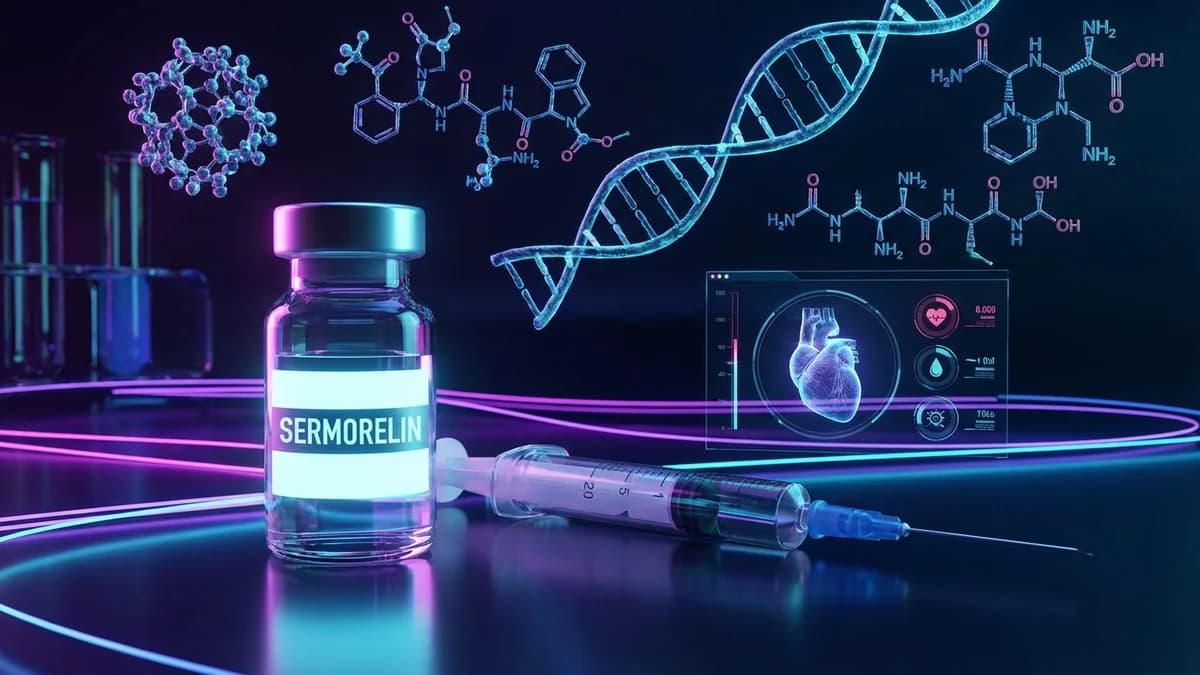
Sermorelin, a 29-amino acid peptide, mimics the natural GHRH, binding to specific receptors on the pituitary gland. This binding activates the cAMP (cyclic adenosine monophosphate) signaling pathway, which in turn stimulates the synthesis and secretion of growth hormone (GH) from the anterior pituitary (PMID 18046908). The increase in circulating GH levels leads to downstream effects such as protein synthesis, lipolysis, and glucose metabolism modulation.
Pharmacokinetics
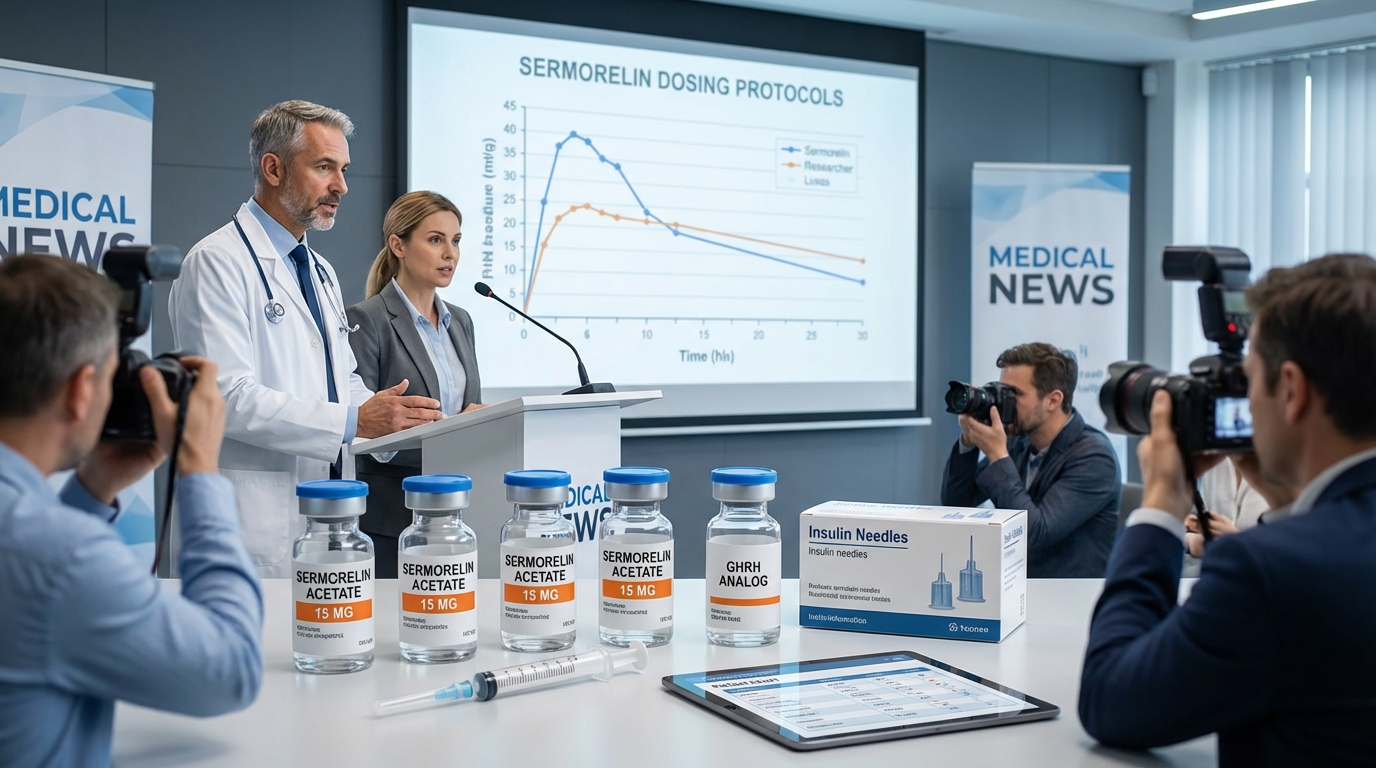
Sermorelin is administered via subcutaneous injection, offering a bioavailability of approximately 70%. Its half-life is relatively short, around 10-20 minutes, necessitating frequent dosing to maintain therapeutic GH levels (PMID 32257855). Peak serum concentrations are typically reached within 30 minutes post-injection, with effects lasting up to several hours.
What Happens in the Body
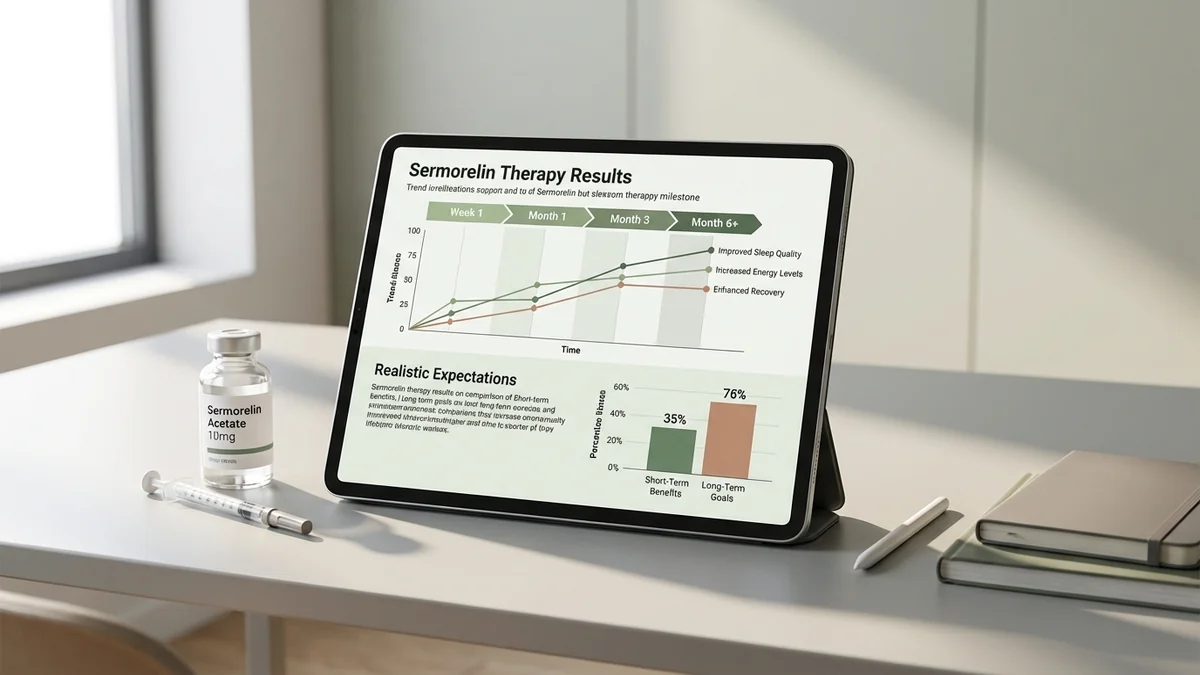
Upon administration, patients may begin to experience the effects of increased growth hormone levels within a few hours. Initial changes often include improved sleep quality and enhanced recovery from exercise. Over time, many patients report increased muscle mass and reduced fat mass, although these effects can vary widely (PMID 41490200).
How It Compares to Similar Peptides
Compared to other GHRH analogs like CJC-1295 or Ipamorelin, Sermorelin has a shorter duration of action, which may require more frequent dosing. CJC-1295, for instance, has a longer half-life due to its ability to bind to serum albumin, offering prolonged GH release. Providers may choose Sermorelin for patients who prefer shorter-acting treatments or have specific dosing needs.