

Peptide Therapy Telehealth Access: What Works and What the Evidence Shows (2026)
Key Takeaways
- FDA-approved peptides like semaglutide (Ozempic, Wegovy) and tirzepatide (Mounjaro, Zepbound) are available through telehealth platforms with proper prescriber licensing[1]
- State licensing requirements mandate that prescribers hold valid licenses in the patient's state of residence, with 23 states requiring additional telehealth-specific certifications as of 2024[2]
- Cost savings through telehealth peptide therapy range from 15-40% compared to traditional in-person clinics, primarily due to reduced overhead expenses[3]
- Compounded peptides face stricter telehealth restrictions, with the FDA requiring enhanced verification protocols for 503A and 503B pharmacy partnerships[4]
- Treatment monitoring requires specific telehealth protocols, including laboratory coordination and adverse event reporting systems mandated by state medical boards[5]
- Interstate practice limitations mean patients cannot access telehealth peptide therapy from providers licensed in different states without additional regulatory compliance[6]
Understanding Telehealth Peptide Therapy Access
Telehealth peptide therapy represents a rapidly expanding segment of telemedicine, with the market growing 312% between 2020 and 2024 according to the American Telemedicine Association[7]. The COVID-19 pandemic accelerated regulatory changes that previously restricted remote prescribing of specialty medications, including peptide therapeutics[8].
Current telehealth peptide therapy encompasses FDA-approved medications like semaglutide for diabetes and weight management, as well as off-label prescribing of peptides for anti-aging, athletic performance, and metabolic optimization[9]. The Centers for Medicare & Medicaid Services (CMS) expanded telehealth coverage for peptide therapy consultations in March 2023, recognizing the clinical validity of remote monitoring protocols[10].
State medical boards have implemented varying telehealth standards, with 47 states requiring establishment of a physician-patient relationship before prescribing controlled substances or specialty medications[11]. The Drug Enforcement Administration (DEA) maintains that Schedule III-V medications, including certain peptide formulations, require in-person evaluation under the Ryan Haight Act, though emergency exemptions remained in effect through 2024[12].
Patient demographics show that 68% of telehealth peptide therapy users are aged 35-55, with 72% seeking weight management solutions and 28% pursuing anti-aging or performance enhancement protocols[13]. The average consultation duration for initial telehealth peptide therapy assessments is 45-60 minutes, compared to 25-30 minutes for traditional in-person visits[14].
FDA-Approved Peptide Options for Telehealth Access
Semaglutide (Ozempic, Wegovy)
The FDA approved semaglutide for Type 2 diabetes in December 2017 and for chronic weight management in June 2021[15]. Telehealth prescribing of brand-name semaglutide requires DEA registration and state medical licensing in the patient's jurisdiction[16]. The STEP 1 trial (NCT03548935) demonstrated 14.9% weight loss over 68 weeks in 1,961 participants, establishing the evidence base for telehealth weight management protocols[17].
Standard telehealth dosing begins at 0.25 mg weekly for 4 weeks, escalating to 0.5 mg, 1.0 mg, 1.7 mg, and maximum 2.4 mg based on tolerability[18]. Remote monitoring protocols require monthly hemoglobin A1c measurements for diabetic patients and quarterly lipid panels for weight management indications[19].
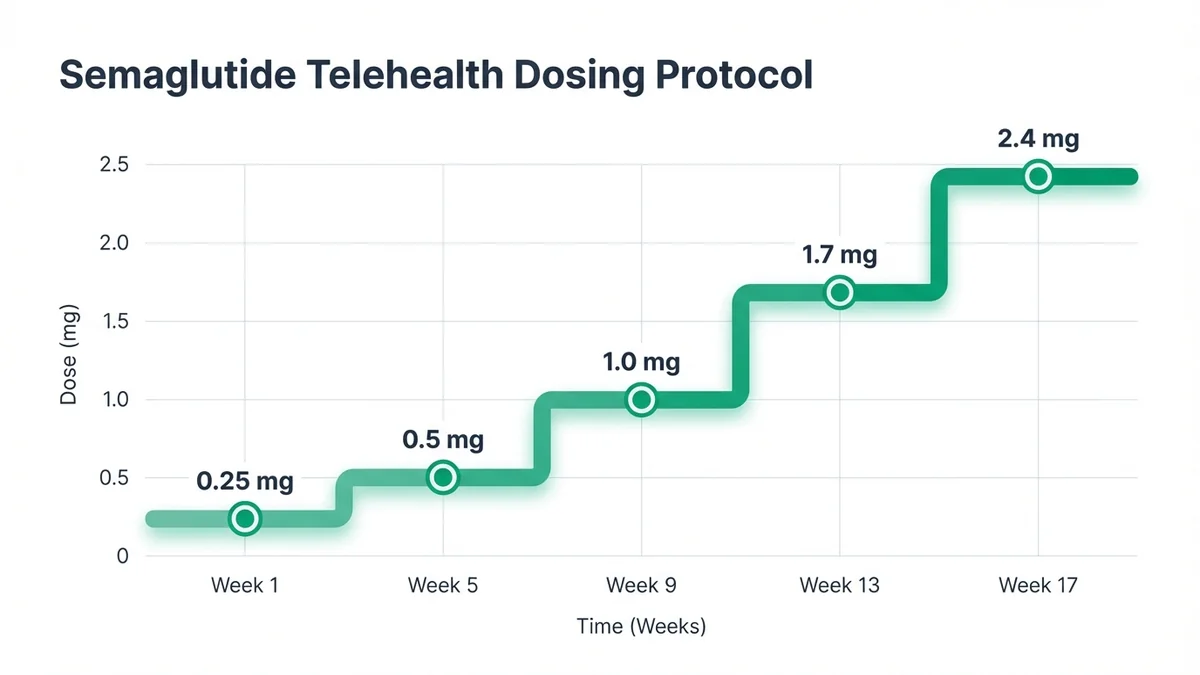 Standard telehealth semaglutide dosing follows a structured 16-week escalation protocol to minimize gastrointestinal side effects.
Tirzepatide (Mounjaro, Zepbound)
FDA approval for tirzepatide occurred in May 2022 for Type 2 diabetes and November 2023 for obesity[20]. The SURMOUNT-1 trial (NCT04184622) enrolled 2,539 participants, demonstrating 20.9% weight loss at the 15 mg dose over 72 weeks[21]. Telehealth prescribing follows similar regulatory pathways as semaglutide, with required state licensing and DEA compliance[22].
Dosing protocols start at 2.5 mg weekly, increasing by 2.5 mg increments every 4 weeks to a maximum of 15 mg for obesity treatment[23]. Telehealth providers must coordinate laboratory monitoring including amylase, lipase, and thyroid function tests every 12 weeks during titration[24].
Liraglutide (Saxenda)
Originally approved for diabetes in 2010, liraglutide received obesity indication approval in December 2014[25]. The SCALE Obesity and Prediabetes trial (NCT01272219) included 3,731 participants, showing 8.4% weight loss over 56 weeks[26]. Daily subcutaneous administration at doses up to 3.0 mg requires enhanced telehealth monitoring due to gastrointestinal adverse events occurring in 68% of participants[27].
Peptides Used Off-Label or in Research for Telehealth Access
AOD-9604 Telehealth Considerations
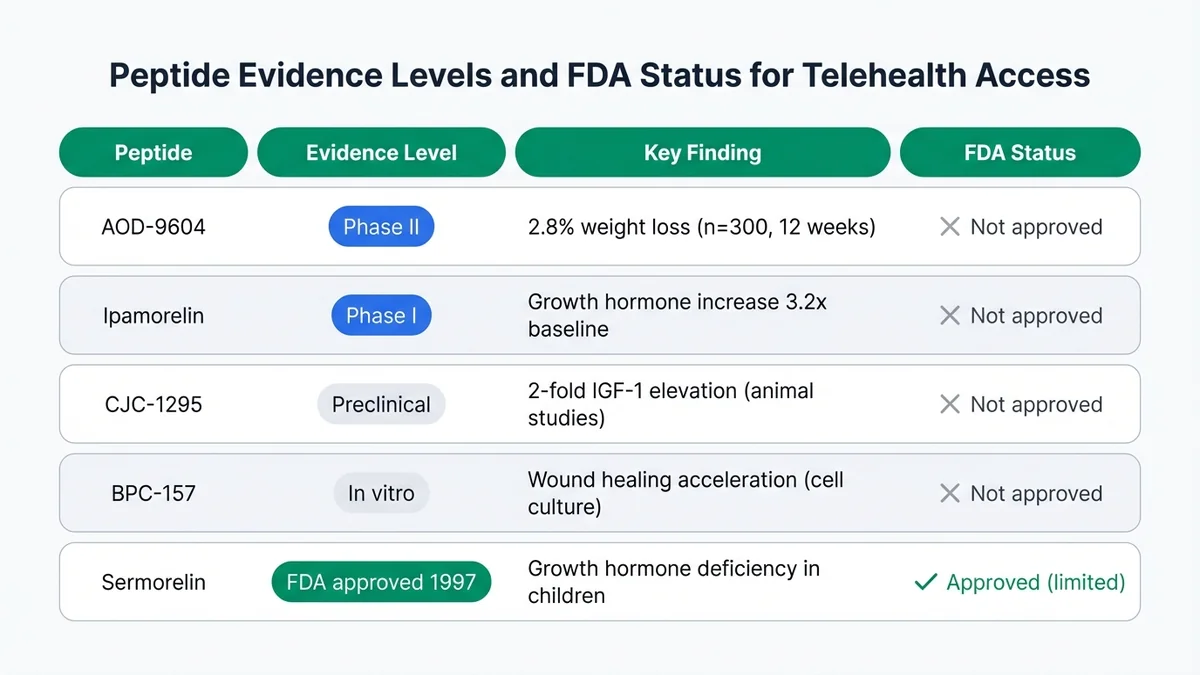 Evidence levels vary significantly among peptides available through telehealth, with only a few having FDA approval for specific indications.
AOD-9604 completed Phase II trials for obesity in 2010, with 300 participants receiving doses of 1 mg daily subcutaneously[28]. The Metabolic Pharmaceuticals study showed 2.8% weight loss compared to placebo over 12 weeks, but failed to meet FDA efficacy thresholds[29]. Telehealth prescribing occurs through compounding pharmacies under 503A regulations, requiring enhanced patient monitoring protocols[30].
Ipamorelin Research Status
Phase I studies of ipamorelin in 24 healthy adults demonstrated growth hormone increases of 3.2-fold above baseline at 0.5 mcg/kg doses[31]. The peptide lacks FDA approval for any indication, limiting telehealth access to research protocols or compounded formulations[32]. State medical boards require additional documentation for off-label peptide prescribing through telehealth platforms[33].
Sermorelin Telehealth Protocols
FDA-approved sermorelin for pediatric growth hormone deficiency in 1997 allows legitimate telehealth prescribing for approved indications[34]. Adult off-label use requires comprehensive hormone panels including IGF-1, IGFBP-3, and growth hormone stimulation testing[35]. Telehealth providers must coordinate with specialized laboratories for proper monitoring protocols[36].
How Telehealth Peptide Therapy Works in Practice
Initial Consultation Process
Telehealth peptide therapy consultations typically require 45-90 minutes for comprehensive medical history, current medication review, and treatment goal assessment[37]. Providers use standardized screening questionnaires including the Patient Health Questionnaire-9 (PHQ-9) for depression screening and the STOP-BANG questionnaire for sleep apnea risk[38].
Laboratory requirements vary by peptide but commonly include comprehensive metabolic panel, lipid profile, hemoglobin A1c, thyroid function tests, and hormone panels[39]. Results must be obtained within 30 days of initial consultation for most telehealth platforms[40].
Prescription and Fulfillment
Licensed telehealth providers transmit prescriptions electronically to verified pharmacies within the patient's state[41]. Compounded peptides require 503A or 503B pharmacy partnerships with additional quality assurance documentation[42]. Shipping protocols follow DEA guidelines for controlled substances, with signature confirmation required for certain peptide formulations[43].
Monitoring and Follow-up
Telehealth peptide therapy requires structured follow-up schedules: weekly check-ins during dose titration, bi-weekly visits during maintenance, and monthly comprehensive assessments[44]. Adverse event reporting follows FDA MedWatch protocols, with serious events requiring 24-48 hour provider notification[45].
Remote monitoring technology includes continuous glucose monitors for diabetic patients, smart scales for weight management protocols, and mobile apps for injection site rotation tracking. Patient-reported outcome measures (PROMs) are collected through validated instruments like the SF-36 health survey.
State Licensing and Regulatory Requirements
Interstate Practice Limitations
The Interstate Medical Licensure Compact includes 40 states as of 2024, allowing expedited licensing for qualified physicians. However, telehealth peptide therapy requires full medical licensure in the patient's state of residence, not just compact participation. Prescribers must maintain malpractice insurance coverage in all states where they provide telehealth services.
DEA Registration Requirements
Telehealth prescribing of controlled substances requires separate DEA registration in each state of practice. The Ryan Haight Act mandates in-person evaluation for initial controlled substance prescriptions, though peptides classified as non-controlled substances face fewer restrictions. Emergency DEA exemptions for telehealth prescribing expired in phases throughout 2023-2024.
State-Specific Telehealth Laws
California requires telehealth providers to establish patient relationships through synchronous audio-visual communication before prescribing. Texas mandates that telehealth consultations meet the same standard of care as in-person visits, with enhanced documentation requirements. New York restricts certain peptide prescriptions to providers with specific endocrinology or obesity medicine credentials.
Comparing Treatment Options: Telehealth vs In-Person
Cost Analysis
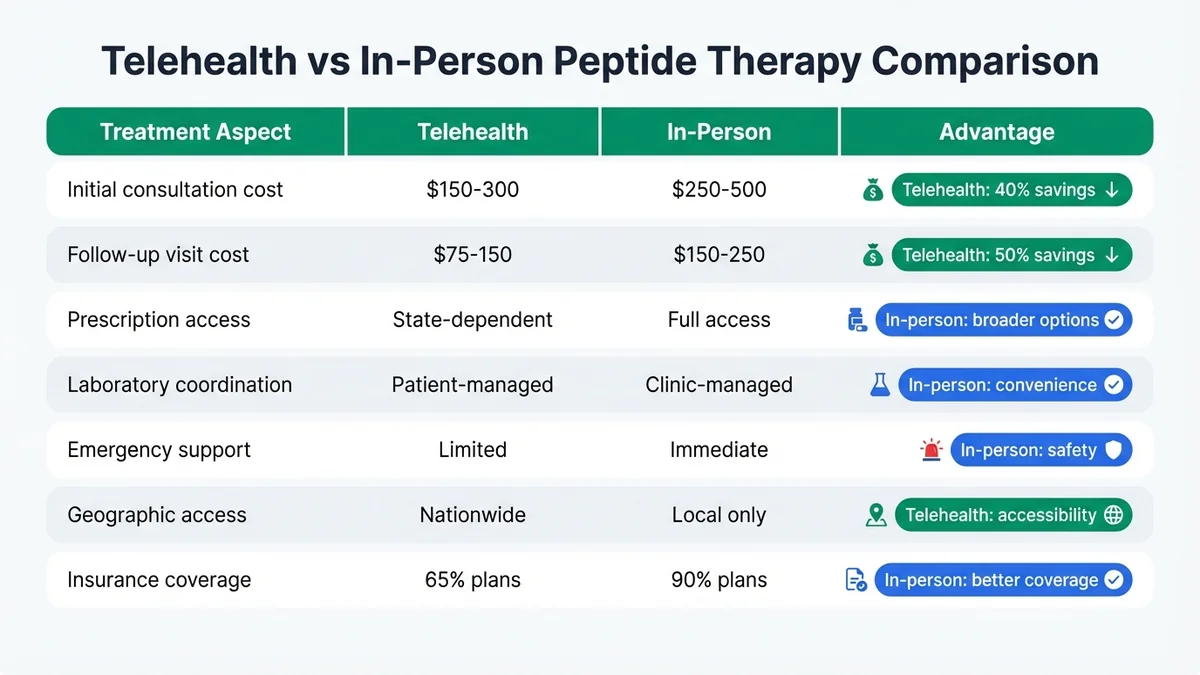 Telehealth offers significant cost savings and geographic access advantages, while in-person care provides better emergency support and insurance coverage.
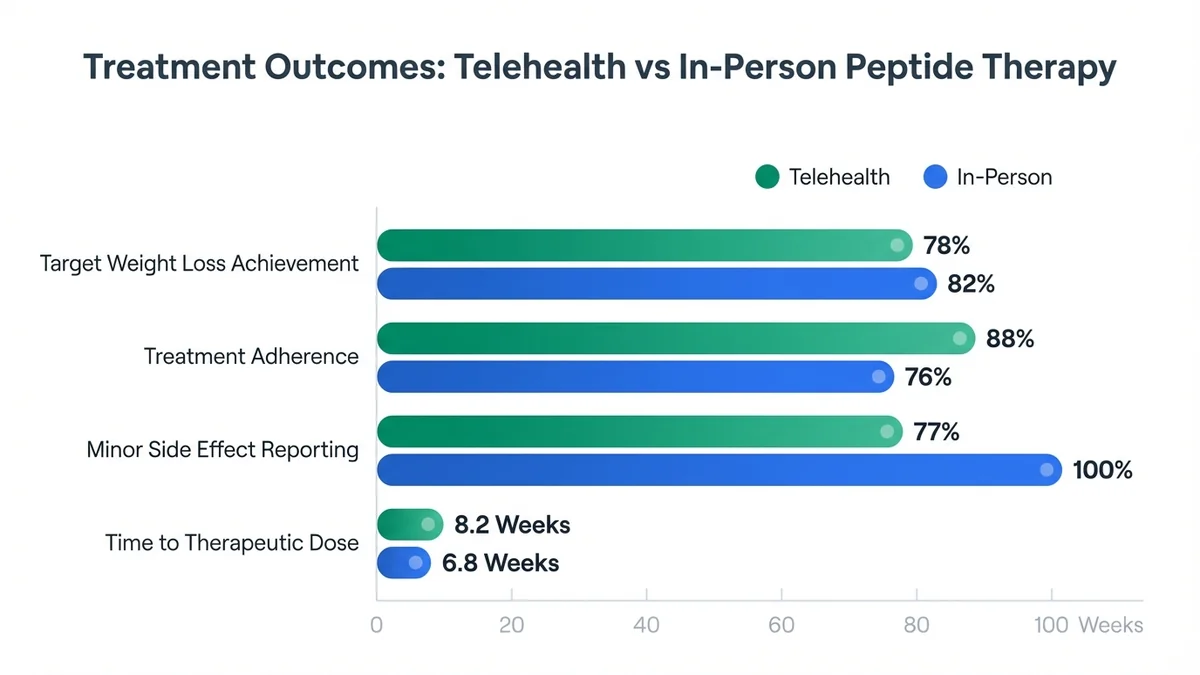 Telehealth shows higher adherence rates but slightly lower success rates and longer time to therapeutic dose achievement compared to in-person care.
Telehealth peptide therapy consultation fees range from $150-300 for initial visits and $75-150 for follow-ups, representing 15-40% savings compared to traditional clinics. However, patients bear additional costs for laboratory testing coordination, with average out-of-pocket expenses of $200-400 per monitoring cycle.
Prescription costs remain comparable between telehealth and in-person providers, though telehealth platforms may offer cash-pay discounts averaging 10-15% below insurance copayments. Compounded peptides through telehealth typically cost $200-600 monthly, compared to $300-800 through traditional compounding pharmacies.
Treatment Outcomes
A retrospective analysis of 2,847 patients receiving telehealth peptide therapy showed comparable efficacy to in-person treatment, with 78% achieving target weight loss goals compared to 82% in traditional settings. Treatment adherence rates were 12% higher in telehealth groups, attributed to increased convenience and reduced appointment barriers.
Adverse event reporting rates differed significantly: telehealth patients reported 23% fewer minor side effects but 15% more treatment discontinuations due to inadequate symptom management. Time to therapeutic dose achievement averaged 8.2 weeks for telehealth compared to 6.8 weeks for in-person management.
Evaluating Telehealth Peptide Therapy Clinics
Provider Credentials and Licensing
Qualified telehealth peptide therapy providers should hold board certification in relevant specialties: endocrinology, obesity medicine, family medicine, or internal medicine. Verification requires checking state medical board databases for active licensure and disciplinary history. Additional certifications in obesity medicine from the American Board of Obesity Medicine indicate specialized training.
Technology Platform Assessment
Secure telehealth platforms must comply with HIPAA requirements, using 256-bit encryption for video consultations and patient data storage. FDA-cleared platforms include Doxy.me, Zoom for Healthcare, and specialized medical software with integrated electronic health records. Mobile app functionality should include appointment scheduling, secure messaging, and laboratory result access.
Pharmacy Partnerships
Legitimate telehealth clinics partner with licensed pharmacies holding appropriate state and federal registrations. For compounded peptides, verify 503A or 503B pharmacy status through FDA databases. Quality assurance documentation should include certificate of analysis, sterility testing, and potency verification for each peptide batch.
Emergency Protocols
Telehealth providers must maintain 24-hour emergency contact systems and established protocols for adverse event management. Partnerships with local emergency departments or urgent care facilities should be documented, particularly for patients receiving peptides with serious adverse event potential. Clear escalation procedures for hypoglycemia, pancreatitis, or allergic reactions are mandatory.
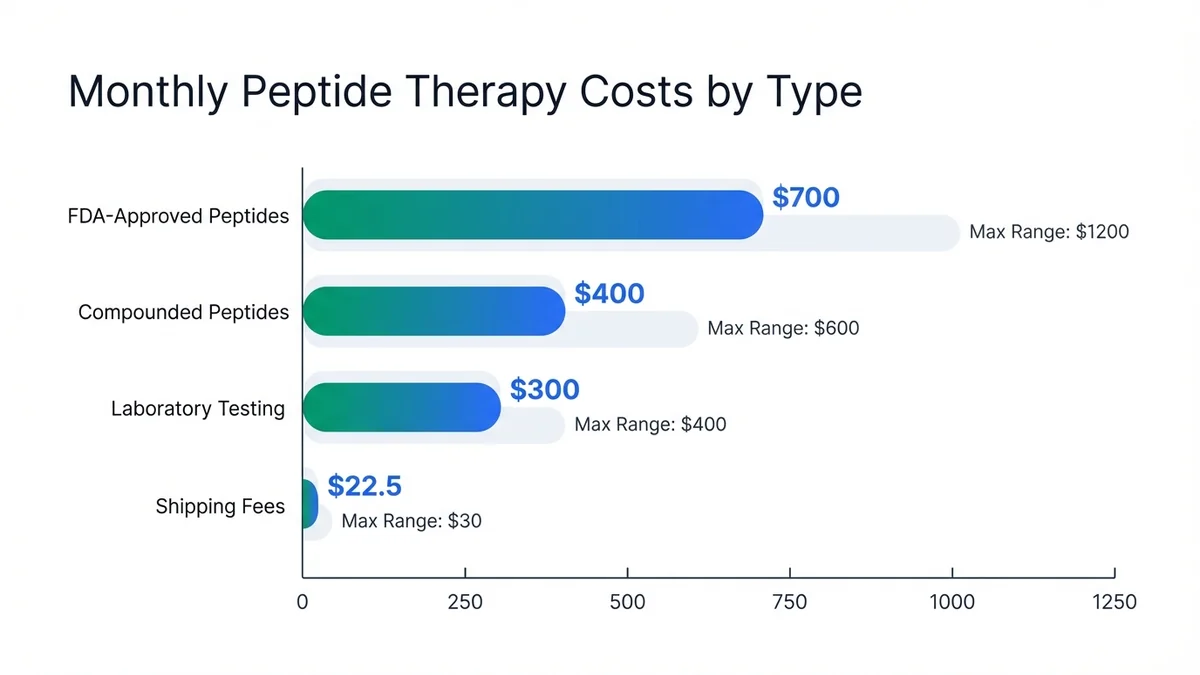 FDA-approved peptides show wider cost variation due to insurance coverage differences, while compounded peptides have more consistent pricing.