CJC-1295 Dosage Guide: How Much Should You Take? (2026)
Key Takeaways
- Standard CJC-1295 dosage ranges from 1-2 mg per week administered via subcutaneous injection, typically divided into 2-3 doses
- The peptide has a half-life of approximately 6-8 days due to albumin binding, allowing for less frequent dosing compared to unmodified GHRH[1]
- Most clinical protocols start with 1 mg weekly and titrate up to 2 mg weekly over 4-6 weeks based on tolerance and IGF-1 response
- CJC-1295 is currently classified as a research peptide by the FDA and is not approved for therapeutic use outside clinical trials
- Proper injection technique requires 29-31 gauge insulin syringes with subcutaneous administration at 45-90 degree angles
- Clinical studies demonstrate sustained growth hormone elevation for up to 6 days following a single 2 mg subcutaneous dose[1]
- Medical supervision is essential for dosing optimization, IGF-1 monitoring, and safety assessment throughout treatment cycles
How CJC-1295 Works in the Body
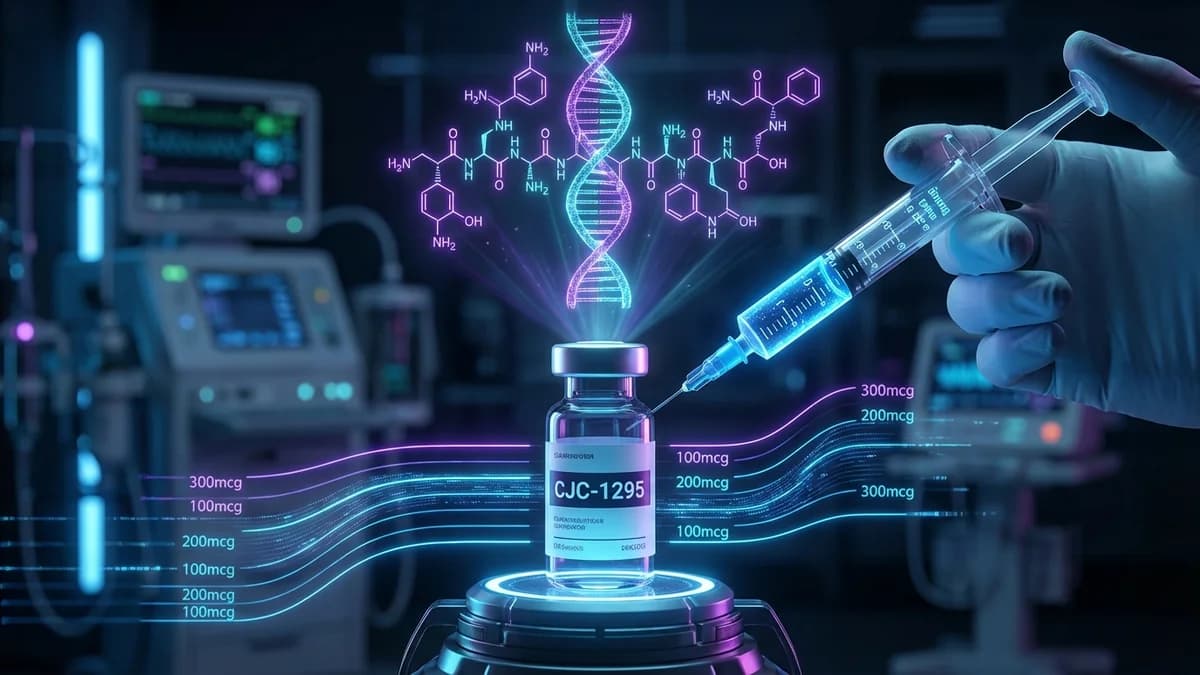
CJC-1295 is a synthetic 30-amino acid analog of growth hormone-releasing hormone (GHRH) engineered with a maleimidopropionic acid modification that enables covalent binding to serum albumin.[1] This albumin conjugation extends the peptide's half-life from approximately 7 minutes (unmodified GHRH) to 6-8 days, fundamentally altering its dosing requirements and clinical utility.[1]
The peptide binds to GHRH receptors in the anterior pituitary gland, stimulating the release of endogenous growth hormone in a pulsatile manner that mimics natural GH secretion patterns.[1] Clinical pharmacokinetic studies demonstrate that a single 2 mg subcutaneous dose of CJC-1295 maintains elevated growth hormone levels for up to 6 days, with peak GH concentrations occurring 2-6 hours post-injection.[1]
"CJC-1295 increased mean plasma GH concentrations 2- to 10-fold for 6 days or more and increased IGF-I concentrations 1.5- to 3-fold for 9-11 days after a single injection."[1]
The extended pharmacokinetic profile of CJC-1295 allows for weekly or twice-weekly dosing protocols, contrasting sharply with unmodified GHRH analogs that require multiple daily injections. The peptide's bioavailability via subcutaneous injection approaches 85-90%, making it the preferred administration route in clinical protocols.[1] Understanding these pharmacokinetic properties is crucial for optimizing dosage timing and frequency to achieve sustained growth hormone elevation while minimizing side effects.
Standard CJC-1295 Dosage Ranges (By Form)
CJC-1295 is primarily administered via subcutaneous injection, as this route provides optimal bioavailability and sustained absorption consistent with the peptide's albumin-binding mechanism.[1] The molecular weight of 3,647.28 Da and hydrophilic properties make subcutaneous injection the most clinically effective delivery method.
| Form | Dose Range | Frequency | Bioavailability | Notes |
|---|---|---|---|---|
| Subcutaneous Injection | 1-2 mg | 2-3x weekly | 85-90% | Preferred method, sustained release |
| Intramuscular Injection | 1-2 mg | 2-3x weekly | 75-85% | Faster absorption, shorter duration |
| Oral | Not applicable | N/A | <5% | Degraded by gastric acid |
| Intranasal | Not applicable | N/A | <10% | Poor mucosal absorption |
Subcutaneous administration provides the most consistent pharmacokinetic profile, with peak plasma concentrations achieved within 2-6 hours and sustained elevation lasting 6-8 days.[1] The 30-amino acid structure with C-terminal amide modification requires injection delivery to maintain peptide integrity and therapeutic efficacy.
Clinical protocols typically employ 29-31 gauge insulin syringes with 0.5-1.0 mL capacity for subcutaneous delivery. The peptide's albumin-binding properties mean that injection site selection (abdomen, thigh, or upper arm) has minimal impact on overall pharmacokinetics, though injection site rotation remains important for tissue health and consistent absorption.
Most therapeutic protocols divide the weekly dose into 2-3 administrations to maintain more consistent IGF-1 elevation. For example, a 2 mg weekly protocol might be administered as 0.67 mg every other day or 1 mg twice weekly with 3-4 day intervals between injections.
CJC-1295 Dosage by Use Case
Growth Hormone Deficiency and Anti-Aging
Clinical protocols for growth hormone optimization typically start with 1 mg CJC-1295 weekly, divided into 2-3 subcutaneous injections.[1] Many anti-aging clinics initiate treatment with 0.5 mg twice weekly (Monday and Thursday) to assess individual tolerance and IGF-1 response. The target is achieving IGF-1 levels in the upper-normal range (250-350 ng/mL) without exceeding physiological parameters.
Advanced protocols may escalate to 2 mg weekly after 4-6 weeks if IGF-1 response is suboptimal and no adverse effects are observed. Clinical experience suggests that doses above 2 mg weekly provide diminishing returns while increasing the risk of side effects such as joint pain, fluid retention, and glucose intolerance. Treatment cycles typically last 12-16 weeks followed by 4-8 week washout periods.
Body Composition and Athletic Performance
Performance-focused protocols often employ higher-end dosing at 1.5-2 mg weekly, administered as 0.5-0.67 mg every other day.[1] This dosing pattern maintains more consistent growth hormone elevation, which may be beneficial for muscle protein synthesis and lipolysis. Clinical observations suggest that body composition changes become apparent after 6-8 weeks of consistent dosing.
Athletes and bodybuilders frequently combine CJC-1295 with ipamorelin or other growth hormone secretagogues in protocols lasting 12-20 weeks. The synergistic approach may allow for lower individual peptide doses while maintaining therapeutic efficacy. Typical combination protocols use 1 mg CJC-1295 weekly plus 300-500 mcg ipamorelin daily.
Sleep Quality and Recovery
Sleep-focused protocols typically employ lower doses of 0.5-1 mg CJC-1295 weekly, administered 2-3 hours before bedtime to align with natural growth hormone release patterns.[1] The extended half-life means that twice-weekly evening injections (Sunday and Wednesday) can provide sustained benefits throughout the week.
Clinical protocols for sleep optimization often start with 0.25 mg twice weekly and titrate based on sleep quality improvements and morning IGF-1 measurements. Many patients report improved deep sleep phases and reduced sleep latency within 2-3 weeks of initiating treatment at these lower doses.
Injury Recovery and Tissue Repair
Therapeutic protocols for injury recovery typically employ 1-1.5 mg CJC-1295 weekly, divided into daily or every-other-day injections to maintain consistent growth factor availability.[1] The enhanced protein synthesis and collagen production associated with elevated IGF-1 levels may accelerate tissue repair processes.
Recovery-focused protocols often last 8-12 weeks, coinciding with typical tissue healing timeframes. Clinical experience suggests that combining CJC-1295 with BPC-157 or TB-500 may provide synergistic benefits for musculoskeletal injuries, though each peptide requires individual dosing optimization.
Titration Protocol: How to Ramp Up Safely
Proper CJC-1295 titration minimizes side effects while optimizing therapeutic response through gradual dose escalation and IGF-1 monitoring.[1] The extended half-life of 6-8 days requires patience during titration, as full pharmacokinetic effects may not be apparent for 2-3 weeks at each dose level.
| Week | Dose | Frequency | Notes |
|---|---|---|---|
| 1-2 | 0.5 mg | Twice weekly | Assess tolerance, baseline IGF-1 |
| 3-4 | 0.75 mg | Twice weekly | Monitor for joint pain, water retention |
| 5-6 | 1 mg | Twice weekly | Check IGF-1 levels, evaluate response |
| 7-8 | 1.25 mg | Twice weekly | Optional escalation if IGF-1 suboptimal |
| 9+ | 1.5-2 mg | Twice weekly | Maximum therapeutic dose |
The initial 0.5 mg twice-weekly dose allows assessment of individual sensitivity while providing measurable IGF-1 elevation in most patients.[1] Baseline IGF-1 testing should occur before treatment initiation, with follow-up testing at weeks 3, 6, and 12 to guide dose optimization.
Dose escalation should be held if patients experience significant side effects including severe joint pain, carpal tunnel symptoms, or fasting glucose elevation above 110 mg/dL. The albumin-binding mechanism means that side effects may persist for 7-10 days after dose reduction, requiring patience during titration adjustments.
Clinical protocols often maintain patients at the lowest effective dose that achieves target IGF-1 levels (typically 200-300 ng/mL), rather than pursuing maximum dosing. This approach optimizes the benefit-to-risk ratio while minimizing long-term adverse effects associated with supraphysiological growth hormone exposure.
How Long Should You Take CJC-1295?
Clinical treatment cycles for CJC-1295 typically range from 12-24 weeks, followed by structured washout periods of 4-12 weeks to prevent receptor desensitization and allow endogenous GHRH axis recovery.[1] The extended half-life and albumin-binding properties mean that growth hormone elevation persists for 7-10 days after the final injection, requiring consideration during cycle planning.
Most patients report initial benefits within 2-4 weeks of consistent dosing, including improved sleep quality and energy levels. Body composition changes typically become apparent after 6-8 weeks, while maximum benefits for muscle mass and fat reduction may require 12-16 weeks of treatment.[1] IGF-1 levels generally normalize within 2-3 weeks of discontinuation due to the peptide's elimination kinetics.
Long-term protocols often employ a 3-month on, 1-month off schedule to maintain therapeutic benefits while minimizing potential risks associated with chronic growth hormone elevation. Some clinics utilize 6-month cycles followed by 2-3 month washout periods for patients seeking more sustained benefits, though long-term safety data for extended CJC-1295 use remains limited.
Tapering is generally not required due to the peptide's gradual elimination, though some practitioners reduce the final week's dose by 50% to ease the transition. Patients should be counseled that IGF-1 levels will return to baseline within 2-4 weeks of discontinuation, and any benefits related to growth hormone elevation will gradually diminish over this timeframe.
Administration Protocol: How to Inject CJC-1295
Proper CJC-1295 injection technique ensures optimal absorption, minimizes injection site reactions, and maintains peptide stability throughout the administration process.[1] The 30-amino acid structure requires careful handling to prevent degradation and maintain therapeutic potency.
Equipment Requirements
Use 29-31 gauge insulin syringes with 0.5-1.0 mL capacity and 1/2 inch needle length for subcutaneous injection. The small gauge minimizes tissue trauma while providing adequate flow rate for the reconstituted peptide solution. Larger gauge needles (27-28) may be used for intramuscular injection but offer no clinical advantage for CJC-1295 administration.
Injection Sites and Rotation
Abdomen: Inject 2 inches away from the navel in the fatty tissue layer. This site provides consistent absorption and is easily accessible for self-administration. Rotate between left and right sides, upper and lower quadrants.
Thigh: Use the outer middle third of the thigh, avoiding the inner thigh and areas near the knee. The vastus lateralis muscle provides good subcutaneous tissue depth with minimal nerve and vessel risk.
Upper Arm: Inject into the posterior aspect of the upper arm, though this site is difficult for self-administration and may require assistance.
Maintain a rotation schedule using at least 6-8 different injection sites to prevent lipodystrophy and ensure consistent absorption. Mark injection sites on a body diagram or use a rotation app to track administration locations.
Step-by-Step Injection Process
-
Preparation: Remove CJC-1295 from refrigeration 15-20 minutes before injection to reach room temperature. Cold injections may cause discomfort and slower absorption.
-
Hand Hygiene: Wash hands thoroughly with soap and water, then sanitize with 70% isopropyl alcohol.
-
Site Preparation: Clean the injection site with an alcohol swab using a circular motion from center outward. Allow to air dry for 30 seconds.
-
Dose Drawing: Remove the needle cap and draw the prescribed dose into the syringe. Tap the syringe to move air bubbles to the top and expel them by gently pressing the plunger.
-
Skin Preparation: Pinch the skin at the injection site to create a fold of subcutaneous tissue approximately 1 inch wide.
-
Needle Insertion: Insert the needle at a 45-90 degree angle (45 degrees for thinner individuals, 90 degrees for those with more subcutaneous fat) with a quick, smooth motion.
-
Injection: Slowly depress the plunger over 5-10 seconds to inject the peptide. Rapid injection may cause discomfort and suboptimal absorption.
-
Withdrawal: Remove the needle quickly and apply gentle pressure with a clean cotton ball or gauze for 10-15 seconds.
Timing and Frequency
Administer CJC-1295 injections 2-3 hours before bedtime to align with natural growth hormone release patterns, though the extended half-life makes timing less critical than with shorter-acting peptides.[1] Most protocols employ twice-weekly dosing (Monday/Thursday or Tuesday/Friday) with 72-96 hour intervals between injections.
Storage and Handling
Store reconstituted CJC-1295 at 36-46°F (2-8°C) in the refrigerator, protected from light and freezing. Reconstituted peptide maintains stability for 14-21 days under proper storage conditions. Lyophilized powder can be stored at room temperature for short periods but should be refrigerated for long-term storage.
For detailed reconstitution instructions, refer to our comprehensive guide on how to reconstitute CJC-1295.
Stacking CJC-1295 for Enhanced Results
CJC-1295 + Ipamorelin Stack
The combination of CJC-1295 (GHRH analog) with ipamorelin (growth hormone secretagogue) provides synergistic growth hormone release through complementary mechanisms.[1] This stack is widely used in clinical anti-aging protocols due to the enhanced GH pulse amplitude and frequency.
Dosing Protocol: CJC-1295 1-2 mg twice weekly + Ipamorelin 300-500 mcg daily before bedtime. The different half-lives (CJC-1295: 6-8 days, Ipamorelin: 2 hours) require staggered administration schedules. Many clinics administer CJC-1295 on Monday/Thursday and ipamorelin daily for sustained growth hormone elevation.
Clinical Rationale: CJC-1295 provides baseline GHRH stimulation while ipamorelin delivers targeted GH pulses, mimicking natural circadian patterns more effectively than either peptide alone. Clinical observations suggest enhanced body composition changes and improved recovery metrics compared to monotherapy protocols.
CJC-1295 + GHRP-6 Combination
GHRP-6 combined with CJC-1295 creates a potent growth hormone releasing protocol favored for muscle building and athletic performance applications. The ghrelin receptor agonism of GHRP-6 complements the GHRH receptor activation of CJC-1295.
Dosing Protocol: CJC-1295 1.5 mg twice weekly + GHRP-6 100-200 mcg three times daily (morning, pre-workout, bedtime). The multiple daily GHRP-6 doses maintain consistent growth hormone stimulation while CJC-1295 provides sustained baseline elevation.
Performance Applications: This combination is commonly used in 12-16 week cycles for body recomposition goals. The appetite-stimulating effects of GHRP-6 may be beneficial for individuals seeking muscle mass gains, though this can be problematic for fat loss goals.
CJC-1295 + Sermorelin Stack
Combining CJC-1295 with sermorelin provides both immediate and sustained GHRH receptor activation, though clinical evidence for synergistic benefits remains limited. This combination is sometimes used in anti-aging protocols seeking maximum growth hormone optimization.
Dosing Considerations: CJC-1295 2 mg twice weekly + Sermorelin 500 mcg daily. The overlapping mechanisms may not provide proportional benefits, and some practitioners question the cost-effectiveness of this combination compared to CJC-1295 monotherapy or CJC-1295 plus growth hormone secretagogue stacks.
Factors That Affect Your CJC-1295 Dosage
Body Weight and Composition
CJC-1295 dosing is not typically weight-adjusted in clinical protocols, unlike many other therapeutic peptides.[1] The albumin-binding mechanism and subsequent pharmacokinetics appear relatively consistent across different body weights within the normal range (BMI 18.5-30). However, individuals with significantly higher body fat percentages may require dose adjustments due to altered peptide distribution and clearance.
Clinical experience suggests that patients over 250 pounds may benefit from the higher end of the dosing range (1.5-2 mg weekly), while those under 150 pounds often respond well to 1-1.5 mg weekly. The extended half-life means that dose adjustments should be made gradually over 4-6 week periods to assess full pharmacokinetic effects.
Age-Related Considerations
Older adults (>65 years) may demonstrate enhanced sensitivity to CJC-1295 due to age-related changes in growth hormone axis function and protein binding capacity.[1] Many geriatric protocols start with 0.5 mg weekly and titrate more slowly than standard adult protocols. Pediatric use is not established, and CJC-1295 should not be used in individuals under 18 years without specialized endocrine supervision.
Age-related decline in albumin levels may affect the peptide's binding capacity and elimination, potentially requiring dose modifications in elderly patients with hypoalbuminemia (albumin <3.5 g/dL). Regular IGF-1 monitoring becomes particularly important in older adults to prevent excessive growth factor elevation.
Kidney and Liver Function
Renal impairment may affect CJC-1295 clearance, though specific dosing adjustments have not been established in clinical studies.[1] Patients with estimated glomerular filtration rate (eGFR) below 60 mL/min/1.73m² should be monitored more closely and may require dose reductions of 25-50% based on clinical response and IGF-1 levels.
Hepatic dysfunction can alter albumin synthesis and peptide metabolism, potentially affecting both the binding capacity and clearance of CJC-1295. Patients with Child-Pugh Class B or C liver disease should be considered for dose reductions and more frequent monitoring, though specific guidelines are not established in the literature.
Concurrent Medications
Growth hormone and IGF-1 can affect glucose metabolism, requiring careful monitoring in patients taking diabetes medications.[1] Insulin requirements may increase during CJC-1295 treatment due to growth hormone's insulin-antagonistic effects. Blood glucose monitoring should be intensified in diabetic patients, with potential need for medication adjustments.
Thyroid hormone replacement therapy may require optimization during CJC-1295 treatment, as growth hormone can affect thyroid hormone conversion and utilization. Some patients may need increased levothyroxine doses to maintain optimal thyroid function during growth hormone elevation.
Individual Response Variability
Genetic polymorphisms in growth hormone receptor sensitivity and IGF-1 production can significantly affect individual responses to CJC-1295.[1] Some patients achieve target IGF-1 levels with 0.5 mg weekly, while others require 2 mg weekly for similar biochemical responses. This variability necessitates individualized dosing based on IGF-1 monitoring rather than standardized weight-based calculations.
Baseline IGF-1 levels also influence dosing requirements, with patients starting at lower levels often requiring higher doses to achieve target ranges. Conversely, individuals with naturally higher IGF-1 levels may need minimal doses to optimize their growth hormone axis function.