
FDA's Crackdown on Compounded GLP-1 Drugs: What Patients Need to Know in 2026
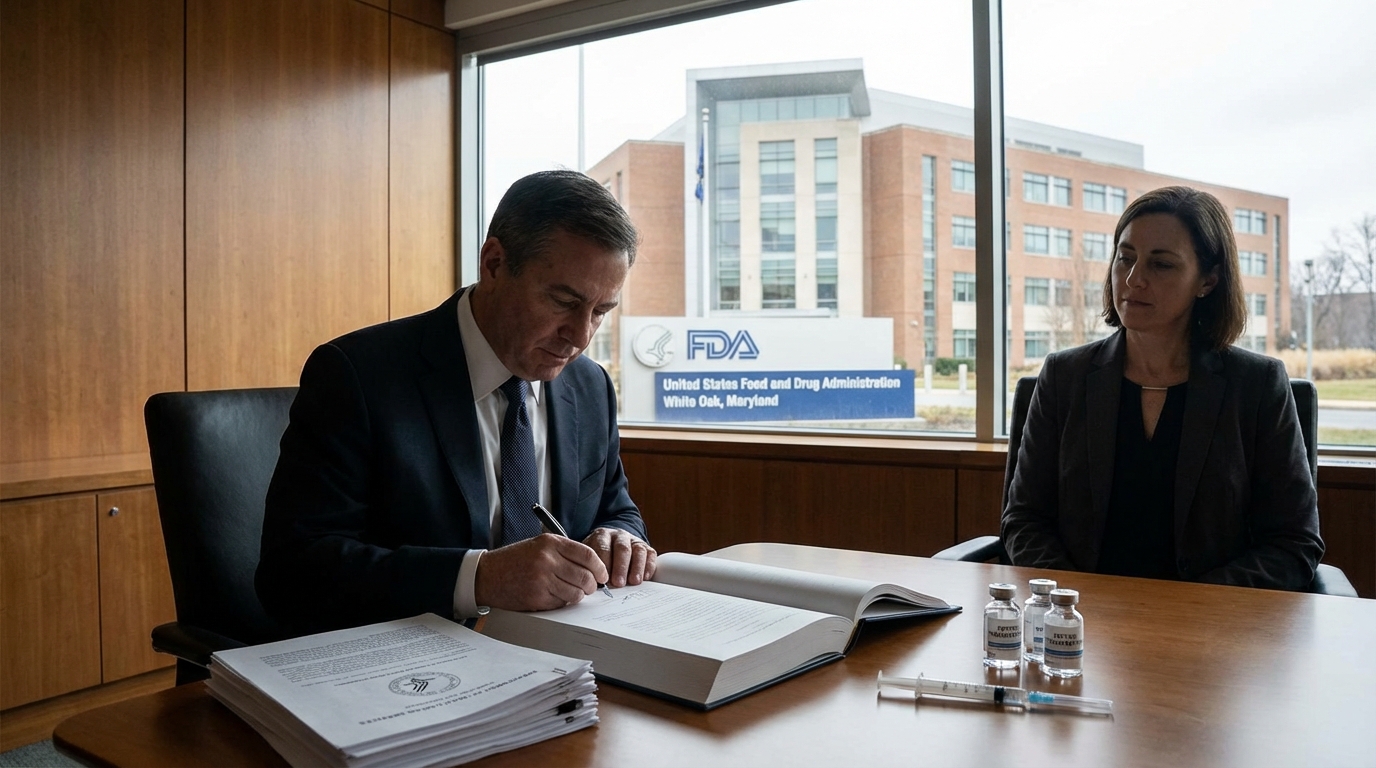
If you've been getting semaglutide or tirzepatide from a compounding pharmacy — through a telehealth platform, a med spa, or a direct-to-consumer subscription — the FDA's regulatory moves in 2025 changed your situation materially. The compounding window that opened during the GLP-1 drug shortage is now closed, enforcement is active, and the landscape for compounded GLP-1 drugs in 2026 looks very different from what many patients got used to.
This article explains exactly what happened, why the FDA acted, what's still legal, and what your real options are if you're trying to stay on therapy without paying $1,300 a month for a brand-name pen.
Key Takeaways
- The shortage exemption is over. The FDA removed semaglutide from its drug shortage list in February 2025. Grace periods for compounding pharmacies expired on April 22, 2025 (503A state-licensed pharmacies) and May 22, 2025 (503B outsourcing facilities).[1] Tirzepatide followed on a similar timeline.[2]
- Routine compounding of "essentially a copy" of Ozempic, Wegovy, Mounjaro, or Zepbound is no longer legally permitted under the shortage exemption that previously allowed it.
- 503B outsourcing facilities may still compound under limited circumstances — specifically for patients with documented clinical needs that the commercial product can't meet (e.g., allergies to excipients, specific dose customization). This is a narrow carve-out, not a loophole.
- Quality problems with compounded GLP-1s were real. The FDA documented dosing errors, potency inconsistencies, and misleading marketing claims — including companies falsely advertising their compounded products as "generic" equivalents of FDA-approved drugs.[3]
- Your alternatives include manufacturer patient assistance programs, FDA-approved biosimilars (where available), telehealth platforms prescribing brand-name GLP-1s, and — for some patients — other peptides used in clinical weight management contexts.
- Legal challenges from compounders are ongoing. Court decisions could still affect enforcement timelines, so the situation bears watching in 2026.
What Actually Happened
To understand where things stand now, you need to know how the compounding window opened in the first place.
2021–2023: The Shortage That Started It All
Demand for semaglutide exploded after Wegovy's approval for chronic weight management in June 2021.[4] Novo Nordisk couldn't keep up. The FDA officially added semaglutide to its 506(e) drug shortage list, which triggered a specific legal provision: under Section 503A and 503B of the Federal Food, Drug, and Cosmetic Act, pharmacies are permitted to compound drugs that appear on the shortage list, even if those compounds are "essentially copies" of commercially available products.[5]
That provision exists for a legitimate reason — when a drug is genuinely unavailable, patients need options. What nobody fully anticipated was how many compounding pharmacies, telehealth platforms, and direct-to-consumer startups would build entire business models around that exemption. By 2024, hundreds of operations were shipping compounded semaglutide to patients across the country, often at $150–$400 per month versus $900–$1,300 for brand-name Wegovy.
Tirzepatide (Mounjaro/Zepbound) hit the shortage list shortly after and saw the same dynamic play out.
February–March 2025: The FDA Pulls the Plug
In February 2025, the FDA removed semaglutide from its drug shortage list, citing improved commercial supply.[1] With the shortage designation gone, the legal basis for compounding "essentially a copy" of Ozempic or Wegovy evaporated.
The FDA didn't flip a switch overnight. Recognizing that hundreds of thousands of patients were mid-treatment, the agency issued grace periods:
| Pharmacy Type | Compound | Deadline to Cease |
|---|---|---|
| 503A state-licensed pharmacies | Semaglutide | April 22, 2025 |
| 503B outsourcing facilities | Semaglutide | May 22, 2025 |
| 503A state-licensed pharmacies | Tirzepatide | Similar timeline (March 2025 announcement) |
| 503B outsourcing facilities | Tirzepatide | Similar timeline |
Sources: FDA declaratory order on semaglutide shortage resolution[1]; NCPA reporting on tirzepatide enforcement discretion end dates.[2]
In March 2025, the FDA announced it was ending enforcement discretion for tirzepatide compounding at 503B facilities while maintaining a brief discretion window for 503A pharmacies on semaglutide through April 22, 2025.[2]
Fall 2025–Early 2026: Enforcement Gets Teeth
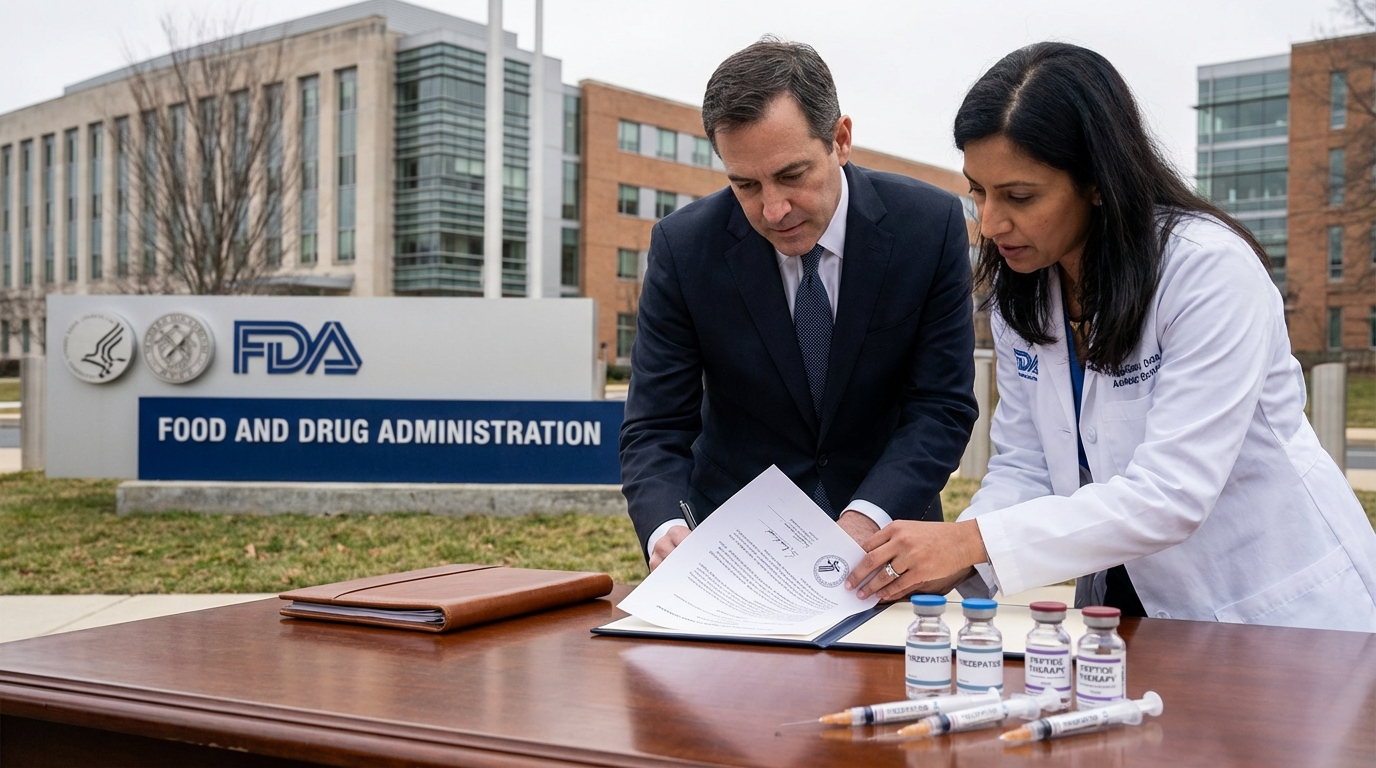
The FDA didn't stop at shortage-list removals. By fall 2025, the agency had issued warning letters to companies marketing compounded semaglutide with misleading claims.[3] One confirmed warning letter went to JulyMD in September 2025, citing false or misleading claims about compounded semaglutide under Sections 502(a) and 502(bb) of the FDCA.[6]
The FDA also announced its intent to restrict the active pharmaceutical ingredients (APIs) used in non-FDA-approved compounded GLP-1 products that were being mass-marketed — a move aimed at cutting off supply chains for large-scale compounders, not just the pharmacies themselves.[7]
Where things stand as of March 2026: routine compounding of semaglutide and tirzepatide copies is prohibited, enforcement is active, and the FDA has made clear it's not backing down.
Why the FDA Acted
The FDA's position rests on two legs: the law, and documented patient safety concerns.
The Legal Leg
The shortage exemption is exactly that — an exemption. It's not a permanent right to compound any drug that happens to be popular. Once the FDA determined that semaglutide and tirzepatide were commercially available in sufficient supply, the exemption expired by operation of law. Compounders arguing otherwise were essentially asking the FDA to keep a shortage designation in place for a drug that was no longer in shortage — which isn't how the statute works.[5]
The FDA also drew a hard line on marketing. Compounded drugs cannot legally be marketed as "generic" versions of, equivalent to, or the same as FDA-approved drugs. They're unapproved new drugs, full stop.[3] Dozens of telehealth companies were doing exactly that — describing their compounded semaglutide as "the same active ingredient as Ozempic" in ways the FDA found false or misleading.
The Safety Leg
This is where it gets more substantive. The FDA documented real problems with compounded GLP-1 products:
Dosing errors. The FDA issued a specific alert about dosing errors associated with compounded injectable semaglutide.[8] Compounded products came in multi-dose vials and prefilled syringes with varying concentrations — unlike the fixed-dose auto-injector pens patients get with Ozempic or Wegovy. Patients were drawing incorrect doses, sometimes dramatically so.
Potency inconsistencies. Without the manufacturing controls that apply to FDA-approved drugs, compounded batches varied in potency. A vial labeled 5 mg/mL might contain more or less than that.
Novel, unapproved ingredients. Some compounders were adding ingredients like retatrutide or cagrilintide — investigational compounds that cannot legally be used in compounding under federal law and have not been found safe and effective for any condition.[9] Patients often had no idea these additions were in their injections.
Misleading advertising. The FDA's fall 2025 warning letters addressed companies claiming their compounded products were bioequivalent to brand-name drugs — a claim that requires clinical data no compounder had generated.[3]
What This Means for Patients Currently on Compounded GLP-1s
If you're still receiving compounded semaglutide or tirzepatide from a pharmacy or telehealth platform, here's the honest answer: the legal basis for that compounding has expired for the vast majority of providers. Some operations may still be running — either through legal grey areas, ongoing litigation, or simply non-compliance — but the regulatory ground has shifted decisively.
503A pharmacies (your standard compounding pharmacy) cannot legally compound essentially-a-copy semaglutide or tirzepatide under the shortage exemption. The grace period ended in April–May 2025.[1]
503B outsourcing facilities have a slightly different situation. They can still compound under narrow circumstances — specifically, when a patient has a documented clinical need that the commercial product can't meet. Think: a patient with a documented allergy to an excipient in Ozempic, or a need for a dose strength not commercially available. This is not a wide-open loophole. It requires documented clinical justification and a licensed prescriber willing to make that case.
What about ongoing litigation? Several compounding industry groups filed legal challenges to the FDA's shortage-list removal decisions. Some grace period extensions were tied to district court timelines. As of March 2026, courts have not reversed the FDA's core determinations, but you should check current legal status with your provider — this is one area where the ground could shift.[VERIFY]
The Quality Argument: Was the FDA Right?
This deserves an honest answer, not a PR-approved one.
The case for the FDA's position: The dosing error data was real. Multi-dose vials with variable concentrations genuinely created risk. The marketing claims — "same as Ozempic," "generic semaglutide" — were often flatly false. And the addition of unapproved ingredients like retatrutide to compounded products, without patient knowledge, was a serious problem.[9] The FDA's job is to protect patients from exactly this kind of thing.
The case for the other side: For millions of patients, compounded GLP-1s were the only financially viable option. Ozempic and Wegovy list prices exceed $900–$1,300 per month, insurance coverage is inconsistent, and manufacturer supply programs have long waitlists. Many patients who were doing well on compounded semaglutide — stable dose, no adverse events, measurable weight loss — lost access to therapy that was working. The access argument isn't trivial.
What the evidence actually shows: The quality problems were real but concentrated. Well-run 503A compounding pharmacies with proper quality controls produced products that patients tolerated without incident. The problems the FDA documented were largely concentrated in high-volume, mass-market operations — the ones churning out thousands of vials per week with minimal oversight. The FDA's response, which treated all compounding equally, arguably caught legitimate small pharmacies in the same net as bad actors.
You can hold both of these things to be true simultaneously. The FDA had legitimate safety grounds to act. The access consequences for patients were real and significant. Neither side of this debate is entirely wrong.
Your Options Right Now
Here's what you can actually do if you're trying to stay on GLP-1 therapy in 2026.
1. FDA-Approved Brand-Name Products
Ozempic (semaglutide, 0.5 mg, 1 mg, 2 mg weekly), Wegovy (semaglutide, up to 2.4 mg weekly), Mounjaro (tirzepatide, 2.5–15 mg weekly), and Zepbound (tirzepatide, 2.5–15 mg weekly) are all commercially available.[4] The cost barrier is real, but manufacturer patient assistance programs exist:
- Novo Nordisk Patient Assistance Program covers Wegovy and Ozempic for qualifying uninsured or underinsured patients
- Eli Lilly's Savings Card for Zepbound can reduce out-of-pocket costs for commercially insured patients
- GoodRx and similar platforms can reduce costs at some pharmacies, though savings vary
2. 503B Compounding — The Narrow Legal Path
If you have a documented clinical reason why the commercial product doesn't work for you — an excipient allergy, a need for a specific dose not commercially available — a licensed 503B outsourcing facility may still be able to compound. Your prescriber needs to document this clearly. Find clinics familiar with this pathway through our clinic finder.
3. Telehealth Platforms Prescribing Brand-Name GLP-1s
Several telehealth providers now focus on helping patients access brand-name GLP-1s through insurance optimization, manufacturer programs, or international pharmacy networks. Costs and legality vary. Ask specifically whether the platform prescribes FDA-approved products or compounded versions before you sign up.
4. Alternative Peptides for Weight Management
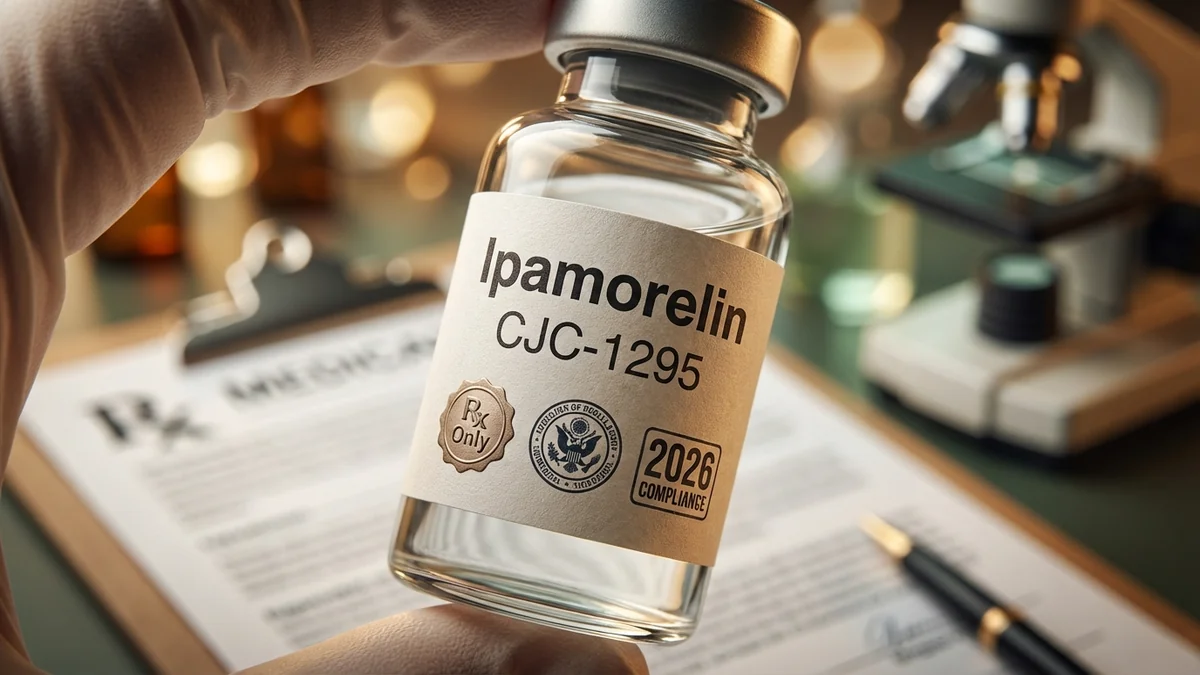
Some patients and clinicians have shifted toward other peptides with weight-related mechanisms. CJC-1295, ipamorelin, and tesamorelin work through growth hormone secretagogue pathways rather than GLP-1 receptor agonism — different mechanisms, different evidence bases, different regulatory status. These aren't replacements for semaglutide's clinical outcomes, but they're options some practitioners use in combination protocols. Discuss with a knowledgeable provider through our clinic directory.
5. Oral Semaglutide (Rybelsus)
Rybelsus — oral semaglutide at 3 mg, 7 mg, and 14 mg daily doses — is FDA-approved for type 2 diabetes and was not in shortage.[1] It's not approved for weight management and the doses are lower than Wegovy, but it's an option some providers use off-label. Talk to your doctor about whether it's appropriate for your situation.