
FDA Peptide Regulations Explained: What's Actually Regulated in 2026
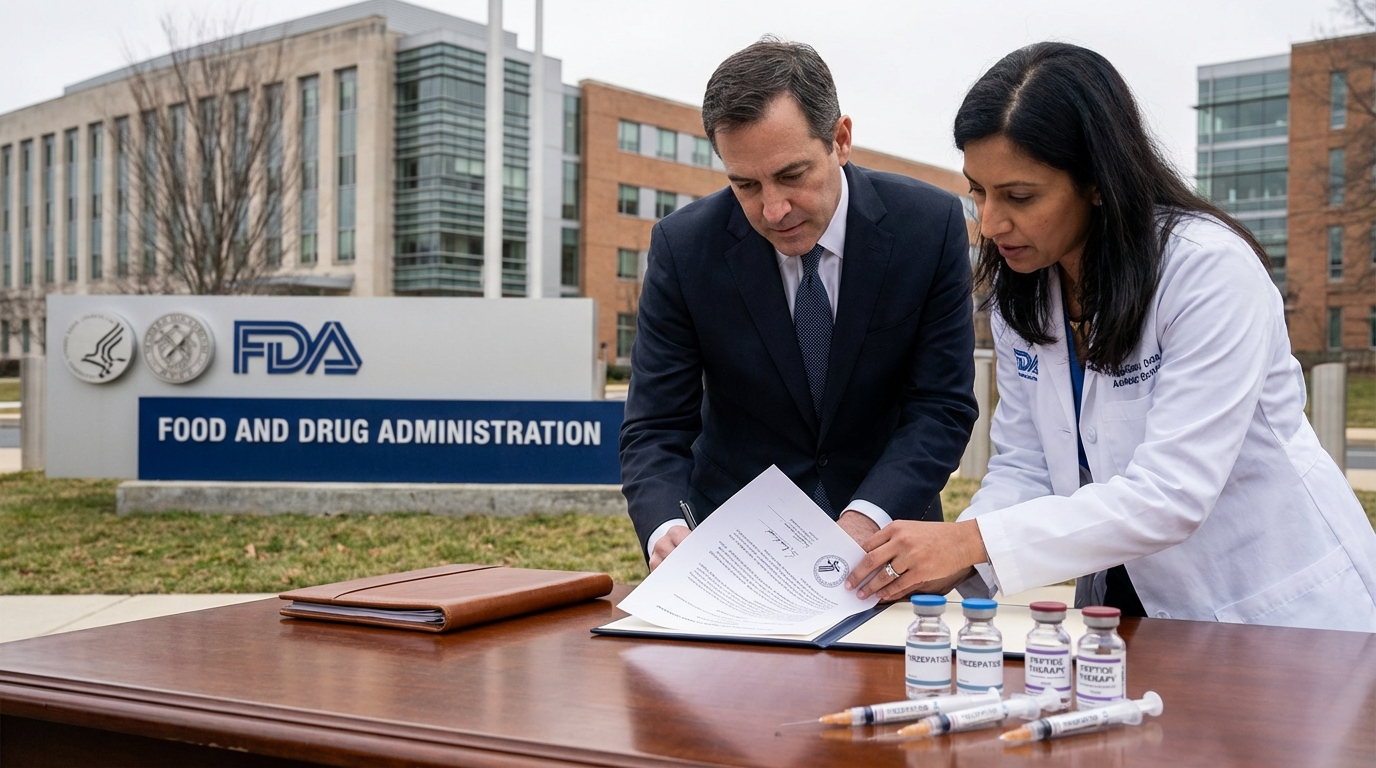
If you've been researching peptide therapy, you've probably noticed that the legal status of most compounds is... murky. Some peptides are available by prescription from licensed pharmacies. Others are sold openly on research chemical websites. And a growing number have been explicitly prohibited from compounding since 2024–2025. Understanding FDA peptide regulations in 2026 isn't just an academic exercise — it determines whether you can get a compound legally, whether your pharmacy is operating within the law, and whether the product you're injecting has been through any quality oversight at all.
Here's the honest picture.
Key Takeaways
- The FDA regulates peptides primarily through its 503A and 503B compounding pharmacy framework, which governs which bulk drug substances can be compounded and dispensed by prescription.
- As of January 7, 2025, the FDA issued revised interim guidance significantly tightening which peptides compounding pharmacies can use — and cutting off the "nominated, under review" gray zone that many clinics had relied on.[1]
- Category 2 peptides — including BPC-157, thymosin beta-4 (TB-500), CJC-1295, and several others — have been ruled inappropriate for compounding under 503A and cannot legally be compounded for patient use.[2]
- A small number of peptides (including sermorelin and NAD+) remain on the Category 1 list and can still be legally compounded by 503A pharmacies.[3]
- "Research use only" is a legal designation that means the compound is not approved for human use — it's not a loophole, and the FDA has explicitly stated that "for research use only" labels don't shield vendors from FD&C Act violations.[4]
- The biggest practical risk for patients isn't arrest — it's product quality. Unregulated peptide products have no mandatory purity or sterility standards, and contamination or mislabeling is a real documented concern.
How the FDA Actually Regulates Peptides
Peptides don't fit neatly into the FDA's traditional drug categories. They're not small molecules. They're not biologics (though some overlap). They're chains of amino acids — and the FDA has historically treated them inconsistently, which is a big part of why this space became so complicated.
The most important regulatory framework for understanding peptide access in the US is the 503A and 503B compounding pharmacy system, established under the Drug Quality and Security Act (DQSA) of 2013.
503A pharmacies are traditional compounding pharmacies that fill prescriptions for individual patients. They can compound drugs from bulk drug substances — but only if those substances appear on the FDA's approved "503A Bulks List," have an FDA monograph, or are components of an FDA-approved drug. Peptides that don't meet those criteria require a formal nomination and review process before they can be compounded.
503B outsourcing facilities operate at larger scale, producing compounded drugs without patient-specific prescriptions for healthcare facilities. They're subject to current Good Manufacturing Practice (cGMP) standards and have their own separate bulk drug substance list.
The Nomination Process: Categories 1, 2, and 3
When a peptide is nominated for the 503A Bulks List, the FDA's Pharmacy Compounding Advisory Committee (PCAC) evaluates it and assigns it to one of three categories:
| Category | What It Means | Compounding Allowed? |
|---|---|---|
| Category 1 | Nominated; FDA determined it's appropriate for compounding | Yes — can be compounded under 503A |
| Category 2 | Nominated; FDA determined it's not appropriate for compounding | No — prohibited for 503A compounding |
| Category 3 | Nominated; awaiting FDA review | Previously: interim tolerance. After Jan 7, 2025: no longer applies to new nominations |
That January 7, 2025 guidance date matters. Before it, many compounding pharmacies operated under an interim policy that allowed them to compound substances that had been nominated but not yet reviewed — essentially a "pending" gray zone.[1] The FDA's revised interim guidance, issued January 7, 2025, closed that window. New nominations made on or after that date won't receive the same interim tolerance, and the FDA has made clear it intends to enforce this more aggressively going forward.[1]
The PCAC held meetings in late 2024 to evaluate several peptides — including CJC-1295, thymosin alpha-1, ipamorelin, and AOD-9604 — for potential inclusion on the official 503A allowed list.[2] Whether any of those evaluations resulted in Category 1 placement should be confirmed with your prescribing provider or pharmacy, as the review process was ongoing as of early 2026.
Which Peptides Are FDA-Approved
Full FDA approval — meaning an approved New Drug Application (NDA) or Biologics License Application (BLA) — is a high bar. Very few peptides have cleared it. Here's what has:
- Semaglutide (semaglutide) — FDA-approved as Ozempic (type 2 diabetes, 2017), Wegovy (chronic weight management, 2021), and Rybelsus (oral formulation, 2019). A GLP-1 receptor agonist with 94% amino acid sequence homology to native human GLP-1.
- Tirzepatide — FDA-approved as Mounjaro (type 2 diabetes, 2022) and Zepbound (obesity, 2023). Dual GIP/GLP-1 receptor agonist.
- Tesamorelin (tesamorelin) — FDA-approved as Egrifta (HIV-associated lipodystrophy, 2010) and EGRIFTA SV (2019 reformulation). A synthetic GHRH analogue, 44 amino acids.
- Sermorelin — FDA-approved historically for growth hormone deficiency diagnostics; the original NDA is no longer active, but sermorelin remains on the 503A Category 1 list and can be legally compounded by prescription.[3]
- Bremelanotide — FDA-approved as Vyleesi (hypoactive sexual desire disorder in premenopausal women, 2019). A melanocortin receptor agonist; often discussed in peptide communities under its research name PT-141.
These compounds can be legally prescribed and dispensed by licensed pharmacies. Compounded versions of FDA-approved drugs like semaglutide have their own separate regulatory status — and that situation has been evolving rapidly through 2025–2026 as FDA shortage designations changed.
Which Peptides Are Prohibited for Compounding (Category 2)
This is where the 2023–2025 regulatory tightening hit hardest. The FDA evaluated a range of popular peptides and determined they're not appropriate for compounding under 503A. The stated reasons vary by compound but generally involve: inadequate evidence of safety for compounded use, immunogenicity risk, or concerns that the compounded form wouldn't be therapeutically equivalent to any approved standard.
The following peptides have been placed in Category 2 — meaning they cannot legally be compounded by 503A pharmacies for patient use:[2]
- BPC-157 (BPC-157) — Body Protection Compound, a 15-amino-acid peptide with substantial animal data on gut healing and musculoskeletal repair. No approved human formulation exists.
- Thymosin beta-4 / TB-500 — A 43-amino-acid thymic peptide. The FDA cited immunogenicity concerns.
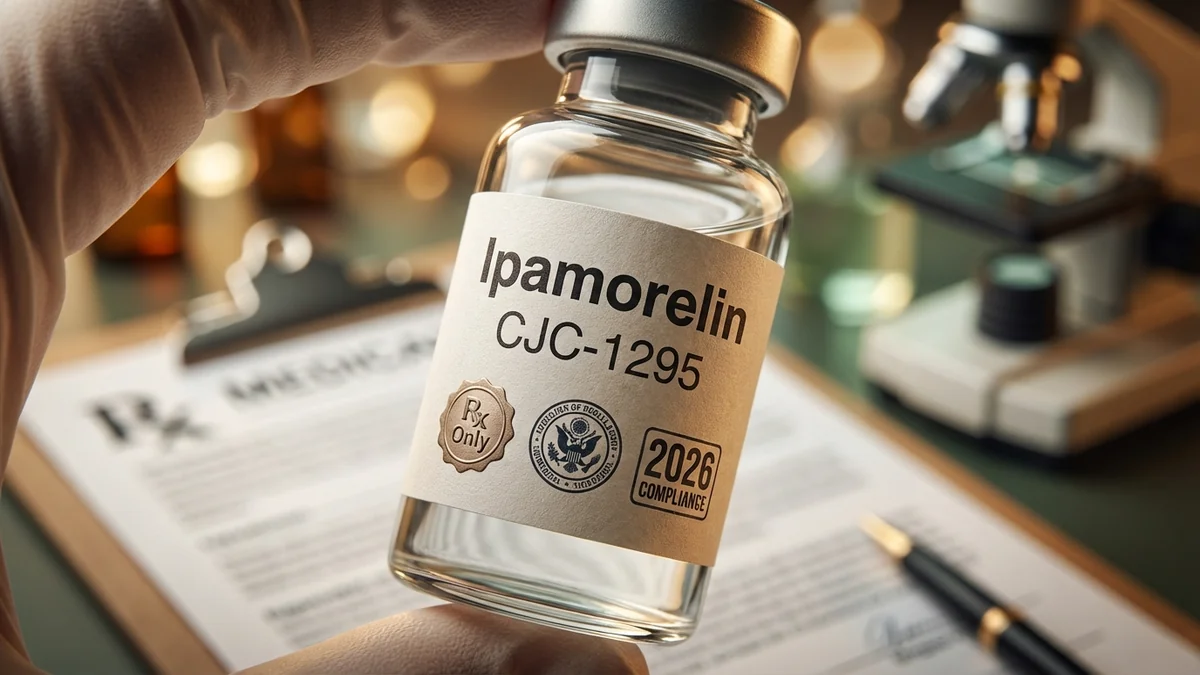
- CJC-1295 — A GHRH analogue with a DAC (Drug Affinity Complex) modification extending its half-life to approximately 6–8 days [VERIFY]. Evaluated by PCAC in late 2024.
- Ipamorelin (ipamorelin) — A selective GHRP (growth hormone-releasing peptide), 5 amino acids. Evaluated alongside CJC-1295.
- Melanotan II — A non-selective melanocortin agonist. Distinct from bremelanotide (PT-141), which received FDA approval; Melanotan II did not.
- AOD-9604 — A modified fragment of human growth hormone (hGH176-191). Failed to demonstrate efficacy in Phase III obesity trials [VERIFY].
- Epitalon — A tetrapeptide (Ala-Glu-Asp-Gly) studied primarily in Russian literature for anti-aging effects. No FDA-reviewed human clinical data.
- Thymosin alpha-1 — An immune-modulating peptide; approved in some countries outside the US but not by the FDA.
- GHK-Cu (GHK-Cu) — A copper-binding tripeptide used topically and via injection. Category 2 for injectable compounding.
If you're currently receiving any of these compounds from a compounding pharmacy, that pharmacy is operating outside the current FDA framework. That doesn't automatically mean the product is unsafe — but it does mean it's operating without regulatory oversight.
The Research-Use Gray Zone
Here's what "research use only" actually means: nothing therapeutic, legally speaking.
When a vendor labels a peptide "for research use only, not for human use," they're attempting to position the sale as exempt from FDA oversight — the argument being that they're selling a chemical reagent, not a drug. The FDA has explicitly rejected this framing. In warning letters and enforcement actions, the agency has stated that "for research use only" disclaimers are, in their words, a ruse to avoid scrutiny for selling misbranded and adulterated products in violation of the Federal Food, Drug, and Cosmetic Act.[4]
So what's the practical reality? Most people sourcing Category 2 peptides like BPC-157 or TB-500 in the US are getting them through research-use vendors. That's the actual market for these compounds right now. Vendors operate in a gray zone where enforcement has historically targeted sellers, not buyers. The FDA's enforcement resources are finite, and individual patients importing small quantities for personal use have not been the primary enforcement target — though that can change.
The legal risk gradient looks roughly like this:
- Vendors — highest risk. FDA warning letters, FTC action, state AG enforcement, and potential FD&C Act criminal liability all apply to sellers.
- Compounding pharmacies that continue to compound Category 2 peptides — significant regulatory and licensure risk, and increasingly the target of the 2025–2026 enforcement wave.[5]
- Physicians who administer or dispense research-grade peptides — meaningful professional and liability risk, particularly as state medical boards have become more active.
- Individual patients — lowest enforcement risk, but not zero. And the legal risk is separate from the quality risk, which is real regardless of your legal exposure.
State-level enforcement is also picking up. State attorneys general have used consumer protection statutes and public health authority to pursue clinics operating outside federal drug law — including a November 2025 action by the Alabama AG against a weight-loss clinic.[6] This isn't just a federal issue anymore.
Quality: The Real Risk
The legal status of a peptide matters. But for your health, the quality question matters more.
When a 503A compounding pharmacy makes a drug, it's operating under state board of pharmacy oversight, USP standards, and in many cases, additional accreditation requirements. There's a paper trail. There's accountability.
When you buy a peptide from a research vendor, there's none of that. The product might be exactly what the label says. Or it might be:
- Underdosed or overdosed — purity variation in unregulated peptide synthesis is common. A vial labeled 5mg might contain 3mg or 7mg.
- Contaminated — bacterial endotoxins (pyrogens) are a particular concern for injectable peptides. Endotoxin contamination can cause fever, chills, and systemic inflammatory responses.
- Mislabeled — some products sold as one peptide contain a different compound entirely, or a mixture.
- Improperly lyophilized or stored — peptide stability depends on proper freeze-drying and cold chain management. Products that weren't handled correctly may be partially degraded before you inject them.
A Certificate of Analysis (CoA) from a third-party lab is the minimum you should look for when evaluating any research-grade peptide product. A CoA should include:
- HPLC purity — high-performance liquid chromatography showing the compound is at least 98–99% pure
- Mass spectrometry confirmation — verifying the molecular weight matches the expected peptide sequence
- Endotoxin testing — particularly important for injectables; should show <1 EU/mg [VERIFY for specific threshold]
- Sterility testing — for injectable products
A CoA from the vendor's own internal lab means very little. Look for testing by an independent, named third-party laboratory.
What Patients Should Ask Before Starting Peptide Therapy
Before you start any peptide protocol, these are the questions worth asking — of your provider, your pharmacy, and yourself:
- Is this compound FDA-approved? If yes, for what indication? If no, what's its regulatory status — Category 1 compoundable, Category 2 prohibited, or research-only?
- Is the prescribing provider licensed in my state? Telehealth prescribing rules vary by state, and some peptide "clinics" operate outside proper licensing frameworks.
- Is the pharmacy 503A or 503B accredited? Ask for the pharmacy's state license number and whether it holds PCAB (Pharmacy Compounding Accreditation Board) accreditation.
- Does the product have a Certificate of Analysis from a named third-party lab? Ask to see it. A legitimate operation will provide it.
- What's the dosing protocol, and is it based on published data? Your provider should be able to cite a rationale — not just a "standard protocol" they heard about at a conference.
- What monitoring is included? Peptide therapy without baseline labs and follow-up monitoring isn't medicine — it's guesswork.