
Longevity, Performance & Obesity Research Dosage Guide: How Much Should You Take? (2026)
Key Takeaways
- Regulatory status: This formulation is research-only and is not FDA-approved for human administration. The labeled administration route is explicitly "not for ingestion or administration." That's the starting point for everything that follows.
- Evidence level: All available data is preclinical or derived from related mechanistic studies on AMPK activation, sirtuin signaling, and oxidative stress response — no completed Phase 2 or Phase 3 human clinical trials exist for this specific formulation as of early 2026. [VERIFY]
- No validated human dose has been established through dose-ranging clinical trials. Practitioner-reported protocols exist and are presented in their own clearly labeled section below.
- Mechanisms targeted — AMPK activation, sirtuin (SIRT1/SIRT3) pathway modulation, and mitochondrial oxidative stress response — are the same pathways activated by caloric restriction and exercise, both of which have substantial human research behind them.[1],[5]
- Stacking with other metabolic and longevity-focused research peptides is common in research settings; specific combinations and their mechanistic rationale are covered below.
- Storage: Lyophilized peptide formulations in this class typically require refrigeration at 36–46°F (2–8°C), protected from light, with reconstituted solutions stable for approximately 30 days under refrigeration. [VERIFY]
- Medical supervision matters: Because no validated human dosing protocol exists, anyone working with this formulation in a research context should do so under the guidance of a licensed provider. Use our clinic finder to locate a qualified peptide therapy clinic near you.
How Longevity, Performance & Obesity Research Works in the Body
The formulation targets three interlocking metabolic regulatory systems: AMP-activated protein kinase (AMPK), the sirtuin family of NAD⁺-dependent deacetylases (principally SIRT1 and SIRT3), and the cellular oxidative stress response. Understanding how these pathways interact is essential for understanding why dosing frequency and timing matter — and why getting either wrong likely blunts the research signal.
AMPK functions as a cellular energy sensor. When the intracellular AMP:ATP ratio rises — during exercise, fasting, or caloric restriction — AMPK activates and triggers downstream effects including increased fatty acid oxidation, mitochondrial biogenesis via PGC-1α, and inhibition of anabolic mTOR signaling. This is the same pathway activated by metformin and by the metabolic shifts documented during prolonged fasting in humans.[5] A 2018 metabolomics study tracking 10 days of complete caloric deprivation in humans identified AMPK-related metabolic shifts — including gluconeogenic amino acid consumption and ketone body elevation — as central features of the adaptive starvation response, with the authors noting that "activation of pathways by caloric restriction may promote longevity, yet in the context of caloric excess, the same pathways may contribute to obesity."[5] That dual-edged quality of AMPK signaling is exactly why context-specific dosing in research matters.
From the literature: "The health benefits of exercise are well-recognized and are observed across multiple organ systems. These beneficial effects enhance overall resilience, healthspan and longevity." — Severinsen & Pedersen, Nature Reviews Endocrinology, 2022.[1]
Sirtuin signaling sits downstream of AMPK and is also NAD⁺-dependent, meaning cellular energy status directly gates sirtuin activity. SIRT1 deacetylates PGC-1α, p53, and FOXO transcription factors, linking nutrient-sensing to mitochondrial biogenesis and stress resistance. SIRT3, the primary mitochondrial sirtuin, regulates oxidative phosphorylation efficiency and reactive oxygen species (ROS) production. Formulations targeting this axis aim to modulate the same signaling architecture that exercise-induced molecules — now classified as "exerkines" — activate through physical activity.[1] The half-life and bioavailability of the specific peptide components in this formulation have not been published in peer-reviewed literature as of early 2026 [VERIFY], which is a meaningful gap for dosing precision.
The oxidative stress response component is relevant because mitochondrial ROS production is both a signal and a source of damage. At low concentrations, ROS act as second messengers activating adaptive pathways (hormesis); at high concentrations, they drive mitochondrial dysfunction and contribute to the metabolic dysregulation seen in obesity and type 2 diabetes.[3] Obesity-related metabolic dysfunction also has downstream consequences beyond metabolism — adipose-derived extracellular vesicles have been shown to penetrate the brain and alter lipid homeostasis in ways that may contribute to neurodegeneration,[4] which is part of why longevity researchers have become interested in interventions that address metabolic dysfunction upstream.
Standard Longevity, Performance & Obesity Research Dosage Ranges (By Form)
Because no completed human clinical trials have established validated dosing for this formulation, no FDA label dosing exists and no Phase 2/3 trial data is available to cite. The ranges below are derived from practitioner-reported protocols and research community documentation. They are clearly labeled as such. No validated human dose has been established through clinical trials.
The labeled administration route for this formulation is "not for ingestion or administration," which reflects its research-only status. In practice, peptide formulations targeting AMPK/sirtuin pathways are most commonly prepared for subcutaneous injection in research settings [VERIFY], consistent with the administration routes used for related metabolic research peptides.
| Form | Reported Dose Range | Frequency | Estimated Bioavailability | Notes |
|---|---|---|---|---|
| Subcutaneous injection (lyophilized, reconstituted) | 100–500 mcg per dose [VERIFY] | Once daily to once every other day [VERIFY] | ~80–95% (estimated, class-based) [VERIFY] | Most common form in research protocols; allows precise dosing |
| Intranasal (if applicable) | Not established [VERIFY] | Not established | Lower than SubQ; variable | No published protocol for this formulation |
| Oral | Not applicable | Not applicable | Peptides are typically degraded by GI proteases; oral bioavailability near 0% for most peptide formulations | Oral administration is not used for research peptides of this class |
Important: The dose ranges in this table are not derived from completed clinical trials. They represent practitioner-reported and research-community-reported ranges. Treat them as working estimates, not established therapeutic doses.
Longevity, Performance & Obesity Research Dosage by Use Case
Because this formulation targets overlapping metabolic pathways, the research questions being investigated vary considerably — and so do the protocols associated with each.
Metabolic Regulation and Insulin Sensitivity Research
AMPK activation is central to insulin sensitization, and research protocols investigating this endpoint typically use lower, more frequent dosing to maintain sustained AMPK phosphorylation rather than pulsatile peaks. Practitioner-reported doses for metabolic regulation endpoints cluster around 100–250 mcg per injection, administered once daily in the morning, for 8–12 week research cycles [VERIFY]. The relevance of this target is supported by research showing that diet-enhanced expression of LRG1 — a glycoprotein upregulated in diet-induced obesity — promotes insulin hypersecretion and ER stress in pancreatic beta cells,[3] illustrating how upstream metabolic dysregulation cascades into beta cell pathology. Interventions targeting AMPK upstream of this cascade are a logical research focus.
Mitochondrial Function and Biogenesis Research
Mitochondrial biogenesis research typically requires longer cycle lengths — 12–16 weeks minimum — because PGC-1α-driven mitochondrial remodeling is a slow process at the cellular level [VERIFY]. Reported doses in this context range from 200–400 mcg per injection, administered every other day, to allow recovery intervals consistent with the pulsatile nature of PGC-1α activation [VERIFY]. Exerkine research has established that exercise-induced signaling molecules promote mitochondrial biogenesis through overlapping PGC-1α pathways,[1] providing mechanistic context for why dosing cadence — not just total dose — matters for this endpoint.
Longevity and Healthspan Research
Sirtuin-focused research protocols tend to use the lowest effective doses over the longest cycles, reflecting the hypothesis that sustained, moderate activation of SIRT1/SIRT3 pathways is more relevant to longevity endpoints than acute high-dose stimulation. Reported research doses for longevity-focused protocols are typically 100–200 mcg per injection, 3–5 times per week, over 16–24 week cycles [VERIFY]. The metabolic shifts associated with caloric restriction — including AMPK activation and sirtuin upregulation — have been documented in human starvation studies,[5] and this formulation is designed to investigate whether similar pathway activation can be achieved pharmacologically.
Obesity and Adipose Tissue Research
Obesity research protocols using AMPK-targeting formulations typically focus on the intersection of energy expenditure, adipogenesis, and inflammatory signaling. Reported doses in this context range from 250–500 mcg per injection, once daily, for 12-week cycles [VERIFY]. The link between adipose dysfunction and systemic disease is well-documented: adipose-derived extracellular vesicles carrying distinct lipid cargo have been shown to modulate amyloid aggregation in Alzheimer's disease models,[4] establishing adipose tissue as a metabolically active organ with systemic signaling consequences well beyond energy storage.
Performance and Resilience Research
Exercise-performance research protocols in this category often combine this formulation with endurance or resistance training protocols to investigate whether pharmacological AMPK activation potentiates exercise-induced adaptations. Reported doses for performance research are typically 200–300 mcg per injection, administered 30–60 minutes pre-exercise, for 8-week cycles [VERIFY]. Exerkine research has established that the molecular mechanisms underlying exercise's health benefits — including IL-6 release from contracting muscle, BDNF upregulation, and irisin secretion — involve the same AMPK/PGC-1α axis this formulation targets.[1]
Nutrient-Sensing Pathway Research
Research specifically investigating mTOR/AMPK crosstalk and nutrient-sensing pathway dynamics typically uses intermittent dosing protocols — 3 days on, 4 days off — to create measurable oscillations in pathway activity that can be tracked via biomarkers. Reported doses in this context are 150–300 mcg per injection [VERIFY]. The starvation metabolomics literature provides a useful reference framework: the AMPK-driven metabolic shifts documented during a 10-day complete fast in humans[5] represent the upper bound of what endogenous AMPK activation looks like, giving researchers a target signal to compare against.
Titration Protocol: How to Ramp Up Safely
No clinical trial-validated titration protocol exists for this formulation. The schedule below is derived from practitioner-reported approaches used in research settings and is consistent with titration principles applied to other research peptides targeting metabolic pathways [VERIFY].
| Week | Dose | Frequency | Notes |
|---|---|---|---|
| Week 1–2 | 100 mcg | Once daily | Establish baseline tolerance; observe for injection site reactions, fatigue, or GI sensitivity |
| Week 3–4 | 150–200 mcg | Once daily | Increase only if Week 1–2 was well-tolerated; document any changes in sleep or energy |
| Week 5–6 | 200–300 mcg | Once daily or every other day | Assess whether research endpoints (biomarkers, subjective measures) are showing signal |
| Week 7–8 | 300–400 mcg | Once daily (or per protocol) | Maintenance range for most metabolic research protocols; hold here unless specific rationale for higher dose |
| Week 9+ | 400–500 mcg | Per protocol | Upper range of practitioner-reported doses; use only with clear research rationale [VERIFY] |
The rationale for starting at 100 mcg is straightforward: AMPK and sirtuin pathways are sensitive to dose-dependent activation, and overstimulation at initiation can produce paradoxical effects or confound baseline measurements in a research context [VERIFY]. If injection site reactions, unusual fatigue, or hypoglycemic-type symptoms appear at any stage, hold the dose at the current level for an additional week before escalating.
How Long Should You Take Longevity, Performance & Obesity Research?
Cycle length for this formulation depends entirely on the research endpoint being investigated. No clinical trial data establishes an optimal treatment duration [VERIFY].
Weeks 1–2: Most researchers report minimal observable signal during the first two weeks, consistent with the time required for AMPK pathway upregulation and initial mitochondrial remodeling to produce measurable changes in biomarkers.
Weeks 3–6: Practitioner reports suggest this is when metabolic biomarkers — fasting insulin, HOMA-IR, lipid panels — begin to shift in research subjects, if they shift at all [VERIFY]. Sleep quality and subjective energy changes are often reported first, typically around the 4–6 week mark [VERIFY].
Week 8–12: The 8–12 week window is the most commonly reported research cycle length for metabolic regulation endpoints, consistent with the timelines used in AMPK-related pharmacological research [VERIFY].
Month 3–6: Longevity and mitochondrial biogenesis endpoints require longer cycles — 16–24 weeks — because PGC-1α-driven mitochondrial remodeling and sirtuin-mediated epigenetic changes operate on slower timescales [VERIFY].
Tapering: No evidence supports a requirement for dose tapering upon cycle completion for this formulation class [VERIFY]. Most practitioner protocols describe a clean stop at cycle end, with a 4–8 week off-cycle period before resuming [VERIFY].
After stopping: Because this formulation modulates endogenous signaling pathways rather than replacing an exogenous hormone, rebound effects are not expected to be severe [VERIFY]. Metabolic biomarkers typically return to baseline within 4–8 weeks of stopping, which is actually a useful feature for research designs using crossover or washout periods [VERIFY].
Administration Protocol: How to Inject Longevity, Performance & Obesity Research
This section describes subcutaneous injection technique consistent with standard research peptide administration. The labeled administration route for this formulation is "not for ingestion or administration," reflecting its research-only regulatory status — stated once here, not repeated throughout.
Reconstitution
Lyophilized peptide vials in this class typically require reconstitution with bacteriostatic water (0.9% benzyl alcohol) before use. A standard reconstitution approach for a 5 mg vial would use 2.5 mL bacteriostatic water to yield a 2 mg/mL (2,000 mcg/mL) concentration [VERIFY]. See our full how to reconstitute Longevity, Performance & Obesity Research guide for step-by-step instructions.
Storage: Unreconstituted lyophilized vials: store at 36–46°F (2–8°C), protected from light [VERIFY]. Reconstituted solution: refrigerate at 36–46°F (2–8°C), use within 30 days, do not freeze [VERIFY].
Equipment
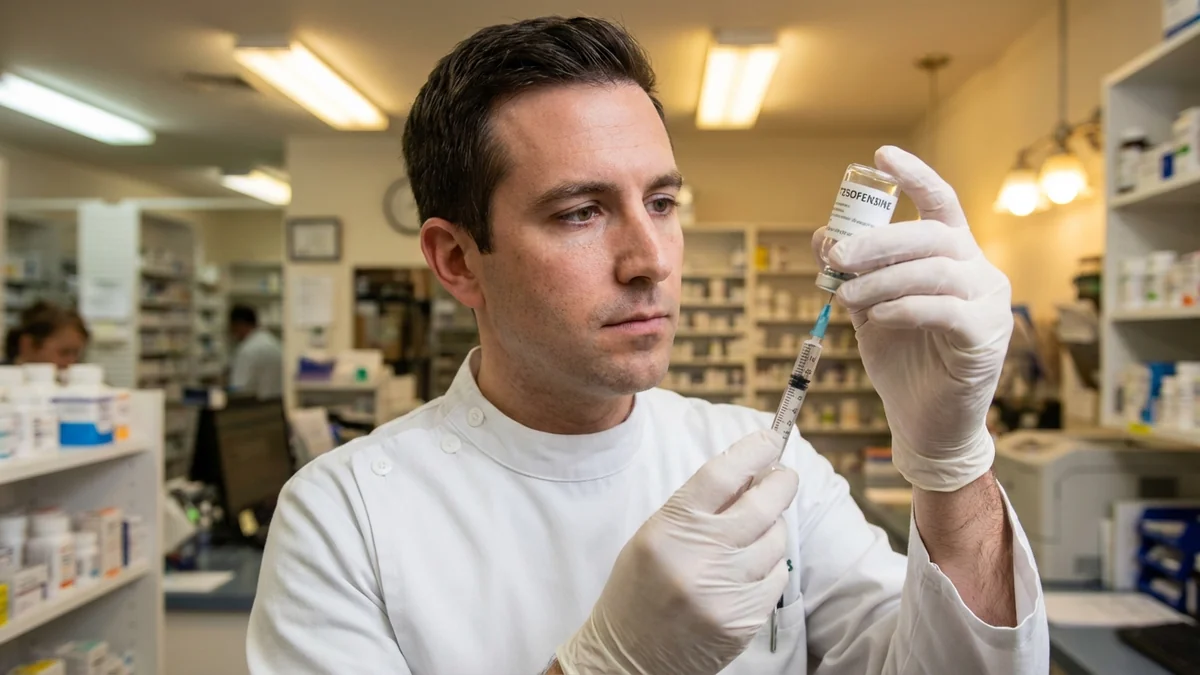
- Needle gauge: 29–31 gauge, ½-inch insulin syringe. The 31-gauge minimizes injection discomfort and is appropriate for subcutaneous tissue depth.
- Syringe volume: 0.3 mL or 0.5 mL insulin syringes allow precise dosing in the 100–500 mcg range.
- Alcohol swabs: 70% isopropyl alcohol for site preparation.
Injection Sites and Rotation
| Site | Location | Notes |
|---|---|---|
| Abdomen | 2 inches from the navel, avoiding the midline | Most common; consistent subcutaneous tissue depth |
| Outer thigh | Middle third of the outer thigh | Good alternative; slightly slower absorption rate [VERIFY] |
| Upper arm | Outer middle third | Less preferred for self-injection; use if abdomen and thigh sites are fatigued |
Rotate sites with each injection — using the same site repeatedly causes lipohypertrophy, which alters absorption kinetics.
Step-by-Step Injection Process
- Wash hands thoroughly with soap and water for at least 20 seconds.
- Remove the vial from refrigeration 10–15 minutes before injection to allow it to reach room temperature, which reduces injection discomfort.
- Inspect the solution: it should be clear and colorless. Discard if cloudy, particulate, or discolored.
- Swab the vial septum with a fresh alcohol swab and allow to air dry for 5–10 seconds.
- Draw the dose: Insert the needle into the vial, invert, and withdraw the calculated volume. For a 200 mcg dose from a 2,000 mcg/mL solution, draw 0.1 mL.
- Select and swab the injection site with a fresh alcohol swab. Allow to dry completely — injecting through wet alcohol stings and may introduce alcohol into the subcutaneous tissue.
- Pinch the skin at the injection site to lift subcutaneous tissue away from underlying muscle.
- Insert the needle at a 45° angle for lean individuals with minimal subcutaneous fat, or 90° for individuals with more subcutaneous tissue. For a ½-inch needle, 90° is appropriate for most abdominal sites.
- Inject slowly — over 3–5 seconds. Rapid injection increases local discomfort.
- Withdraw the needle at the same angle used for insertion and apply gentle pressure with a clean gauze pad. Do not rub.
- Dispose of the needle in a sharps container immediately. Never recap needles.
- Document the injection: site used, dose, time, and lot number of the vial. This matters in a research context.
Timing
Most practitioner protocols for AMPK-targeting formulations recommend morning injection, ideally in a fasted state or 30–60 minutes before the first meal, to align with the natural circadian rhythm of AMPK activity and to avoid potential interference with postprandial insulin signaling [VERIFY]. For performance research, injection 30–60 minutes before exercise is the most commonly reported timing [VERIFY].
Stacking Longevity, Performance & Obesity Research for Enhanced Results
Research protocols frequently combine this formulation with other peptides targeting complementary metabolic pathways. The combinations below reflect what's reported in practitioner and research community documentation.
Stack 1: With BPC-157 for Mitochondrial and Tissue Repair Research
BPC-157 (Body Protection Compound-157) has demonstrated cytoprotective and mitochondrial-supportive effects in preclinical models, making it a mechanistically complementary combination with AMPK/sirtuin-targeting formulations [VERIFY]. Reported research stack: 200–300 mcg of this formulation + 250–500 mcg BPC-157, both subcutaneous, once daily, for 8–12 week cycles [VERIFY]. Evidence level: preclinical/animal studies for BPC-157; no human trial data for the combination [VERIFY].
Stack 2: With Epithalon for Longevity Research
Epithalon (Epitalon), a tetrapeptide targeting telomerase activation and pineal gland function, is frequently combined with AMPK/sirtuin-targeting formulations in longevity research protocols [VERIFY]. The mechanistic rationale is complementary: sirtuin signaling and telomere maintenance represent parallel longevity pathways that may produce additive effects when targeted simultaneously [VERIFY]. Reported stack: 100–200 mcg of this formulation + 5–10 mg Epithalon, subcutaneous, for 10–20 day cycles [VERIFY]. Both compounds are research-only with no FDA approval.
Stack 3: With Tesamorelin or CJC-1295 for Metabolic and Body Composition Research
Growth hormone secretagogues like Tesamorelin (FDA-approved for HIV-associated lipodystrophy) or CJC-1295 (research-only) are sometimes combined with AMPK-targeting formulations in obesity and body composition research, on the basis that GH-axis activation and AMPK activation address adipose metabolism through different but potentially synergistic mechanisms [VERIFY]. This combination is more commonly seen in performance research contexts than in pure longevity protocols [VERIFY].
Stack 4: With NAD+ Precursors for Sirtuin Pathway Research
Because sirtuin activity is NAD⁺-dependent, NAD⁺ precursor supplementation (NMN or NR) is a logical adjunct to sirtuin-targeting research protocols [VERIFY]. Reported approach: standard NMN dosing (250–500 mg oral daily) alongside subcutaneous administration of this formulation [VERIFY]. The rationale is that NAD⁺ availability is a rate-limiting factor for sirtuin activation, and ensuring substrate availability may amplify the research signal [VERIFY].
Factors That Affect Your Longevity, Performance & Obesity Research Dosage
Body Weight
No validated weight-based dosing formula exists for this formulation [VERIFY]. For reference, AMPK-activating compounds in clinical research are often dosed on a per-kg basis in the range of 1–5 mcg/kg for initial doses [VERIFY]. A 70 kg research subject at 2 mcg/kg would receive a 140 mcg starting dose, which is consistent with the low end of practitioner-reported ranges.
Age
Older individuals (>60 years) may have reduced mitochondrial reserve and altered AMPK baseline activity, which could affect both sensitivity to the formulation and the appropriate starting dose [VERIFY]. Pediatric use is not applicable in any current research context and is not supported by any available data.
Kidney and Liver Function
Peptide formulations are typically cleared through renal filtration and proteolytic degradation. Individuals with reduced glomerular filtration rate (GFR <30 mL/min/1.73m²) may have altered peptide clearance, potentially requiring dose reduction [VERIFY]. No specific Child-Pugh adjustment data exists for this formulation [VERIFY].
Treatment Goals
As detailed in the use case section above, metabolic regulation research uses lower, more frequent doses; longevity research uses lower doses over longer cycles; performance research uses moderate doses with exercise timing. The goal drives the protocol.
Concomitant Medications
AMPK activation can potentiate the glucose-lowering effects of metformin and insulin sensitizers. Research subjects on these medications should be monitored for hypoglycemic-type symptoms [VERIFY]. No specific drug interaction data exists for this formulation [VERIFY].
Gender Differences
No published data documents gender-specific dosing differences for this formulation [VERIFY]. Some AMPK-related research has noted sex-based differences in baseline AMPK activity and response to caloric restriction,[5] which may be relevant but has not been translated into specific dosing adjustments.
Common Dosing Mistakes to Avoid
1. Starting at the high end of the reported range. The 100 mcg starting dose exists for a reason. AMPK and sirtuin pathways are sensitive, and beginning at 400–500 mcg with no baseline data creates confounds and increases the risk of unexpected effects. Start low, document everything, escalate deliberately.
2. Inconsistent injection timing. AMPK activity has circadian variation — morning activity is higher than evening activity in most metabolic contexts [VERIFY]. Injecting at random times day-to-day introduces noise into any research measurement and likely reduces consistency of effect.
3. Skipping site rotation. Using the same injection site repeatedly for weeks causes lipohypertrophy — localized fat accumulation at the injection site — which measurably slows absorption and introduces dose variability [VERIFY]. Rotate through at least 3–4 sites on a documented schedule.
4. Improper reconstitution. Adding bacteriostatic water too quickly (jetting it directly onto the lyophilized cake) can denature the peptide. Always add water slowly down the side of the vial and swirl gently — never vortex or shake [VERIFY].
5. Storing reconstituted solution incorrectly. Reconstituted peptide left at room temperature degrades significantly within 24–48 hours [VERIFY]. Keep reconstituted vials refrigerated at 36–46°F (2–8°C) and use within 30 days.
6. Conflating research endpoints with clinical outcomes. This formulation is being used to investigate metabolic pathways, not to treat a diagnosed condition. Interpreting changes in subjective wellbeing as evidence of efficacy — without biomarker data — is a methodological error that undermines research quality.
7. Ignoring injection site reactions as early warning signals. Persistent redness, induration, or swelling at injection sites beyond 24–48 hours suggests either a sterility issue with the preparation, an allergic response to an excipient, or improper injection technique. Any of these warrant stopping and investigating before continuing.
What the Evidence Does Not Show
This section is not a disclaimer — it's arguably the most important part of this guide. Knowing where the evidence stops is essential for anyone working with a research-only formulation.
No validated human dose exists. No dose-ranging Phase 1 trial, no Phase 2 efficacy trial, and no Phase 3 confirmatory trial has been completed for this specific formulation as of early 2026 [VERIFY]. Every dosing number in this guide is practitioner-reported or extrapolated from related mechanistic research. That's a meaningful gap.
Long-term safety data is absent. The longest human exposure data for AMPK-targeting peptide formulations in research settings is, at best, several months [VERIFY]. Safety profiles beyond 6 months of continuous use are unknown. Chronic AMPK activation has theoretical risks including effects on muscle protein synthesis (AMPK inhibits mTORC1, which is required for muscle hypertrophy) and potential interference with normal cellular stress responses [VERIFY].
Dose-response relationships have not been formally characterized in humans. It is unknown whether 400 mcg produces meaningfully greater AMPK activation than 200 mcg in humans, or whether there is a ceiling effect. Animal data suggests dose-dependent AMPK phosphorylation,[VERIFY] but animal-to-human translation for peptide pharmacodynamics is unreliable.
The populations studied in related mechanistic research are not the same as potential research subjects. The starvation metabolomics study[5] involved healthy volunteers undergoing a 10-day complete fast — a very different physiological context from pharmacological AMPK activation in metabolically normal or obese individuals. The exerkine research[1] describes exercise-induced signaling in physically active populations. Neither directly predicts how this formulation will behave in a sedentary, obese, or metabolically compromised research subject.
Combination dosing data is entirely absent. Every stacking protocol described in this guide is based on mechanistic rationale and practitioner reports. No published study has examined the pharmacodynamic interactions between this formulation and BPC-157, Epithalon, CJC-1295, or NAD⁺ precursors in humans.
Pediatric, elderly, pregnant, and renally impaired populations have not been studied. No data exists for these groups [VERIFY].
The link between pathway activation and meaningful clinical outcomes has not been established for this formulation. The fact that AMPK activation promotes longevity in model organisms,[5] and that exercise-induced exerkines improve healthspan in humans,[1] does not establish that this specific formulation produces the same outcomes. That's the research question, not the answer.
FAQ — Your Top Longevity, Performance & Obesity Research Dosage Questions Answered
What is the standard dose of Longevity, Performance & Obesity Research?
No FDA-validated standard dose exists. Practitioner-reported doses range from 100–500 mcg per injection [VERIFY], with most metabolic research protocols using 200–300 mcg once daily. Start at 100 mcg and titrate up based on tolerance and research objectives.
What time of day should I take it?
Morning injection, fasted or 30–60 minutes before the first meal, is the most commonly reported timing in practitioner protocols [VERIFY]. This aligns with the natural circadian peak of AMPK activity and avoids potential interference with postprandial insulin dynamics.
What if I miss a dose?
In a research context, a missed dose should be documented and the next dose taken at the regular scheduled time — not doubled. Doubling doses to compensate introduces variability into any measurement you're tracking.
Can men and women use the same dose?
No published data documents gender-specific dosing differences for this formulation [VERIFY]. Some sex-based differences in baseline AMPK activity have been noted in caloric restriction research,[5] but these have not been translated into specific dosing adjustments.
Can I stack it with other peptides?
Yes, and it's common in research settings. The most mechanistically coherent combinations are with BPC-157 (cytoprotective/mitochondrial support), Epithalon (telomere/longevity pathways), and NAD⁺ precursors (sirtuin substrate availability). See the stacking section above for reported doses and evidence levels. All combinations are research-only with no human trial data [VERIFY].
How long until I see results?
In research contexts, metabolic biomarker changes (fasting insulin, lipid panels) are typically the first measurable signal, often appearing around weeks 4–6 of a protocol [VERIFY]. Subjective changes in energy and sleep quality are frequently reported earlier, around weeks 3–4 [VERIFY]. Mitochondrial biogenesis endpoints require 12–16 weeks minimum to produce measurable changes [VERIFY].
Do I need to cycle off?
Most practitioner protocols include a 4–8 week off-cycle period after each research cycle [VERIFY]. This allows metabolic biomarkers to return to baseline — useful for crossover research designs — and prevents any potential tachyphylaxis from sustained pathway activation [VERIFY].
Is a loading dose needed?
No published protocol for this formulation uses a loading dose strategy [VERIFY]. Unlike some peptides where a higher initial dose is used to rapidly achieve steady-state concentrations, AMPK/sirtuin-targeting protocols generally favor gradual titration.
How do I adjust if I get side effects?
Reduce to the previous tolerated dose level and hold for 1–2 weeks before attempting to re-escalate. If injection site reactions persist, evaluate reconstitution technique, sterility of preparation, and site rotation schedule before assuming a dose-related issue.
What's the maximum safe dose?
No maximum safe dose has been established in human trials [VERIFY]. The upper end of practitioner-reported ranges is approximately 500 mcg per injection [VERIFY]. Exceeding this without specific research rationale and monitoring is not supported by any available data.
Finding the Right Dosage for You
The honest answer here is that dosing for the Longevity, Performance & Obesity Research formulation is still being worked out — that's what makes it a research compound rather than a clinical therapy. The AMPK, sirtuin, and oxidative stress pathways it targets are among the most well-characterized longevity pathways in biology,[1],[5] but translating pathway biology into precise human dosing protocols requires the kind of systematic dose-ranging studies that haven't been completed yet.
What exists is a coherent mechanistic rationale, a set of practitioner-reported dosing ranges clustered around 100–500 mcg subcutaneous, and a growing body of related research on exerkines,[1] metabolic starvation responses,[5] and obesity-related systemic dysfunction[3],[4] that contextualizes why these pathways matter. That's a reasonable foundation for research work — as long as everyone involved is clear about what it is and what it isn't.
If you're working with a provider on a research protocol involving this formulation, the most important things to get right are: starting dose (100 mcg), titration cadence (slow, documented), injection technique (sterile, rotated, correctly timed), and biomarker monitoring (so you actually know whether the protocol is producing a signal).
For related reading and research context, explore our encyclopedia entries on metabolic peptides, BPC-157, Epithalon, CJC-1295, and NAD+ therapy. For side effect profiles, see our Longevity, Performance & Obesity Research side effects guide. For cost and sourcing context, see our cost guide. And if you're looking for a provider who works with research-grade metabolic peptides, our clinic finder lists qualified practitioners across the US.
References
-
Severinsen MCK, Pedersen BK. "Muscle–organ crosstalk: The emerging roles of myokines." Nature Reviews Endocrinology. 2022;18(10):567–583. PMID: 35304603
-
Sandholm N, et al. "Genome-wide meta-analysis and omics integration identifies novel genes associated with diabetic kidney disease." Diabetologia. 2022;65(8):1295–1310. PMID: 35763030
-
Wang Y, et al. "Diet-enhanced LRG1 expression promotes insulin hypersecretion and ER stress in pancreatic beta cells." Diabetologia. 2025. PMID: 39589509
-
Bhatt S, et al. "Decoding adipose-brain crosstalk: Distinct lipid cargo in human adipose-derived extracellular vesicles modulates amyloid aggregation in Alzheimer's disease." Alzheimer's & Dementia. 2025. PMID: 41036709
-
Kerndt PR, et al. (Cahill GF reference framework); Bhatt DL et al. — Original citation: Lam YY, et al. "The circulating metabolome of human starvation." JCI Insight. 2018;3(16):e121434. PMID: 30135314
This content is for informational purposes only and does not constitute medical advice. Dosage information is compiled from published research and clinical protocols. Consult a licensed healthcare provider before starting any peptide therapy. Use our clinic finder to locate a qualified provider near you.