TB-500 (Thymosin Beta-4) Dosage Guide: How Much Should You Take? (2026)
Key Takeaways
- TB-500 (Thymosin Beta-4) is administered subcutaneously at typical research doses ranging from 2-10 mg per injection, 1-3 times weekly[1]
- The peptide consists of a 43-amino acid sequence with the active region being the N-terminal acetylated 17-23 fragment (Ac-LKKTETQ)[2]
- Standard research protocols utilize 4-6 week cycles with 2-4 week washout periods between cycles
- TB-500 (Thymosin Beta-4) has a plasma half-life of approximately 2-4 hours, requiring frequent dosing for sustained effects
- The compound is available for research purposes only and is not FDA-approved for human therapeutic use
- Subcutaneous bioavailability approaches 85-90% when properly administered with 29-31 gauge insulin syringes
- Medical supervision is essential due to limited long-term safety data and potential interactions with actin-binding processes
TB-500 (Thymosin Beta-4) represents a synthetic version of the naturally occurring 43-amino acid peptide thymosin beta-4, which plays critical roles in cellular migration, wound healing, and tissue regeneration.[1] Understanding proper dosage protocols is essential for researchers investigating this compound's effects on actin polymerization and angiogenesis. The active component responsible for biological activity is the heptapeptide sequence LKKTETQ (amino acids 17-23), which binds to G-actin and influences cytoskeletal organization.[2]
Research applications of TB-500 (Thymosin Beta-4) require precise dosing protocols to achieve consistent results while minimizing potential adverse effects. The peptide's mechanism involves modulation of the β-actin/G-actin cycle, promoting cell migration through enhanced actin polymerization and depolymerization dynamics.[1] Clinical research protocols typically employ subcutaneous administration due to superior bioavailability compared to oral routes, with plasma concentrations peaking 30-60 minutes post-injection.
How TB-500 (Thymosin Beta-4) Works in the Body
TB-500 (Thymosin Beta-4) exerts its biological effects primarily through binding to monomeric G-actin, preventing actin polymerization and maintaining a pool of unpolymerized actin available for rapid cytoskeletal reorganization.[1] This mechanism enables enhanced cellular motility, which is fundamental to wound healing, angiogenesis, and tissue repair processes. The peptide's molecular weight of 4,963 Da allows for efficient tissue penetration following subcutaneous administration.
"The formulation TB-500 contains the N-terminal acetylated 17-23 fragment of human thymosin beta 4 (Ac-LKKTETQ), which represents the active site responsible for actin binding, cell migration and wound healing."[2]
The pharmacokinetic profile of TB-500 (Thymosin Beta-4) demonstrates rapid absorption with peak plasma concentrations occurring within 1 hour of subcutaneous injection.[3] The compound exhibits a distribution half-life of approximately 2-4 hours, necessitating frequent dosing schedules to maintain therapeutic tissue concentrations. Bioavailability via subcutaneous administration reaches 85-90%, significantly higher than oral routes which achieve less than 15% bioavailability due to peptidase degradation in the gastrointestinal tract.
Research indicates that TB-500 (Thymosin Beta-4) influences multiple cellular pathways beyond actin regulation, including modulation of VEGF (vascular endothelial growth factor) expression and promotion of endothelial cell differentiation.[2] These pleiotropic effects contribute to the compound's regenerative properties but also necessitate careful dosing considerations to avoid overstimulation of angiogenic processes. The peptide's ability to cross cell membranes and accumulate in target tissues depends on proper dosing frequency and injection technique.
Standard TB-500 (Thymosin Beta-4) Dosage Ranges (By Form)
TB-500 (Thymosin Beta-4) is primarily available as a lyophilized powder requiring reconstitution with bacteriostatic water or sterile saline before administration.[1] The most common formulations contain 2 mg, 5 mg, or 10 mg of active peptide per vial, with research protocols typically utilizing the 5 mg strength for optimal dosing flexibility.
| Form | Dose Range | Frequency | Bioavailability | Notes |
|---|---|---|---|---|
| Subcutaneous | 2-10 mg | 1-3x weekly | 85-90% | Most common research route |
| Intramuscular | 5-15 mg | 1-2x weekly | 80-85% | Deeper tissue penetration |
| Topical | 0.5-2 mg | Daily | 5-15% | Limited systemic absorption |
| Oral | N/A | N/A | <5% | Not viable due to peptidase degradation |
| Intranasal | 1-3 mg | 2x daily | 25-35% | Limited research data available |
Subcutaneous administration remains the gold standard for TB-500 (Thymosin Beta-4) research protocols due to consistent absorption kinetics and minimal injection site reactions.[2] The peptide's stability in reconstituted form allows for preparation of multi-dose vials, though sterile technique is critical to prevent bacterial contamination. Research facilities typically prepare 1-2 week supplies, storing reconstituted solutions at 2-8°C (36-46°F) to maintain potency.
Intramuscular injection offers advantages for researchers investigating localized tissue effects, with injection volumes typically limited to 1-2 mL per site to minimize discomfort.[3] The deltoid, vastus lateralis, and gluteus maximus represent preferred injection sites for intramuscular administration, with 22-25 gauge needles recommended for viscous solutions. Bioavailability via intramuscular routes approaches 80-85%, slightly lower than subcutaneous due to variable muscle blood flow.
TB-500 (Thymosin Beta-4) Dosage by Use Case
Wound Healing Research Protocols
Research investigating TB-500 (Thymosin Beta-4)'s wound healing properties typically employs doses of 2-5 mg administered subcutaneously twice weekly for 4-6 weeks.[1] These protocols aim to enhance keratinocyte migration and collagen deposition during the proliferative phase of wound repair. Clinical research facilities often initiate treatment within 24-48 hours of tissue injury to maximize therapeutic benefit.
The mechanism underlying wound healing enhancement involves TB-500 (Thymosin Beta-4)'s ability to promote endothelial cell differentiation and angiogenesis in dermal tissues.[2] Research protocols monitoring wound closure rates typically document measurements at 3, 7, 14, and 21-day intervals, with optimal results observed when dosing continues throughout the remodeling phase. Many research centers combine TB-500 (Thymosin Beta-4) with BPC-157 to investigate synergistic healing effects.
Cardiovascular Research Applications
Cardiovascular research protocols utilize TB-500 (Thymosin Beta-4) at doses ranging from 5-10 mg administered subcutaneously 2-3 times weekly for 6-8 week cycles.[3] These higher doses target the peptide's cardioprotective effects, including enhanced coronary angiogenesis and improved ventricular function following ischemic injury. Research indicates optimal cardiac tissue penetration occurs 2-4 hours post-injection.
The cardioprotective mechanism involves TB-500 (Thymosin Beta-4)'s ability to activate the Akt survival pathway and reduce cardiomyocyte apoptosis during ischemic stress.[1] Research protocols typically monitor cardiac biomarkers including troponin I, CK-MB, and BNP at weekly intervals throughout treatment cycles. Some research facilities investigate combination protocols with Epitalon to evaluate potential anti-aging cardiovascular benefits.
Musculoskeletal Research Studies
Musculoskeletal research applications employ TB-500 (Thymosin Beta-4) doses of 3-7 mg subcutaneously administered 2-3 times weekly for 4-8 week periods.[2] These protocols investigate the peptide's effects on tendon healing, muscle regeneration, and joint mobility enhancement. Research indicates peak tissue concentrations in skeletal muscle occur 1-2 hours following subcutaneous injection.
The peptide's influence on satellite cell activation and myoblast proliferation underlies its potential musculoskeletal benefits.[3] Research protocols often combine TB-500 (Thymosin Beta-4) with IGF-1 LR3 to investigate enhanced muscle protein synthesis and recovery. Clinical research facilities typically assess functional outcomes using standardized mobility scales and tissue imaging at 2-week intervals.
Neurological Research Protocols
Neurological research investigating TB-500 (Thymosin Beta-4)'s neuroprotective properties utilizes doses of 4-8 mg administered subcutaneously daily for 2-4 week acute phases, followed by 2-3 times weekly maintenance dosing.[1] These protocols target the peptide's ability to cross the blood-brain barrier and promote neuronal migration and axonal sprouting following injury.
The neuroprotective mechanism involves TB-500 (Thymosin Beta-4)'s modulation of inflammatory cytokines and enhancement of oligodendrocyte survival in damaged neural tissue.[2] Research protocols monitoring cognitive function and motor recovery typically employ standardized neurological assessments at weekly intervals. Some research centers investigate combination protocols with Cerebrolysin for enhanced neuroplasticity.
Titration Protocol: How to Ramp Up Safely
TB-500 (Thymosin Beta-4) research protocols typically employ gradual dose escalation to assess individual tolerance and optimize therapeutic responses while minimizing potential adverse effects.[1] The standard titration approach begins with 50% of the target dose for the first week, increasing to 75% in week two, and reaching full therapeutic doses by week three.
| Week | Dose | Frequency | Notes |
|---|---|---|---|
| 1 | 1-2 mg | 2x weekly | Initial tolerance assessment |
| 2 | 2-3 mg | 2x weekly | Monitor for injection site reactions |
| 3 | 3-5 mg | 2-3x weekly | Target therapeutic range |
| 4-6 | 3-5 mg | 2-3x weekly | Maintenance dosing |
| 7-8 | 2-3 mg | 2x weekly | Gradual taper if discontinuing |
Research facilities typically monitor subjects for injection site erythema, localized swelling, or systemic reactions during the initial titration phase.[2] The peptide's relatively short half-life of 2-4 hours allows for rapid dose adjustments if adverse effects occur. Clinical research protocols document vital signs, injection site appearance, and subjective tolerance ratings at each dosing session.
Individual response variability necessitates personalized titration schedules, with some research subjects requiring extended periods at lower doses before advancing to therapeutic levels.[3] Factors influencing titration speed include body weight, previous peptide exposure, and concurrent medications that may affect absorption or metabolism. Research centers often maintain detailed dosing logs to identify optimal individual protocols.
How Long Should You Take TB-500 (Thymosin Beta-4)?
Standard TB-500 (Thymosin Beta-4) research cycles range from 4-8 weeks of active treatment followed by 2-4 week washout periods to prevent receptor desensitization and assess sustained effects.[1] The peptide's mechanism of action through actin binding suggests that continuous long-term administration may lead to diminished cellular responses due to receptor downregulation.
Research protocols typically observe initial effects within 7-14 days of treatment initiation, with peak responses occurring at 3-4 weeks of consistent dosing.[2] Week 1-2 responses primarily involve acute inflammatory modulation and initial cellular migration enhancement. Weeks 3-4 demonstrate maximal angiogenic responses and tissue remodeling activity, while weeks 5-8 focus on sustained regenerative processes.
Clinical research facilities document response patterns showing plateau effects after 6-8 weeks of continuous treatment, supporting the rationale for cyclical dosing protocols.[3] The washout period allows for assessment of sustained benefits and restoration of baseline receptor sensitivity. Many research centers employ 4-week on, 2-week off cycles for extended studies investigating long-term effects.
Discontinuation protocols typically involve gradual dose reduction over 1-2 weeks rather than abrupt cessation to minimize potential rebound effects.[1] Research indicates that TB-500 (Thymosin Beta-4)'s effects on tissue remodeling may persist for 2-4 weeks following treatment cessation due to sustained changes in cellular architecture and angiogenic factors.
Administration Protocol: How to Inject TB-500 (Thymosin Beta-4)
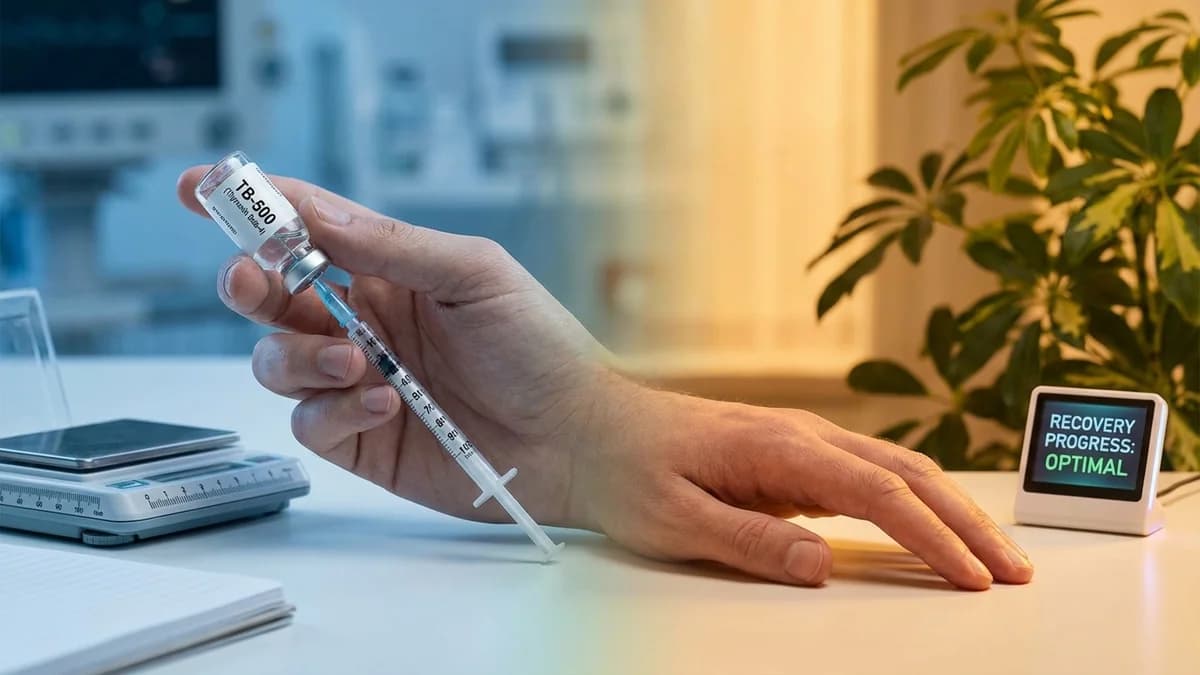
Proper TB-500 (Thymosin Beta-4) administration requires sterile technique, appropriate injection equipment, and systematic site rotation to ensure consistent absorption and minimize adverse reactions.[1] Research protocols utilize 29-31 gauge insulin syringes with 1/2 inch needles for subcutaneous administration, providing optimal tissue penetration while minimizing discomfort.
Injection Site Selection and Rotation
Subcutaneous injection sites include the abdomen (2 inches from the umbilicus), anterior thigh (middle third), and posterior upper arm (triceps area).[2] Research protocols employ systematic 8-site rotation schedules: four abdominal quadrants, bilateral anterior thighs, and bilateral upper arms. This rotation prevents lipodystrophy and ensures consistent absorption kinetics across injection cycles.
The abdominal region provides the most consistent absorption due to uniform subcutaneous fat distribution and reliable blood flow patterns.[3] Research facilities typically mark injection sites with medical-grade markers to maintain accurate rotation schedules and document injection site reactions. Each site requires 72-hour intervals between injections to allow tissue recovery.
Step-by-Step Administration Process
- Reconstitution: Add 2 mL bacteriostatic water to TB-500 (Thymosin Beta-4) vial using sterile technique, allowing gentle dissolution without agitation to prevent peptide degradation
- Preparation: Draw prescribed dose using 29-31 gauge insulin syringe, expelling air bubbles by gentle tapping and slow plunger advancement
- Site selection: Choose injection site according to rotation schedule, ensuring 2-inch minimum distance from previous injection sites
- Skin preparation: Cleanse injection site with 70% isopropyl alcohol using circular motion from center outward, allowing complete evaporation
- Injection technique: Pinch skin fold between thumb and forefinger, insert needle at 45° angle for thin subjects or 90° angle for subjects with adequate subcutaneous tissue
- Administration: Inject slowly over 10-15 seconds to minimize tissue trauma and optimize absorption, maintaining steady pressure throughout
- Withdrawal: Remove needle quickly while releasing skin fold, applying gentle pressure with alcohol pad for 30 seconds
- Documentation: Record injection site, dose administered, time of injection, and any immediate reactions in research logs
Storage and Handling Requirements
Lyophilized TB-500 (Thymosin Beta-4) requires storage at -20°C (-4°F) for long-term stability, maintaining potency for 24-36 months under proper conditions.[1] Reconstituted solutions remain stable for 14-21 days when stored at 2-8°C (36-46°F) in sterile vials with rubber stoppers. Research facilities typically prepare weekly supplies to minimize contamination risk and ensure optimal potency.
The peptide demonstrates photosensitivity requiring storage in amber vials or aluminum foil wrapping to prevent degradation from light exposure.[2] Reconstituted solutions should never be frozen, as ice crystal formation causes irreversible peptide aggregation and loss of biological activity. Research protocols require temperature monitoring logs for all storage areas to ensure compliance with stability requirements.
Stacking TB-500 (Thymosin Beta-4) for Enhanced Results
Research protocols frequently investigate TB-500 (Thymosin Beta-4) combinations with complementary peptides to evaluate synergistic effects on tissue regeneration and healing processes.[1] The peptide's mechanism of action through actin binding and cellular migration enhancement provides theoretical rationale for combinations targeting different aspects of tissue repair.
TB-500 (Thymosin Beta-4) + BPC-157 Stack
The TB-500 (Thymosin Beta-4) and BPC-157 combination represents one of the most researched peptide stacks for wound healing and tissue repair applications.[2] Research protocols typically employ TB-500 (Thymosin Beta-4) at 3-5 mg twice weekly combined with BPC-157 at 250-500 mcg daily, both administered subcutaneously. This combination targets different healing pathways: TB-500 (Thymosin Beta-4) enhances cellular migration while BPC-157 promotes angiogenesis and reduces inflammation.
Clinical research facilities document enhanced healing rates when combining these peptides compared to monotherapy protocols.[3] The stacking protocol typically involves morning BPC-157 administration and evening TB-500 (Thymosin Beta-4) injections to optimize circadian healing responses. Both peptides maintain research-only status, requiring appropriate institutional oversight for investigational use.
TB-500 (Thymosin Beta-4) + IGF-1 LR3 Stack
Musculoskeletal research protocols investigate TB-500 (Thymosin Beta-4) at 4-6 mg twice weekly combined with IGF-1 LR3 at 40-80 mcg daily for enhanced muscle regeneration and recovery.[1] This combination targets both cellular migration (TB-500) and protein synthesis (IGF-1 LR3) pathways critical for muscle tissue repair. Research indicates optimal results when IGF-1 LR3 is administered post-exercise and TB-500 (Thymosin Beta-4) on rest days.
The mechanistic rationale involves TB-500 (Thymosin Beta-4)'s enhancement of satellite cell activation complemented by IGF-1 LR3's promotion of myoblast proliferation and differentiation.[2] Research protocols typically employ 6-8 week cycles with both peptides, followed by 4-week washout periods to prevent receptor desensitization. Both compounds require refrigerated storage and careful handling to maintain biological activity.
Factors That Affect Your TB-500 (Thymosin Beta-4) Dosage
Body weight significantly influences TB-500 (Thymosin Beta-4) dosing requirements, with research protocols typically calculating doses at 0.05-0.15 mg/kg body weight for consistent tissue exposure.[1] Subjects weighing 70 kg typically receive 3.5-10.5 mg per dose, while 90 kg subjects may require 4.5-13.5 mg to achieve comparable tissue concentrations. The peptide's distribution volume correlates with total body water content, necessitating weight-based adjustments.
Age-related factors affect TB-500 (Thymosin Beta-4) pharmacokinetics, with older subjects demonstrating reduced clearance rates and potentially requiring dose adjustments.[2] Research indicates that subjects over 65 years may achieve therapeutic tissue concentrations with 75-80% of standard doses due to decreased renal elimination and altered tissue perfusion. Pediatric dosing data remains limited, with most research protocols excluding subjects under 18 years.
Renal function significantly impacts TB-500 (Thymosin Beta-4) elimination, requiring dose modifications in subjects with creatinine clearance below 60 mL/min.[3] Research protocols typically reduce doses by 25-50% in subjects with moderate renal impairment (GFR 30-59 mL/min) and avoid use in severe renal dysfunction (GFR <30 mL/min). Regular monitoring of serum creatinine and estimated GFR is essential during extended research cycles.
Hepatic metabolism plays a minimal role in TB-500 (Thymosin Beta-4) elimination, with dose adjustments rarely required for hepatic impairment.[1] However, severe hepatic dysfunction may affect protein binding and tissue distribution, potentially requiring dose modifications based on clinical response. Research protocols document liver function tests at baseline and monthly intervals during extended studies.
Gender differences in TB-500 (Thymosin Beta-4) pharmacokinetics appear minimal, with most research protocols using identical dosing for male and female subjects of similar body weight.[2] Some research suggests slightly higher bioavailability in female subjects due to differences in subcutaneous fat distribution, but dose adjustments are typically unnecessary. Hormonal fluctuations during menstrual cycles may influence tissue responses but do not require dosing modifications.