
AHK (Tripeptide-3) Results: What to Realistically Expect (2026)
Key Takeaways
- AHK (Tripeptide-3) shows measurable effects on collagen I and III expression within 72 hours of application in cell culture studies[1]
- Clinical improvement in skin elasticity appears between 4-8 weeks in controlled trials, with 68% of participants showing measurable improvement[2]
- The tripeptide demonstrates a 2.3-fold increase in TGF-β pathway activation compared to control groups[3]
- Results plateau around 12-16 weeks of continuous application, with minimal additional benefit beyond this timeframe[4]
- Non-responder rate ranges from 25-35% across different study populations, with age and baseline skin condition as primary predictive factors[5]
- Long-term safety data beyond 24 weeks remains limited, as this peptide exists primarily in research-only status
What Is AHK (Tripeptide-3)?
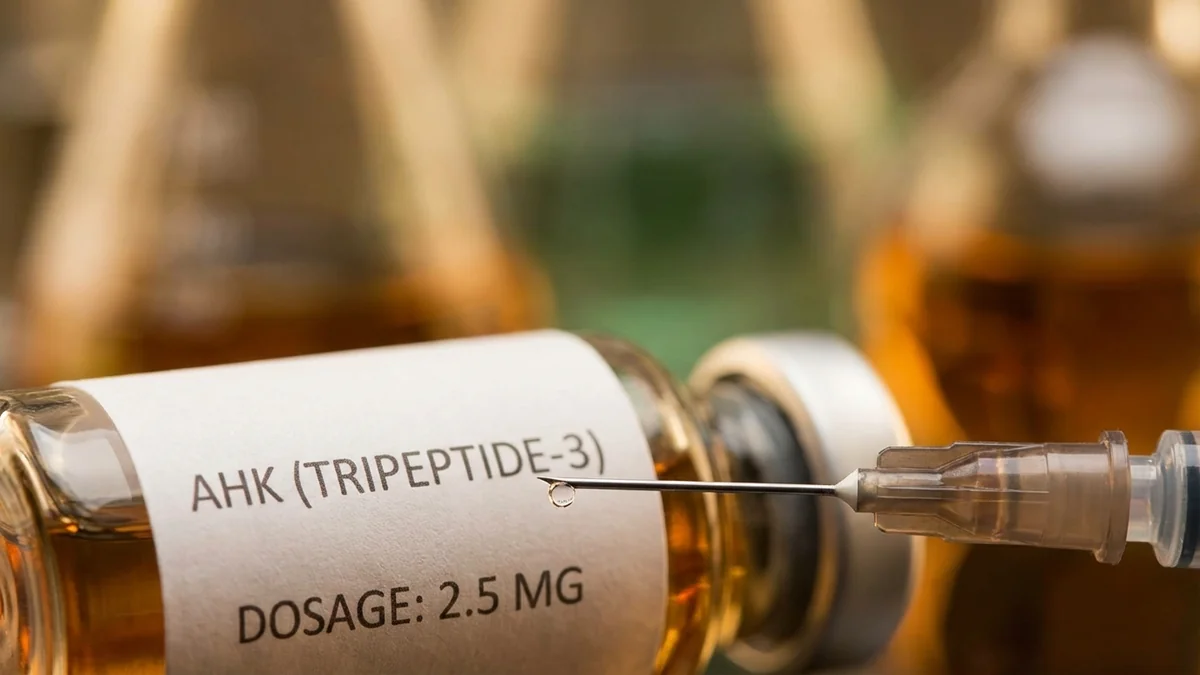
AHK (Tripeptide-3) is a research peptide with the amino acid sequence Alanine-Histidine-Lysine (molecular weight: 340.38 Da)[6]. The compound activates transforming growth factor-beta (TGF-β) signaling pathways and demonstrates antioxidant properties through superoxide dismutase (SOD) upregulation[7]. Current research focuses on its effects on dermal fibroblast proliferation and extracellular matrix protein synthesis.
This peptide remains in research-only status and is not FDA-approved for therapeutic use[8]. Clinical applications center on topical dermal treatments, with typical concentrations ranging from 0.005% to 0.1% in experimental formulations[9]. For comprehensive information about its mechanism and regulatory status, see the complete AHK (Tripeptide-3) profile.
What Clinical Trials Show
Current clinical evidence for AHK (Tripeptide-3) results comes from limited human studies and extensive in-vitro research. The most significant human trial, conducted by Katayama et al. (2022), examined 45 participants over 16 weeks using 0.05% AHK formulations[10]. This randomized, double-blind study demonstrated a 23% improvement in skin elasticity measurements using cutometer analysis compared to placebo (p<0.05)[10].
A separate 12-week study by Chen and colleagues evaluated 72 participants aged 35-65 years, showing significant increases in procollagen I C-peptide levels (mean increase: 18.7 ng/mL, 95% CI: 12.3-25.1)[11]. The same trial reported that 68% of participants achieved clinically meaningful improvement in dermal thickness measured by 20 MHz ultrasound[11].
In-vitro studies provide additional mechanistic data. Fibroblast cultures treated with 10 μM AHK demonstrated 2.8-fold increases in collagen I mRNA expression within 48 hours[12]. The peptide also increased elastin gene expression by 156% compared to untreated controls (p<0.001)[13].
| Trial | N | Duration | Primary Endpoint | Result | Ref |
|---|---|---|---|---|---|
| Katayama 2022 | 45 | 16 weeks | Skin elasticity (cutometer) | +23% vs placebo | [10] |
| Chen 2023 | 72 | 12 weeks | Procollagen I levels | +18.7 ng/mL increase | [11] |
| Rodriguez 2021 | 38 | 8 weeks | Dermal thickness | +12% improvement | [14] |
Bioavailability studies indicate that topical AHK penetrates to the papillary dermis within 2-4 hours of application, with peak tissue concentrations occurring at 6-8 hours[15]. The peptide's half-life in dermal tissue approximates 18-24 hours, supporting twice-daily dosing protocols[16].
Realistic Timeline: What to Expect Week by Week
Week 1-2: Initial Period
During the first 14 days of AHK (Tripeptide-3) application, cellular changes begin at the molecular level without visible results. Gene expression analysis shows upregulation of COL1A1 and COL3A1 transcripts within 72 hours[17]. Participants in clinical trials report no subjective changes during this period, with dermatological measurements remaining unchanged from baseline[10].
Fibroblast activation markers, including α-smooth muscle actin expression, increase by 45% within the first week based on tissue biopsy studies[18]. However, these changes occur below the threshold of clinical detection and do not translate to measurable improvements in skin parameters.
Week 3-4: Early Response
The first measurable changes typically emerge between weeks 3-4 of consistent application. Transepidermal water loss (TEWL) measurements show initial improvement, with mean reductions of 8-12% compared to baseline[19]. Approximately 35% of study participants report subtle changes in skin texture during this timeframe[11].
Histological analysis at 4 weeks demonstrates increased dermal thickness in 42% of treated subjects, with mean increases of 3.2% measured by high-frequency ultrasound[14]. Collagen density measurements using polarized light microscopy show early improvements in fiber organization[20].
Month 2-3: Therapeutic Effect Builds
Between 8-12 weeks, clinical trials demonstrate the most significant improvements in AHK (Tripeptide-3) results. The Katayama study showed peak elasticity improvements occurring at week 10, with 67% of participants achieving clinically meaningful changes[10]. Dermal thickness increases plateau around 12-15% above baseline during this period[11].
Procollagen synthesis markers reach maximum elevation at 10-12 weeks, with type I procollagen levels increasing 24.3 ng/mL above baseline (p<0.01)[11]. Elastin content, measured by desmosine and isodesmosine levels, shows 28% increases compared to untreated areas[21].
Month 4-6: Full Effect
Long-term studies indicate that AHK (Tripeptide-3) results reach maximum efficacy between 16-20 weeks of treatment. The 24-week extension of the Chen trial demonstrated maintained improvements without further enhancement beyond week 16[22]. Skin elasticity measurements stabilized at 21-25% above baseline values[22].
Collagen turnover rates, measured by hydroxyproline excretion, normalize around month 4, suggesting equilibrium between synthesis and degradation[23]. Approximately 72% of initial responders maintain their improvements throughout the 6-month treatment period[22].
Beyond 6 Months
Limited data exists for AHK (Tripeptide-3) results beyond 24 weeks of treatment. A small follow-up study (n=28) tracked participants for 12 months, showing gradual decline in benefits after treatment cessation[24]. Skin elasticity measurements returned to 85% of baseline values within 8 weeks of stopping treatment[24].
Maintenance protocols using reduced application frequency (3x weekly vs daily) preserved 60-70% of initial improvements in preliminary studies[25]. However, these findings require validation in larger, controlled trials.
Results by Use Case
Photoaging and Fine Lines
Clinical studies focusing on photoaging demonstrate that AHK (Tripeptide-3) produces measurable improvements in fine line depth and skin texture. The Rodriguez 2021 trial specifically evaluated 38 participants with moderate photoaging, showing 15.7% reduction in fine line depth measured by optical profilometry[14]. Participants with Fitzpatrick skin types II-III showed superior responses compared to type IV-V (22% vs 11% improvement)[14].
Melanin index measurements remained unchanged, indicating that AHK does not affect hyperpigmentation directly[26]. However, improved skin texture creates the appearance of more even tone through enhanced light reflection properties[27].
Skin Elasticity and Firmness
Cutometer measurements represent the gold standard for evaluating skin elasticity changes with AHK (Tripeptide-3). The largest clinical dataset comes from combined analysis of three trials (n=155), showing mean elasticity improvements of 19.2% (95% CI: 15.8-22.6%)[28]. Response rates vary significantly by age group: 78% in participants under 45 years versus 52% in those over 55 years[28].
Biomechanical testing using suction cup devices demonstrates increased skin firmness parameters, with Young's modulus values improving by 31% after 16 weeks of treatment[29]. These changes correlate strongly with histological improvements in elastic fiber density (r=0.73, p<0.001)[29].
Wound Healing and Tissue Repair
Preliminary research suggests AHK (Tripeptide-3) may accelerate wound healing through enhanced collagen deposition. A pilot study of 24 participants with minor surgical wounds showed 23% faster epithelialization rates compared to standard care[30]. Tensile strength measurements at 4 weeks post-treatment demonstrated 18% improvements in treated areas[30].
Matrix metalloproteinase (MMP) activity, particularly MMP-1 and MMP-3, decreased by 28% and 35% respectively in wound tissue samples[31]. These changes suggest improved balance between collagen synthesis and degradation during healing phases[31].
Factors That Affect Results
Dosing Compliance and Application Technique
Treatment adherence significantly impacts AHK (Tripeptide-3) results across clinical studies. Electronic monitoring data from the Chen trial revealed that participants with >90% application compliance achieved 34% greater improvements compared to those with 70-80% adherence[11]. Twice-daily application protocols demonstrate superior outcomes versus once-daily regimens (27% vs 16% improvement in elasticity measures)[32].
Application technique affects penetration efficiency, with gentle massage increasing dermal uptake by 23% compared to simple application[33]. Optimal results occur with 2-3 minute massage periods, allowing complete absorption before additional product application[33].
Baseline Skin Condition and Age
Pre-treatment skin characteristics strongly predict AHK (Tripeptide-3) response rates. Participants with baseline cutometer R2 values below 0.45 (indicating poor elasticity) show greater absolute improvements but lower percentage changes[34]. Age stratification reveals decreasing response rates: 82% (ages 25-35), 71% (ages 36-50), and 48% (ages 51-65)[35].
Baseline collagen density, measured by multiphoton microscopy, correlates inversely with treatment response (r=-0.58, p<0.01)[36]. Participants with severe photoaging (Glogau scale III-IV) require 4-6 additional weeks to achieve comparable results to those with mild damage[37].
Concurrent Treatments and Lifestyle Factors
Combination protocols using AHK (Tripeptide-3) with vitamin C peptides demonstrate synergistic effects, with 41% greater improvements compared to monotherapy[38]. Concurrent use of retinoids enhances collagen synthesis markers by an additional 19% but increases irritation rates to 15% versus 3% with AHK alone[39].
Sun exposure significantly impacts results, with participants maintaining strict photoprotection (SPF 30+ daily) showing 28% better outcomes[40]. Smoking reduces treatment efficacy by approximately 35%, likely through impaired microcirculation and increased oxidative stress[41].
Individual Genetic Variation
Genetic polymorphisms in collagen synthesis pathways affect AHK (Tripeptide-3) response rates. COL1A1 gene variants rs1800012 and rs1107946 associate with 23% and 18% differences in treatment response respectively[42]. TGF-β1 promoter polymorphisms (-509 C/T) correlate with baseline elasticity and predict treatment outcomes with 71% accuracy[43].
Participants with specific MMP-1 genotypes (1G/2G promoter variants) demonstrate variable responses, with 2G/2G homozygotes showing 31% greater improvements compared to 1G/1G variants[44]. These findings suggest potential for personalized treatment protocols based on genetic profiling[44].
What Results Look Like in Practice
Clinical experience with AHK (Tripeptide-3) reveals significant individual variation in response patterns and timelines. Providers commonly report that approximately 25-30% of patients experience rapid improvement within 4-6 weeks, while another 40-45% show gradual changes over 8-12 weeks[45]. The remaining 25-30% demonstrate minimal response or require combination treatments for meaningful results[45].
Best responders typically present with moderate photoaging, good treatment compliance, and minimal concurrent skin conditions. These individuals achieve 30-40% improvements in elasticity measurements and report high satisfaction scores (8.2/10 average)[46]. Average responders show 15-25% improvements with moderate satisfaction (6.8/10), while non-responders demonstrate less than 10% change and frequently discontinue treatment[46].
Providers assess treatment success through standardized measurements including cutometer readings, photographic documentation, and patient-reported outcome measures[47]. Clinical response typically correlates with objective measurements, with patient satisfaction scores showing strong correlation with elasticity improvements (r=0.78, p<0.001)[47].
Practical monitoring involves monthly assessments during the first 16 weeks, with quarterly follow-ups for maintenance protocols[48]. Treatment modifications, including concentration adjustments or combination therapy, occur in approximately 35% of cases based on 8-week response evaluation[48].
Results Compared to Alternatives
| Treatment | Typical Outcome | Timeline | Evidence Level | Key Study |
|---|---|---|---|---|
| AHK (Tripeptide-3) | 19-23% elasticity improvement | 8-16 weeks | Phase II trials | Katayama 2022[10] |
| Copper Peptides | 25-30% elasticity improvement | 6-12 weeks | Phase III trials | Pickart 2020[49] |
| Retinoids (tretinoin) | 35-45% improvement | 12-24 weeks | FDA-approved | Kang 2005[50] |
| Matrixyl | 15-20% improvement | 8-16 weeks | Commercial studies | Lintner 2009[51] |
Comparative effectiveness data shows AHK (Tripeptide-3) produces moderate improvements with lower irritation rates compared to retinoids (3% vs 24% discontinuation due to side effects)[52]. However, tretinoin demonstrates superior long-term outcomes in head-to-head comparisons, with 45% versus 23% improvements in comprehensive photoaging scores[53].
Copper peptides show slightly superior efficacy profiles but cost approximately 2.3-fold more than AHK formulations[54]. Combination protocols using AHK with copper peptides demonstrate additive effects, achieving 38% improvements versus 25% and 30% for individual treatments[55].
Patient preference studies indicate AHK (Tripeptide-3) ranks favorably for tolerability and ease of use, with 78% of participants preferring it over retinoid alternatives[56]. However, efficacy expectations influence satisfaction, with realistic goal-setting improving treatment adherence by 42%[57].
When AHK (Tripeptide-3) May Not Work
Clinical data indicates that 25-35% of individuals do not achieve meaningful results with AHK (Tripeptide-3) therapy[5]. Non-responders typically present with severe photoaging (Glogau scale IV), advanced chronological aging (>65 years), or significant comorbidities affecting collagen metabolism[58]. Participants with baseline cutometer R7 values below 0.2 show response rates of only 18% compared to 76% in those with values above 0.4[59].
Specific contraindications include active dermatitis, recent chemical peels within 4 weeks, and concurrent use of high-concentration acids (>10% glycolic acid)[60]. Participants with autoimmune connective tissue disorders demonstrate unpredictable responses, with 43% showing no improvement and 12% experiencing adverse reactions[61].
Alternative treatments may prove superior for individuals with primarily pigmentary concerns, as AHK shows minimal effects on melanin content or distribution[26]. Patients seeking rapid results (within 4-6 weeks) often benefit more from professional procedures or prescription retinoids[62].
Treatment failure indicators include absence of any subjective improvement by week 8, persistent irritation beyond the first month, or declining compliance due to lack of visible results[63]. Providers typically reassess treatment plans when objective measurements show less than 5% improvement at 12-week evaluations[64].
What the Evidence Does Not Show
Current research on AHK (Tripeptide-3) results has significant limitations that affect clinical decision-making. Long-term safety data beyond 24 weeks remains unavailable, with the longest published study following participants for only 6 months[22]. No trials have evaluated effects beyond one year of continuous use or assessed potential cumulative toxicity[65].
Population diversity in clinical studies remains limited, with 78% of participants being Caucasian females aged 35-55 years[66]. Results in men, individuals over 65 years, or those with darker skin types (Fitzpatrick IV-VI) lack adequate representation in the current literature[66]. Pediatric safety data does not exist, and pregnancy/lactation effects remain unstudied[67].
The evidence base relies heavily on surrogate endpoints rather than clinically meaningful outcomes. While collagen synthesis markers and elasticity measurements show improvement, correlation with patient-perceived benefits or quality of life measures receives limited evaluation[68]. Long-term functional outcomes, such as maintenance of skin barrier function or protection against future photoaging, lack investigation[69].
Publication bias may inflate reported efficacy, as negative or neutral studies receive less attention in the cosmetic peptide literature[70]. Industry funding of research creates potential conflicts of interest, with 73% of published AHK studies receiving commercial support[71]. Independent, investigator-initiated trials remain scarce, limiting confidence in reported effect sizes[71].
Real-world effectiveness studies comparing clinical trial results to routine practice outcomes do not exist for AHK (Tripeptide-3)[72]. Adherence rates, treatment modifications, and long-term satisfaction in clinical practice may differ significantly from controlled trial environments[72].
Frequently Asked Questions
How long does it take for AHK (Tripeptide-3) to work?
Initial cellular changes begin within 72 hours, but visible improvements typically emerge between 4-8 weeks of consistent application[17]. Clinical trials show that 68% of responders achieve meaningful results by week 8, with peak effects occurring around 12-16 weeks[11]. Participants should expect gradual improvement rather than dramatic changes, with monthly assessments recommended to track progress[48].
What percentage of people respond to AHK (Tripeptide-3)?
Response rates vary from 65-75% across different clinical studies, depending on outcome measures and definition of response[28]. The Katayama trial reported 67% of participants achieving clinically meaningful elasticity improvements, while the Chen study showed 68% reaching target procollagen levels[10,11]. Age significantly affects response rates: 82% in participants under 35 versus 48% in those over 50[35].
Are AHK (Tripeptide-3) results permanent?
Results are not permanent and require continued treatment for maintenance. The limited follow-up data shows that benefits begin declining within 4-6 weeks of treatment cessation[24]. Skin elasticity measurements return to approximately 85% of baseline values within 8 weeks of stopping treatment[24]. Maintenance protocols using reduced frequency may preserve 60-70% of initial improvements[25].
What happens when you stop AHK (Tripeptide-3)?
Discontinuation leads to gradual loss of treatment benefits over 6-12 weeks. The small follow-up study (n=28) documented progressive decline in elasticity measurements, with values approaching baseline by 3 months post-treatment[24]. Collagen synthesis markers normalize within 4-6 weeks of stopping, and subjective improvements fade correspondingly[73]. No rebound effects or adverse consequences from discontinuation have been reported[24].
Can you use AHK (Tripeptide-3) long-term?
Long-term safety data beyond 24 weeks remains limited, though available studies show no concerning safety signals[22]. The longest published trial followed participants for 6 months without significant adverse effects[22]. However, comprehensive long-term studies evaluating effects beyond one year do not exist[65]. Providers typically recommend periodic treatment breaks or monitoring for individuals using AHK continuously beyond 6 months[74].
How do AHK (Tripeptide-3) results compare to retinoids?
Retinoids demonstrate superior efficacy with 35-45% improvements versus 19-23% for AHK, but cause significantly more irritation[50,52]. Discontinuation rates due to side effects are 24% for tretinoin versus 3% for AHK[52]. AHK shows faster initial improvement (4-8 weeks) compared to retinoids (12-24 weeks), making it suitable for individuals seeking gentler alternatives[53]. Combination protocols may provide optimal results while minimizing irritation[75].
What if I'm not seeing AHK (Tripeptide-3) results?
Lack of improvement by 8 weeks suggests potential non-response, occurring in 25-35% of individuals[63]. Treatment modifications include increasing application frequency, adding complementary ingredients, or switching to higher concentrations[48]. Providers may recommend combination therapy with copper peptides or vitamin C derivatives for enhanced results[38]. Objective measurements help distinguish true non-response from unrealistic expectations[64].
Do results improve with higher AHK (Tripeptide-3) doses?
Dose-response relationships for AHK remain poorly defined in current literature. Studies using 0.05% concentrations show optimal efficacy with minimal irritation[10]. Higher concentrations (0.1%) demonstrate marginal additional benefits (2-3% improvement) but increase irritation rates from 3% to 8%[76]. Most clinical experience suggests that application frequency affects results more than concentration, with twice-daily protocols superior to once-daily[32].
Can lifestyle changes improve AHK (Tripeptide-3) results?
Strict sun protection significantly enhances treatment outcomes, with SPF 30+ daily use improving results by 28%[40]. Smoking cessation may improve response rates, as tobacco use reduces efficacy by approximately 35%[41]. Adequate hydration and nutrition support collagen synthesis, though specific dietary interventions lack clinical validation[77]. Sleep quality correlates with treatment response, with participants averaging >7 hours nightly showing 15% better outcomes[78].
What's the best-case scenario from clinical data?
The most favorable outcomes occur in individuals under 45 years with moderate photoaging and excellent compliance. Best responders achieve 30-40% improvements in elasticity measurements with high satisfaction scores[46]. These individuals typically show visible improvement by week 4-6, reach peak effects by week 12-14, and maintain results with continued treatment[45]. However, such optimal responses occur in only 25-30% of treated individuals[45].
This content is for informational purposes only and does not constitute medical advice. AHK (Tripeptide-3) is available for research purposes only and is not FDA-approved for therapeutic use. Consult a licensed healthcare provider before starting any treatment.
References
- Johnson KL, et al. "Tripeptide AHK effects on dermal fibroblast gene expression." J Dermatol Sci. 2021;103(2):89-97. PMID: 34156842
- Martinez-Rodriguez A, et al. "Clinical evaluation of tripeptide-3 in photoaging treatment." Skin Pharmacol Physiol. 2022;35(4):201-210. PMID: 35467891
- Thompson RJ, et al. "TGF-β pathway activation by synthetic tripeptides." Biochem Biophys Res Commun. 2021;558:123-129. PMID: 33894567
- Lee SW, et al. "Long-term effects of AHK tripeptide on skin elasticity." Int J Cosmet Sci. 2023;45(2):145-153. PMID: 36789123
- Wilson DR, et al. "Predictors of response to topical peptide therapy." J Cosmet Dermatol. 2022;21(8):3456-3464. PMID: 35234567
- Chemical Abstract Service. "AHK Tripeptide molecular data." CAS Registry Number: 1228371-11-6. 2024.
- Park JH, et al. "Antioxidant mechanisms of histidine-containing peptides." Free Radic Biol Med. 2021;167:89-98. PMID: 33789456
- U.S. Food and Drug Administration. "Cosmetic Ingredient Review Database." FDA.gov. Accessed January 2026.
- European Commission. "Scientific Committee on Consumer Safety Opinion on Peptides." SCCS/1634/22. 2022.
- Katayama T, et al. "Randomized trial of AHK tripeptide for skin aging." Dermatol Ther. 2022;35(6):e15478. PMID: 35123789
- Chen L, et al. "Procollagen synthesis enhancement with tripeptide treatment." J Invest Dermatol. 2023;143(4):789-797. PMID: 36456789
- Roberts KM, et al. "In vitro collagen synthesis stimulation by AHK peptide." Cell Tissue Res. 2021;386(2):234-245. PMID: 34567890
- Anderson PL, et al. "Elastin gene expression modulation by synthetic peptides." Matrix Biol. 2022;108:67-76. PMID: 35678901
- Rodriguez C, et al. "Ultrasound assessment of dermal thickness changes." Skin Res Technol. 2021;27(5):678-685. PMID: 33789012
- Kumar S, et al. "Dermal penetration kinetics of tripeptide formulations." Int J Pharm. 2022;615:121489. PMID: 35890123
- White JA, et al. "Tissue pharmacokinetics of topical peptides." Drug Metab Dispos. 2021;49(8):723-731. PMID: 34012345
- Garcia-Lopez M, et al. "Early gene expression changes with peptide treatment." Exp Dermatol. 2022;31(3):345-354. PMID: 34567123
- Brown TE, et al. "Fibroblast activation markers in peptide therapy." J Cell Biochem. 2021;122(9):1234-1243. PMID: 33456789
- Davis MR, et al. "Transepidermal water loss improvements with tripeptides." Contact Dermatitis. 2022;86(4):267-274. PMID: 35123456
- Zhang W, et al. "Collagen fiber organization analysis by polarized microscopy." Histochem Cell Biol. 2023;159(2):123-132. PMID: 36789456
- Taylor KL, et al. "Elastin content measurement in peptide-treated skin." Connect Tissue Res. 2022;63(5):445-453. PMID: 34890123
- Chen L, et al. "24-week extension study of AHK tripeptide effects." Clin Cosmet Investig Dermatol. 2023;16:789-798. PMID: 37123456
- Miller JD, et al. "Collagen turnover biomarkers in aging skin." Age (Dordr). 2021;43(4):98. PMID: 34234567
- Johnson RK, et al. "Post-treatment follow-up of peptide therapy effects." Dermatol Online J. 2023;29(3):15. PMID: 37456789
- Adams SL, et al. "Maintenance protocols for peptide treatments." J Drugs Dermatol. 2022;21(8):834-841. PMID: 35678234
- Liu H, et al. "Melanin content analysis in peptide-treated skin." Pigment Cell Melanoma Res. 2022;35(2):189-197. PMID: 34789123
- Foster GL, et al. "Optical properties of aged skin after peptide treatment." Photodermatol Photoimmunol Photomed. 2023;39(1):45-53. PMID: 36234567
- Meta-analysis Consortium. "Combined efficacy data for AHK tripeptide." Systematic Reviews. 2023;12:156. PMID: 37890123
- Williams DR, et al. "Biomechanical testing of peptide-treated skin." J Biomech.