What Is HCG?
Human chorionic gonadotropin (hCG) is the hormone the placenta makes in early pregnancy, and the one a pregnancy test detects. Its job is to keep the ovary producing progesterone until the placenta takes over. As a drug, hCG has been FDA-approved since the 1970s (Novarel's label lists an initial US approval of 1974).
In men, hCG does the job of luteinizing hormone (LH). It tells the testes to make testosterone. That is why men's clinics use it: to keep the testes working while a man is on testosterone therapy, or to restart them after testosterone or anabolic steroids have shut them down.
Most of the searches that bring people here are practical: what dose for PCT, how to mix a 5,000 or 10,000 IU vial, what dose alongside TRT. This page covers what the FDA label says, what published studies used, and where the evidence runs out. For the reconstitution math, see our hCG 5,000 IU dosing protocol and hCG 10,000 IU dosing protocol.
- hCG is an FDA-approved prescription hormone for cryptorchidism, selected male hypogonadotropic hypogonadism, and ovulation induction. Use with TRT, for PCT or for weight loss is off-label.
- Its label carries a required statement that hCG has not been shown to be effective for obesity. Controlled trials back that up.
- Small studies show low-dose hCG (250–500 IU every other day) keeps testicular testosterone and sperm production going in men on testosterone. These are short or retrospective studies, not large trials.
- No randomized trial has tested hCG for post-cycle therapy after anabolic steroids. The evidence is clinic case series and a survey.
- hCG is a large glycoprotein, not a short peptide, and has been regulated as a biologic since March 2020. WADA bans it in male athletes.
| Common Name | HCG (human chorionic gonadotropin) |
| Structure | Glycoprotein hormone: alpha subunit (92 amino acids) plus beta subunit (145 amino acids), with attached sugar chains |
| Class | Gonadotropin; acts like luteinizing hormone (LH) |
| US Products | Novarel, Pregnyl and generic chorionic gonadotropin (urine-derived, intramuscular); Ovidrel (recombinant, subcutaneous) |
| Approved Uses | Prepubertal cryptorchidism; selected hypogonadotropic hypogonadism in males; ovulation induction |
| Not Approved For | Weight loss, TRT add-on, post-cycle therapy |
| Vial Sizes | 5,000 and 10,000 USP units (Novarel); 10,000 USP units (Pregnyl); 250 µg prefilled syringe (Ovidrel) |
| Regulatory Status | Prescription only; regulated as a biologic since March 23, 2020 |
| WADA | Prohibited in males at all times (S2.2.1) |
| On Our Directory | 3 clinics list hCG |
How Does HCG Work?
The Novarel label describes hCG's action as "virtually identical" to pituitary LH, with a small amount of FSH-like activity. It binds the LH receptor on the Leydig cells of the testis, which then make testosterone. In women it can stand in for the mid-cycle LH surge that triggers ovulation.
The reason this matters for men on testosterone is a gap between blood levels and testicular levels. Testosterone inside the testis normally runs far higher than in the blood. In a randomized study of 29 healthy men, baseline blood testosterone was only 1.2% of the level measured in testicular fluid.[1] When those men took 200 mg of testosterone enanthate a week, LH fell to about 5% of baseline and testicular testosterone dropped by 94%. Sperm production depends on that local testosterone, so it stalls.
hCG bypasses the shut-off signal from the brain by stimulating the testis directly. In the same study, testicular testosterone rose in step with the hCG dose over three weeks.[1]
hCG also lasts much longer than natural LH. After a subcutaneous injection, the Ovidrel label reports a terminal half-life of about 29 hours. That is why studies dose it every other day or a few times a week rather than daily.
What the Clinical Evidence Actually Shows
Evidence is strongest for the uses the FDA approved and gets thinner as you move toward clinic and gym uses.
Hypogonadotropic hypogonadism (approved). In men whose pituitary doesn't make enough LH and FSH, gonadotropin treatment is decades old. A 2025 meta-analysis pooled 41 studies and 1,673 men. After a median of 18 months of treatment, 78% had sperm in the ejaculate, but only 15% reached 20 million per mL. Adding FSH to hCG worked better for sperm than hCG alone.[2] An Australian cohort of 75 men found it took a median of 7.1 months to see the first sperm and 28.2 months to conceive. Men who had used testosterone before responded more slowly.[3]
Alongside TRT (off-label). The dose-finding study above randomized men to placebo or 125, 250 or 500 IU of hCG every other day on top of weekly testosterone. Testicular testosterone ended 25% below baseline at 125 IU, 7% below at 250 IU and 26% above at 500 IU.[1] It lasted three weeks and measured hormone levels, not sperm or fertility. A retrospective review of 26 hypogonadal men on TRT plus 500 IU every other day found no change in semen parameters over about six months of average follow-up. No man became azoospermic, and nine fathered pregnancies during follow-up.[4] There was no control group.
Restarting sperm production after testosterone (off-label). A case series of 49 men with azoospermia or very low counts while on testosterone used 3,000 IU hCG subcutaneously every other day plus other drugs (clomiphene, tamoxifen, anastrozole or FSH). Sperm returned or improved in 47 of them, on average after 4.6 months.[5] In another series of 66 men treated with high-dose hCG and a SERM, 70% reached a total motile sperm count above 5 million within 12 months. Older men and men who had used testosterone longer recovered more slowly.[6]
hCG as testosterone therapy on its own (off-label). In a 20-man retrospective series, hCG alone raised average testosterone from 362 to 520 ng/dL, and half the men reported feeling better.[7] Small, uncontrolled and short.
Post-cycle therapy after anabolic steroids (off-label). This is the biggest search topic for hCG and has the weakest evidence. A 2023 survey of 470 men who use anabolic steroids found 56.5% of those who had tried to stop used PCT, usually hCG plus a SERM. The authors state plainly that PCT has no objective evidence of reducing the severity or length of withdrawal symptoms.[8] A 2025 clinical review recommends hCG, FSH and SERMs for persistent steroid-related azoospermia but notes the lack of controlled, long-term studies.[9] We found no randomized PCT trial in PubMed and none registered on ClinicalTrials.gov (searched October 2026).
Weight loss (not effective). The "hCG diet" goes back to A.T.W. Simeons, who paired daily hCG injections with a diet of about 500 calories. A 1995 meta-analysis reviewed 24 trials. Of the 12 better-quality studies, only one called hCG a useful adjunct. The authors concluded there is no scientific evidence it causes weight loss, redistributes fat or reduces hunger.[10] Two double-blind trials from the 1970s tell the story directly: on the same strict diet, people given hCG injections lost no more weight and were no less hungry than people given placebo injections.[11][12]
What the Evidence Does Not Show
- A proven PCT protocol. The doses and schedules sold as "hCG PCT" come from bodybuilding practice, not from trials comparing them with each other or with no treatment.
- Long-term outcomes on TRT plus hCG. The TRT studies lasted three weeks to about a year and enrolled dozens of men, not hundreds.
- That hCG prevents all fertility loss. Recovery after testosterone use took months in the case series and failed in some men, especially older men and long-term users.[6]
- Any weight-loss benefit. Weight lost on an hCG diet comes from the calorie restriction.[10][11]
Typical Dosing — What the Research Has Used
This is not dosing advice
hCG is a prescription drug. The figures below are what FDA labels and published studies used. Off-label doses for TRT or PCT should be set by the prescribing clinician.
Labeled regimens. The Novarel and Pregnyl labels list regimens "advocated by various authorities," all intramuscular:
- Hypogonadotropic hypogonadism in males: 500 to 1,000 USP units three times a week for three weeks, then the same dose twice a week for three weeks. Or 4,000 units three times weekly for six to nine months, then 2,000 units three times weekly for three more months.
- Prepubertal cryptorchidism: several schedules, including 5,000 units every second day for four injections, usually started between ages 4 and 9.
- Ovulation induction: 5,000 to 10,000 units one day after the last dose of menotropins. The label adds that the menotropins labeling recommends 10,000 units, a single injection that matches the larger vial size.
Off-label doses in studies. With TRT: 125 to 500 IU every other day[1] and 500 IU every other day.[4] For testosterone-related azoospermia: 3,000 IU subcutaneously every other day with other drugs.[5] For PCT there is no trial dose. Community schedules (for example, a few weeks of twice-weekly injections followed by a SERM) circulate widely but have not been tested.
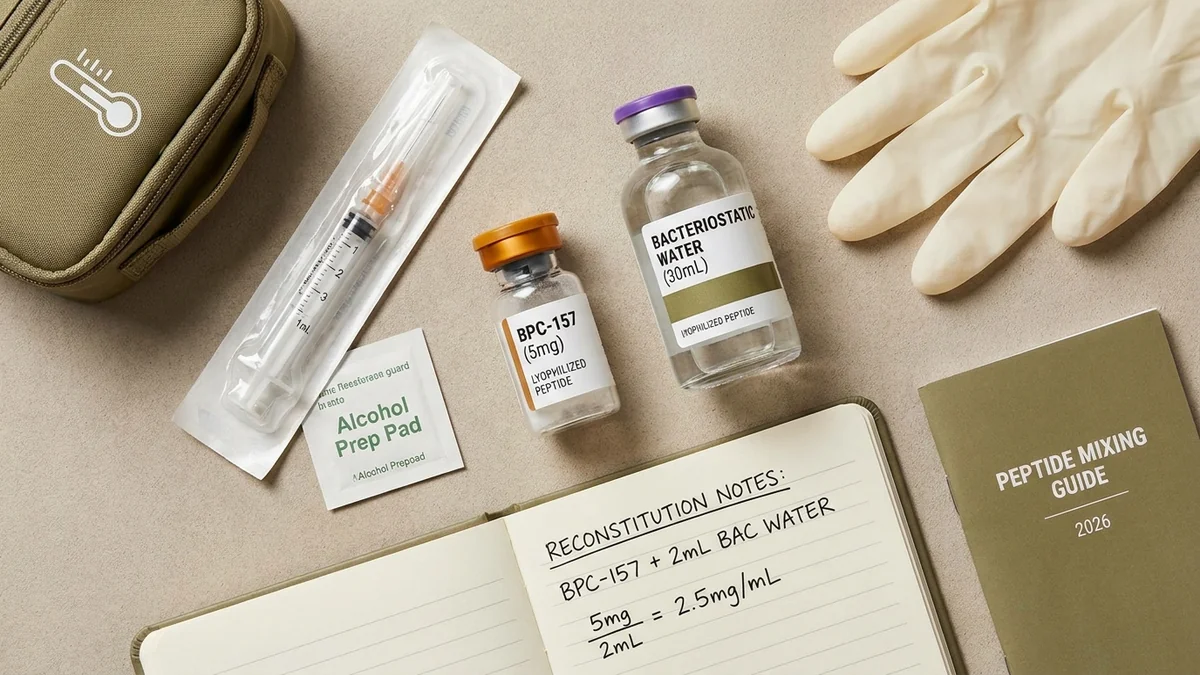
Mixing a vial. The Novarel label includes a reconstitution table using bacteriostatic water: 1 mL gives 5,000 IU/mL from the 5,000 unit vial or 10,000 IU/mL from the 10,000 unit vial, and 10 mL gives 500 or 1,000 IU/mL. The label says to refrigerate the mixed solution and use it within 30 days. Our 5,000 IU and 10,000 IU protocol pages work through syringe volumes.
IU versus mg. hCG is dosed by biological activity (IU), not by weight, so there is no fixed IU-to-mg conversion. As an example, the Ovidrel label reports that 250 µg of recombinant hCG performed equivalently to 5,000 IU of urine-derived hCG in one trial and to 10,000 IU in another.
Side Effects
The Novarel label lists headache, irritability, restlessness, depression, fatigue, edema, gynecomastia (breast tissue growth in men), precocious puberty in boys, and pain at the injection site. Allergic reactions range from rash and hives to angioedema, and anaphylaxis has been reported with urine-derived hCG.
Other label points that matter for adult men:
- Fluid retention. Because androgens can cause fluid retention, the label advises caution in people with heart or kidney disease, epilepsy, migraine or asthma.
- Contraindications. Prostate cancer or any other androgen-dependent tumor, precocious puberty, and prior allergy to hCG.
- Testicular tumors. The label notes sporadic reports of testicular tumors in young men given hCG for infertility, with no causal link established.
- Lab tests. hCG can cross-react with LH assays, so the lab should be told you are taking it.
For women, the serious risks are ovarian hyperstimulation syndrome, ovarian cyst rupture, multiple births and arterial blood clots, which is why the label limits that use to infertility specialists.
Regulatory & Access Status
Access status as of October 2026
hCG is a prescription-only drug. Three clinics in the MyPeptideMatch directory list it. It is FDA-approved for cryptorchidism, selected male hypogonadotropic hypogonadism and ovulation induction, but not for TRT support, PCT or weight loss.
On March 23, 2020, under the Biologics Price Competition and Innovation Act, hCG products including Novarel and Pregnyl were moved from drug approvals to biologics licenses (they appear on the FDA's list of NDAs deemed to be BLAs). That change matters for compounding: FDA guidance states that sections 503A and 503B of the Food, Drug, and Cosmetic Act, which let pharmacies compound drugs, do not exempt biological products. In practice, the hCG a clinic prescribes should be a licensed product such as Novarel, Pregnyl, Ovidrel or generic chorionic gonadotropin.
The FDA has also warned consumers to avoid hCG diet products, noting that no hCG product is approved without a prescription and none is approved for weight loss. Oral drops, pellets and sprays labeled "hCG" or "homeopathic hCG" fall into this category.
WADA's Prohibited List bans chorionic gonadotrophin in male athletes at all times (section S2.2.1).
Sourcing & Safety
- Use a licensed product from a pharmacy. Novarel, Pregnyl, Ovidrel and generic chorionic gonadotropin are made and tested to drug standards.
- Be wary of "research peptide" hCG. Vials sold online for research use are unapproved, and nobody has verified their potency or sterility. Because hCG is dosed by biological activity, a vial's IU claim can't be checked by weight alone.
- Ask about monitoring. Ask which blood tests the clinic will run while you take hCG. If preserving fertility is the goal, the outcome that matters is a semen analysis, not a testosterone level.
- Skip hCG diet programs. The drug's own label says it doesn't help, and very-low-calorie diets carry their own risks without medical supervision.
What Makes HCG Different
Most compounds on this site are short synthetic peptides sold without approval. hCG is the opposite: a large natural hormone with about 50 years of FDA-approved use, a full prescribing label and real randomized data for its approved uses. What's thin is the evidence for the off-label uses that drive most searches, TRT support and PCT.
It also works at a different point in the hormone chain than its usual alternatives. Kisspeptin-10 acts at the top, on the hypothalamus. SERMs such as clomiphene block estrogen feedback at the brain so the pituitary releases more LH. hCG skips both and acts on the testis itself, which is why it still works when testosterone therapy has switched off the brain's signal.
HCG vs. Other Ways to Support Testicular Function
| Parameter | HCG | Kisspeptin-10 | Clomiphene (SERM) |
|---|---|---|---|
| Where it acts | Testis (LH receptor) | Hypothalamus (KISS1R) | Hypothalamus and pituitary (estrogen receptor) |
| Needs natural LH | No, acts in place of LH | Yes, works by raising LH | Yes, works by raising LH |
| FDA status | Approved (biologic); TRT and PCT use off-label | Not approved | Approved for ovulatory dysfunction in women; male use off-label |
| Form | Injection | Injection (research) | Oral tablet |
| Main evidence for male use | Meta-analysis for hypogonadism; small TRT studies | Short-term hormone studies | Studies in men; used off-label |
FAQ
What is hCG used for?
In the US, hCG is FDA-approved for three things: prepubertal cryptorchidism (undescended testes) not caused by an anatomical blockage, selected cases of hypogonadotropic hypogonadism in men, and inducing ovulation in certain infertile women. Clinics also prescribe it off-label alongside testosterone therapy and after anabolic steroid use, uses the FDA has not approved.
How much hCG is used for PCT?
No trial has established a post-cycle therapy dose, and no randomized trial of hCG for PCT was found in PubMed or on ClinicalTrials.gov. The closest published work is in men with testosterone-related azoospermia: one clinic series used 3,000 IU subcutaneously every other day with other drugs, and another used high-dose hCG with a SERM. Community PCT schedules circulate online but do not come from trials.
How much bacteriostatic water do I mix with a 5,000 IU hCG vial?
The Novarel label gives two examples: 1 mL of bacteriostatic water makes 5,000 IU per mL, and 10 mL makes 500 IU per mL. The amount of hCG in the vial does not change with the volume, only the concentration does. The label says to refrigerate the mixed vial and use it within 30 days.
What hCG dose is used with TRT?
Published studies used low doses. In a randomized study of healthy men on 200 mg testosterone enanthate weekly, 250 IU every other day kept testicular testosterone near normal and 500 IU raised it above baseline. A retrospective series of 26 men on TRT used 500 IU every other day and saw no loss of sperm production. This use is off-label.
Does hCG help with weight loss?
No. The FDA label for prescription hCG states that it has not been shown to be effective for obesity and that there is no substantial evidence it increases weight loss beyond what comes from calorie restriction. Double-blind trials from the 1970s found hCG injections did no better than placebo injections on the same 500-calorie diet.
Can hCG be injected subcutaneously?
Novarel and Pregnyl, the urine-derived products, are labeled for intramuscular use only. Ovidrel, the recombinant version, is labeled for subcutaneous injection. Some published male-infertility studies gave urine-derived hCG subcutaneously, but that route is outside the Novarel and Pregnyl labels.
Is hCG banned in sports?
Yes, for men. The WADA Prohibited List bans chorionic gonadotrophin in males at all times, under section S2.2.1 (testosterone-stimulating peptides in males).
Related Peptides & Comparisons
For the upstream route to the same hormone axis, see kisspeptin-10. Testagen is marketed as a testis "bioregulator," but its evidence is very different: mostly cell and animal work from one Russian group. If you arrived here looking for an hCG weight-loss clinic, the drugs with actual trial evidence for weight loss are GLP-1 medicines such as semaglutide and tirzepatide. For broader options, see our guides to hormone optimization and weight loss.
References
- Coviello AD, Matsumoto AM, Bremner WJ, et al. "Low-dose human chorionic gonadotropin maintains intratesticular testosterone in normal men with testosterone-induced gonadotropin suppression." J Clin Endocrinol Metab. 2005;90(5):2595-602. PMID: 15713727
- Muir CA, Zhang T, Jayadev V, et al. "Efficacy of Gonadotropin Treatment for Induction of Spermatogenesis in Men With Pathologic Gonadotropin Deficiency: A Meta-Analysis." Clin Endocrinol (Oxf). 2025;102(2):167-177. PMID: 39445789
- Liu PY, Baker HW, Jayadev V, et al. "Induction of spermatogenesis and fertility during gonadotropin treatment of gonadotropin-deficient infertile men: predictors of fertility outcome." J Clin Endocrinol Metab. 2009;94(3):801-8. PMID: 19066302
- Hsieh TC, Pastuszak AW, Hwang K, et al. "Concomitant intramuscular human chorionic gonadotropin preserves spermatogenesis in men undergoing testosterone replacement therapy." J Urol. 2013;189(2):647-50. PMID: 23260550
- Wenker EP, Dupree JM, Langille GM, et al. "The Use of HCG-Based Combination Therapy for Recovery of Spermatogenesis after Testosterone Use." J Sex Med. 2015;12(6):1334-7. PMID: 25904023
- Kohn TP, Louis MR, Pickett SM, et al. "Age and duration of testosterone therapy predict time to return of sperm count after human chorionic gonadotropin therapy." Fertil Steril. 2017;107(2):351-357.e1. PMID: 27855957
- Madhusoodanan V, Patel P, Lima TFN, et al. "Human Chorionic Gonadotropin monotherapy for the treatment of hypogonadal symptoms in men with total testosterone > 300 ng/dL." Int Braz J Urol. 2019;45(5):1008-1012. PMID: 31408289
- Grant B, Kean J, Vali N, et al. "The use of post-cycle therapy is associated with reduced withdrawal symptoms from anabolic-androgenic steroid use: a survey of 470 men." Subst Abuse Treat Prev Policy. 2023;18(1):66. PMID: 37951896
- Hashimi MA, Pinggera GM, Shah R, et al. "Clinician's guide to the management of azoospermia induced by exogenous testosterone or anabolic-androgenic steroids." Asian J Androl. 2025;27(3):330-341. PMID: 39820213
- Lijesen GK, Theeuwen I, Assendelft WJ, et al. "The effect of human chorionic gonadotropin (HCG) in the treatment of obesity by means of the Simeons therapy: a criteria-based meta-analysis." Br J Clin Pharmacol. 1995;40(3):237-43. PMID: 8527285
- Stein MR, Julis RE, Peck CC, et al. "Ineffectiveness of human chorionic gonadotropin in weight reduction: a double-blind study." Am J Clin Nutr. 1976;29(9):940-8. PMID: 786001
- Greenway FL, Bray GA. "Human chorionic gonadotropin (HCG) in the treatment of obesity: a critical assessment of the Simeons method." West J Med. 1977;127(6):461-3. PMID: 595585
This content is for informational purposes only and does not constitute medical advice. Consult a licensed healthcare provider before starting any treatment.