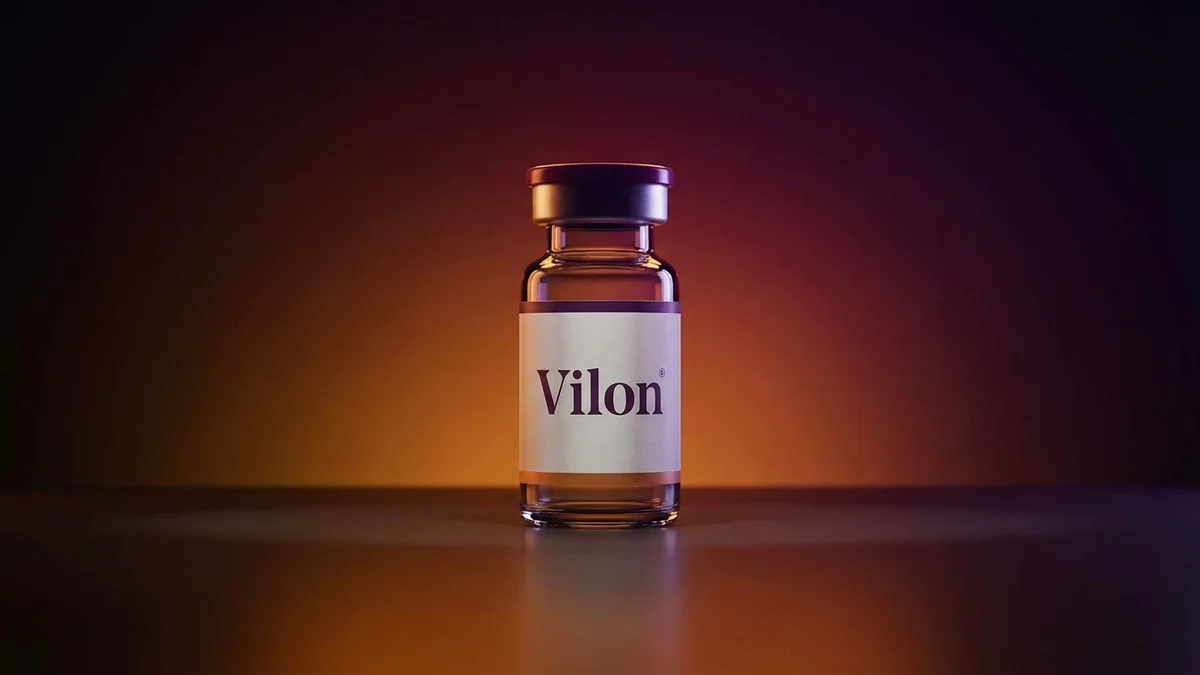
Vilon is the shortest of the Khavinson bioregulators: two amino acids, lysine and glutamic acid, written Lys-Glu or KE. Khavinson's group lists it as an "immunoprotector,"[1] and Russian papers often call it a "thymomimetic," meaning it is meant to imitate signals from the thymus, the organ where immune T-cells mature.[3]
Most Vilon research was published between 2000 and 2006, with a few newer cell studies. It is nearly all cell and rodent work from Khavinson's institute and its partner labs, and it has not been independently replicated. There is one small human study, in patients with type 1 diabetes, and no placebo-controlled trial.
If you came here because Vilon is sold for immunity or longevity, the short version is this: the lab and mouse results are real and point in a consistent direction, but nobody has shown that taking Vilon changes immune function or aging in a person.
- Vilon is the synthetic dipeptide Lys-Glu (KE), developed by Khavinson's group as a thymus-related immune "bioregulator."
- Cell studies show it raised interleukin-2 gene activity, loosened condensed chromatin in cells from elderly donors, and reduced inflammatory signals in skin cells.
- Mouse studies reported more physical activity and fewer tumors. One reported a longer lifespan; a larger paper from the same group reported survival gains only for a different peptide.
- Human data is a single small Russian study on blood clotting in type 1 diabetes. No trial appears on ClinicalTrials.gov (searched October 2026).
- There is no established human dose, and it is not FDA-approved for any use.
| Common Name | Vilon |
| Sequence | Lys-Glu (KE) |
| Formula / Molecular Weight | C11H21N3O5 / about 275 Da |
| Class | Synthetic dipeptide ("peptide bioregulator," thymomimetic) |
| Developed by | Khavinson group, St. Petersburg Institute of Bioregulation and Gerontology |
| Primary Research Areas | Immune cell signaling, chromatin in aging cells, lifespan and tumor models in rodents |
| Human Trials | One small Russian study; none registered on ClinicalTrials.gov |
| FDA Status | Not approved for any indication |
| Forms Sold | 20 mg lyophilized "research" vials (often as the acetate salt); oral capsules |
| Typical Dose | No established human dose |
What Is Vilon?
Khavinson's program started from extracts of animal organs and later synthesized very short peptides modeled on them.[7] Vilon is the thymus entry in that family. You will sometimes see "Vilon acetate" on vendor labels; acetate is a salt form left over from synthesis and purification, and the peptide is the same.
The group's broader theory is that peptides of two to seven amino acids enter cells and nuclei and bind DNA or histone proteins, changing which genes are active.[2] For Vilon in particular, its 2023 stem cell study used molecular modeling to propose that KE binds specific DNA sequences found in the promoters of the SIRT1, PARP1 and PARP2 genes.[5] That binding was modeled on a computer, not measured in cells.
How Does Vilon Work?
What has been measured falls into three groups.
Immune signaling. In mouse spleen cells, Lys-Glu increased gene expression of interleukin-2, a key T-cell growth signal, depending on concentration and exposure time.[4] In a 2022 study run with an Italian university group, Vilon and four other Khavinson peptides lowered TNF and IL-6 release by activated human macrophage-like cells and reduced their adhesion to blood vessel cells.[7] That is the closest thing to outside involvement in the record, though Khavinson's institute was a co-author.
Chromatin in aging cells. As cells age, parts of their DNA become tightly packed and the genes in those regions go quiet. In cultured blood cells from elderly people, Vilon loosened this condensed chromatin and reactivated ribosomal genes.[8] A companion study in cells from people aged 75 to 88 found the same pattern for Vilon and four other peptides.[9] These were lab experiments on donated cells, not treatment of the donors.
Aging-related genes. In human mesenchymal stem cells, KE raised SIRT1 gene expression and protein about 6- and 8-fold in young cells, and lowered PARP1 and PARP2 in aging cells.[5] In aging human skin fibroblasts, KE reduced the inflammatory signals IL-1, NF-κB and TGF-β and increased sirtuin-6.[6]
What the Clinical Evidence Actually Shows
Animal studies. These are the core of the case for Vilon:
- Lifespan. In female mice given Vilon under the skin from six months of age, a 2000 paper reported more physical activity and endurance, a longer lifespan, and fewer spontaneous tumors.[10] A longer 2001 paper from the same group, using 0.1 µg per mouse for five days each month, reported that Lys-Glu increased physical activity and lowered lung tumor rates, but its abstract reports gains in mean and maximum survival only for the pineal peptide Epitalon (Ala-Glu-Asp-Gly), tested alongside it.[11] Read together, the lifespan claim for Vilon is weaker than vendor pages suggest.
- Chemically induced tumors. In rats given a bladder carcinogen, tumors developed in 56% of Vilon-treated animals versus 75.5% of controls.[12] In mice given a colon carcinogen, tumors appeared in 14.3% of animals treated with 10 µg/kg Vilon versus 60% of controls.[13]
- Stress. In rats, injected Vilon improved open-field measures of resistance to emotional stress and limited stress-related enlargement of the adrenal glands and shrinkage of the thymus.[3]
- Digestion. Given by mouth to rats, Vilon raised the activity of several digestive enzymes, most clearly in older animals.[14]
Human studies. We found one: a Russian-language study in patients with type 1 diabetes and signs of chronic low-grade clotting activation. The authors report that Vilon reduced or eliminated these clotting abnormalities, with a weaker effect in elderly patients with severe disease.[15] The abstract gives no patient numbers, dose or control group details.
What the Evidence Does Not Show
- Better immunity in people. No study has measured infection rates, vaccine responses or immune cell counts in healthy people taking Vilon.
- Longer life in people. The lifespan data is from mice, and the group's own larger mouse paper reported a survival gain only for Epitalon.
- Cancer prevention in people. The tumor studies used carcinogen-exposed rodents. They do not show that Vilon prevents or treats cancer in humans.
- Less fatigue. Mice given Vilon were more active and had more endurance.[10] No human study has measured fatigue.
- Liver recovery or tissue regeneration. We found no study testing Vilon for either.
- Independent replication. Every study cited here includes Khavinson or his institute's staff as authors.
Typical Dosing — What the Research Has Used
No established human dose
No published trial has established a safe or effective human dose of Vilon. The figures below describe what animal studies used and what circulates online. They are not dosing guidance.
The research doses are tiny and from animals:
- Mice: 0.1 µg per animal under the skin, five consecutive days a month, for life.[11]
- Mice, colon tumor model: 10 µg/kg.[13]
- Humans: the one human study's abstract does not state a dose.[15]
Community-reported amounts for the 20 mg injectable vial are most often around 200 µg a day, used in 10-day courses or every other day. These numbers come from online protocols, not trials. Our Vilon dosing protocol page covers that schedule and the reconstitution math, which helps with accurate measuring but is not evidence that the dose works.
On oral Vilon: the rat digestion study gave it by mouth,[14] but Khavinson's group also reports that KE is broken down in solutions and partly in tissues more readily than some longer bioregulators.[1] How much survives digestion in a person is unknown.
Side Effects — What to Actually Expect
There is no human safety data collected in a study, so there is no evidence-based list of Vilon side effects.
The 2000 mouse study reported that long-term Vilon caused no unfavorable effects on the animals' development.[10] That is reassuring as far as it goes, but it says little about people. The mouse dose of 0.1 µg is about 2,000 times smaller than the 200 µg daily amount quoted online.
Practical risks:
- Injection risks: redness, pain or swelling at the site, and infection if the product or technique isn't sterile.
- Product quality: research vials are not made to drug manufacturing standards, and purity depends on the seller.
- Immune effects: Vilon is promoted as an immune modulator. If you have an autoimmune disease, an organ transplant, or take immune-suppressing drugs, that is a reason to talk to your physician first, since nobody has studied it in those groups.
Regulatory & Access Status
Access status as of October 2026
Vilon is not FDA-approved for any indication and cannot be prescribed as an approved drug. Two clinics on our directory list Vilon among the peptides they offer.
In the US, Vilon is sold as injectable vials labeled "research use only" and as oral capsules marketed as supplements. Neither route involves FDA review of safety or effectiveness.
Sourcing & Safety
If you decide to buy Vilon anyway, check for:
- An independent certificate of analysis (COA) from a named third-party lab, for your batch.
- HPLC purity of at least 98% and mass spectrometry confirming Lys-Glu at about 275 Da (the acetate salt will weigh more per milligram of powder).
- Sterility and endotoxin testing for anything injected.
Red flags: no third-party COA, claims that Vilon treats cancer or restores the thymus, and human studies that can't be found in PubMed. We don't publish user reviews or testimonials, and you should be cautious of vendor pages that rely on them.
What Makes Vilon Different
Vilon is the simplest molecule in the bioregulator family, a dipeptide where most of its relatives have three or four amino acids. It is also one of the oldest, with most of its animal work done before 2006. Compared with Thymosin Alpha-1, a 28-amino-acid thymus peptide approved as a drug in some countries outside the US and tested in human trials, Vilon's evidence is far thinner.
It is often confused with Thymogen, another Russian thymus-associated dipeptide. Thymogen is Glu-Trp (EW); Vilon is Lys-Glu (KE).[1]
Vilon vs. Other Thymus-Related Peptides
| Parameter | Vilon | Thymogen | Thymosin Alpha-1 |
|---|---|---|---|
| Sequence | Lys-Glu (2 amino acids) | Glu-Trp (2 amino acids) | 28 amino acids |
| Proposed role | Immune regulation, aging | Immune regulation | Immune modulation |
| Main evidence | Cell and rodent studies, one small human study | Russian research; listed by its developers as a medicinal product | Human clinical trials |
| FDA status | Not approved | Not approved | Not approved |
FAQ
What is Vilon peptide?
Vilon is a synthetic dipeptide, lysine-glutamic acid (Lys-Glu, or KE), developed by Vladimir Khavinson's group in St. Petersburg. The group describes it as a thymus-related 'immunoprotector' and geroprotector. At two amino acids, it is the shortest of the Khavinson bioregulators. It is not an approved drug in the US.
What is Vilon used for?
It is marketed for immune support and healthy aging. The research behind those claims is mostly from the 2000s: cell studies on immune cells and chromatin, and mouse and rat studies on lifespan and chemically induced tumors. There is one small Russian study in people with type 1 diabetes. No placebo-controlled trial has been published.
What are the benefits of Vilon?
In lab and animal studies, Vilon increased interleukin-2 gene activity in immune cells, loosened tightly packed chromatin in cells from elderly donors, increased physical activity and lowered tumor rates in mice, and reduced induced bladder and colon tumors in rodents. Whether any of this applies to people is unknown.
What is the Vilon dosage?
No human dose has been established. Mouse studies used very small amounts, such as 0.1 µg per mouse for five days a month. Community-reported amounts for injectable vials are often around 200 µg a day in short courses. That figure comes from online protocols, not from trials.
What are the side effects of Vilon?
There is no systematic human safety data. A long-term mouse study reported no unfavorable effects on development with chronic use, but that is not evidence of safety in people. Injected research vials carry the usual risks of site reactions, contamination and uncertain purity.
Can Vilon be taken orally?
Oral Vilon products are sold, and one rat study gave Vilon by mouth and saw changes in digestive enzyme activity. Khavinson's group also reports that the KE dipeptide breaks down more readily in solution than some longer bioregulators. No study has measured how much oral Vilon reaches the blood in people.
Is Vilon the same as Thymogen?
No. Both are thymus-associated dipeptides from Russian research, but Vilon is Lys-Glu (KE) and Thymogen is Glu-Trp (EW). They are different molecules with separate research records.
Related Peptides & Comparisons
For immune questions, Thymosin Alpha-1 has the strongest human evidence among related peptides; see also our guide to immune support. From the same bioregulator family, Pinealon is studied for the brain, Epitalon for the pineal gland and aging, and Cartalax for cartilage. For aging more broadly, see anti-aging and longevity.
References
- Khavinson V, Linkova N, Kozhevnikova E, et al. "Transport of Biologically Active Ultrashort Peptides Using POT and LAT Carriers." Int J Mol Sci. 2022;23(14):7733. PMID: 35887081
- Khavinson VK, Popovich IG, Linkova NS, et al. "Peptide Regulation of Gene Expression: A Systematic Review." Molecules. 2021;26(22):7053. PMID: 34834147
- Koplik EV, Meshcheriakov AF, Pertsov SS, et al. "Effect of dipeptide vilon on emotional stress resistance in rats." Ross Fiziol Zh Im I M Sechenova. 2002;88(11):1440-1452. PMID: 12587272
- Khavinson VK, Morozov VG, Malinin VV, et al. "Effect of peptide Lys-Glu on interleukin-2 gene expression in lymphocytes." Bull Exp Biol Med. 2000;130(9):898-899. PMID: 11177276
- Khavinson VK, Linkova NS, Ashapkin VV, et al. "KE peptide regulates SIRT1, PARP1, PARP2 gene expression and protein synthesis in human mesenchymal stem cells aging." Adv Gerontol. 2023;36(3):302-312. PMID: 37782636
- Fridman NV, Linkova NS, Kozhevnikova EO, et al. "Comparison of the Effects of KE and AED Peptides on Functional Activity of Human Skin Fibroblasts during Their Replicative Aging." Bull Exp Biol Med. 2020;170(1):154-157. PMID: 33231794
- Avolio F, Martinotti S, Khavinson VK, et al. "Peptides Regulating Proliferative Activity and Inflammatory Pathways in the Monocyte/Macrophage THP-1 Cell Line." Int J Mol Sci. 2022;23(7):3607. PMID: 35408963
- Lezhava T, Khavinson V, Monaselidze J, et al. "Bioregulator Vilon-induced reactivation of chromatin in cultured lymphocytes from old people." Biogerontology. 2004;5(2):73-79. PMID: 15105581
- Khavinson VKh, Lezhava TA, Malinin VV. "Effects of short peptides on lymphocyte chromatin in senile subjects." Bull Exp Biol Med. 2004;137(1):78-81. PMID: 15085253
- Khavinson VK, Anisimov VN, Zavarzina NY, et al. "Effect of vilon on biological age and lifespan in mice." Bull Exp Biol Med. 2000;130(7):687-690. PMID: 11140587
- Anisimov VN, Khavinson VK, Mikhalski AI, et al. "Effect of synthetic thymic and pineal peptides on biomarkers of ageing, survival and spontaneous tumour incidence in female CBA mice." Mech Ageing Dev. 2001;122(1):41-68. PMID: 11163623
- Pliss GB, Mel'nikov AS, Malinin VV, et al. "Inhibitory effect of peptide vilon on the development of induced rat urinary bladder tumors in rats." Bull Exp Biol Med. 2001;131(6):558-560. PMID: 11586406
- Pliss GB, Mel'nikov AS, Malinin VV, et al. "The effect of vilon (Lys-Glu) on 1.2-dimethylhydrazine-induced neoplasia." Vopr Onkol. 2005;51(4):466-469. PMID: 16308980
- Khavinson VK, Timofeeva NM, Malinin VV, et al. "Effect of the dipeptide vilon on activity of digestive enzyme in rats of various ages." Bull Exp Biol Med. 2001;131(6):583-585. PMID: 11586413
- Kuznik BI, Kolesnichenko LR, Kliuchereva NN, et al. "Effect of thymomimetic vilon on blood coagulation system and fibrinolisis in diabetes mellitus type 1 patients of different age." Adv Gerontol. 2006;19:107-115. PMID: 17152731
This content is for informational purposes only and does not constitute medical advice. Consult a licensed healthcare provider before starting any treatment.