Key Takeaways
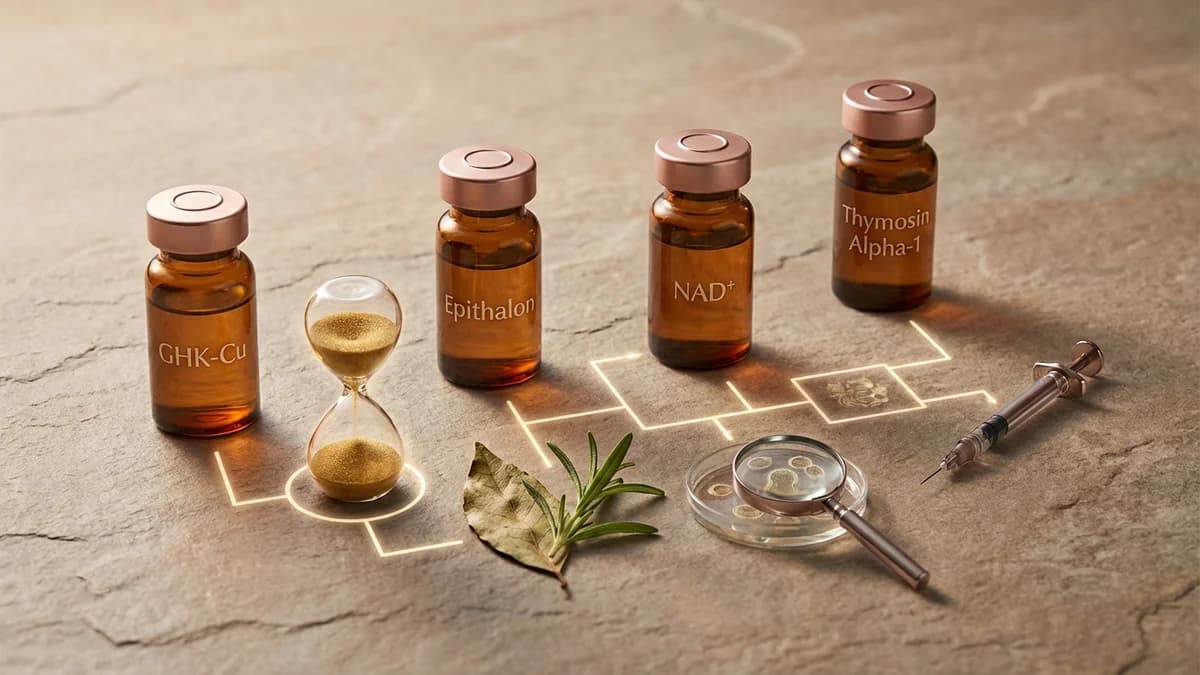
- The Anti-Aging & Longevity Peptide Protocol combines GHK-Cu, Epithalon, NAD+, and Thymosin Alpha-1.
- This protocol targets skin health, telomere support, cellular energy, and immune modulation.
- Typical duration involves cycles of 20 days for Epithalon and continuous use for other peptides.
- GHK-Cu and NAD+ are compoundable peptides, while Epithalon is research-only.
- Medical supervision is recommended due to the research status of some components.
What Is the Anti-Aging & Longevity Peptide Protocol?
The Anti-Aging & Longevity Peptide Protocol is a synergistic approach combining multiple peptides to target various aspects of aging, including skin health, cellular longevity, and immune function. This protocol includes GHK-Cu, Epithalon, NAD+, and Thymosin Alpha-1, each contributing unique mechanisms to support anti-aging goals.
- GHK-Cu: Known for its role in collagen production and skin repair, GHK-Cu is a copper peptide that modulates gene expression and enhances tissue regeneration (PMID 29986520).
- Epithalon: A telomerase activator, Epithalon is used for its potential to elongate telomeres and support cellular longevity (PMID 12937682).
- NAD+: This coenzyme is crucial for cellular energy and mitochondrial function, often administered via IV or subcutaneous injection (PMID 31754102).
- Thymosin Alpha-1: Modulates immune response and enhances T-cell function, contributing to overall health and longevity (PMID 35364609).
How the Anti-Aging & Longevity Peptide Protocol Works
Each peptide in this protocol has a distinct mechanism of action:
- GHK-Cu: Enhances collagen synthesis and skin repair through copper-mediated pathways, promoting skin health and reducing wrinkles (PMID 35083444).
- Epithalon: Activates telomerase, potentially extending the lifespan of cells by maintaining telomere length (PMID 12937682).
- NAD+: Supports cellular metabolism and energy production, crucial for maintaining youthful cellular function (PMID 22076378).
- Thymosin Alpha-1: Boosts immune function by modulating T-cell activity and reducing inflammation (PMID 35364609).
Together, these peptides aim to enhance skin appearance, support cellular longevity, and improve immune resilience.
Anti-Aging & Longevity Peptide Protocol Dosing Protocol
The following table outlines the dosing protocol for each peptide:
| Peptide | Dose | Administration Method | Timing | Cycle Length |
|---|---|---|---|---|
| GHK-Cu | Topical application | Apply to skin | Daily | Continuous |
| Epithalon | 5-10 mg | Subcutaneous injection | Evening | 20 days |
| NAD+ | 250-500 mg | IV infusion or SubQ | Weekly (IV) / Daily (SubQ) | Continuous |
| Thymosin Alpha-1 | 1.6 mg | Subcutaneous injection | Morning | Continuous |
These doses are based on available research and clinical protocols. It is essential to consult with a healthcare provider for personalized dosing.
Administration Guide
- Reconstitution: Use bacteriostatic water for peptide reconstitution. Follow specific instructions for each peptide.
- Injection: Use separate syringes for each peptide. Do not mix in one syringe.
- Timing: Administer Epithalon in the evening for optimal telomerase activation. NAD+ can be administered in the morning or as a weekly IV infusion.
- Storage: Store reconstituted peptides in a refrigerator. Use within the recommended period to maintain efficacy.
- Equipment: Use insulin syringes (29-31 gauge) for subcutaneous injections.
Who Is This Protocol For?
Athletes Recovering from Injury
The protocol supports tissue repair and immune modulation, beneficial for athletes recovering from injuries. GHK-Cu and Thymosin Alpha-1 enhance recovery by promoting collagen synthesis and reducing inflammation.
Post-Surgical Recovery
Patients recovering from surgery may benefit from the protocol's ability to enhance tissue regeneration and immune function, potentially reducing recovery time.
Anti-Aging / Longevity Goals
Individuals seeking to improve skin health and support cellular longevity may find this protocol beneficial due to its effects on collagen production, telomere support, and cellular energy.
Specific Conditions
The protocol may target specific conditions related to aging, such as skin aging, immune decline, and reduced cellular energy.
Expected Results and Timeline
- Week 1-2: Users commonly report improved skin texture and energy levels.
- Week 3-4: Enhanced skin elasticity and reduced fine lines are typical changes.
- Week 5-8: Full protocol effects include noticeable improvements in skin appearance and overall vitality.
- Post-Cycle: After stopping Epithalon, maintenance of benefits is possible with continued use of other peptides.
Potential Side Effects and Risks
- GHK-Cu: Skin irritation is a common side effect. Monitor for allergic reactions.
- Epithalon: Limited data on side effects; potential for immune modulation.
- NAD+: Flushing and gastrointestinal discomfort may occur.
- Thymosin Alpha-1: Injection site reactions and flu-like symptoms are possible.
Medical supervision is crucial, especially for stacked protocols. Regular bloodwork is recommended to monitor health markers.